
Used Smith machine vs new Smith machine in 2026 comes down to verified condition, comparable features, and the full cost of getting the machine ready to train. A lower asking price can be compelling, but transport, missing parts, and uncertain service may change the value.
This guide gives you a practical U.S. buyer framework for comparing delivered costs, future ownership expenses, everyday usefulness, and the feelings that come with each choice. It uses one current RitFit price as a dated example, not as a review of a particular listing.
Quick Answer: A used Smith machine can be the better value when its condition, parts, compatibility, and transport are verified and its complete delivered cost is clearly below a comparable new setup. Choose new when documented configuration and a direct support path matter more than the possible upfront savings.
Key Takeaways
- Compare complete setups: Taxes, delivery, moving, assembly, included parts, and compatibility can change the real price.
- Budget for ownership: New and used machines can both need maintenance, repairs, replacement parts, and time out of service.
- Use verified comparisons: Savings only mean something when the used and new machines provide comparable functions and accessories.
- Buy the condition you can verify: If a seller will not demonstrate movement and safety catches or identify the exact model, walk away.
- Count peace of mind honestly: Confidence, deal satisfaction, and worry are personal values, not guaranteed product outcomes.
Used vs New Smith Machine: Compare the Full Cost
A Smith machine's true purchase cost includes more than its listed price. Add the costs needed to receive, move, assemble, complete, and safely use the specific configuration you are considering.
| Cost line | New machine | Used machine | Status |
|---|---|---|---|
| Asking or checkout price | Current checkout total for the exact configuration | Seller's price for the exact machine and included items | Known once confirmed |
| Sales tax | Confirm at checkout for your location | Confirm whether the transaction and location require tax | Verify |
| Delivery or pickup | Confirm freight, delivery level, and appointment terms | Confirm pickup distance, vehicle, loading, and help | Verify |
| Moving into the room | Plan unloading, stairs, doorways, and moving help | Plan disassembly, loading, transport, stairs, and reassembly | Verify |
| Assembly and installation | Allow for assembly time or paid help if needed | Allow for teardown, missing instructions, reassembly, and adjustments | Contingent |
| Missing parts and compatibility | Confirm what the selected package includes | Inventory hardware, cables, handles, safety parts, and model-specific fit | Used: verify; either: contingent |
| Room readiness | Measure the footprint and plan floor protection | Measure the exact machine and plan floor protection | Verify |
| Bench, plates, bar, and accessories | Buy only items needed for your planned setup | Confirm what is included and what is compatible before adding replacements | Contingent |
| Maintenance and wear | Plan adjustments and routine checks; new equipment still needs care | Inspect existing wear and plan for maintenance or replacement parts | Contingent |
| Repair, labor, and downtime | Damage outside applicable coverage may still require parts or labor | Repair responsibility and parts sourcing depend on the machine and seller | Contingent |
| Resale recovery | Future resale proceeds are unknown | Future resale proceeds are unknown | Unknown |
"Known" means confirmed for the exact purchase, "verify" means obtain the amount or terms before paying. "Contingent" means it depends on condition, configuration, or a future event, and no standard freight, repair, or resale amount is assumed.
Keep the initial delivered setup separate from later ownership costs. A used unit may require local pickup and reassembly, while a new unit may require freight coordination and assembly.
Neither route is automatically free of effort or expense. Track maintenance and service needs over time, including the possibility of a repair-related pause in training.
What You Gain and Give Up With Used vs New
A used Smith machine may cost less upfront and already fit your needs, while a new machine usually makes its stated configuration and purchase documentation easier to confirm. The actual value depends on condition, included functions, support terms, and how soon you can use it.
- Potential used benefits: A lower asking price may reflect prior depreciation, a local machine may be available sooner, and an older configuration may already have the functions you want.
- Potential used tradeoffs: Wear, incomplete hardware, uncertain compatibility, difficult moving, or an unavailable replacement part can absorb some or all of the apparent savings.
- Potential new benefits: You can confirm the selected configuration, retain the order record, and ask the seller about current documentation and parts support. New purchase coverage, if applicable, begins under that order's written terms.
- Potential new tradeoffs: The upfront checkout amount can be higher, and assembly, upkeep, room preparation, freight handling, and damage excluded from coverage still require planning.
Function matters as much as age.
Compare the Smith bar, rack functions, cable system, safety catches, storage, and included accessories that matter to your training.
Do not assume two machines with the same broad label are interchangeable or that a used attachment fits a different generation.
"He used the Smith machine a lot, he used a lot of machines a lot. He still did some free weight stuff as well too and that should help lend this idea that there's not one that is definitively better than the other."
Joe Bennett, Hypertrophy Coach, Independent, Hypertrophy Coach Breaks Down Jay Cutler's Quad Training
That observation concerns equipment choice for training, not used-equipment condition. Select the setup that supports the movements you actually plan to do, then judge its price and condition separately.
The Emotional Value of Buying Used or New
The emotional value of a used or new Smith machine is personal and can pull in opposite directions. A bargain can feel resourceful, while a documented new purchase can feel reassuring, but neither feeling proves the machine is a good fit.
- Buying used can feel rewarding: Finding a well-kept machine at a price you negotiated may bring satisfaction, control over the budget, and a sense of reusing useful equipment.
- Buying used can also feel stressful: You may keep wondering about hidden wear, feel pressure during negotiation or moving, or regret a purchase if repair work appears after pickup.
- Buying new can feel like a fresh start: Unboxing and building a planned gym space can feel motivating, and clear order records or an applicable support path may provide confidence.
- Buying new can create its own doubts: A large upfront payment can raise concern that you paid too much or may not use the equipment enough.
Reduce avoidable anxiety with evidence: verify the seller and exact model, inspect the machine in person, test movement and catches, list every included part, and get written answers about coverage and compatibility. If you cannot inspect a used machine or the seller will not answer basic questions, leave the deal.
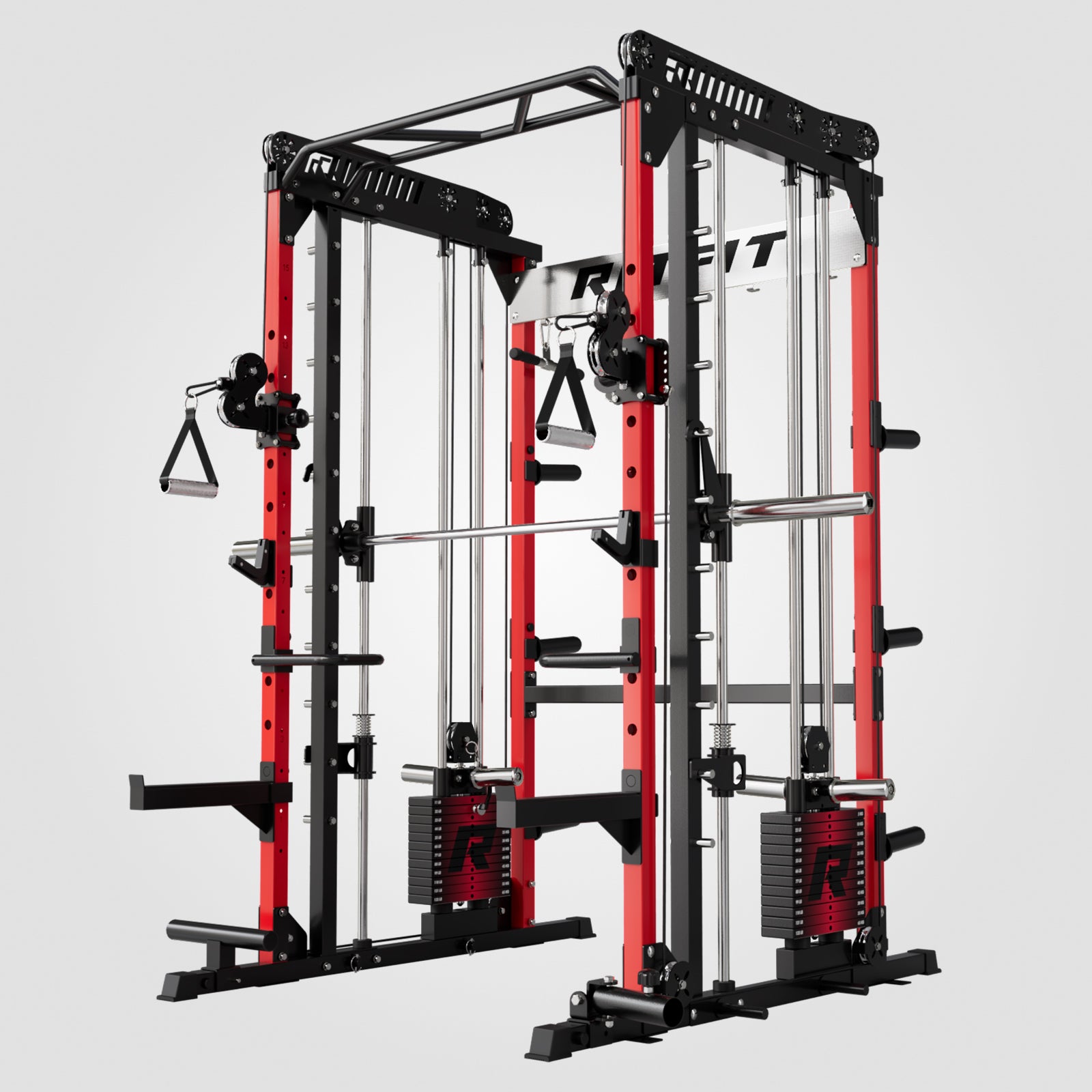
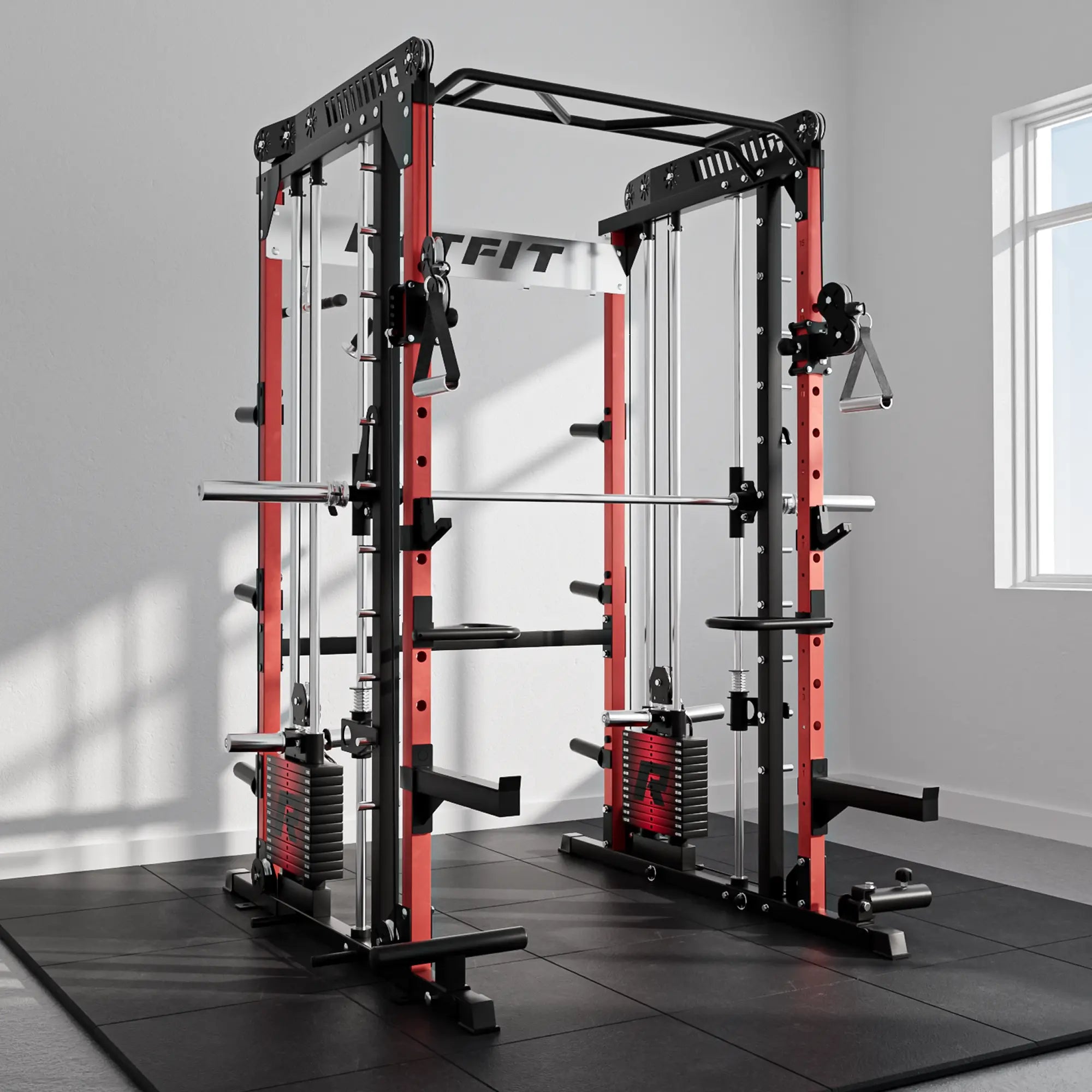
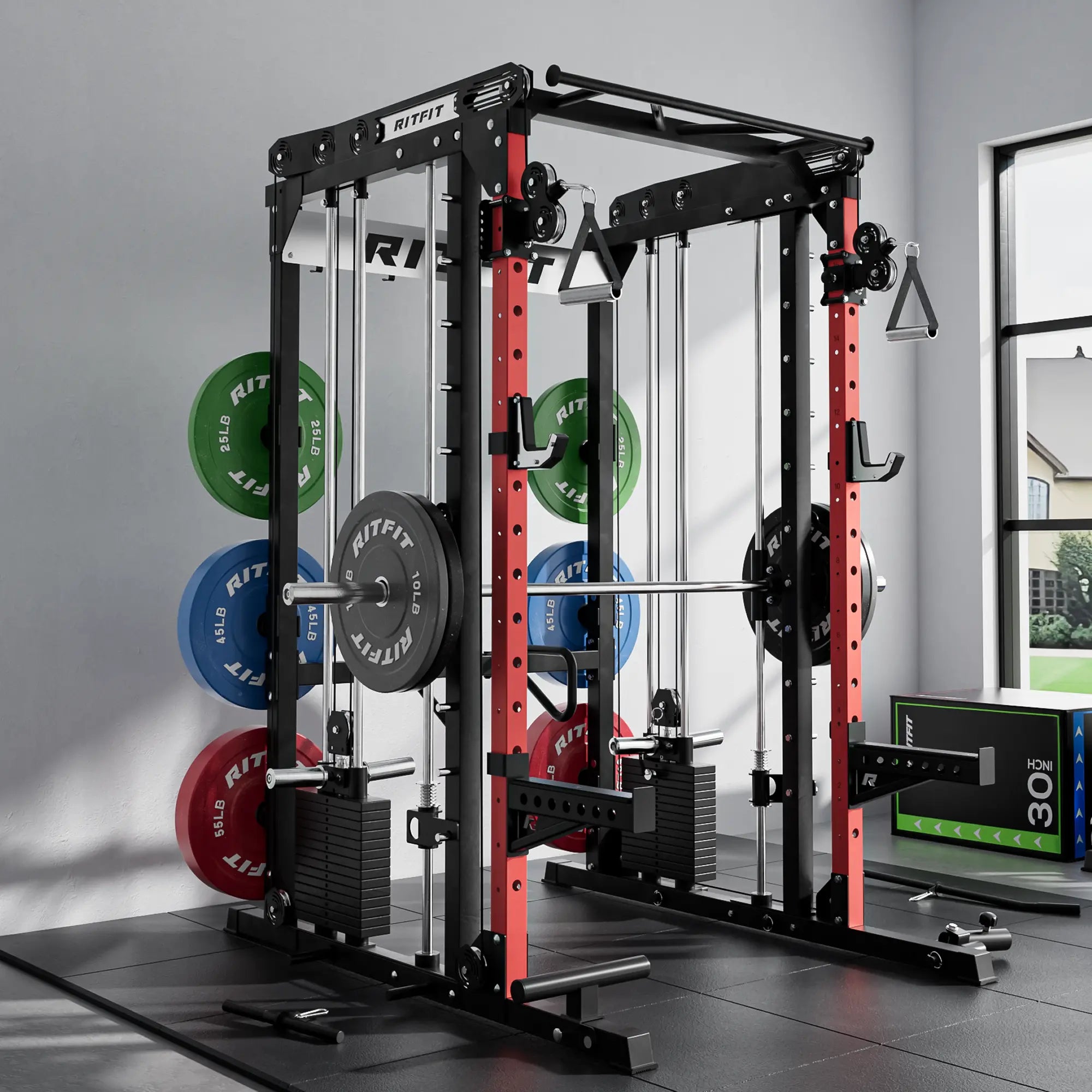
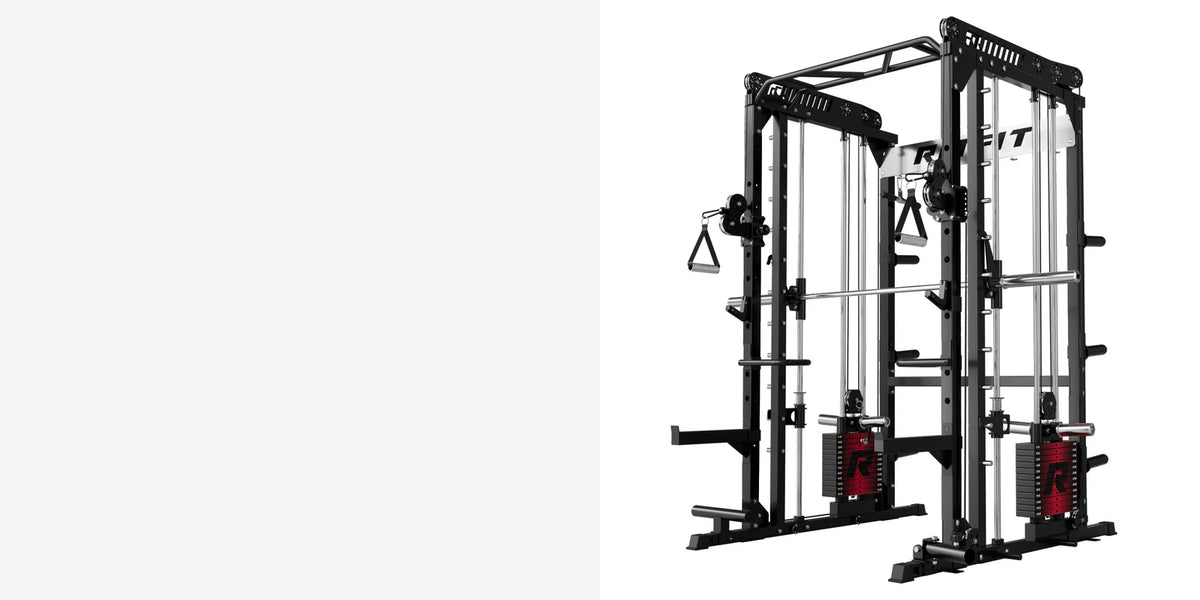
The official RitFit M1 PRO page currently lists a Smith bar, power rack, and dual cable crossover among its functions. Those functions show why a buyer should compare the useful configuration, not just whether a machine is new or used.
Calculate Your Break-Even Savings
Calculate used-machine savings against the real delivered price of a new machine with comparable functions and included items. A listing price compared with a new product's headline price is not an apples-to-apples result.
Potential upfront savings = comparable new setup's actual checkout and delivery total − used machine's complete ready-to-use cost.
For the used total, include its price, applicable tax, pickup or delivery, vehicle and moving help, disassembly and reassembly, missing compatible parts, and any required bench, plates, bar, accessories, or floor protection. Keep optional upgrades separate so you can see what is essential.
For a longer ownership view, add expected maintenance, wear-item replacement, repair labor, and parts.
Downtime can also mean postponing a workout or finding another training option while you arrange service.
Subtract resale recovery only if you have a defensible estimate for your own case; otherwise leave it unknown.
Apply the same categories to the new option, including assembly, maintenance, uncovered damage, and space preparation.
Do not invent a repair probability or a future resale price to make the formula look precise. If a cable condition or replacement-part quote is uncertain, record it as a risk or obtain a written estimate before deciding.
Used vs New Smith Machine Decision Matrix
Your best choice depends on what you can verify and which costs or uncertainties you are willing to manage. Use this matrix as a decision aid rather than a prediction about machine life or repair outcomes.
| Your situation | A reasonable direction | Why |
|---|---|---|
| You can inspect a complete machine and arrange safe, affordable transport | Consider used | The lower price may remain meaningful after verified delivery and setup costs. |
| You need documented configuration and a clear seller support contact | Consider new | Order records and current written terms are easier to confirm for the original buyer. |
| The used listing omits model, parts, or condition details | Pause or walk away | You cannot reliably compare function, compatibility, or repair exposure. |
| The used machine lacks a feature you would otherwise buy separately | Recalculate both setups | Add only compatible items you truly need, then compare complete totals. |
| Neither machine fits the room or delivery route | Choose neither yet | Measure the footprint, ceiling, doors, stairs, and floor plan before committing. |
| You value a documented new purchase more than uncertain savings | Consider new | Confidence and a direct support path may be worth the difference to you. |
For a new RitFit purchase, check the exact model and current written terms before ordering.
S.
lower 48 states.
Its Power Cage table lists lifetime structural frame and weld coverage and one-year parts coverage for specified models, but do not assume those terms cover every older version or a secondhand buyer.
Confirm the exact model and version in writing.
RitFit's current return policy also has conditions for buyer-remorse returns, including an applicable request window, unopened original packaging, and buyer-paid return shipping. Confirm the current window, eligibility, and freight terms for your order; a new machine is not an unconditional, no-cost trial.
Used Smith Machine Inspection Checklist
Inspect the exact machine and its included parts before paying whenever possible. A seller's description or model photo cannot establish the condition of the unit being offered.
- Confirm identity: Record the brand, exact model, version, serial or identifying label, and any available proof of purchase.
- Check the frame: Look for visible damage, corrosion, cracked welds, missing fasteners, or signs that parts have been altered.
- Move the bar unloaded: Ask the seller to demonstrate smooth travel through its path and engagement of the safety hooks or catches. Stop if movement binds or catches do not engage reliably.
- Inspect moving parts: Look over cables, pulleys, bearings, guide surfaces, pads, handles, and other wear items for visible damage or uneven movement.
- Inventory the package: Compare the actual hardware, safety parts, attachments, and instructions with the exact model's parts list.
- Verify compatibility: Get confirmation that any replacement cable, attachment, bench, or accessory fits the model and version.
- Plan the move: Measure the route and room, identify who will disassemble and lift the machine, and confirm the vehicle can carry the parts safely.
- Ask about support: Request written confirmation of any remaining coverage and whether replacement parts are currently available. Do not assume a used RitFit warranty transfers.
- Set a walk-away rule: If the seller refuses inspection, cannot identify the machine, or pressures you to pay before you verify essential details, leave.
A Current RitFit Price and Configuration Example
One dated new-machine price can make the comparison method concrete, but it cannot establish the market value of an unspecified used Smith machine. The exact bundle and checkout terms still need to match.
On October 22, 2026, the official RitFit M1 PRO black product page displayed a sale price of $1,299.99 and a regular price of $1,399.99.
Prices and configurations can change, so verify the live page and final checkout total. This dated example is not a standard price for all new machines and does not define a used-machine discount.
The page lists a Smith bar, power rack, and dual cable crossover.
If those functions matter to you, compare each one with the used machine's actual configuration and accessories before calculating savings.
A machine without the same useful functions is not a like-for-like alternative, even if its asking price is lower. For comparison examples, review a Smith machine and cable crossover configuration alongside a Smith machine with lat pulldown, then verify the exact features and package on each current product page.
To browse related RitFit Smith machine configurations, use the exact model pages to verify what is included. A page listing describes a product configuration; it does not verify the condition of any secondhand unit.
For general guidance on choosing a Smith machine, compare your room, intended use, and included functions before adding a listing to your shortlist. You can also review a Smith machine package and a dual-cable configuration to see how included components vary by setup.
FAQs About Used Smith Machines vs New
Is a used Smith machine worth buying?
A used Smith machine can be worth buying when its exact model, condition, included parts, transport, and setup costs are verified. Compare its complete delivered cost with a new machine that has the same useful functions. Walk away when the seller cannot demonstrate smooth movement or safe catches.
What should I check before buying a used Smith machine?
Check the exact model and version, proof of ownership, frame and welds, bar path, catches, cables, pulleys, bearings, pads, hardware, and included accessories. Ask for a complete parts list and compatibility confirmation. Arrange safe transport and do not pay before you can inspect the machine or verify the seller's claims.
Does a used RitFit Smith machine keep its warranty?
Do not assume a used RitFit machine keeps warranty coverage. RitFit's current policy says coverage is for the original purchaser and is non-transferable, but older models and versions may have different written terms. Confirm the exact model with RitFit before purchase and ask whether replacement parts are available.
How do I compare a used Smith machine with a new one?
Compare the same functions, included accessories, taxes, delivery or pickup, moving, assembly, floor protection, and any missing compatible parts. Then add ownership costs such as maintenance, repairs, downtime, and resale recovery. Use an actual comparable new checkout total, not a headline list price, as the benchmark.
Can a new Smith machine be returned if I change my mind?
A new machine is not automatically a free trial. Read the seller's current return window, eligibility rules, packaging requirements, and freight terms before ordering. RitFit's current policy places conditions on buyer-remorse returns, including unopened original packaging and buyer-paid return shipping, so verify the live policy for your order.
Which ongoing ownership costs and downtime risks should buyers budget for?
Budget for routine checks and adjustments, maintenance supplies, and possible wear parts such as cables, pulleys, bearings, and pads. Either machine may need repair parts or labor, and downtime can mean postponing training or finding another place to work out. Treat resale recovery as unknown unless you have a well supported estimate.
How do confidence, deal satisfaction, regret, and purchase anxiety differ subjectively?
A used purchase may feel satisfying when you find a well kept machine at a price you chose, but uncertainty about hidden wear or moving can cause worry. A new purchase may feel like a confident fresh start, while the larger payment can bring concern about cost or future use. These reactions vary by person.
Conclusion
Used Smith machine vs new Smith machine in 2026 is a comparison of complete configuration, ready-to-use cost, condition evidence, and the level of uncertainty you are comfortable carrying. Calculate savings only after checking comparable functions, transport, parts, and setup.
Inspect any used unit in person when possible, get policy terms in writing, and walk away when key details cannot be verified. For a new purchase, check the current configuration, delivery, and return terms using the RitFit discount guide.
Disclaimer
This guide is general shopping information, not an inspection, repair assessment, or guarantee of warranty coverage. Follow the equipment maker's instructions and consult a qualified professional for assembly or repair questions.