








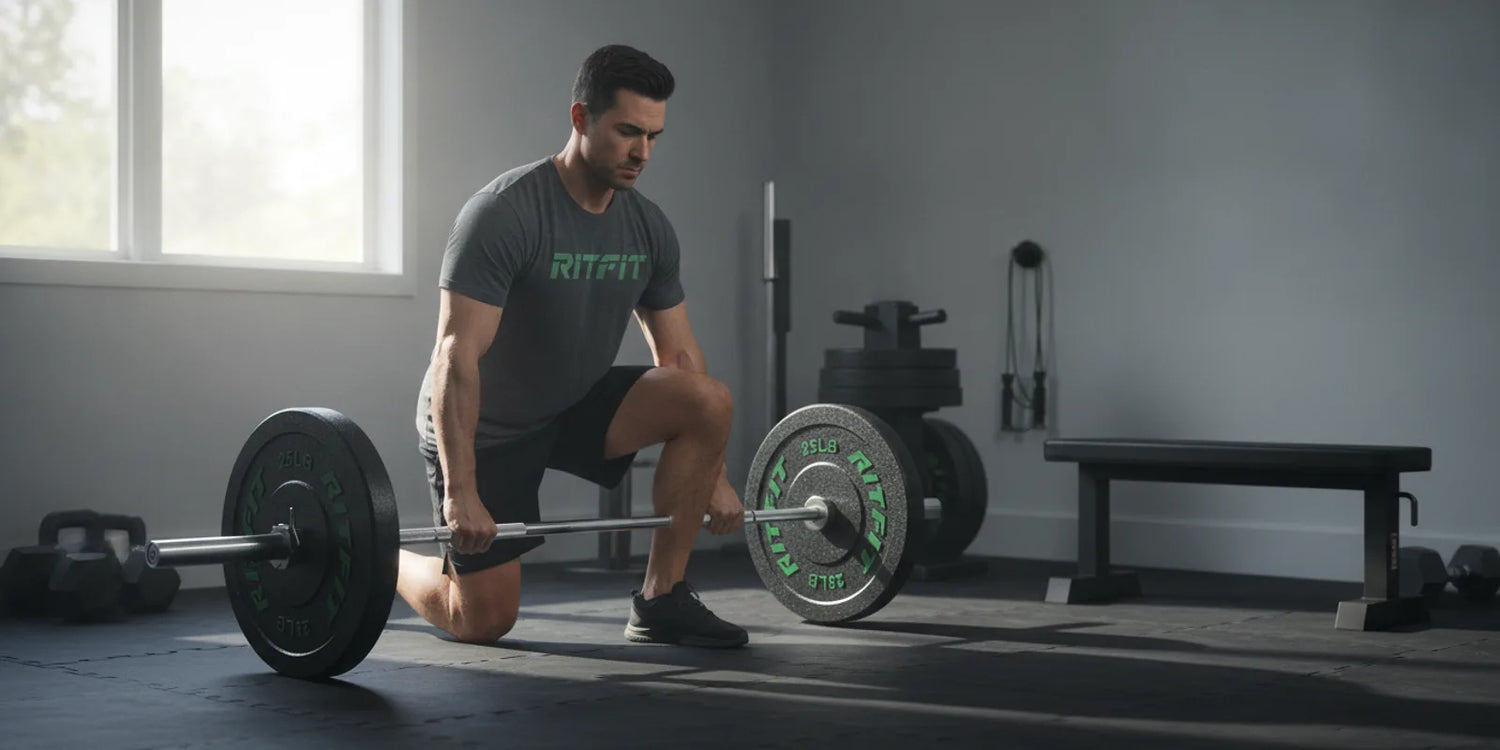
Shopping for weights for sale in 2026 means navigating dozens of options across dumbbells, barbells, kettlebells, and weight plates, each with different price points, materials, and ideal uses. Knowing what you're actually getting for your dollar makes the difference between a smart long-term investment and expensive equipment that collects dust.
This guide breaks down every major weight type by cost per pound, material, and best use case, so you can build a complete home gym at any budget without second-guessing your purchase.
Quick Answer: Weights for sale range from $0.75 to $5.00 per pound depending on type and material, with cast iron plates and fixed dumbbells offering the best value. A functional starter free weight set for a home gym typically costs $300 to $600 and covers all major compound lifts.
Key Takeaways
- Price range: Weights for sale cost between $0.75 and $5.00 per pound, with cast iron plates being the most affordable and urethane-coated dumbbells at the premium end.
- Best value entry point: A barbell plus 300 lb of Olympic plates typically runs $340 to $500, giving you 12 to 18 months of progressive overload on all major lifts.
- Material tradeoffs: Cast iron is cheapest but louder; rubber-coated weights protect floors and cost $2.00 to $3.00 per pound; urethane offers commercial-grade durability at $3.00 to $5.00 per pound.
- Adjustable vs. fixed: Adjustable dumbbells replace a full rack in a fraction of the space, making them the top pick for smaller home gyms despite a higher per-pound cost.
- Used weights are safe: Cast iron plates are structurally stable and can be found used for $0.50 to $0.75 per pound, cutting your startup cost by 30 to 50 percent.
What Types of Weights Are for Sale and Which Should You Buy?
Free weights for sale fall into four main categories, and the right choice depends on your training goals, available space, and budget. Barbells with weight plates offer the most versatility and progressive overload for serious strength training, while dumbbells and kettlebells handle accessory work and conditioning.
Dumbbells (Fixed vs. Adjustable)
Fixed hex dumbbells are ideal for facilities or lifters who want instant access to any weight without setup time. Adjustable dumbbells consolidate 5 to 50 lb of resistance into a single compact unit, making them the top pick for most home gyms where floor space is limited.
- Fixed hex dumbbells: Available in 2.5 lb increments, typically sold as a pair or full rack set; cast iron hex runs $1.40 to $2.00 per pound.
- Adjustable plate-loaded: Lower per-pound cost around $2.25, but slower to adjust between sets; good for strength-focused lifters who change weight infrequently.
- Selectorized adjustable: Dial-select or pin-select systems (5 to 50 lb in one unit) run $4.00 to $5.00 per pound but eliminate the need for a full rack, ideal for apartments or small garages.
Barbells and Olympic Weight Plates
A 7-foot Olympic barbell rated for at least 700 lb is the foundation of any serious home gym. Paired with a 300 lb plate set, it handles every major compound lift including squats, deadlifts, bench press, overhead press, and barbell rows.
- Olympic barbells: Standard 45 lb, 7-foot bar; look for tensile strength ratings of 165,000 PSI or higher for heavy pulling movements.
- Standard iron plates: $0.75 to $1.50 per pound; widely available and compatible with all Olympic bars; most cost-effective plate option.
- Bumper plates: $1.50 to $3.00 per pound; designed to be dropped safely; required for Olympic lifting movements like cleans and snatches.
- Starter bundle value: A barbell plus 300 lb of plates typically costs $340 to $500, covering 12 to 18 months of progressive overload before additional plates are needed.
Kettlebells
Kettlebells are sold individually and are best suited for ballistic movements like swings, Turkish get-ups, and single-arm presses. They complement barbell training but are typically not a complete replacement for a plate-loaded setup.
- Cast iron kettlebells: Most affordable style; consistent diameter regardless of weight makes them easy to rack and swing; priced at $1.50 to $2.50 per pound.
- Competition kettlebells: Fixed outer diameter across all weights for consistent technique practice; cost more per pound but preferred by kettlebell sport practitioners.
Weight Plate Sets
Barbells and weight plates sold as a bundle offer the best cost-per-pound value for home gym builders. Standard configurations include a 7-foot bar plus 255 to 300 lb of plates in a mix of 45 lb, 35 lb, 25 lb, 10 lb, 5 lb, and 2.5 lb increments.
- Cast iron plate sets: Best value at $0.75 to $1.50 per pound; slightly rough texture but fully functional for all barbell movements.
- Rubber-coated plate sets: $1.50 to $2.50 per pound; protect floors and reduce noise on drops; better for home environments with finished floors.
- Urethane plate sets: $2.50 to $4.00 per pound; commercial-grade durability; color-coded for quick weight identification; best for heavy daily use.
How Much Do Weights Cost Per Pound?
Weights for sale typically cost between $0.75 and $5.00 per pound, with price driven primarily by material, coating, and format. Understanding the per-pound cost benchmark helps you compare deals accurately and avoid overpaying for features you don't need.
Dumbbell Price Breakdown by Material
Cast iron fixed dumbbells represent the most affordable entry point, while selectorized adjustable systems cost more per pound but replace an entire rack of fixed weights.
| Dumbbell Type | Avg. Cost Per Pound | Best For |
|---|---|---|
| Cast Iron Fixed | $1.40-$2.00/lb | Budget, durable, classic design |
| Rubber Hex | $2.00-$3.00/lb | Quieter, floor-safe, gym-style |
| Urethane-Coated | $3.00-$5.00/lb | Premium, commercial-grade, longest lifespan |
| Plate-Based Adjustable | ~$2.25/lb | Space-saving, slower to change |
| Selectorized Adjustable | $4.00-$5.00/lb | Fastest changes, most compact |
Prices reflect 2026 retail averages; actual costs vary by brand, seller, and promotions.
Barbell and Plate Bundle Pricing
Weight plates and barbell bundles deliver the best per-pound value of any free weight category, especially when purchased as a complete set. Pricing guides note that weight plates range from $0.75 to $4.00 per pound depending on material and coating.
| Plate Type | Avg. Cost Per Pound | Best For |
|---|---|---|
| Standard Iron Plates | $0.75-$1.50/lb | Budget, classic, widely available |
| Rubber-Coated Plates | $1.50-$2.50/lb | Floor-safe, quieter, easier to grip |
| Bumper Plates | $1.50-$3.00/lb | Drop-safe, best for Olympic lifting |
| Urethane Plates | $2.50-$4.00/lb | Premium, commercial durability |
Bundle pricing: a 7-foot Olympic barbell plus 300 lb of iron plates typically costs $340 to $500.
Is the Adjustable Dumbbell Premium Worth It?
Selectorized adjustable dumbbells cost more per pound upfront, but they eliminate the need to buy and store 8 to 10 pairs of fixed weights. For home gyms with under 150 sq ft of dedicated floor space, the space savings alone often justifies the higher per-pound cost.
- Plate-based adjustable sets: Around $2.25 per pound for a 40 lb set at roughly $90; slower to change but the most affordable adjustable format.
- Selectorized systems: Around $4.00 to $5.00 per pound for a 50 lb set; dial-select or pin-select allows 5-second weight changes between sets.
- Long-term value: A selectorized 50 lb pair replaces roughly $500 to $700 worth of fixed rubber hex dumbbells (5 to 50 lb in 5 lb increments), making the upfront premium recoup quickly for home users who train across multiple rep ranges.
Browse exercise weights to compare current pricing across dumbbell formats and plate styles.
Which Weight Material Is Best for a Home Gym?
The best weight material for a home gym depends on your flooring, noise tolerance, and training intensity. Cast iron costs the least but is the loudest on impact; rubber and urethane coatings add cost while reducing floor damage and noise significantly.
Cast Iron Weights
Cast iron is the most durable and affordable material for both dumbbells and weight plates. It does not rust easily under normal conditions and can last decades with basic care, making it the default choice for budget-focused home gym setups.
- Pros: Lowest cost per pound, extremely durable, holds weight reliably without degrading over time.
- Cons: Loud on impact with hard floors, can chip concrete or scratch wood surfaces, slightly rough texture on older cast iron.
- Best for: Garage gyms with rubber mats or concrete floors, lifters prioritizing cost efficiency over noise reduction.
Shop cast iron weight plates for the most affordable per-pound price on plate sets.
Rubber-Coated Weights
Rubber hex dumbbells and rubber-coated plates cost $2.00 to $3.00 per pound but provide meaningful floor protection and noise reduction, making them the most popular choice for finished basement gyms, home gyms with hardwood adjacent, or anywhere noise is a concern.
- Pros: Protects flooring from impact, reduces noise by 30 to 50 percent compared to bare iron, easier to grip with sweaty hands, common in commercial gyms.
- Cons: Higher per-pound cost than cast iron, rubber odor can linger in enclosed spaces for the first few weeks.
- Best for: Home gyms in finished spaces, shared walls or floors (apartments, condos), lifters who prioritize a quieter training environment.
Urethane-Coated Weights
Urethane coating represents the premium tier of home gym weights, offering the longest lifespan, the cleanest appearance, and the most consistent performance across heavy daily use. Costs run $3.00 to $5.00 per pound.
- Pros: Superior durability compared to rubber (does not crack, peel, or absorb odors), color-coded for fast weight identification, commercial-grade feel.
- Cons: Highest upfront cost; diminishing returns for lifters who train 3 to 4 days per week at moderate intensity.
- Best for: Home gym owners who train 5 to 7 days per week at high intensity, or those investing in long-term equipment that won't need replacement for 10 or more years.
See the full selection of weights for home gym across all material types and price ranges.
Are Free Weights or Machines Better for Building Strength?
Free weights and machines both build strength and muscle effectively, but free weights produce significantly greater gains in free-weight-specific tests while muscle hypertrophy is equal between the two approaches. A 2023 meta-analysis of 13 studies with 1,016 total participants found that free-weight training produced significantly greater strength gains in barbell and dumbbell tests, while muscle growth was similar regardless of training modality.[1]
- Strength specificity: If your goal is to get stronger at barbell lifts like squats, deadlifts, and bench press, training with free weights produces better transfer than machine-based training.
- Muscle hypertrophy: Machines and free weights produce comparable muscle growth, so neither is categorically superior for building size.
- Stabilizer activation: Free weights require more input from stabilizer muscles and synergists because there is no fixed plane of motion, which translates well to athletic performance and real-world movement.
- Jump performance: An 8-week study of 120 male participants found that barbell squat training produced greater improvements in squat jump and countermovement jump height than machine leg press training.[2]
- Beginners and safety: Machines offer a guided range of motion that reduces technique demands, making them useful for beginners learning movement patterns or anyone returning from a period of inactivity.
- Complementary use: The most effective programs for both strength and hypertrophy often combine free weights for compound movements with machines for isolation work, rather than using either exclusively.
"Barbells, dumbbells, machines, and cables are all totally fine. The goal isn't to move the most weight, but rather to feel the target muscle contracting."
Greg Nuckols, MA, Strength Researcher and Coach, Stronger By Science
How to Build a Home Gym Weight Set on Any Budget
Building a home gym weight set starts with identifying your training goals and available space, then prioritizing purchases in order of exercise-per-dollar return. A barbell with plates delivers the widest exercise variety at the lowest per-pound cost, making it the logical starting point for most home gym builders.
Under $500 Starter Setup
A complete functional strength training setup is achievable for $400 to $600 and covers every major compound lift without requiring machines or cable systems.
- Barbell plus 300 lb plate set ($340-$500): Covers squats, deadlifts, bench press, overhead press, and rows. A standard 7-foot Olympic bar plus 255 to 300 lb of iron plates provides 12 to 18 months of progressive overload for most beginners and intermediate lifters.[3]
- Rubber flooring ($30-$80): Horse stall mats at 3/4-inch thickness protect your floor and reduce noise; 24 sq ft covers a standard lifting platform.
- Squat stands or power rack ($200-$400): Required to safely perform back squats and bench press with a barbell; buy new for structural safety.
- Adjustable bench ($80-$150): Opens up incline press, flat bench, seated overhead press, and dozens of dumbbell movements.
Is It Worth Buying Used Weights?
Cast iron and iron plates are safe to buy used because iron does not degrade structurally over time. Experienced home gym builders note that used cast iron plates can be found for $0.50 to $0.75 per pound on platforms like Facebook Marketplace and Craigslist, compared to $1.00 or more per pound new, cutting your total plate cost by 30 to 50 percent.
- Safe to buy used: Iron plates, fixed hex dumbbells, kettlebells, and standard barbells (inspect for bent shafts).
- Buy new for safety: Power racks and weight benches, since structural cracks in welds are not always visible but can cause catastrophic failure under load.
- Inspection checklist: For used barbells, roll them on a flat surface to check for bends; inspect collars and knurling for damage; avoid bars with visible rust pitting in the sleeve.
$500-$1,500 Intermediate Setup
After establishing a barbell and rack foundation, adding a selection of exercise weights expands your training options significantly without requiring a full commercial setup.
- Adjustable dumbbells ($150-$430): Opens up lateral raises, dumbbell flyes, concentration curls, single-arm rows, and isolation work that complements compound barbell training.
- Additional plate weight ($100-$200): Add 100 to 150 lb of iron plates as your strength progresses beyond your starter set; buying in increments reduces upfront cost.
- Weight storage ($50-$120): A plate tree or dumbbell rack keeps your gym organized and reduces injury risk from plates left on the floor. See weight storage solutions to keep your setup organized.
- Weightlifting accessories ($30-$80): Lifting belt, chalk, barbell collars, and wrist wraps become important as load increases above 200 lb. See weightlifting accessories for the full range.
Pair your weight set with a quality bench to unlock the full range of pressing movements. The RitFit 1300lb Adjustable Weight Bench supports up to 1,300 lb and adjusts across multiple incline angles, making it a durable long-term foundation.
If space is a priority, the RitFit Gator Adjustable Bench offers a compact footprint without sacrificing stability.
Before finalizing your purchase, use our guide on how to choose dumbbell weight to dial in the right starting load, and see our weight bench guide for matching your bench to your training style. For the best current deals, check the current fitness equipment deals page for promotions on plates, dumbbells, and barbell sets.
FAQs About Weights for Sale
What is the cheapest type of weight to buy for a home gym?
Cast iron fixed dumbbells and standard iron weight plates are the most affordable options, typically costing $1.40 to $2.00 per pound for dumbbells and $0.75 to $1.50 per pound for plates. Buying a barbell-and-plate bundle offers the best value per pound, making it the go-to starting point for most budget-conscious home gym builders.
Are adjustable dumbbells worth buying instead of a full dumbbell set?
For most home gym setups, yes. Adjustable dumbbells replace a full rack of fixed weights in a fraction of the space, and selectorized models at $4 to $5 per pound eliminate the need to store multiple pairs, a trade-off that pays off quickly for smaller spaces.
How much does a beginner home gym weight set cost?
A functional beginner home gym weight set typically costs $300 to $600 and includes a 7-foot Olympic barbell plus around 255 to 300 pounds of plates. This setup covers all major compound lifts and provides enough progressive overload for 12 to 18 months of consistent strength training before additional plates are needed.
Is it safe to buy used weights for a home gym?
Cast iron and iron plates are generally safe to buy used because iron does not degrade structurally. Used plates regularly sell for $0.50 to $0.75 per pound versus $1.00 or more per pound new, but inspect barbells for bent shafts and always buy power racks and weight benches new, since weld cracks pose serious safety risks under heavy load.
What is the difference between rubber and cast iron weights?
Cast iron weights are the most affordable and durable option, but louder on impact and harder on unprotected floors. Rubber-coated weights at $2.00 to $3.00 per pound protect flooring and reduce noise, while urethane-coated weights at $3.00 to $5.00 per pound offer commercial-grade durability for heavy daily use.
How do I choose between free weights and a weight machine?
A 2023 meta-analysis found that free-weight training produced significantly greater strength gains in barbell and dumbbell tests, while muscle hypertrophy was similar between both modalities. Free weights require more stabilizer activation and transfer better to compound movements, while machines offer a guided range of motion useful for beginners, making a combination of both an effective long-term approach.
Conclusion
Weights for sale range from $0.75 to $5.00 per pound, and the best choice depends on your training goals, space, and budget. A barbell-and-plate bundle at $340 to $500 remains the highest exercise-per-dollar investment for serious home gym builders, while adjustable dumbbells solve the space problem for smaller setups.
Start with the foundation, add weights as your strength progresses, and buy used cast iron plates where available to reduce costs. Browse the full weights for home gym collection to find the right set for your setup and budget.
Disclaimer
The information in this article is for general educational purposes and does not constitute professional fitness, medical, or safety advice. Consult a qualified strength and conditioning coach or healthcare provider before beginning any new resistance training program, especially if you have existing injuries or medical conditions.
Save on your next RitFit order
Tap the button to copy your code, then paste it at checkout.
References
1. Haugen AS, Vårvik FT, Larsen S, Haugen T, van den Tillaar R. Effect of free-weight vs. machine-based strength training on maximal strength, hypertrophy and jump performance, a systematic review and meta-analysis. BMC Sports Sci Med Rehabil. 2023;15:103. doi:10.1186/s13102-023-00713-4
2. Keiner M, Sander A, Wirth K, Hartmann H, Yaghobi D. Effect of 8 weeks of free-weight and machine-based strength training on strength and power performance. J Hum Kinet. 2016;53:201-210. doi:10.1515/hukin-2016-0023
3. Iversen VM, Norum M, Schoenfeld BJ, Fimland MS. No time to lift? Designing time-efficient training programs for strength and hypertrophy: a narrative review. Sports Med. 2021;51(10):2079-2095. doi:10.1007/s40279-021-01490-1





