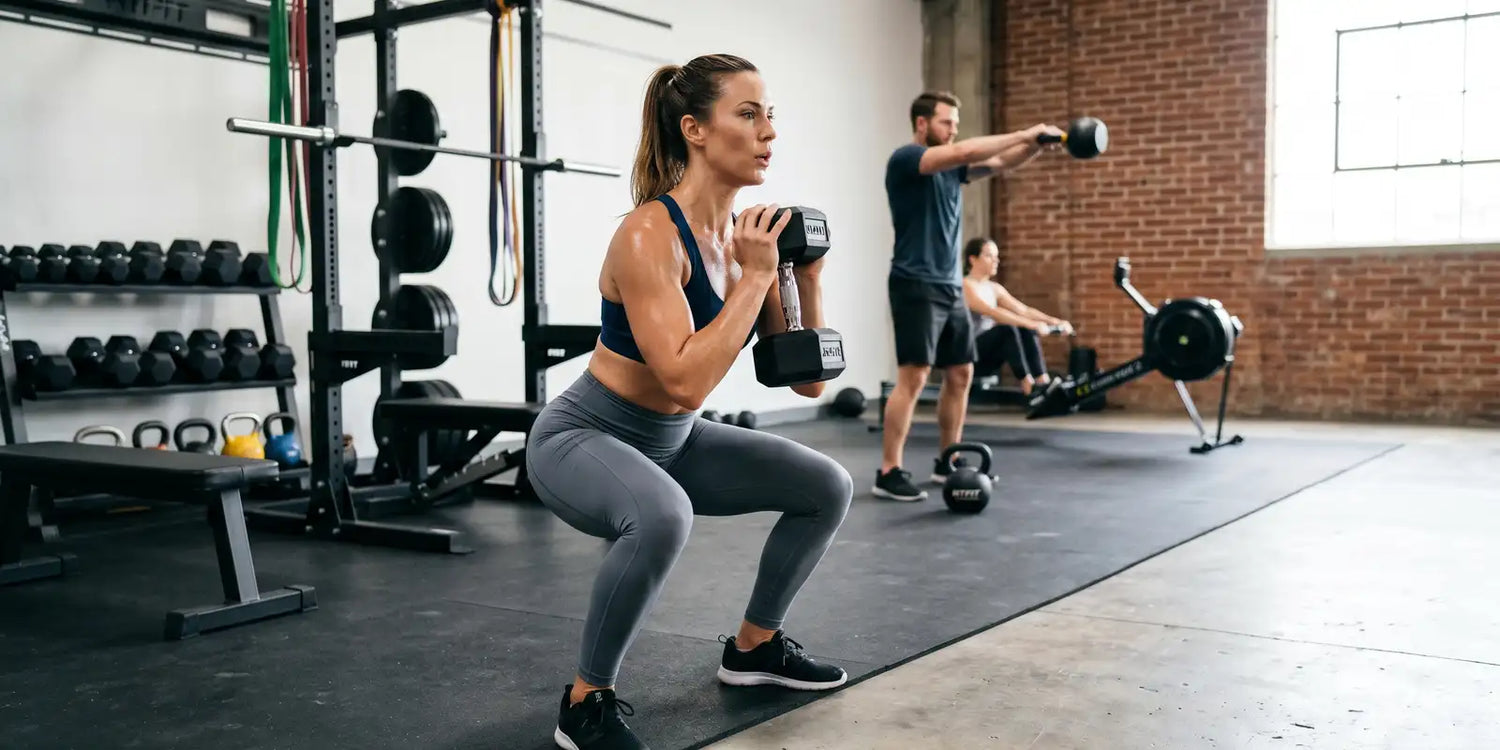
Boot camp fitness is a coached group workout that blends strength, cardio, and bodyweight movements into one timed session, loosely inspired by military training. This guide explains what a class involves and whether it suits you.
You will learn the typical class structure, common exercises, real benefits, how often to train, and how beginners can start safely with simple modifications.
Quick Answer: Boot camp fitness is a coached group exercise class that blends strength, cardio, and bodyweight movements into one timed, full-body session, loosely inspired by military training. Most classes run 45 to 60 minutes, scale to any fitness level with coach modifications, and deliver efficient all-around conditioning in a supportive group setting.
Key Takeaways
- Definition: Boot camp fitness is coached group circuit training that mixes strength, cardio, and bodyweight work into one efficient session.
- Structure: Most classes run 45 to 60 minutes through a warm-up, strength block, conditioning block, and cooldown.
- Scalable: A good coach offers modifications, so beginners and experienced exercisers can train side by side.
- Frequency: Two to three sessions per week is a sensible starting point, with recovery built in.
- Equipment light: Many workouts need only bodyweight, with optional dumbbells, kettlebells, or bands.
What is boot camp fitness in simple terms?
Boot camp fitness is a structured, coached group exercise class that combines strength training, cardio intervals, and bodyweight movements into one full-body session. It sits between a cardio class and a weightlifting session, with high output and an instructor guiding every move.
- Coached: An instructor demonstrates each exercise, watches your form, and adjusts the pace for the group.
- Full body: One session trains strength, conditioning, and movement together rather than isolating a single quality.
- Adaptable: The intensity scales to your current level, so you work hard without being left behind.
If you want variety and structure without planning your own routine, this format fits well. It also overlaps with broader group formats covered in our guide to interactive fitness.
Where does the boot camp term come from?
The term boot camp comes from military basic training, and fitness boot camps borrow that group, drill-style approach. According to widely cited descriptions, a fitness boot camp is a group physical training program loosely modeled on military training, often led by trainers who may include former military personnel.
- Origin: Sessions traditionally opened with dynamic stretching and running, then moved into varied interval work.
- Modern shift: Today many classes are indoor, climate controlled, and friendlier than the drill-sergeant stereotype.
The military framing is mostly about the group dynamic and structured effort, not literal punishment. The goal is steady, shared progress at each person's own pace.
What does a typical boot camp class look like?
A typical boot camp class runs 45 to 60 minutes and moves through four blocks, a warm-up, a strength block, a conditioning block, and a cooldown. One common interval format is roughly 30 to 45 seconds of work paired with 15 to 30 seconds of rest, repeated across several rounds.
- Warm-up: Light cardio and mobility drills prepare your heart and joints for the work ahead.
- Strength block: Dumbbells, bands, or bodyweight moves are performed in timed intervals or rep ranges while the coach checks form.
- Conditioning block: Heart rate climbs with moves like kettlebell swings, box step-ups, or sled pushes, sequenced for a training effect.
- Cooldown: Stretching and slower breathing help your body recover.
One guide describes a common layout of 5 to 8 exercises per round with 2 to 4 total rounds. The exact mix changes daily to keep training balanced and engaging.
What exercises and equipment are used in boot camp?
Boot camp workouts use a mix of cardio, strength, and speed exercises, and they usually require minimal equipment. Many moves are bodyweight based, with optional light to moderate weights added to vary the stimulus.
- Bodyweight staples: Push-ups, squats, lunges, planks, burpees, and jumping moves form the core of most sessions.
- Light equipment: Dumbbells, kettlebells, resistance bands, jump ropes, and battle ropes add load and variety.
- Three qualities: A well-rounded workout develops cardio, strength, and speed rather than just one.
Because the format trains several abilities at once, it naturally touches the 5 components of fitness. That balance is part of what makes boot camp efficient for everyday strength.
What are the benefits of boot camp training?
The main benefit of boot camp is balanced, full-body conditioning in a short, efficient session. Research on circuit-style training suggests it can improve cardiorespiratory fitness, body composition, and functional strength when done consistently.
- Heart and metabolic health: In one pilot study, sedentary obese men who completed a 4-week high-intensity circuit program of three 30-minute sessions per week showed a 16% drop in resting heart rate and a 5.5% drop in systolic blood pressure, along with improved blood lipids.[2]
- Strength and body composition: A study of overweight women found that 9 weeks of functional high-intensity circuit training, 3 sessions per week, improved body composition, peak oxygen uptake, and functional strength measures such as push-ups and burpees.[3]
- Wellbeing and habits: A study of a multidisciplinary boot camp for adults with metabolic syndrome found short-term reductions in body mass index, waist circumference, and body fat, plus improvements in quality of life and mood, though activity gains faded without follow-up support.[1]
Group energy and coaching add accountability that helps many people stay consistent. For more on tracking that consistency, see our guide on the purpose of a fitness log.
"Real fat loss requires total-body strength training and conditioning that drives results. That means combining functional movements with compound lifts, aiming for the largest muscle groups that elevate heart rate and improve energy expenditure the most."
Jeff Cavaliere, MSPT, CSCS, Physical Therapist and Strength Coach, former Head Physical Therapist for the NY Mets, How To Get Six Pack Abs Guide (Athlean-X)
Is boot camp right for beginners?
Yes, boot camp can suit beginners when modifications are offered. A good coach scales every exercise to your level and lets you work at your own pace rather than forcing you to keep up with experienced members.
- Tell the coach first: Mention any injuries or limitations before class so you get modifications upfront, not after you push too hard.
- Easier versions: Swap full push-ups for incline push-ups, jumps for step-ups, and burpees for a slower squat-to-stand.
- Form over speed: Move well rather than fast, since clean technique protects you and targets the right muscles.
Common mistakes to avoid include starting too fast, skipping the warm-up, and ignoring early pain. Your first class will feel harder than your second, which is normal, and beginners may also like our overview of fitness for women.
How often should you train and progress safely?
For most people new to boot camp, two to three sessions per week is a sensible starting point. This gives your muscles and nervous system time to recover and adapt between demanding sessions, which matters as much as the workouts themselves.
- Spread the load: Place rest or light activity days between sessions rather than training intensely every day.
- Progress reps before load: Build the number of reps or intervals you can complete with good form before adding heavier weight.
- When to add weight: Increase load only once you can finish full intervals with consistent technique.
- When to stop: Stop on sharp or joint pain, and check with a professional before continuing.
Tracking effort helps you progress sensibly, and concepts like RIR, or reps in reserve, can guide how hard to push each interval. If improvements slow, a fitness plateau is usually a sign to adjust volume or recovery rather than train harder.
How does boot camp compare to HIIT and CrossFit?
Boot camp is a coached class format that often uses HIIT style intervals but adds strength circuits, mobility, and group accountability. HIIT is a training technique, while CrossFit is a separate branded methodology with its own competitive structure.
| Style | What it is | Best for |
|---|---|---|
| Boot camp | Coached group class blending strength, cardio, and bodyweight circuits | People who want structure, variety, and community |
| HIIT | A method of short hard efforts alternated with rest, usable with many exercises | Time-short workouts focused on conditioning |
| Traditional gym | Self-directed machine and free-weight training | People who prefer planning their own routine |
Comparison of class formats to help you choose based on structure and goals.
None is inherently better, the right choice depends on your goals and how much structure you want. Understanding measures like a rep max, or RM, helps when you move between formats.
How do you build a boot camp workout at home?
You can build an effective boot camp style session at home with little more than a mat and one or two adjustable weights. Start with a 5-minute dynamic warm-up, then run 2 to 3 rounds of 5 to 8 exercises with short rests between moves.
- Sample circuit: Bodyweight squats, push-ups, jumping jacks, walking lunges, and a plank hold, repeated for rounds.
- Weight selection: Begin with light to moderate dumbbells or bodyweight only, then progress gradually.
- Rest: Take 20 to 30 seconds between exercises, or longer as needed while you build fitness.
The short follow-along workout below shows a no-equipment HIIT circuit you can adapt into a home boot camp session.
Older beginners can scale the moves and add support tools, and our roundup of fitness accessories for seniors offers helpful options.
FAQs About Boot Camp Fitness
What is boot camp fitness?
Boot camp fitness is a coached group workout, loosely inspired by military training, that blends strength exercises, cardio intervals, and bodyweight movements into one efficient session.
Classes typically run forty five to sixty minutes and move through timed circuits with short rest.
The format is scalable, so beginners and experienced exercisers can train side by side at their own pace.
Is boot camp good for beginners?
Yes, boot camp can suit beginners when modifications are offered.
A good coach demonstrates every move, scales exercises to your level, and lets you work at your own pace.
Tell the instructor about any injuries before class, focus on form over speed, and expect your first session to feel harder than later ones.
How often should I do boot camp workouts?
For most people new to boot camp, two to three sessions per week is a sensible starting point.
This gives your muscles and nervous system time to recover and adapt between high output sessions.
Recovery matters as much as the workout, so spread sessions across the week and add a rest or light activity day.
What equipment do you need for a boot camp workout?
Many boot camp workouts need little or no equipment, relying on bodyweight moves like squats, push-ups, lunges, and burpees.
Classes and home versions often add light to moderate dumbbells, kettlebells, resistance bands, a jump rope, or battle ropes to vary the stimulus.
You can build a session at home with just a mat and one or two adjustable weights.
What is the difference between boot camp and HIIT?
HIIT describes a method of alternating short bursts of hard effort with rest, and it works with almost any exercise.
Boot camp is a broader class format that often uses HIIT style intervals but also adds coached strength circuits and group accountability.
In short, HIIT is a technique, while boot camp is an instructor led class that applies it.
Conclusion
Boot camp fitness packs strength, cardio, and bodyweight training into one coached, scalable session that suits many goals and levels. Its structure and group energy make it an efficient way to build all-around conditioning.
If you are new, start with two to three sessions a week, tell your coach about any limitations, and focus on form first. You can also try a short home circuit before committing to a class.
Disclaimer
This article is for general educational purposes only and is not medical advice or a substitute for professional guidance. Consult a qualified healthcare or fitness professional before starting a new exercise program, especially if you have an injury or health condition.
References
1. Suk Jeon J, Rom Lee S, Yeoup Lee S. Effects of a 2-day multidisciplinary boot camp on biomarkers, behavior, mood, and quality of life in adults with metabolic syndrome. Atencion Primaria. 2020;52(8):576-577. PMCID: PMC7505900
2. Miller MB, Pearcey GE, Cahill F, et al. The effect of a short-term high-intensity circuit training program on work capacity, body composition, and blood profiles in sedentary obese men: a pilot study. BioMed Research International. 2014;2014:191797. PMCID: PMC3953517
3. Sperlich B, Wallmann-Sperlich B, Zinner C, et al. Functional High-Intensity Circuit Training Improves Body Composition, Peak Oxygen Uptake, Strength, and Alters Certain Dimensions of Quality of Life in Overweight Women. Frontiers in Physiology. 2017;8:172. PMCID: PMC5376588