Cardiac fitness, more precisely called cardiorespiratory or cardiovascular fitness, is how efficiently your heart, lungs, and blood vessels deliver oxygen to your muscles during sustained activity. It is one of the core components of overall physical fitness.
This guide explains what cardiac fitness is, why it matters, how it is measured, and how healthy adults can improve it through aerobic training. It is general fitness education, not medical advice for any heart condition.
Disclaimer
This article is general fitness education and is not medical advice, diagnosis, or treatment for any heart or health condition. Consult a qualified healthcare professional before starting a new exercise program, especially if you have any existing medical concerns.
Table of Contents
Key Takeaways
- Definition: Cardiac fitness is your cardiorespiratory system's ability to deliver oxygen to working muscles during sustained exercise.
- It is trainable: Regular aerobic activity, intervals, and progressive overload all raise your aerobic capacity over time.
- Measured by VO2 max: VO2 max is the gold-standard metric, supported by resting heart rate and heart rate recovery.
- Strongly tied to health: Higher cardiorespiratory fitness is associated with lower all-cause and cardiovascular mortality risk.
- Start small: Beginners can begin with 10 to 15 minutes of moderate activity daily and build toward weekly guidelines.
What Is Cardiac Fitness?
Cardiac fitness describes how well your heart and lungs supply oxygen while you exercise at medium to high intensity. According to Cleveland Clinic, it goes by several names, including cardiorespiratory fitness, cardiovascular endurance, and aerobic fitness.
With good cardiac fitness, your body keeps muscles supplied with oxygen, so you can sustain activity longer before tiring. Understanding this places it within the five components of physical fitness.
- Performance capacity, not diagnosis: Cardiac fitness reflects how your system performs, which differs from the clinical absence of disease.
- Whole-system effort: Lungs take in oxygen, the heart and vessels transport it, and muscles use it to produce work.
This makes cardiac fitness a practical, trainable quality that everyday people can build, much like learning about interactive fitness.
Why Cardiac Fitness Matters
Strong cardiac fitness lets your body move blood efficiently, delivering more oxygen to fuel your cells. It supports everyday tasks like climbing stairs and is linked to meaningful long-term health outcomes.
A 2024 systematic review and meta-analysis found that individuals classified as unfit had roughly 2 to 3 fold greater all-cause and cardiovascular mortality risk than fit individuals, regardless of body mass index[1]. This positions cardiorespiratory fitness as a potent, independent predictor of risk.
- Fitness scales with benefit: A study using UK Biobank data found each 1 MET higher fitness was associated with about 8% lower all-cause and 9% lower cardiovascular mortality[2].
- Broad associations: A large cohort study observed higher estimated fitness linked to lower all-cause, cardiovascular, and cancer mortality[3].
These findings are associations rather than guarantees, yet they consistently point toward the value of building aerobic capacity over a lifetime.
How Cardiac Fitness Is Measured
Cardiac fitness is measured by examining how well your body takes in and uses oxygen. Several practical and laboratory methods exist, each offering a different window into your aerobic capacity.
VO2 Max
VO2 max is the maximum amount of oxygen your body can use during high intensity activity, and according to UC Davis Sports Medicine it is the gold-standard measure of cardiorespiratory fitness, expressed in mL/kg/min where higher values mean greater aerobic fitness.
Resting Heart Rate and Heart Rate Recovery
A lower resting heart rate often reflects good aerobic conditioning, though it is influenced by genetics, hydration, and medications, so it is one data point rather than a full assessment.
METs and Submaximal Estimates
Metabolic equivalents, or METs, compare the energy used during activity to the energy used at rest, and submaximal tests can estimate fitness without a maximal effort.
- Typical VO2 max ranges: One fitness reference notes sedentary adults often register around 25 to 30 mL/kg/min, while elite endurance athletes routinely exceed 70.
- Track trends, not single numbers: Logging values over time, alongside keeping a fitness log, shows progress more clearly than any one reading.
Familiar contexts such as fitness testing such as the Presidential Fitness Test also help frame how aerobic capacity is assessed.
Heart Rate Zones for Cardio Training
Heart rate zones express exercise intensity as a percentage of your maximum heart rate, helping you train with purpose. A common rough estimate of maximum heart rate is 220 minus your age.
Different zones drive different adaptations, from easy recovery work to harder efforts that push your aerobic ceiling. Understanding intensity pairs well with training intensity terms like RIR used in strength work.
- Moderate intensity: A common training reference suggests this falls around 55 to 70% of maximum heart rate, ideal for building an aerobic base.
- Vigorous intensity: Higher efforts run roughly 70 to 85% of maximum heart rate and build aerobic power more quickly.
Treat these percentages as rough guides, since individual maximum heart rate varies and the 220 minus age formula is only an estimate.
How to Improve Your Cardiac Fitness
You improve cardiac fitness by doing activities that raise your heart rate and increase the oxygen you breathe in. Consistency and gradual progression matter more than any single hard session.
- Meet weekly guidelines: National physical activity guidelines recommend at least 150 minutes of moderate or 75 minutes of vigorous aerobic activity per week.
- Add intervals later: Once you have an aerobic base, short bursts of higher intensity work can further raise aerobic capacity.
Mix steady efforts with progression, and explore cardio-friendly fitness routines that fit your schedule and preferences.
Common Cardio Tools and Workouts at Home
Many activities build cardiac fitness, so the best choice is one you will repeat consistently. Equipment is optional, but it can make training more convenient and measurable.
- Bodyweight cardio: Brisk walking, marching, and low impact aerobics need no gear and suit most beginners.
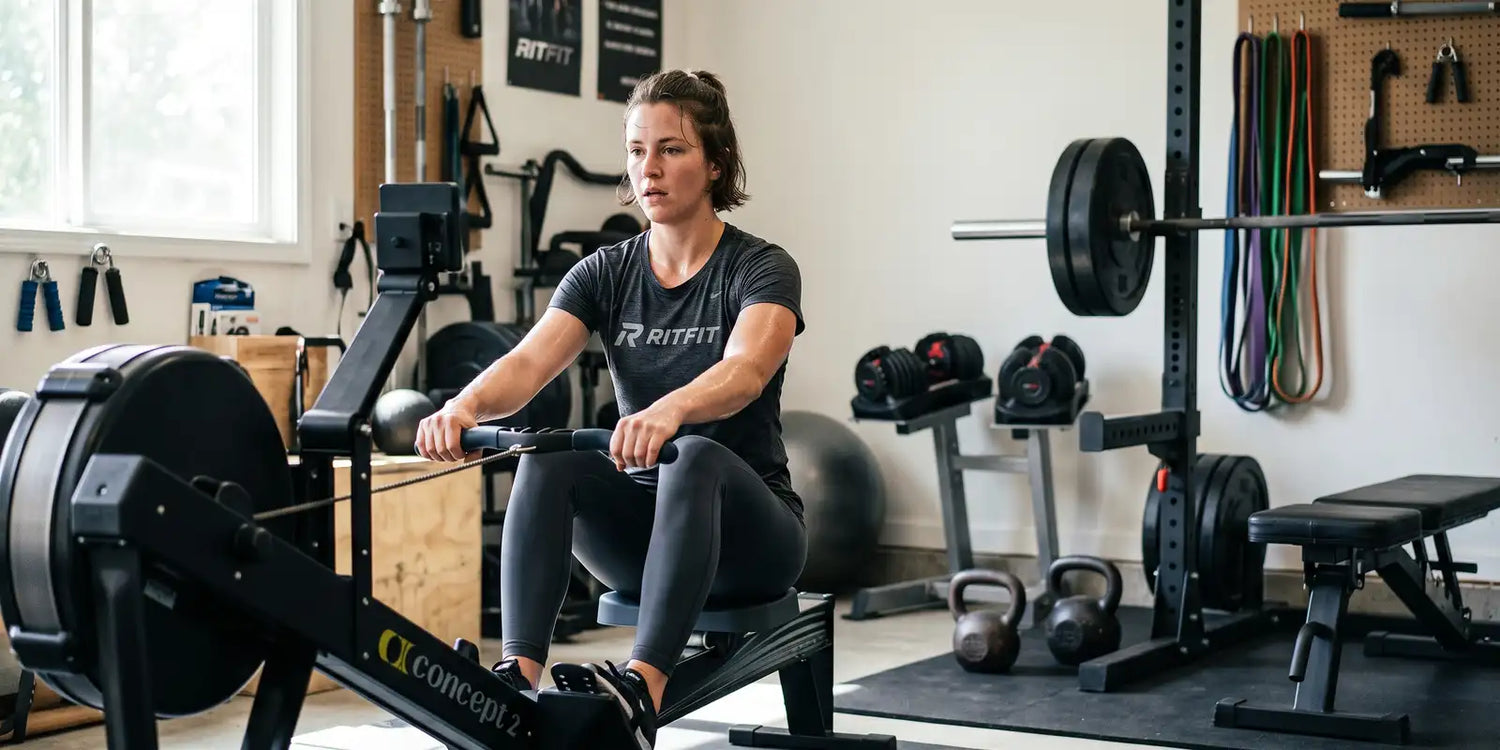
- Machine based cardio: Rowers, bikes, and treadmills let you track time, intensity, and progress with ease.
- Interval circuits: Alternating harder and easier intervals keeps sessions efficient and engaging.
Choose tools that match your space and goals, then focus on showing up regularly to let adaptations build.
FAQs About Cardiac Fitness
What is cardiac fitness in simple terms?
Cardiac fitness, more accurately called cardiorespiratory or cardiovascular fitness, is how efficiently your heart, lungs, and blood vessels deliver oxygen to your muscles during sustained activity. Better cardiac fitness means you can walk, climb stairs, or exercise longer before feeling tired, because your body keeps supplying the oxygen your working muscles need.
How is cardiac fitness measured?
The gold-standard measure is VO2 max, the maximum oxygen your body uses during hard exercise, expressed in milliliters per kilogram per minute. Practical at-home indicators include resting heart rate, how quickly your heart rate drops after exercise, and how easily you handle brisk activity. Fitness trackers and treadmill tests can estimate these values for everyday use.
What is a good VO2 max?
VO2 max varies widely by age, sex, and training. Commonly cited ranges put sedentary adults around 25 to 30 milliliters per kilogram per minute, while elite endurance athletes often exceed 70. Rather than chasing one number, most people benefit from tracking improvement over time, since even modest gains in aerobic capacity are linked with meaningful health benefits.
How can a beginner improve cardiac fitness?
Start with 10 to 15 minutes of moderate aerobic activity such as brisk walking, cycling, or rowing, then gradually add minutes or intensity each week. National guidelines suggest about 150 minutes of moderate activity weekly. Mixing in short bursts of higher-intensity intervals can further boost aerobic capacity once you have built a comfortable base.
Is cardiac fitness the same as heart health?
They are closely related but not identical. Cardiac fitness describes your performance capacity, how well your cardiovascular system delivers oxygen during exercise, while heart health refers to the absence of disease. Improving cardiorespiratory fitness is associated with lower mortality risk, but if you have a diagnosed heart condition, talk with a qualified healthcare professional before starting a program.
Conclusion
Cardiac fitness is your cardiorespiratory system's ability to deliver oxygen during sustained effort, and it is one of the most trainable and health relevant qualities you can build. Measure it with VO2 max and heart rate, then improve it with consistent aerobic work.
If you are new, start with short daily sessions and progress toward weekly guidelines. Anyone with a diagnosed condition should consult a qualified professional first.
References
1. Weeldreyer NR, De Guzman JC, Allen JD, Gaesser GA, Angadi SS. Cardiorespiratory fitness, body mass index and mortality: a systematic review and meta-analysis. Br J Sports Med. 2024;59(5):e108748. https://pmc.ncbi.nlm.nih.gov/articles/PMC11874340/
2. Gonzales TI, Westgate K, Strain T, et al. Cardiorespiratory fitness assessment using risk-stratified exercise testing and dose-response relationships with disease outcomes. Sci Rep. 2021;11(1):15315. https://pmc.ncbi.nlm.nih.gov/articles/PMC8319417/
3. Vainshelboim B, Myers J, Matthews CE. Non-exercise estimated cardiorespiratory fitness and mortality from all-causes, cardiovascular disease, and cancer in the NIH-AARP diet and health study. Eur J Prev Cardiol. 2022;29(4):599-607. https://pmc.ncbi.nlm.nih.gov/articles/PMC8489355/