LISS stands for low-intensity steady-state cardio, a continuous aerobic workout performed at an easy, sustainable effort. This guide explains what a LISS workout is, how it works in your body, and how to start one safely.
You will learn the target heart-rate zone, real session examples, an honest LISS vs HIIT comparison, and a simple way to progress at home.
Quick Answer: A LISS workout is low-intensity steady-state cardio, a continuous aerobic session such as brisk walking or easy cycling held at roughly 50 to 65 percent of your maximum heart rate for 30 to 60 minutes. You should be able to hold a full conversation throughout the effort.
Key Takeaways
- Definition: LISS is low-intensity steady-state cardio, a continuous, easy-effort aerobic session usually lasting 30 to 60 minutes.
- Effort: Aim for roughly 50 to 65 percent of your maximum heart rate, an effort where you can still hold a conversation.
- Fuel: LISS relies heavily on fat as fuel, which makes it a useful tool alongside a sensible calorie plan.
- LISS vs HIIT: Neither is universally better, HIIT saves time while LISS is gentler and easier to sustain.
- Best for: Beginners, recovery days, and endurance building, thanks to its low impact and low injury risk.
What Is a LISS Workout?
A LISS workout is a session of low-intensity steady-state cardio, meaning you perform continuous aerobic activity at an easy to moderate effort that stays constant from start to finish. The pace is one you could comfortably hold for 30 to 60 minutes.
- Low intensity: Your effort stays modest, never reaching the breathless zone of sprints or intervals.
- Steady state: Your heart rate and pace remain stable rather than spiking and recovering.
- Common forms: Brisk walking, easy cycling, light jogging, swimming, or rowing.
It is the opposite of high-intensity interval training, where short hard bursts alternate with recovery. If you have seen a treadmill "fat-burning zone" label, that setting is essentially LISS.
How Does LISS Cardio Work in Your Body?
LISS works by keeping you in an aerobic state where your body has enough oxygen to use fat as a primary fuel source. Because the effort is low, your muscles can rely on fat oxidation rather than burning quickly through stored glycogen.
In one controlled trial, low-intensity exercise at 50 watts reached the maximal whole-body fat oxidation rate, and during 60 minutes about 13.5 g of fat was metabolized, roughly 57 percent more than during a harder incremental workout.[1]
- Aerobic system: Steady, oxygen-rich effort trains your heart, lungs, and mitochondria over time.
- Fuel source: Lower intensity shifts your body toward fat for energy rather than glycogen.
- Low stress: The gentle load means less strain on joints and an easier recovery afterward.
Remember that burning fat as fuel during a session is not the same as overall fat loss, which still depends on your total energy balance. To put this in context, see our guide on how many calories to burn a day for fat loss.
What Heart Rate and Duration Define LISS?
LISS sits at roughly 50 to 65 percent of your maximum heart rate, sustained continuously for about 30 to 60 minutes. A practical gauge is the talk test, where you should be able to speak in full sentences without gasping.
- Target zone: About 50 to 65 percent of max heart rate, often called zone 2 by heart-rate trainers.
- Session length: Usually 30 to 60 minutes, since the low effort lets you keep going longer.
- Talk test: If full sentences feel hard, slow down until conversation is easy again.
You do not need to obsess over hitting an exact number, as consistency matters more than precision here.
"I am not as fond of zone 2 exercise as some other folks are. I don't certainly don't think it's bad, it is good for you. I just don't think you need to be that worried about what exact zone you're in."
Andy Galpin, PhD, Professor of Exercise Science, Parker University
To make steady sessions repeatable at home, a reliable machine helps, so review the best cardio machine for weight loss at home.
Which LISS Workouts Can You Start Today?
You can start LISS today with almost any continuous, low-effort cardio you enjoy, from brisk walking to easy cycling. The best LISS workout is simply the one you will repeat consistently at a conversational pace.
- Brisk walking: The simplest option, indoors on a treadmill or outdoors, ideal for beginners.
- Easy cycling: Low impact and joint friendly, on a stationary bike or flat road.
- Steady rowing: Full-body engagement at a relaxed, repeatable stroke rate.
- Swimming or elliptical: Gentle on the joints while keeping your heart rate steady.
The follow-along treadmill session below shows what a sustained LISS effort feels like in practice.
A treadmill makes walking-based LISS easy in any weather, so compare options in our roundup of the best treadmill for home. Stay hydrated across longer sessions with a RitFit water bottle.
LISS vs HIIT: Which Should You Choose?
Choose LISS when you want a gentle, sustainable session, and choose HIIT when you want to save time and push intensity. Neither is universally better, so the right pick depends on your goals, schedule, and recovery capacity.
| Factor | LISS | HIIT |
|---|---|---|
| Intensity | Low and steady | High bursts with recovery |
| Time needed | 30 to 60 minutes | 15 to 25 minutes |
| Joint impact | Low, easy recovery | Higher, more fatigue |
| Best for | Beginners, endurance, recovery | Busy schedules, conditioning |
Typical session characteristics for steady-state cardio compared with high-intensity interval training.
Many people get the best results by blending both across the week. For the interval side, see our HIIT for lifters fat-loss and conditioning guide and our breakdown of what is a Tabata workout.
If you want another conditioning format to weigh up, our metcon workouts guide covers a different style.
What Are the Benefits and Limits of LISS?
The main benefit of LISS is that it builds aerobic fitness and cardiometabolic health with very low injury risk, making it easy to sustain. Its main limit is that it takes more time to burn the same calories as higher-intensity training.
A systematic review and meta-analysis of 50 studies, with 824 participants in the intervention groups, found that low-intensity endurance training produced a large effect on relative VO2max and a moderate effect on the first ventilatory threshold.[2]
- Gentle on joints: Low impact suits beginners, heavier individuals, and recovery days.
- Easy to sustain: Lower perceived effort supports long-term consistency and adherence.
- Time cost: Sessions are longer, so calorie burn per minute is lower than HIIT.
- Plateau risk: Doing only LISS can stall progress, so variety still matters.
For machine-based steady sessions, our list of the best exercise machines for fat loss and core strength can help you pick equipment.
How Do You Build and Progress a LISS Routine?
Build a LISS routine by starting with two to three short sessions per week, then adding duration before adding intensity. Progress gradually so the effort stays low while your endurance improves over the weeks.
How often should you do LISS?
Beginners can start with two to three sessions of 30 to 45 minutes, and because LISS is low stress you can do it more often than HIIT, even on lifting rest days.
How do you progress safely?
A study found that low-intensity exercise below 2.0 mmol per liter blood lactate, for at least 1 hour twice a week over 4 weeks, improved recovery ability and endurance in adults and suited beginners due to very low injury risk.[3]
What mistakes should you avoid?
- Going too hard: Drifting into a breathless pace turns LISS into moderate cardio and hurts recovery.
- Skipping progression: Never adding time or variety can lead to a fitness plateau.
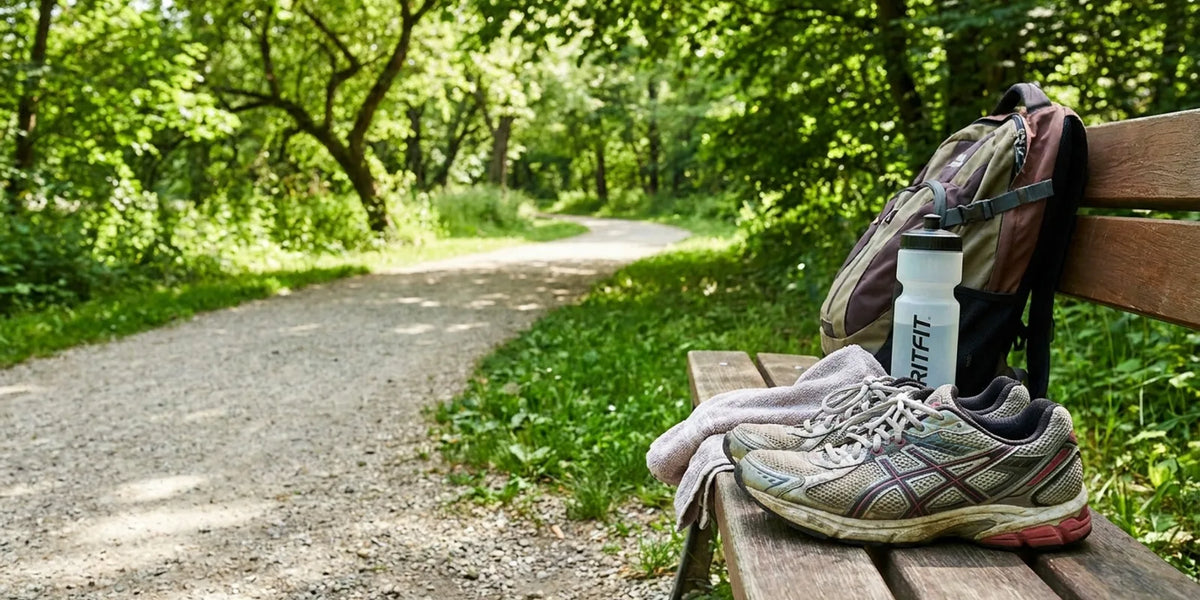
- Ignoring comfort: Poor footwear or setup makes long sessions harder to repeat.
When should you stop or back off?
Stop or ease off if you feel chest pain, dizziness, or unusual shortness of breath, and check with a clinician before starting if you have a health condition.
Use LISS as active recovery between hard days, and support it with tools from our maximize your workout recovery with a roller stick guide and the wider range in our RitFit training accessories collection.
FAQs About LISS Workouts
What does LISS stand for?
LISS stands for low-intensity steady-state cardio.
It means doing continuous aerobic activity, such as walking or easy cycling, at a low to moderate effort for an extended period.
Your pace and heart rate stay steady throughout the session rather than spiking and dropping the way they do during interval training.
What heart rate should you aim for during LISS?
Most guidance places LISS at roughly 50 to 65 percent of your maximum heart rate, an effort you can comfortably hold for 30 to 60 minutes.
A simple check is the talk test, where you should be able to carry on a conversation in full sentences.
If you are gasping for breath, you have drifted out of the LISS zone.
Is LISS or HIIT better for fat loss?
Neither is clearly better, and the right choice depends on your goals and recovery capacity.
HIIT burns more calories in less time and creates a larger afterburn, while LISS is gentler on joints, easier to sustain, and relies more on fat as fuel.
Many people get the best results by combining both across the week.
How often should you do LISS cardio?
Beginners can start with two to three LISS sessions per week of 30 to 45 minutes each, then add time before adding intensity. Because LISS places low stress on the body, you can do it more frequently than HIIT, and many people use it on rest days from lifting as easy active recovery without hurting their next workout.
Can beginners start with LISS?
Yes.
LISS is one of the most beginner-friendly forms of cardio.
The low intensity and low impact make it easy on the joints and simple to sustain, which helps build a consistent habit.
Start with brisk walking for 20 to 30 minutes, keep the effort conversational, and gradually extend the duration as your fitness improves.
Conclusion
LISS is a low-intensity, steady-state cardio session that builds aerobic fitness with minimal joint stress and easy recovery. It is one of the most approachable ways to start moving consistently.
Begin with two to three conversational-pace sessions per week, add duration before intensity, and blend in higher-intensity work as you progress. Browse the RitFit sales page for equipment that supports a balanced, sustainable routine.
Disclaimer
This article is for general educational purposes only and is not medical advice. Consult a qualified healthcare professional before starting any new exercise program, especially if you have an existing health condition.
References
1. Liepinsh E, Makarova E, Plakane L, et al. Low-intensity exercise stimulates bioenergetics and increases fat oxidation in mitochondria of blood mononuclear cells from sedentary adults. Physiological Reports. 2020;8(12):e14489. PMCID: PMC7305243
2. Nuuttila OP, Matomäki P, Raitanen J, Sievänen H, Vasankari T. Effects of Low-Intensity Endurance Training on Aerobic Fitness and Risk Factors of Cardiometabolic Health in Working-Age Adults: A Systematic Review and Meta-Analysis. Scandinavian Journal of Medicine & Science in Sports. 2026;36(1):e70208. PMCID: PMC12810095
3. Lee D, Son JY, Ju HM, Won JH, Park SB, Yang WH. Effects of Individualized Low-Intensity Exercise and Its Duration on Recovery Ability in Adults. Healthcare (Basel). 2021;9(3):320. PMCID: PMC7999698