No single workout melts fat off only your midsection. The honest, science-backed answer is that belly fat shrinks when you combine a sustained caloric deficit with total-body training and core strengthening, then let genetics decide where the fat leaves first.
This guide breaks down what actually works, which evidence to trust, and how to build a weekly plan you can start this week using free or home-gym equipment.
Table of Contents
- Can specific workouts target belly fat?
- What the science actually says about spot reduction
- Why total body fat loss is the only path
- Best workouts that burn overall body fat
- Why core training still matters
- How to build a weekly belly fat workout plan
- Common mistakes that stall progress
- When to expect visible results
Key Takeaways
- Spot reduction is largely a myth: specific ab routines do not preferentially burn belly fat in any meaningful way.
- Calorie deficit drives fat loss: consistent nutrition combined with training is what actually shrinks the midsection over time.
- Combined training wins: a meta-analysis of 43 trials showed aerobic plus resistance training reduced abdominal fat the most.
- Core work shapes the muscle underneath: stronger abs improve posture and tone, which shows once body fat drops.
- Patience beats hacks: expect eight to twelve weeks of consistent effort before belly fat visibly shrinks.
Can specific workouts target belly fat?
No, specific workouts cannot preferentially burn fat from your belly. Fat is mobilized from storage sites throughout the body based on hormones and genetics, not on which muscle happens to be working underneath, so crunches and ab machines train the muscle but do not selectively empty the fat layer on top.
This is also why two people doing identical routines can lose fat from different areas first, and why the same person often holds onto lower-belly fat longer than any other site.
"There is research showing that exercise can reduce visceral fat without actually causing weight loss. So it is a good idea to exercise in general, but specific exercises are not going to target preferentially belly fat. The real key to losing belly fat is just getting into a caloric deficit consistently and doing it for long enough."
Layne Norton, PhD, BioLayne
Pair that deficit with a structured plan and the right equipment, like the adjustable dumbbells collection, and you have everything needed to train the whole body hard enough to force fat loss.
What the science actually says about spot reduction
The spot reduction evidence is genuinely mixed, but never strong enough to justify endless ab work as a belly fat strategy. The few positive trials show a tiny site-specific effect only when ab training is layered on top of matched aerobic exercise, not as a standalone approach.
- Modest positive signal: one 10-week trial in 16 overweight men found that adding abdominal endurance work (torso rotation and crunches at 30 to 40 percent of 1RM, four days per week) to treadmill running reduced 697 g more trunk fat than treadmill running alone, when energy expenditure was matched.[1]
- Inconsistent across sites: an 8-week mixed circuit study in 14 adults reduced subcutaneous abdominal fat but produced no change at the triceps site, suggesting any localized effect is small and unreliable.[2]
- Decades of null findings: most earlier studies using isolated ab exercises alone showed no meaningful localized fat loss, which is why mainstream sports science organizations, including ACSM, treat spot reduction as ineffective in practice.
Read together, these findings justify training the whole body rather than chasing the myth of targeted belly fat loss.
Why total body fat loss is the only path
If you cannot spot-reduce, the only reliable way to shrink belly fat is to lower total body fat through a sustained caloric deficit plus training that burns calories and preserves muscle. As total fat drops, the belly follows, even if it is the last area to lean out.
A meta-analysis of 43 randomized trials enrolling 3,552 subjects confirmed that aerobic training, resistance training, and combined training all significantly reduced subcutaneous abdominal fat versus control, with combined aerobic plus resistance training producing the largest reduction of about 28.82 cm2.[3]
For more on related approaches, our guide to the best exercises to lose belly fat and our analysis of whether walking on a treadmill every day burns belly fat go deeper on individual modalities.
Best workouts that burn overall body fat
The best belly fat workout is the one that maximizes weekly energy expenditure while preserving or building muscle. Three modalities do this well, and combining them outperforms any single one.
Aerobic training
Steady-state cardio at 60 to 75 percent of maximum heart rate, such as brisk walking, easy cycling, or jogging, burns calories reliably and is easy to recover from. Two to three 30 to 45 minute sessions per week fit most schedules and require no equipment beyond supportive shoes.
Resistance training
Compound lifts like squats, deadlifts, presses, and rows build muscle that raises resting metabolic rate and forces the body to spare muscle while dieting. The meta-analysis cited above found resistance training alone reduced subcutaneous abdominal fat by an average of 5.39 cm2, and combined training roughly doubled that effect.[3]
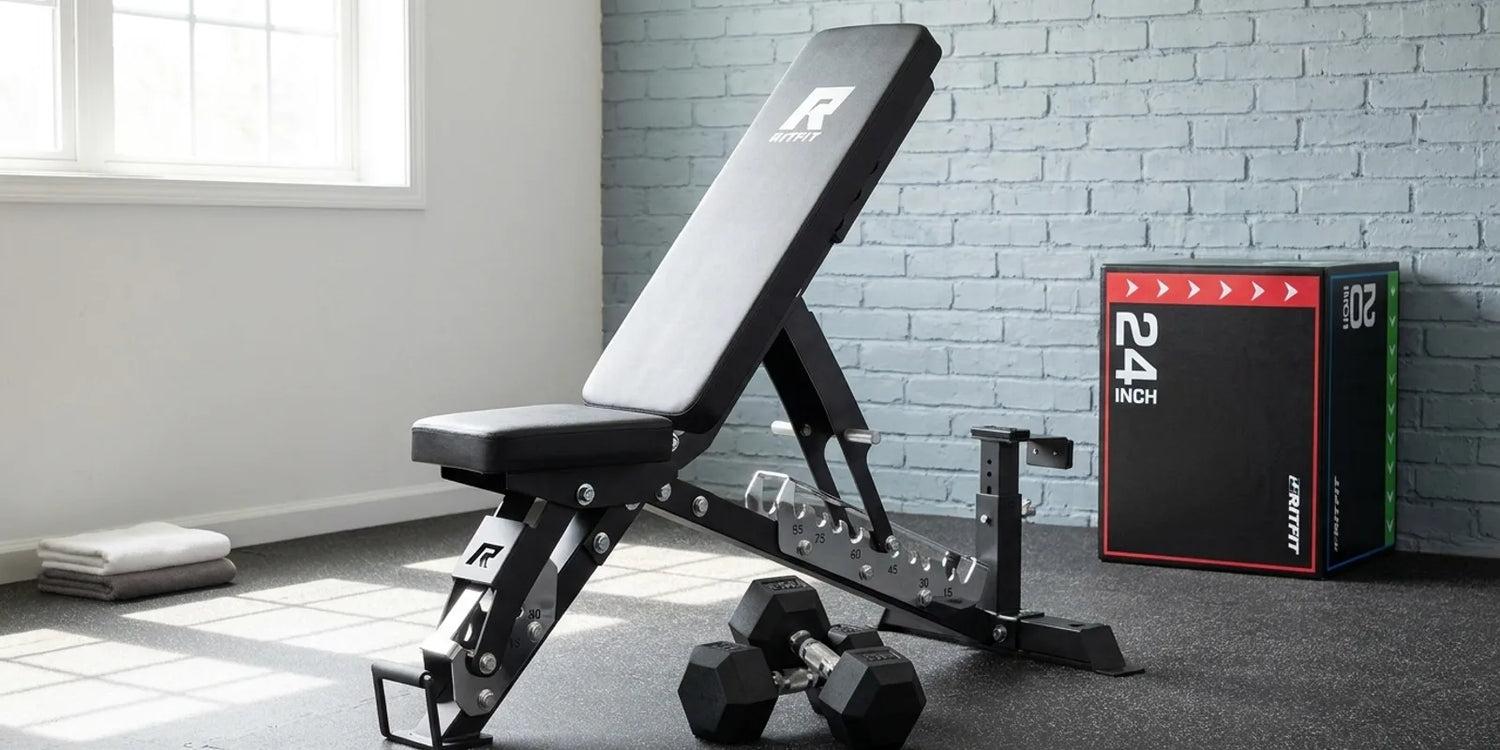
Beginners can run full-body sessions three times per week using a simple setup like the RitFit 1300lb Adjustable Weight Bench with dumbbells, then progress to barbell lifts as strength improves. Use our guide to choosing dumbbell weight to set a sensible starting load.
HIIT
High-intensity interval training alternates short, hard efforts with recovery periods and may produce a modest additional effect on visceral fat. One to two sessions per week is plenty, and protocols like the Tabata workout or a structured HIIT routine on cardio equipment keep sessions short enough to repeat.
Beginners should build an aerobic base for four to six weeks before adding true HIIT. For a higher-volume conditioning alternative, our Metcon workouts guide blends strength and intervals in a single session.
Why core training still matters
Core training does not burn belly fat directly, but it strengthens the muscles that define the midsection once body fat drops. Stronger transverse abdominis, obliques, and rectus abdominis improve posture, support heavy compound lifts, and create the toned look most people are actually chasing.
Pick two or three anti-extension and anti-rotation exercises such as planks, dead bugs, Pallof presses, and hanging knee raises, and progress them like any other lift by adding reps, sets, or load over time.
Follow along with a real routine like the standing core session below to see how bodyweight ab work fits into a fat-loss week.
Equipment-based options like a cable machine for core and belly fat work or a bench-based ab routine let you overload the movement progressively.
How to build a weekly belly fat workout plan
A balanced weekly plan combines three resistance sessions, two cardio sessions, and one optional HIIT session, with at least one full rest day. This structure matches the combined training approach that produced the largest abdominal fat reduction in the meta-analysis cited above.
| Day | Session | Notes |
|---|---|---|
| Monday | Full-body resistance | Squat, bench, row, 3 sets of 8 to 12 reps |
| Tuesday | Steady cardio | 30 to 45 minutes at 60 to 75 percent HRmax |
| Wednesday | Full-body resistance | Deadlift, overhead press, pull-up, 3 sets of 6 to 10 reps |
| Thursday | Core plus walk | Plank, dead bug, Pallof press plus 30 minute walk |
| Friday | Full-body resistance | Lunge, push-up, row, 3 sets of 10 to 15 reps |
| Saturday | Optional HIIT | 15 to 20 minutes, 8 to 10 hard intervals |
| Sunday | Rest or easy walk | Sleep, mobility, meal prep |
Progressive overload is non-negotiable. Add small weight jumps every one to two weeks, log your sessions, and aim for 8,000 to 10,000 daily steps to keep non-exercise activity high while in a deficit.
Common mistakes that stall progress
Most belly fat plans stall for predictable reasons. Spotting them early keeps results coming and prevents injuries that can sideline training for weeks.
- Endless ab reps instead of compound lifts: hundreds of crunches burn few calories and do not target belly fat, while squats and rows build muscle and burn far more energy per minute.
- Ignoring nutrition: training cannot out-train a surplus calorie intake. Track food for one week to establish a true baseline, then aim for a 300 to 500 calorie daily deficit.
- Skipping progressive overload: using the same weight for months removes the stimulus for muscle growth and metabolic change. Increase load, reps, or sets every one to two weeks.
- Overtraining with daily HIIT: more than three HIIT sessions per week raises injury risk, suppresses recovery, and often leads to burnout. Cap true HIIT at one to two sessions.
- Training through sharp lower-back pain: soreness is normal, but sharp, radiating, or persistent back pain is a stop signal. Deload, swap exercises, and consult a professional if it persists beyond a few days.
When to expect visible results
Visible belly fat loss usually takes eight to twelve weeks of consistent training and nutrition. The first changes are often in face, arms, and chest, with the lower belly among the last sites to lean out, especially for people genetically predisposed to store fat there.
Track progress with waist measurements, progress photos, and how clothes fit, since the scale can stall while body composition improves. Reassess every four weeks and adjust calories or training volume if results plateau for two or more cycles.
Pair this patience with a realistic weekly plan, and the same physics that produced the meta-analysis results above will work for you.
FAQs About What Workouts Target Belly Fat
Can I lose only belly fat with the right workout?
No. Spot reduction as a meaningful strategy has been debunked for decades. A few small trials show a tiny site-specific effect when ab work is added to matched aerobic training, but the bulk of evidence says you lose fat across your whole body in a caloric deficit, and genetics decide where it leaves first.
Do crunches and sit-ups burn belly fat?
Not directly. Crunches strengthen the rectus abdominis and obliques, which can improve muscle tone and posture, but they burn very few calories. Pair them with total-body training and a calorie deficit so the fat covering those muscles can actually shrink.
What is the single best workout for losing belly fat?
There is no single best workout. A meta-analysis of 43 trials found that combined aerobic plus resistance training reduced subcutaneous abdominal fat the most. Pick modalities you can stick with three to five times per week and run them alongside a sustainable caloric deficit.
How often should I train to reduce stomach fat?
Three to five sessions per week is a solid target for most adults. Blend two to three resistance sessions with two to three cardio or HIIT sessions, keep daily steps high, and repeat for at least eight to twelve weeks before judging progress.
Does HIIT target belly fat better than steady cardio?
Both reduce overall body fat when calories are matched, but HIIT is time efficient and may modestly favor visceral fat reduction. Use HIIT one to two times per week and steady cardio for the rest, especially if you are a beginner or returning from a layoff.
Will core training make my stomach look flatter?
Yes, indirectly. A stronger transverse abdominis acts like an internal corset, improving posture and waistline appearance, while compound lifts and daily movement burn the calories that shrink the fat layer on top. Visible flatness still depends on lowering total body fat through diet and consistent training rather than endless ab reps.
How long until I see my belly shrink?
Most people notice looser clothes in four to eight weeks of consistent training plus a moderate caloric deficit of roughly 300 to 500 calories per day. Belly fat is often the last to go for men and women with a genetic predisposition to store it there, so patience matters.
Are ab machines better than bodyweight core work?
Neither is inherently better. Ab machines can add overload and variety, while bodyweight moves like planks and dead bugs train stability that carries into compound lifts. Choose based on comfort, access, and how well you can progressively overload the movement.
Conclusion
No workout targets only belly fat, and pretending otherwise wastes time you could spend on what actually works. Build a weekly plan around resistance training, aerobic work, and a sustainable caloric deficit, add core exercises to strengthen the muscles underneath, and let consistency do the rest.
Start with two full-body lifts and two cardio sessions per week, dial in protein and steps, and reassess every four weeks.
Disclaimer
This article is for general fitness education only and is not medical advice. Consult a qualified healthcare or nutrition professional before starting a new training or diet program, especially if you have any underlying condition.
References
1. Vispute SS, Sharma A, Smith JD. Abdominal aerobic endurance exercise reveals spot reduction exists. Physiological Reports. 2023;11(22):e15860. https://pmc.ncbi.nlm.nih.gov/articles/PMC10680576/
2. Paoli A, Pacelli F, Moro T, et al. Effect of an Endurance and Strength Mixed Circuit Training on Body Composition in Healthy Adults. International Journal of Environmental Research and Public Health. 2021;18(4):1554. https://pmc.ncbi.nlm.nih.gov/articles/PMC8038840/
3. Vasim I, Majeed CN, DeBoer MD. The Effect of Aerobic and Resistance Training and Combined Exercise Modalities on Subcutaneous Abdominal Fat: A Systematic Review and Meta-analysis. Advances in Nutrition. 2021;12(3):873-885. https://pmc.ncbi.nlm.nih.gov/articles/PMC7849939/