








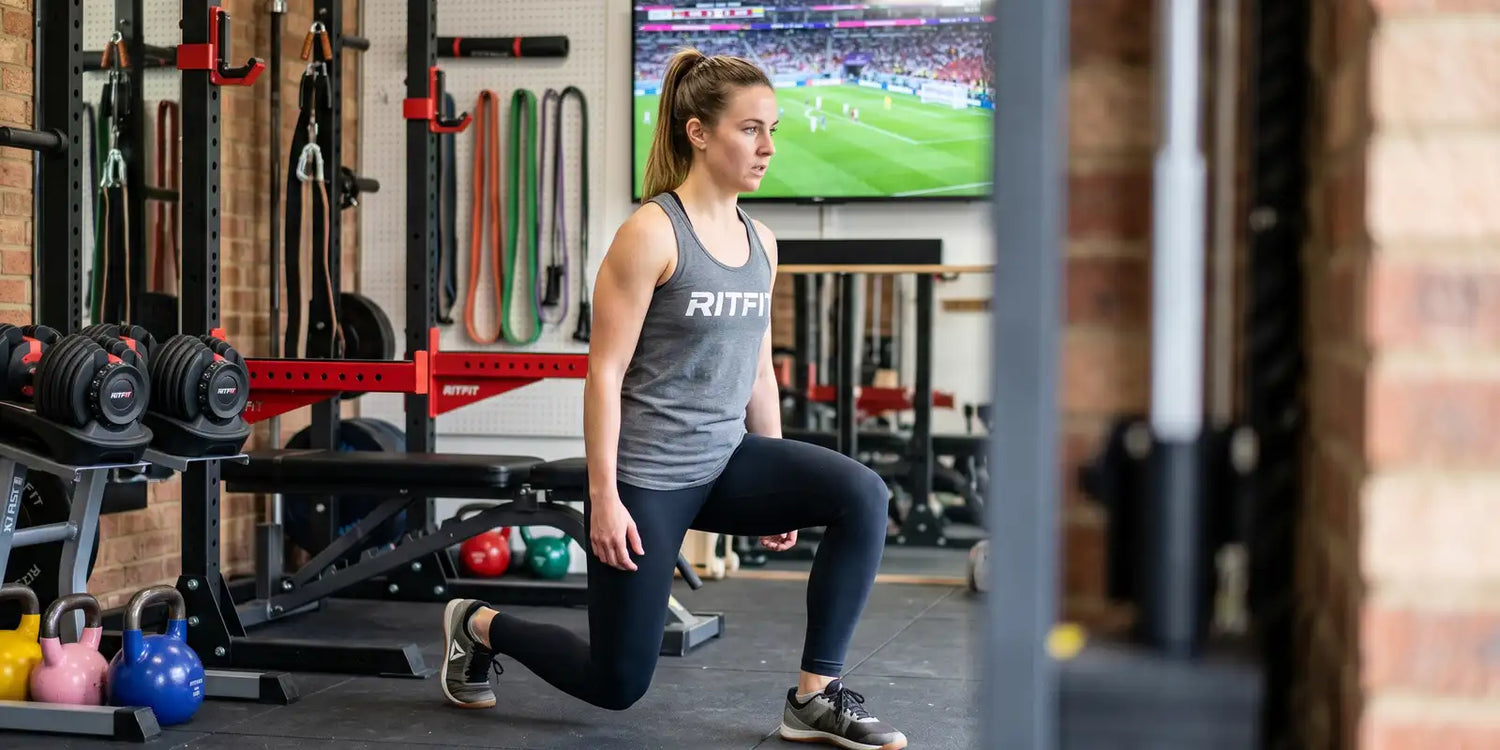
The soccer season brings dozens of high-stakes matches to screens across North America and around the globe. This independent guide turns match day viewing into an engaging bodyweight fitness challenge that breaks up prolonged sedentary screen time.
Goals, referee cards, substitutions, and video reviews serve as active prompts for quick bodyweight movements without missing match action. Learn how to select your difficulty tier, maintain proper form, and train safely in your living room.
Quick Answer: A match day fitness challenge pairs common soccer events like goals, cards, and corner kicks with brief bodyweight exercises during broadcast pauses. Participants choose one difficulty tier before kickoff, follow strict repetition caps per match, and stop each set as soon as live gameplay resumes to maintain safe, active viewing.
Key Takeaways
- Active Viewing Prompts: Predictable soccer match stoppages such as goals, fouls, and corner kicks trigger short sets of bodyweight exercises.
- Pre-Kickoff Tier Selection: Choosing easy, medium, or hard tiers before kickoff ensures balanced training volume across ninety minutes.
- Per-Match Volume Caps: Strict repetition limits prevent excessive physical fatigue during event-dense matches with frequent referee whistles.
- Minimal Equipment Needed: The routine relies on bodyweight squats, lunges, push-ups, and planks in a clear home space.
- Independent Educational Resource: This training guide is purely educational and holds no official affiliation with soccer tournament organizers or broadcast networks.
Why Is Match Day Viewing a Great Movement Opportunity?
Match day viewing provides predictable breaks in play that make interrupting prolonged sitting practical and effective. Research links excessive sedentary screen time to elevated cardiovascular risks, making regular movement pauses beneficial for overall wellness.[1]
- Prolonged Seated Time: Pregame shows, ninety minutes of match play, and halftime commentary frequently keep fans seated for hours.
- Natural Broadcast Pauses: Whistles, VAR reviews, substitutions, and corner kicks provide twenty to forty seconds of natural active windows.
- Intermittent Conditioning: Short bodyweight sets improve blood flow and elevate energy levels without interfering with game enjoyment.
Pairing your viewing with light activity transforms passive entertainment into a healthier routine. Explore the coordination in fitness guide to understand how balance drills support daily athleticism.
What Are the Core Rules of the Match Day Challenge?
The core rules require selecting one difficulty tier before kickoff and performing one set per qualifying match event. Scientific evaluations show that managing work duration and recovery intervals is essential for controlling physiological strain during high-intensity training.[2]
- One Event Equals One Set: Perform only one exercise set per event, regardless of which team triggers the stoppage.
- No Set Stacking: If multiple fouls occur in rapid succession, perform one set and skip the rest to avoid fatigue.
- Immediate Play Stoppage: Conclude your exercise set immediately when live gameplay resumes to ensure safe, distraction-free movement.
- Respect Daily Limits: Stop performing a specific movement once you reach its designated per-match volume cap.
Keeping training bouts short and controlled prevents joint strain while maintaining high movement quality throughout the broadcast.
Which Game Events Trigger Each Bodyweight Exercise?
Specific soccer events correspond to distinct bodyweight movements with predetermined repetition targets across three difficulty tiers. Table guidelines outline exact repetition counts and maximum volume caps to keep training structured and safe.
| Game Event | Bodyweight Exercise | Easy Tier | Medium Tier | Hard Tier | Per-Match Cap |
|---|---|---|---|---|---|
| Goal Scored | Bodyweight Squats | 5 reps | 8 reps | 12 reps | 36 reps |
| Yellow Card | Incline Push-Ups | 3 reps | 6 reps | 10 reps | 30 reps |
| Corner Kick | Reverse Lunges | 3 reps/leg | 5 reps/leg | 8 reps/leg | 32 reps/leg |
| Offside Call | Jumping Jacks | 10 reps | 15 reps | 20 reps | 100 reps |
| Penalty Awarded | Burpees | 2 reps | 3 reps | 5 reps | 12 reps |
| Player Substitution | High Knee March | 20 steps | 30 steps | 40 steps | 160 steps |
| Video Review (VAR) | Wall Sit Hold | 15 seconds | 25 seconds | 35 seconds | 3 holds |
| Red Card Issued | Plank Hold | 15 seconds | 25 seconds | 35 seconds | 2 holds |
Exercise volume limits prevent excessive fatigue during unusually stop-and-start soccer fixtures.
When an exercise hits its maximum cap, substitute remaining triggers with gentle walking in place. Learn about explosive movement scaling in our burpee fitness guide for safer conditioning.
How Do You Execute Key Bodyweight Moves With Proper Form?
Executing bodyweight movements with strict form protects joints and maximizes muscular activation across every short set. Research confirms that functional bodyweight drills generate substantial cardiovascular and muscular recruitment when performed with deliberate control.[3]
Bodyweight Squat Technique
Stand with feet shoulder-width apart, brace your core, and push your hips back while keeping your chest upright. Drive through your midfoot to return to a full standing position without letting your knees cave inward.
Incline Push-Up Technique
Place your hands slightly wider than shoulder-width on an elevated surface like a bench or countertop. Lower your chest with control while maintaining a rigid torso line from head to heels.
Reverse Lunge Technique
Step backward with one foot, lowering your back knee smoothly toward the floor while keeping your front shin vertical. Press firmly through the front heel to return to the starting position.
High Knee March and Plank Holds
Drive your knees upward toward hip level while maintaining an upright posture and rhythmic breathing. For planks, engage your glutes and core while supporting your weight on forearms and toes.
Mastering basic calisthenics builds foundational strength that transfers directly to dedicated home gym training sessions. For structured progression, try our RitFit M1 21 day challenge program.
How Can You Scale the Workout Safely Across Difficulty Tiers?
Scaling the challenge requires selecting a difficulty tier that matches your current conditioning level without causing form breakdown. Choosing conservative volume targets ensures you can complete multiple sets throughout ninety minutes while avoiding excessive muscular soreness.
- Easy Tier for Beginners: Complete the lowest rep ranges, utilize elevated push-up surfaces, and optionally participate only during the first half.
- Medium Tier for Regular Exercisers: Tackle moderate rep targets with strict tempo control and standard floor variations.
- Hard Tier for Advanced Athletes: Utilize maximum repetitions and deeper ranges of motion only after testing easier tiers successfully.
- Joint-Friendly Adaptations: Swap jumping jacks for step jacks and standard lunges for supported split squats to minimize knee impact.
Review our comprehensive jumping jacks conditioning analysis to understand calorie burn and impact considerations.
How Do You Set Up a Safe Living Room Training Space?
A safe living room training area requires at least one body length of clear floor space in all directions free of obstacles. Stable foot placement and clear sightlines protect against accidental slips or collisions while your focus alternates between exercise and match play.
- Clear Floor Hazard Zones: Move coffee tables, loose rugs, beverages, and electronic cables out of your designated movement perimeter.
- Use Sturdy Support Surfaces: Rely on immovable walls, heavy sofas, or certified fitness equipment rather than lightweight rolling chairs.
- Maintain Proper Traction: Wear supportive athletic shoes or train barefoot on a clean, non-slip training mat.
- Dedicated Equipment Integration: Keep dedicated gear like the RitFit limited edition soccer collection items and supportive home fitness accessories within easy reach.
- Stretching and Support: Use plush RitFit soccer towels for sweat management and floor cushioning during core holds.
If you want to transition from living room bodyweight workouts to dedicated strength routines, explore our versatile workout benches collection and detailed weight bench workout guide.
FAQs About Match Day Fitness Challenges
What exercises work best during a soccer match watch party?
Bodyweight movements that require minimal setup and allow immediate stopping work best during live sports viewing. Squats, incline push-ups, reverse lunges, marching in place, wall sits, and planks allow quick transitions without losing track of broadcast action or crowding family and friends in living rooms.
How many calories does a match day fitness challenge burn?
Total calorie expenditure depends on individual body weight, movement tempo, chosen difficulty tier, and the frequency of referee whistles during the game. Rather than treating this as a precise calorie-burning session, view the challenge as a practical strategy to interrupt prolonged sedentary time while enjoying live entertainment.
Do I need specialized fitness equipment for this match challenge?
No dedicated equipment is mandatory for the standard match day routine because all exercises rely on your own body weight. A stable wall, sturdy couch, or elevated countertop provides sufficient support for modified movements, while dedicated mats and towels enhance floor comfort during extended core holding drills.
Is this watch party workout appropriate for complete beginners?
Yes, beginners can safely participate by selecting the easy tier, performing modified exercise variations, and limiting activity to the first forty-five minutes of play. Always prioritize smooth, controlled execution over speed, take full advantage of natural broadcast breaks, and stop immediately if you experience dizziness or joint discomfort.
What should I do when multiple game events happen back-to-back?
When several fouls, cards, or corner kicks occur within a short window, execute only one single set and ignore the remaining triggers. Stacking multiple exercise sets during rapid play creates unnecessary fatigue, compromises proper movement mechanics, and increases the risk of tripping over nearby living room furniture.
Can short movement breaks during sports broadcasts improve fitness?
Yes, accumulating short bursts of physical activity throughout a ninety-minute soccer broadcast helps counteract the negative health impacts of continuous sitting. Regular movement promotes circulation, stimulates major muscle groups, and helps build lasting daily activity habits when paired with consistent weekly structured resistance and cardiovascular training programs.
Conclusion
The match day fitness challenge offers an enjoyable method to stay active while supporting your favorite soccer teams with friends and family. Choosing an appropriate difficulty tier, honoring repetition caps, and maintaining strict movement technique ensures a safe and productive viewing experience.
Take your functional conditioning to higher levels by pairing game day calisthenics with a structured strength training routine. Explore our money-saving tips in the RitFit discount guide to outfit your personal home training space affordably.
Disclaimer
This article provides general fitness education and does not constitute individualized medical or exercise advice. Consult a qualified physician before starting any new training routine, and note that RitFit has no official affiliation with any soccer tournament organizers or broadcast rights holders.
References
1. Ford ES, Caspersen CJ. Sedentary behavior and cardiovascular disease: a review of prospective studies. Int J Epidemiol. 2012;41(5):1338-1353. doi:10.1093/ije/dys078 PMCID: PMC4582407
2. Hesketh KL, Church H, Kinnafick F, et al. Evidence-based vs social media-based high-intensity interval training protocols: physiological and perceptual responses. PLoS One. 2021;16(9):e0257685. doi:10.1371/journal.pone.0257685 PMCID: PMC8480907
3. McDougle JM, Mangine GT, Townsend JR, Jajtner AR, Feito Y. Acute physiological outcomes of high-intensity functional training: a scoping review. PeerJ. 2023;11:e14493. doi:10.7717/peerj.14493 PMCID: PMC9817969





