








Self massage puts professional-grade relief within reach of your own hands, and you can do it at home, at work, or right after a workout. These 11 self massage tips for recovery and wellness target the feet, head, jaw, back, knees, glutes, forearms, IT band, neck, and shoulders with moves that take just a few minutes.
Most of these moves work with your hands alone, while a few benefit from a massage therapy ball or a foam roller. Avoid pressing into any area that is injured, swollen, or sharply painful, and ease up if a spot stays tender.
Quick Answer: Self massage relieves everyday aches and supports recovery by pressing, rolling, and kneading tight muscles and fascia with your hands, a massage therapy ball, or a foam roller. Do the move that matches your pain point for a few minutes, breathe slowly, and stop if any pressure feels sharp or makes pain worse.
Key Takeaways
- Time: Most self massage moves take under five minutes and need no equipment beyond your hands.
- Tools: A massage therapy ball and a foam roller make self massage easier and more precise.
- Technique: Use firm, slow pressure and small circles to work out knots without bruising tissue.
- Trigger points: Pressing into a tender spot for a few seconds helps release muscle tension.
- Safety: Stop any move that causes sharp or worsening pain, and avoid injured areas.
What Do You Need to Start Self Massage?
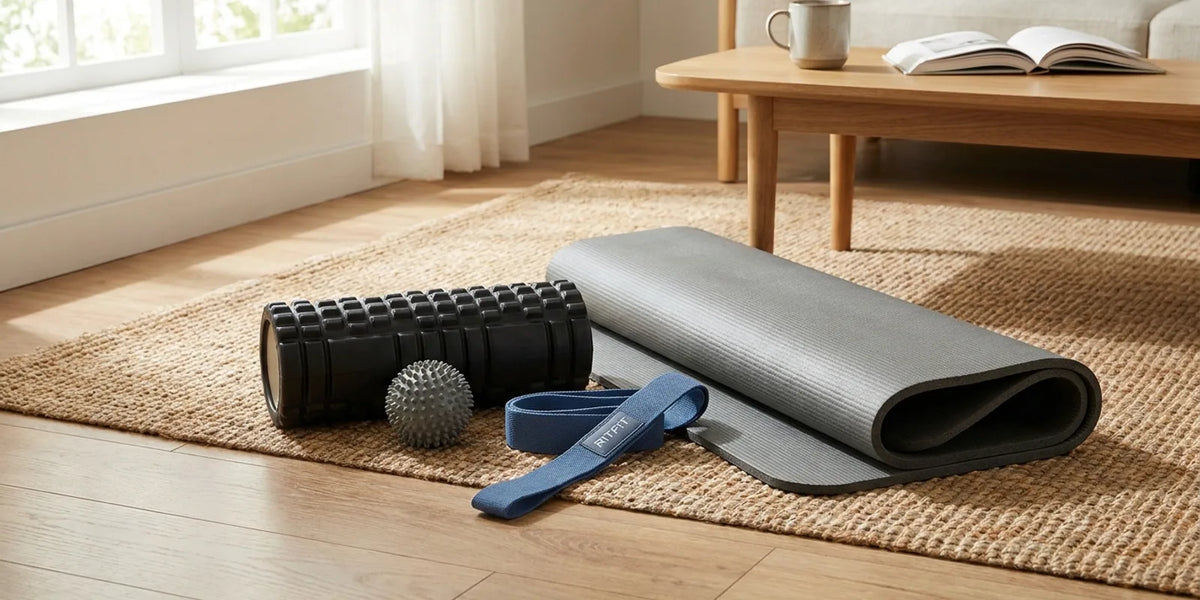
You can begin self massage with your hands alone, but a few simple tools make most moves faster and more effective. A massage therapy ball, a foam roller, and a firm surface cover nearly every technique in this guide.
Browse the recovery and mobility collection for the tools used in these tips. If you want deeper, targeted relief later, read our take on whether a massage gun is worth adding to your routine.
How Do You Massage Sore Feet at Your Desk?
Rolling a massage therapy ball under your foot relieves tired arches and heels while you stay seated. You can do the whole move under a desk without interrupting your work.
Here is how to do it.
- Place a massage therapy ball under a bare or socked foot and roll from heel to toe with firm pressure, but do not flatten the ball completely.
- When a spot feels tender, work the knot by rolling in small circles.
Need more pressure? Stand while rolling instead of sitting.
How Do You Relieve Tension Headaches with a Massage Ball?
Massaging the base of your skull with two massage therapy balls eases the tension headaches caused by craning over a screen. Poor posture often tightens the neck and head in ways that trigger these headaches.
Here is how to do it.
- Lie on your back with your legs bent.
- Hold a massage therapy ball in each hand between your thumb and forefinger, and rest your hands behind your head so the balls sit on either side of the base of your skull.
- Alternate between shaking your head side to side and tucking then lifting your chin.
How Do You Massage Lower Back Pain from PMS?
Two massage therapy balls placed under your lower back knead the tenderness and inflammation that build before and during your period. Lifting your hips presses the balls into the area where your sacrum meets your hip bone.
Here is how to do it.
- Lie on your back with your legs bent and your feet firmly planted on the ground.
- Place two massage therapy balls under your lower back around the spot where your sacrum, the triangular bone at the base of the spine, meets your hip bone.
- Raise and lower your hips to knead the area with the balls.
How Do You Loosen a Tight Jaw in the Morning?
Pressing your fingertips up under your cheekbones and along your jawline relaxes a jaw that clenches when you are stressed. Doing this right after waking or during an anxious moment eases both a sore jaw and its related headache.
Here is how to do it.
- Use the pads of your fingertips to press up under your cheekbones, starting at the apples of your cheeks.
- Open and close your mouth as you press upward.
- Work all the way back along an imaginary beard line, then press your thumb under your jawbone and pull your fingertips down the side of your face.
- Repeat the movement along your jaw toward your chin, then grab the chin and pull the skin down between your thumbs and fingertips.
How Do You Release Sore Knees from Sitting All Day?
Kneading the bound fascia just above your knee releases the stiffness that builds when your legs stay bent for hours. These tight bands of connective tissue form what most people call knots.
Here is how to do it.
- Sit down, unbend the sore leg, and let it rest so the muscles in your quad stay soft.
- Press into the tender spot with a fingertip or knuckle and massage in a star shape for about 10 seconds.
- Bend and straighten the knee twice, then repeat two to three times for each place that hurts.
How Do You Self Massage a Sore Butt from Sitting?
Sitting on a massage therapy ball and rolling your glute over it releases tension built up from long hours at a desk. The move feels good even without pain, and it targets the deepest parts of the buttock.
Here is how to do it.
- Sit on the ground with your legs bent and your hands resting on the floor behind you, with a massage therapy ball under your butt cheek.
- Lift the leg on that side off the ground and roll around on the ball, working into the places where you feel the most tension.
- Repeat on the other side.
How Do You Relieve Sore Forearms from Typing or Manual Work?
Twisting your forearm inside a cupped hand eases the deep soreness that typing all day or doing manual labor creates. The pressure stays gentle, more like turning a sausage casing than squeezing it.
Here is how to do it.
- Hold your arm out with your palm up and cup it just under the elbow with your opposite hand.
- Flip your arm inside your grip so your palm faces the ground.
- Work your way down your arm until you reach your wrist, and do not squeeze too hard.
How Do You Massage the IT Band After Running or Walking?
Rolling the IT band with a foam roller at a slight angle relieves the tightness you feel after running, walking, or climbing stairs. Coming at the band from an angle is far more comfortable than rolling directly on your side.
Here is how to do it.
- Lie on your side with a foam roller under your hip.
- Using your hands to brace yourself, slowly roll down from your hip to your knee while rotating your body toward the ground.
- Roll back into the starting position.
"The knee joint itself is a consequential joint. That means it is simply a hinge joint that is at the mercy of what is going on at the ankle below and the hip above."
Jeff Cavaliere, MSPT, CSCS, Physical Therapist and Strength Coach, former Head Physical Therapist for the NY Mets, Athlean-X
How Do You Massage Your Neck and Shoulders Against a Wall?
Pressing a massage therapy ball between the wall and your shoulder works out neck and shoulder tension without overusing your hands. Self massage with your hands alone can actually add more tension to this area.
Here is how to do it.
- Stand with a massage therapy ball between the wall and your shoulder.
- Raise your arm above your head and shift your head from side to side.
- Experiment with the ball in different positions along your neck and shoulders.
How Do You Loosen a Slouched Mid Back with a Foam Roller?
Rocking over a foam roller placed beneath your shoulder blades releases the mid back tightness that slouching at a computer creates. You should feel the stretch right where your muscles pull tight and get sore.
Here is how to do it.
- Lie face up with your feet shoulder width apart and flat on the floor.
- Center the foam roller on your mid back, beneath your shoulder blades, so it sits perpendicular to your body.
- Rock your body toward and away from your feet over the foam roller.
If a foam roller feels too large, a massage body stick offers a portable alternative for the same mid back work.
How Do You Give Yourself a Relaxing Head and Scalp Massage?
Drawing growing circles from your temples toward your scalp relaxes the head and relieves everyday headaches. This move feels wonderful and needs only your fingertips.
Here is how to do it.
- Draw circles with your fingertips at your temples.
- Increase the size and pressure of your circles as you move toward your scalp.
FAQs About Self Massage for Recovery and Wellness
Can self massage replace a professional massage?
Self massage can relieve everyday aches and help recovery, but it is not a full substitute for a trained professional.
A therapist reaches muscles and joints you cannot, and they can tailor pressure to your specific condition.
Use these moves for daily maintenance and see a professional for persistent or severe pain.
How often should you do self massage?
A few minutes of self massage most days is a reasonable starting point for general wellness.
Listen to how your body responds, and space out sessions on any spot that stays sore.
Daily work is fine when the pressure stays comfortable and you avoid injured areas.
Is it safe to use a massage therapy ball at home?
Massage therapy balls are safe for most healthy adults when used with firm but controlled pressure.
Roll slowly, breathe, and move off the ball if you feel sharp or shooting pain.
Avoid rolling directly over bones, joints, the spine, or any recently injured area.
What is the best time to self massage?
The best time is whenever you feel the tension, whether that is mid workday, after exercise, or right before bed.
Evening sessions can double as a wind down routine that supports sleep and recovery.
A quick desk break works well for feet, jaw, and forearms.
Should I self massage before or after a workout?
Light self massage before a workout helps wake up tight muscles, while deeper work after a session supports recovery and reduces soreness.
Keep pre workout pressure gentle and save the heavier rolling for afterward.
Drink water after a longer session to support tissue recovery.
Why does self massage support recovery?
Self massage increases blood flow to tight muscles, loosens bound fascia, and calms the nervous system.
These effects help reduce the stiffness and delayed soreness you feel after exercise.
Regular short sessions keep muscles pliable and ready for your next workout.
Conclusion
Self massage tips for recovery and wellness ease aches anywhere with just a few minutes and minimal equipment. Match each move to the body part that hurts, keep pressure firm but comfortable, and stop if anything feels sharp.
Start with the tips that match your daily aches, then build from there. For related routines, read our roller stick recovery guide and pull home gym setup ideas.
Browse low ceiling home gym tips and holiday fitness tips to stay consistent all year. Make self massage a short, regular habit and your muscles will stay looser and readier.
Disclaimer
The content in this article is for general information only and is not medical advice. Stop any self massage that causes sharp or worsening pain, and talk to a doctor or physical therapist before using these techniques if you have an injury, a chronic condition, or are pregnant.





