A 30 minute chest and triceps workout is enough to build pressing strength and support muscle growth when you lead with a compound press, keep rest periods short, and pair chest moves with triceps isolation. This plan works in a commercial gym or a home gym with an adjustable bench and a pair of dumbbells.
Below you will find the warm up, the full routine, form cues, home gym substitutions, and a 4 week progression. Stop any set if your joint position breaks down, and get clearance from a doctor if you have a recent injury.
Quick Answer: Do a 30 minute chest and triceps workout with 3 to 4 heavy pressing sets, one chest and triceps superset block, and a high rep finisher. Train 1 to 2 times per week, rest 30 to 90 seconds between sets, and use an adjustable weight bench at home.
Key Takeaways
- Pair chest and triceps together: This pairing is efficient because both muscles work during every press pattern, so one warm up covers the whole session.
- Lead with a compound press: Start with a bench press or dumbbell press while your chest, shoulders, and elbows are fresh, using 3 to 4 sets of 6 to 8 reps.
- Use supersets to beat the clock: Pair an incline press with a triceps extension for 3 rounds and rest only 30 to 45 seconds to keep density high.
- Progress with control: Add load or reps only when your form and range of motion stay clean across every set.
- Substitute by pattern, not by brand: Dumbbells, cables, machines, and bodyweight moves can all deliver the same result when the movement pattern stays similar.
Why Should You Pair Chest and Triceps in 30 Minutes?
Training chest and triceps together is efficient because both muscle groups share nearly every pressing movement. You warm up once, sequence the session around the press, and finish with targeted triceps work instead of restarting a new movement family.
- Shared movement pattern: Bench presses, incline presses, and push ups all drive the chest while the triceps finish the elbow lockout.
- One warm up for the session: You prepare the shoulders, elbows, and upper back once instead of warming up for two separate muscle groups.
- High local fatigue: Once the pressing volume is done, a few isolation sets let you finish the session without adding another compound exercise.
This pairing is a common choice in upper body splits because it keeps a short session dense and needs no extra equipment beyond a bench and some load.
How Should You Structure a 30 Minute Chest and Triceps Workout?
Structure the session as a warm up, a heavy compound press, one chest and triceps superset block, and a high rep finisher. Keep transitions tight and rest periods short so the total time stays close to 30 minutes.
- Warm up: 5 minutes of light cardio, shoulder prep, and pressing rehearsal.
- Main press: 8 to 10 minutes for 3 to 4 sets of 6 to 8 reps.
- Superset block: 10 to 12 minutes for 3 rounds of a chest move plus a triceps move.
- Finisher: 4 to 5 minutes of push ups, machine presses, or bench dips at higher reps.
- Transition buffer: 1 to 2 minutes to change bench angles and load dumbbells.
Time efficient training can still build strength and size when you keep rest short and make every set count.[1]
What Is the Right Warm Up Before a Short Pressing Session?
Warm up for 5 minutes with light cardio, shoulder mobility, and one or two low load press sets. Dense upper body work feels smoother when your shoulders, elbows, and upper back are ready to press.
- Light cardio: Spend 2 to 3 minutes brisk walking, jump roping, or doing jumping jacks to raise body temperature.
- Shoulder prep: Do arm circles, band pull aparts, and controlled shoulder dislocates to open the upper body.
- Pressing rehearsal: Perform 1 to 2 light ramp up sets of push ups, empty bar presses, or light dumbbell presses.
Skip long warm up circuits because the goal is readiness, not fatigue, before your first heavy working set.
What Is the Best 30 Minute Chest and Triceps Workout for Home or Gym?
Run this 30 minute chest and triceps workout as a heavy press, a chest and triceps superset, and a high rep finisher. It works with a barbell, dumbbells, or a compact home gym setup.
Heavy Compound Chest Move
Start with a bench press or dumbbell bench press for 3 to 4 sets of 6 to 8 reps because this lift produces the most force and mechanical tension. Rest 60 to 90 seconds, control the lowering phase, and leave about 1 to 2 reps in reserve on most sets.
- Best use: This is the primary strength and size driver for the whole session.
- Key cue: Keep your shoulder blades set, your feet planted, and the bar or dumbbell path controlled from start to finish.
- Home gym option: Use an adjustable weight bench with hex rubber dumbbells if you do not have access to a barbell station.
Chest and Triceps Superset Block
Pair an incline dumbbell press or incline machine press with a rope pushdown or overhead cable extension for 3 rounds because this gives you more quality work in less time. Bench incline changes how the pectoralis major, anterior deltoid, and triceps share the work.[2]
- Exercise A: Incline Dumbbell Press or Incline Machine Press
- Exercise B: Rope Pushdown or Overhead Cable Extension
- Rep target: 8 to 10 reps for the chest move and 10 to 12 reps for the triceps move.
- Best use: This block adds hypertrophy focused volume without dragging the session.
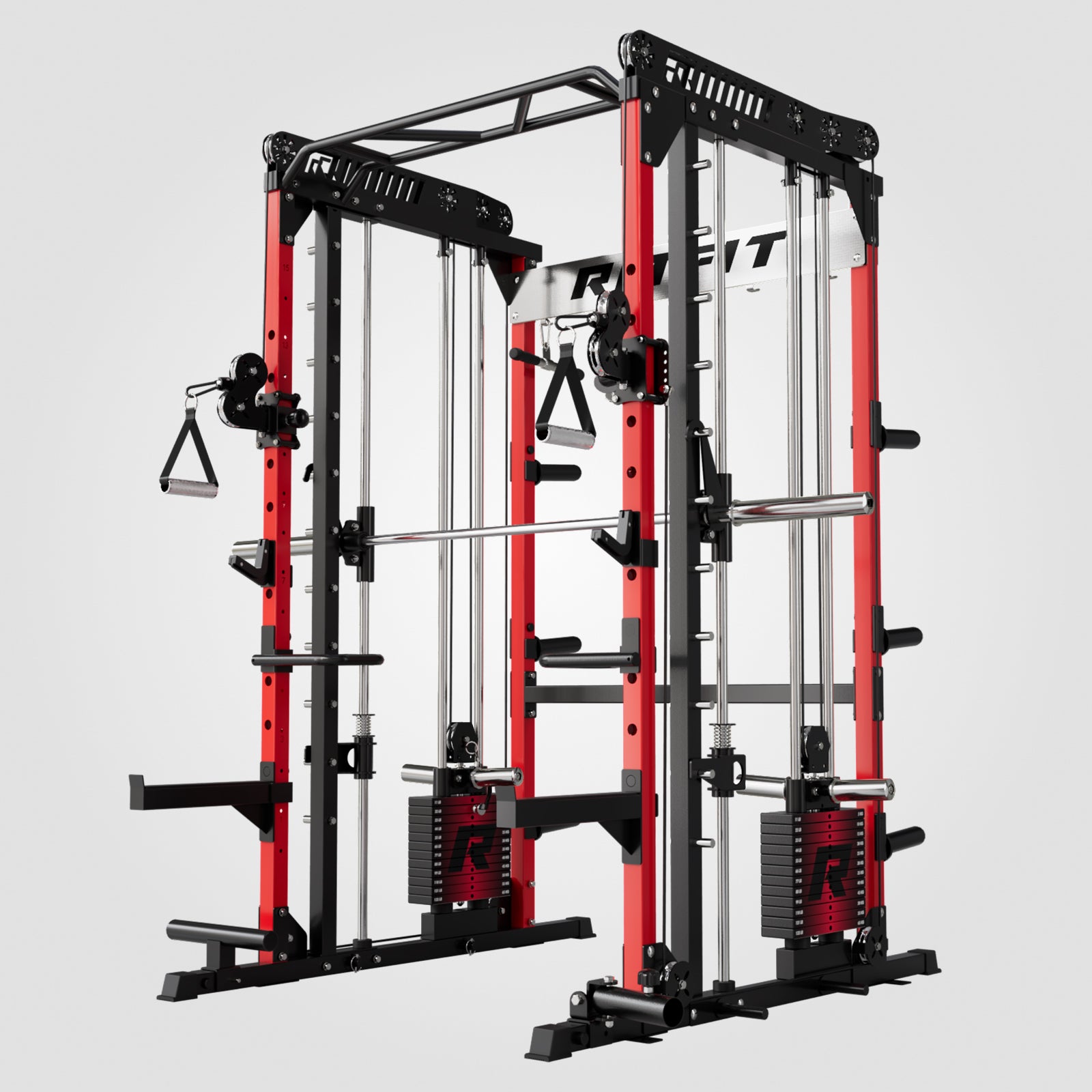
- Home gym option: A cable crossover machine or a compact home cable setup works well for controlled triceps isolation.
High Rep Pump Finisher
Finish with push ups, a machine chest press, or a pec deck paired with bench dips or close grip push ups for 2 fast rounds because the goal is to accumulate useful fatigue without wasting time. Keep rest near 30 seconds and stop if your range of motion or joint position starts to break down.
- Exercise A: Push Ups, Machine Chest Press, or Pec Deck
- Exercise B: Bench Dips or Close Grip Push Ups
- Rep target: 12 to 15 reps or as many clean reps as possible.
- Best use: This block adds metabolic stress and finishes the workout without adding another long compound exercise.
How Do You Perform the Key Exercises With Clean Form?
Use a tight upper back, a stable ribcage, and a controlled elbow path on every press so tension stays on the chest and triceps. Stop the set when bar path, speed, or joint position starts to break down.
- Chest setup: Keep your upper back tight and your ribcage stable so the press does not turn into a loose shoulder driven movement.
- Elbow path: Let your elbows track naturally instead of flaring them hard to the side or pinning them unnaturally close.
- Tempo: Lower the weight with control, pause briefly if needed, and press with intent.
- Lockout: Fully extend the elbows on triceps work without snapping the joint to force the finish.
- Breathing: Inhale during the lowering phase and exhale during the press or extension.
Clean reps matter more in a short session because every set has to count, so never trade range of motion for speed.
How Should You Progress This Routine Over 4 to 6 Weeks?
Run this workout 1 to 2 times per week and progress from better reps, to slightly more load, to slightly more total work when recovery feels solid. Training load influences both muscle hypertrophy and strength gain, so add weight only when your sets stay clean.[3]
- Week 1: Learn the pace, use conservative loads, and leave a small rep cushion on every set.
- Week 2: Add 1 to 2 reps across the main press or the superset block.
- Week 3: Increase load on the main press if every set stayed clean.
- Week 4: Keep the load steady and improve rep quality, tempo control, or range of motion before the next jump.
- Reset rule: If your shoulders or elbows feel beat up, reduce the finisher volume before cutting the main press.
You can hold the same structure for 4 to 6 weeks before changing the exercise choices to keep progress moving.
What Equipment Do You Need for This Workout at Home?
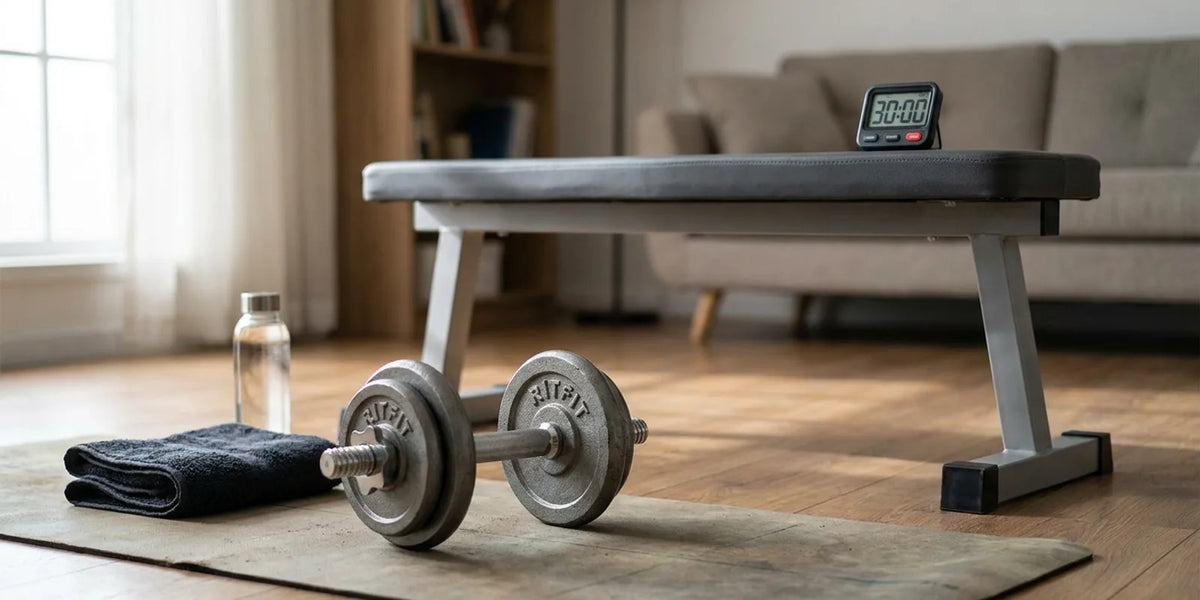
You need a stable bench, dumbbells or a barbell, and one cable or band option to run this 30 minute chest and triceps workout at home. An adjustable bench with flat and incline settings covers every press angle you need.
- Bench: Start with a home gym bench that has flat and incline positions so you can press at several angles, like the GATOR adjustable weight bench.
- Load: Dumbbells give you the simplest home setup for pressing and extensions, and a barbell adds more room to progress.
- Cable or band station: One cable column or a set of resistance bands is enough for pushdowns and overhead extensions.
- Space: The full routine needs a bench footprint of about one door frame and a clear floor for push ups.
- Setup help: A bench workout guide explains how to set bench angles and choose starting loads.
A bench, dumbbells, and one cable or band station are enough to run this entire session effectively at home.
What Are the Best Substitutions Without a Cable or Barbell?
You do not need the exact same equipment to get the same training effect because the movement pattern matters more than the exercise name. Pick the option that lets you train hard with stable form and repeatable progression.
- No barbell: Use dumbbell bench presses on a stable bench, or Smith machine options for home gyms if you want built in stability.
- No cable: Replace pushdowns with band pressdowns, rolling dumbbell extensions, or overhead dumbbell extensions.
- Shoulder friendly choice: Neutral grip dumbbell pressing and machine pressing are often better tolerated than fixed straight bar pressing.
- Finisher swaps: Replace bench dips with close grip push ups or a dips workout that feels comfortable on your shoulders.
- Related reading: See Best Smith Machine Chest Workouts for Muscle Growth and How to Grow Triceps for more exercise ideas.
Home gym lifters can run this workout fully with a bench, dumbbells, and bands, so a missing cable station does not block progress.
How Do You Support Recovery and Stay Safe on Pressing Days?
Pair this workout with enough food, protein, and at least 48 hours between heavy pressing days because muscle growth happens after training, not during it. A resistance training plan for muscle and strength works best when recovery is consistent.[4]
- Recovery target: Sleep well and avoid stacking extra shoulder or pressing volume the day after this session.
- Protein habit: Hit consistent daily protein intake instead of trying to fix recovery with one large post training meal.
- Solo training rule: Do not take heavy barbell bench sets to technical failure without a spotter or a safer setup.
- Joint discomfort: Swap out bench dips or straight bar pressing if they irritate your shoulders, elbows, or wrists.
- Form first: Stop the set when control, bar path, or joint position starts to deteriorate.
"What I advise in most cases is, instead of looking for a spotter to take you through those areas of a lift that are more difficult, think of other ways you can improve your ability to complete that lift, if strength is your goal."
Jeff Cavaliere, MSPT, CSCS, Physical Therapist and Strength Coach, former Head Physical Therapist for the NY Mets, Athlean-X
FAQs About 30 Minute Chest and Triceps Workouts
Can you build muscle with a 30 minute chest and triceps workout?
Yes.
A 30 minute chest and triceps workout can build muscle when you keep volume and effort high, rest short, and progress load or reps over time.
Quality pressing sets with 1 to 2 reps in reserve matter more than session length for hypertrophy.
How many times a week should you do a chest and triceps workout?
Most lifters do a chest and triceps workout one to two times per week.
That frequency gives the chest, shoulders, and elbows enough recovery between heavy pressing days while still allowing steady progression.
Adjust it based on your recovery and total training volume.
What exercises work your chest and triceps at the same time?
Compound pressing moves such as bench presses, incline presses, and push ups train the chest and triceps at the same time because the triceps finish the elbow lockout. Add isolation work like pushdowns or overhead extensions to target the triceps directly.
Is a chest and triceps workout good for beginners?
Yes.
Beginners can use the same chest and triceps structure with lighter loads, full range of motion, and a small rep cushion on every set.
The compound press teaches a useful pattern, while supersets keep the 30 minute session efficient and easy to repeat.
How long should you rest between chest and triceps exercises?
Rest 60 to 90 seconds after your heavy compound press and 30 to 45 seconds after each chest and triceps superset. Short rests keep the session inside 30 minutes, while heavier sets get enough recovery to maintain force and clean form.
Do you need a bench for a chest and triceps workout at home?
A stable bench makes a home chest and triceps workout much better because it supports dumbbell pressing at flat and incline angles. You can substitute push ups and floor presses if space is limited, but an adjustable bench widens your exercise options.
Conclusion
A 30 minute chest and triceps workout is enough to build pressing strength and hypertrophy focused volume during busy weeks. Use clean reps, tight rest periods, and smart substitutions for 4 to 6 weeks, then adjust loads and exercise choices based on how your joints, performance, and recovery respond.
Pick one bench and one pair of dumbbells, run this plan twice per week, and track your working sets. If you are ready to upgrade your setup, explore the RitFit sale page for benches, dumbbells, and cable machines.
Disclaimer
This workout is for general fitness education and is not medical advice. If you have a current injury, recent surgery, chest pain, or any condition that affects exercise tolerance, get clearance from a qualified medical professional before starting this plan.
References
1. Iversen VM, Norum M, Schoenfeld BJ, Fimland MS. No Time to Lift? Designing Time-Efficient Training Programs for Strength and Hypertrophy: A Narrative Review. Sports Med. 2021;51(10):2079-2095. doi:10.1007/s40279-021-01490-1. PMCID: PMC8449772
2. Rodriguez-Ridao D, Antequera-Vique JA, Martin-Fuentes I, Muyor JM. Effect of Five Bench Inclinations on the Electromyographic Activity of the Pectoralis Major, Anterior Deltoid, and Triceps Brachii during the Bench Press Exercise. Int J Environ Res Public Health. 2020;17(19). doi:10.3390/ijerph17197339. PMCID: PMC7579505
3. Lopez P, Radaelli R, Taaffe DR, et al. Resistance Training Load Effects on Muscle Hypertrophy and Strength Gain: Systematic Review and Network Meta-analysis. Med Sci Sports Exerc. 2021;53(6):1206-1216. doi:10.1249/MSS.0000000000002585. PMCID: PMC8126497
4. Currier BS, D'Souza AC, Singh MAF, et al. American College of Sports Medicine Position Stand. Resistance Training Prescription for Muscle Function, Hypertrophy, and Physical Performance in Healthy Adults: An Overview of Reviews. Med Sci Sports Exerc. 2026;58(4):851-872. doi:10.1249/MSS.0000000000003897. PMCID: PMC12965823