An abdominal machine core workout is one of the most efficient ways to build a strong midsection at home, using equipment such as cable pulleys, adjustable ab benches, and multi-station home gyms to load your core with controlled resistance. This guide covers the best abdominal machine exercises, weight selection, training frequency, and safe progression.
You will learn which machine types actually work, the top exercises to run on them, a complete sample routine, and clear stopping rules. All recommendations are beginner-friendly for home gym owners.
Quick Answer: A strong abdominal machine core workout uses three to five controlled exercises such as cable crunches, cable woodchoppers, pallof presses, and bench knee tucks, performed for three sets of ten to fifteen reps. Train your core two to four times per week, start with light resistance, and add weight only when you can complete strict, pain-free reps.
Key Takeaways
- Machines add load: Abdominal machines let you progressively overload the core with resistance you can control and adjust.
- Variety beats crunches: Cable woodchoppers, pallof presses, and anti-rotation moves recruit the obliques more fully than simple crunches.
- Start light: Use a weight that allows 12 to 15 strict reps, and increase it only when form stays clean.
- Train 2 to 4 days: Your core recovers quickly, but it still needs rest between hard sessions.
- Stop for pain: Any sharp lower-back or joint pain is a signal to reduce weight or stop.
What Is an Abdominal Machine?
An abdominal machine is any piece of strength equipment designed to load the core muscles, most commonly the rectus abdominis and obliques, through a controlled range of motion. Common types include dedicated ab crunch stations, adjustable ab benches, cable pulleys with ab attachments, and multi-station home gyms that add resistance to core movements.
- Adjustable ab bench: A compact, space-saving platform for decline crunches, knee tucks, and sit-ups, often folded for storage.
- Cable pulley: Uses a weight stack or adjustable plates for woodchoppers, cable crunches, and pallof presses under variable resistance.
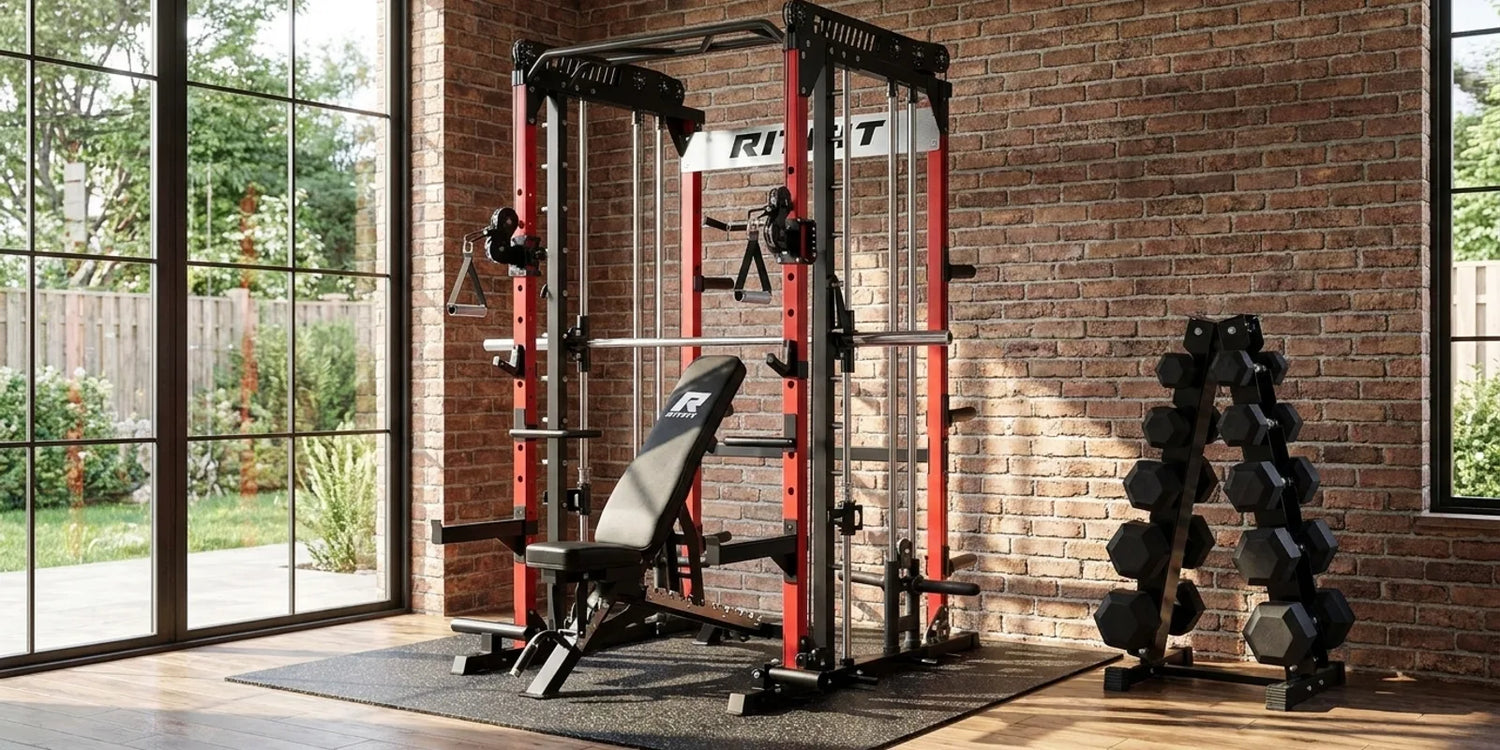
- Multi-station home gym: Combines a cable system and other stations so you can train the core and the whole body on one machine.
- Ab wheel or roller: A simple tool that challenges the core with anti-extension resistance.
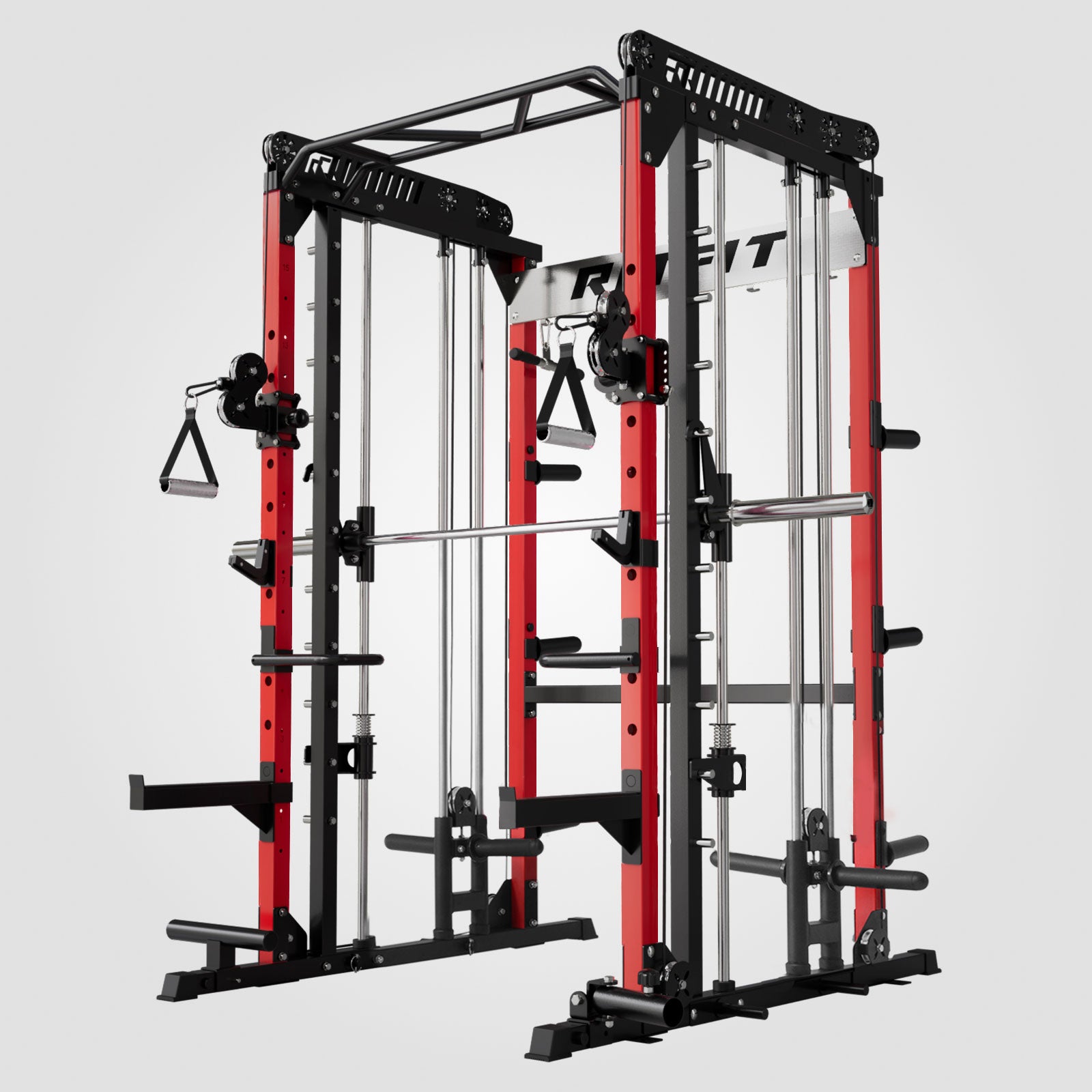
If you train at home, a versatile option like a Multifunctional Smith Machine with an integrated cable system lets you run nearly every core exercise below, while a compact Cable Machine covers the pulley-based moves on their own.
Why Use a Machine for Core Training?
Machines give your core a load you can measure, adjust, and progressively increase, which is exactly what drives strength and muscle growth over time. They also add stability and a guided path, making it easier to keep good form than with free-weight or floor variations.
Machines are a tool, not a magic shortcut.
One EMG comparison found that trunk-flexion machines such as the Ab Roller and ABslide produced similar or lower rectus abdominis activation than conventionally performed trunk curls.[1]
That means a well-run floor routine can work, but a machine adds loading options and variety that help you keep progressing without plateauing.
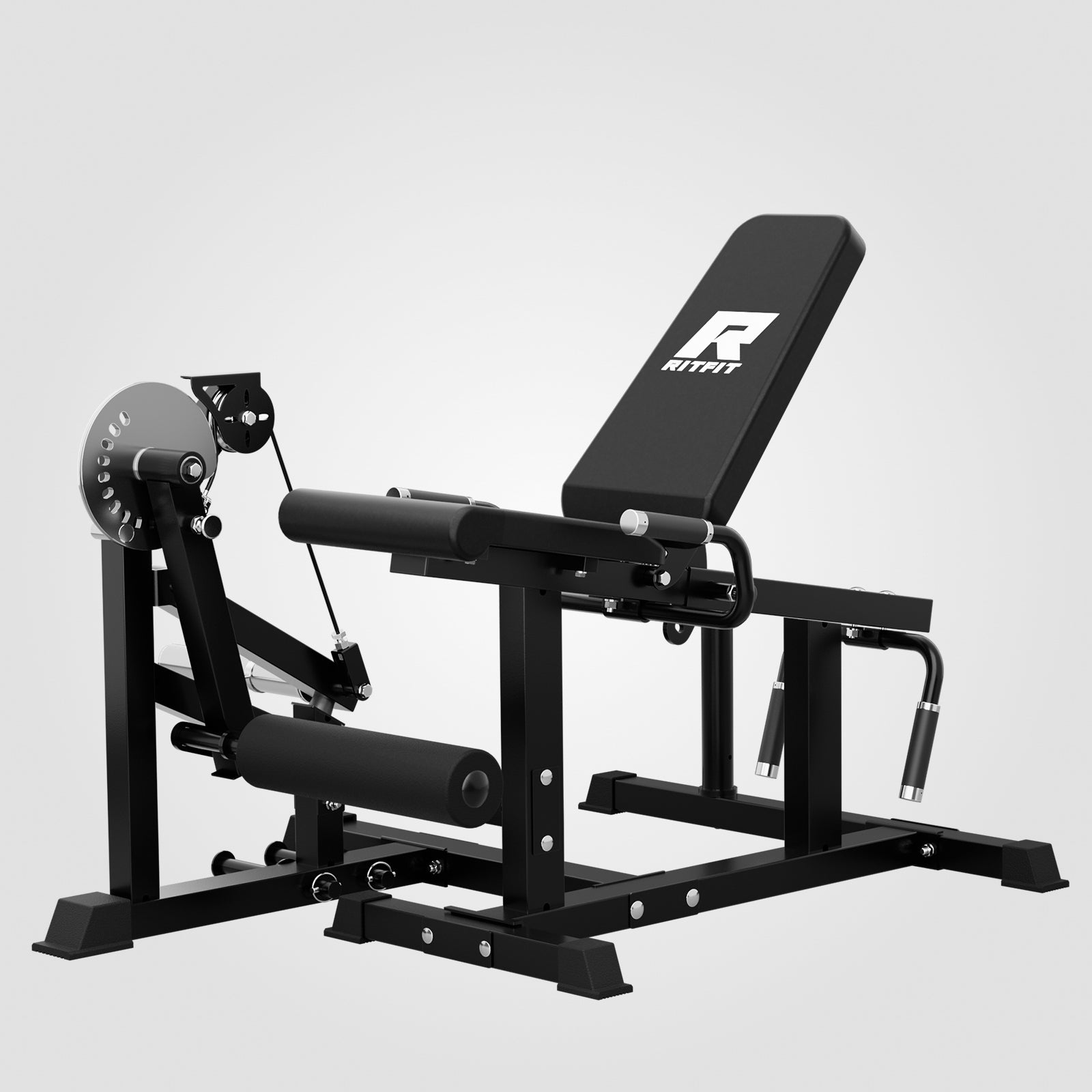
For home users, a machine also solves a space problem: one station like the 2 In 1 Combo Machine can replace several pieces of equipment, and a Leg Machine or cable station anchors your lower-body work alongside it.
6 Best Abdominal Machine Core Exercises
Six abdominal machine core exercises cover the three core jobs you need to train: flexion, anti-rotation, and rotation. Pick three to five per session and rotate them for balanced development.
- Cable crunch: Kneel under a cable pulley, hold the rope at your head, and curl your ribs toward your pelvis while keeping hips still.
- Cable woodchopper: Set the pulley at shoulder height, rotate the torso across the body in a controlled diagonal to load the obliques.
- Pallof press: Stand side-on to a cable pulley, press the handle away from your chest, and resist the rotation pull to build anti-rotation strength.
- Bench knee tuck: Lie on an adjustable ab bench with hands near your hips and tuck your knees to your chest with control.
- Decline sit-up: Set the bench to a slight decline and perform sit-ups with a plate held across the chest for added load.
- Machine torso twist: Use a seated twist station to work the obliques through a full rotational range.
Anti-rotation work deserves special attention. A peer-reviewed EMG comparison found that prone-position exercises with hip extension produced significantly greater abdominal, oblique, and lumbar paraspinal muscle activity than the crunch or bent-knee sit-up.[2]
Exercises like the pallof press and woodchopper are the machine-based way to get that extra activation, and they pair well with a cable-equipped station such as the Smith Machine With Cable System.
If you already own a basic bench, many of these moves translate directly. The Best Core Workouts For Beginners Intermediate And Advanced Levels guide shows how to scale intensity as your core adapts.
"Probably the most shocking result of this entire experiment was the level of rectus abdominis activity elicited by a bodyweight chin-up! It beat out any other abdominal exercise, weighted exercises and all, in mean and peak rectus abdominis activity."
Bret Contreras, PhD in Sports Science, Contreras Strength Institute
How to Choose the Right Weight
Choose a weight that lets you complete 12 to 15 clean, controlled reps where the last two feel challenging but your lower back stays neutral. If you cannot finish the set with good form, the load is too heavy.
- Start light: On a cable pulley, begin with the lightest stack setting and add weight only when you hit the top of the rep range smoothly.
- Focus on tempo: Take two seconds to lift and three to lower so you control the resistance through the whole range.
- Increase by small steps: Move up one plate increment when you can complete 15 strict reps on every set.
Resistance settings matter more than people think.
Research on resistance-based core training found that lowering spring resistance on an adjustable-resistance core platform significantly increased rectus abdominis and internal oblique activity compared to a fixed platform.[3]
In practice, that means lighter, more controlled resistance can beat heavy, sloppy reps, so tune the machine until the tension feels smooth and constant.
For a full home setup with variable cable resistance, the Cable Machine Handles collection and a Smith Machine give you the attachments and stations you need to dial in your own loads.
Sample Abdominal Machine Core Workout
A sample abdominal machine core workout runs on any cable pulley or multi-station home gym and takes about 20 minutes. Run it two to three times per week with at least one rest day between sessions.
| Exercise | Sets x Reps |
|---|---|
| Cable crunch | 3 x 12-15 |
| Cable woodchopper (each side) | 3 x 10-12 |
| Pallof press (each side) | 3 x 10-12 |
| Bench knee tuck | 3 x 12-15 |
Rest 45 to 60 seconds between sets. Start with the lightest weight that lets you complete every rep with strict form.
Add this core block after your main lifts, or run it as a standalone session on a rest day. Beginners can start with two sessions per week, then add a third as recovery allows.
For a broader training plan, the Best Full Body Workout Smith Machine For Home Gym guide pairs core work with the rest of your body.
Common Mistakes and When to Stop
The most common mistakes are using too much weight, rushing the tempo, and letting the hips or lower back do the work. Correct these first before you increase any load.
- Arching the lower back: Keep the ribs stacked over the pelvis and avoid overextending during crunches and knee tucks.
- Yanking the cable: Use momentum to swing the weight instead of squeezing the core slowly.
- Holding your breath: Breathe out on the effort and in on the return so your core stays engaged.
- Skipping rest: Training the same core muscles every day limits recovery and increases injury risk.
Stop the set immediately if you feel sharp or shooting pain in your lower back, hips, or joints, and switch to a lighter load or a different exercise.
Mild muscle fatigue is normal, but pain is not.
If discomfort persists, reduce frequency to twice per week and revisit your form before adding weight.
Back and core work reinforce each other, so a balanced program helps protect your spine. The 8 Best Smith Machine Back Workouts guide shows how to strengthen the supporting muscles that keep your torso stable during every rep.
FAQs About Abdominal Machine Core Workouts
Do abdominal machines actually work?
Yes.
Abdominal machines load the core with controlled resistance so you can progressively overload the rectus abdominis and obliques.
One EMG comparison found trunk-flexion machines produced activation similar to conventional trunk curls.
Results still depend on consistent training, proper form, and a balanced routine.
How often should you train your core on a machine?
Most lifters can train the core two to four times per week on an abdominal machine.
The abs recover quickly, but they still need a rest day between hard sessions.
Beginners should start with two sessions per week, then add a third or fourth as tolerance and recovery improve.
What weight should you start with on an ab machine?
Start light enough that you can complete 12 to 15 controlled reps with strict form.
The last two reps should feel challenging without rounding your lower back.
Increase the weight only when you can hit the top of that range smoothly.
Lower resistance often works better for beginners.
Can an abdominal machine reduce belly fat?
No machine can spot reduce belly fat.
Ab exercises strengthen the abdominal muscles underneath, but visible definition depends on lowering overall body fat through a sustained calorie deficit.
Combine regular core training with full-body strength work and a consistent nutrition plan for the best results.
What is the best abdominal machine for a home gym?
The best machine depends on your space and goals.
An adjustable ab bench is compact and versatile, while a cable pulley or multi-station home gym lets you do woodchoppers, pallof presses, and cable crunches under loaded resistance.
Choose the machine you can use consistently and store easily.
Conclusion
An abdominal machine core workout is a practical, scalable way to strengthen your midsection at home with controlled resistance.
Pick three to five machine exercises, start light, train two to four times per week, and progress only when your form stays clean.
Combine the routine with full-body training and a sensible diet for the best results.
Start this week with one cable pulley session and one bench session, then build from there. If you are ready to upgrade your home setup, browse the latest offers at RitFit sales to find the machine that fits your space.
Disclaimer
This article is for general information only and is not medical advice. Consult a qualified professional before starting any new exercise program, especially if you have a history of back or joint problems, and stop any exercise that causes pain or adjust loads to your own ability.
References
1. Hildenbrand K, Noble L. Abdominal Muscle Activity While Performing Trunk-Flexion Exercises Using the Ab Roller, ABslide, FitBall, and Conventionally Performed Trunk Curls. J Athl Train. 2004;39(1):37-43. PMCID: PMC385260
2. Escamilla RF, Lewis C, Pecson A, Imamura R, Andrews JR. Muscle Activation Among Supine, Prone, and Side Position Exercises With and Without a Swiss Ball. Sports Health. 2016;8(4):372-9. PMCID: PMC4922527
3. Kim HJ, Sung JH, Ryu JK, Jung HC, Wang J. Effect of Reformer Spring Resistance Modifications on Core Muscle Activity During Basic Core Muscle Exercises. Healthcare (Basel). 2024;12(23). PMCID: PMC11641042