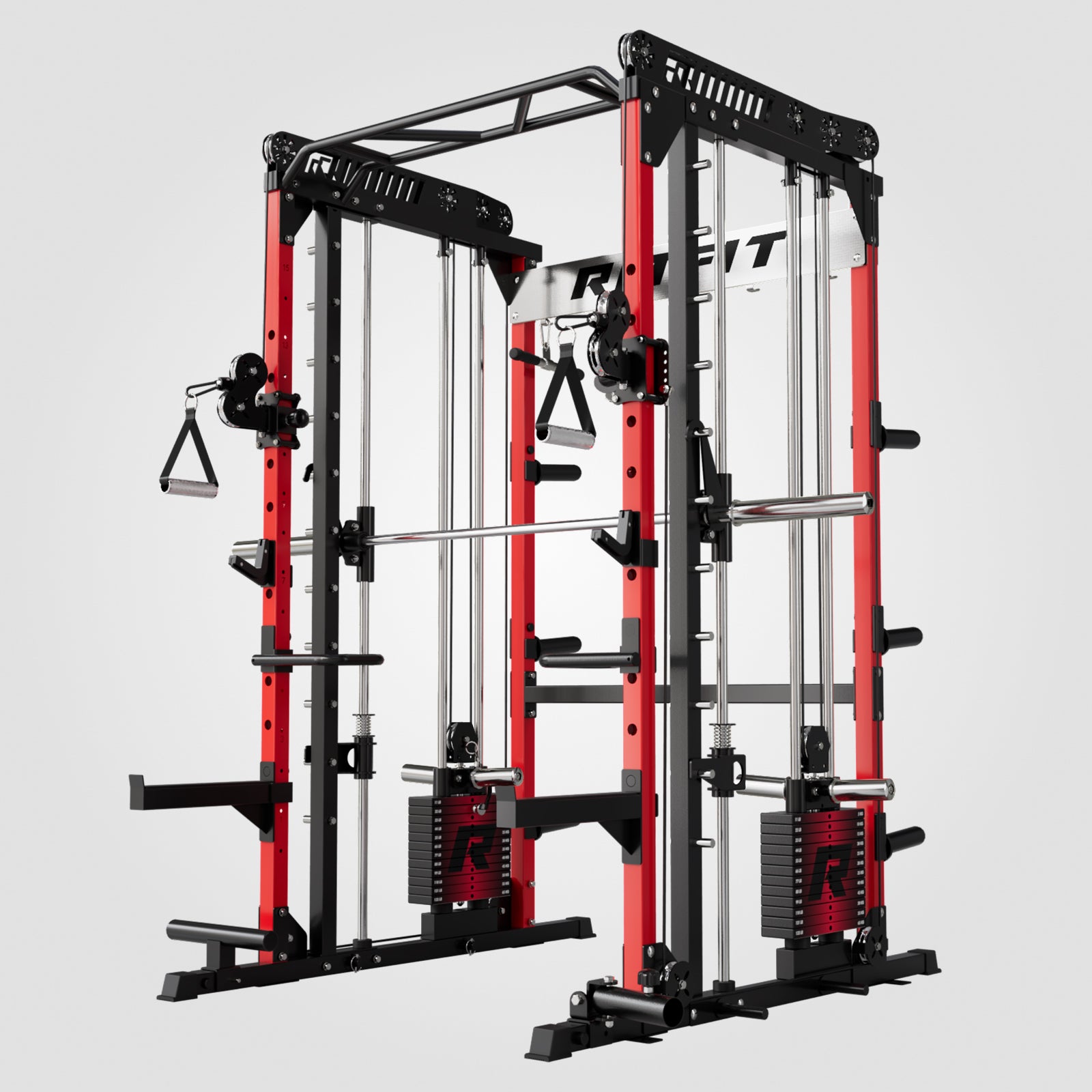
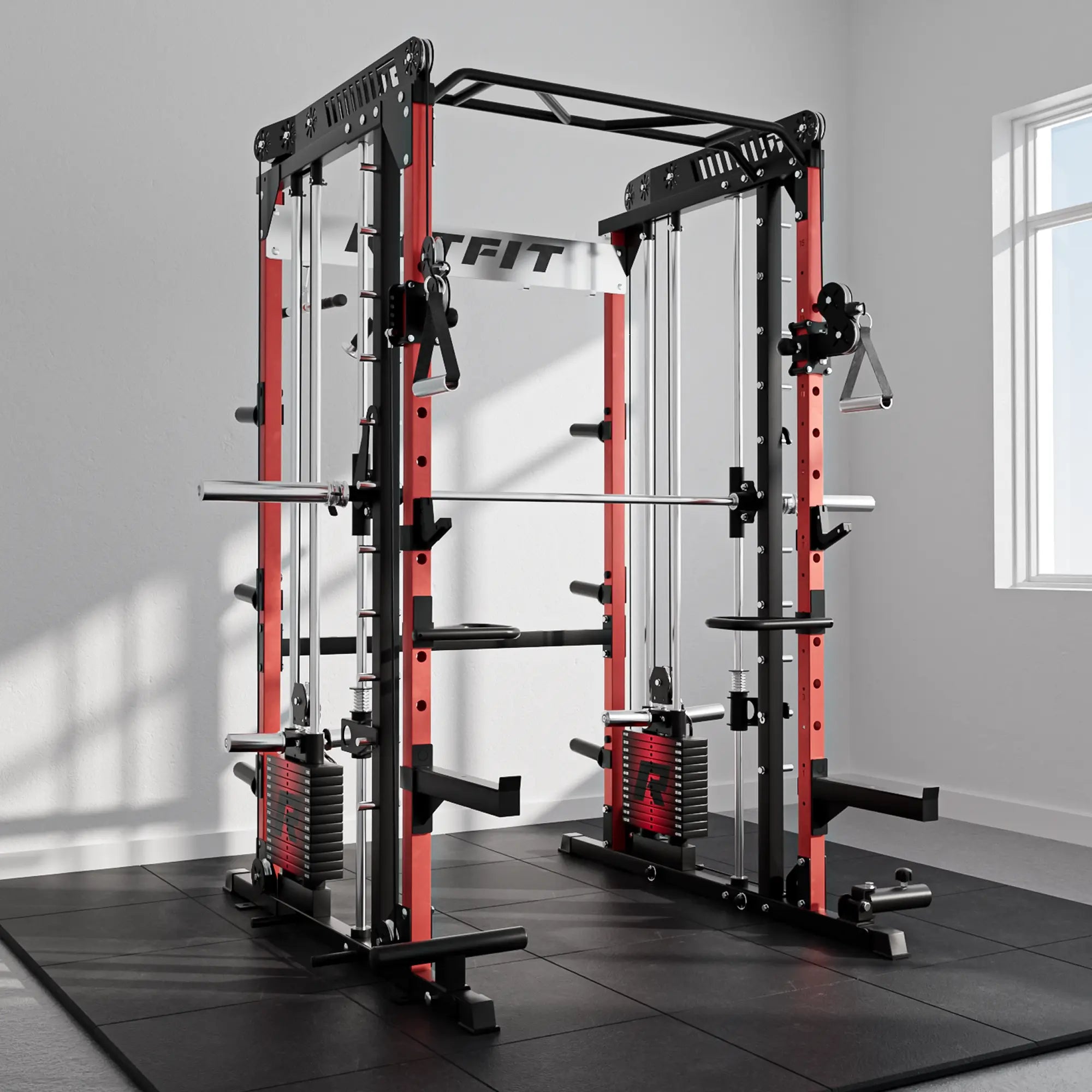

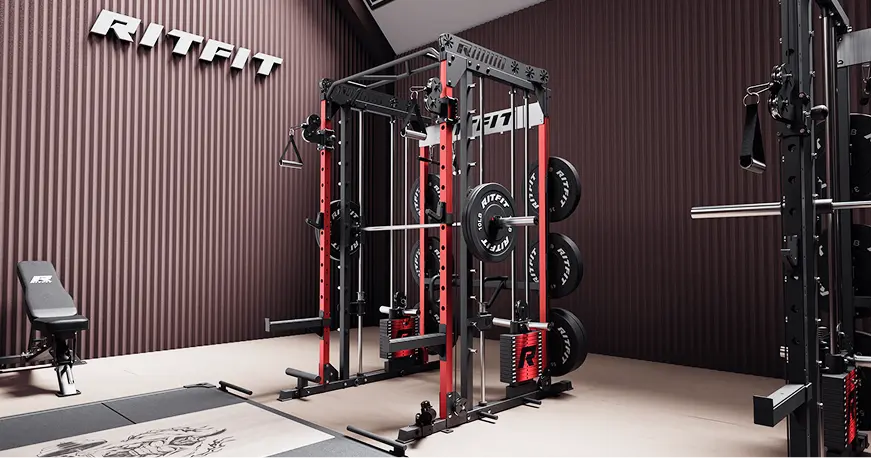
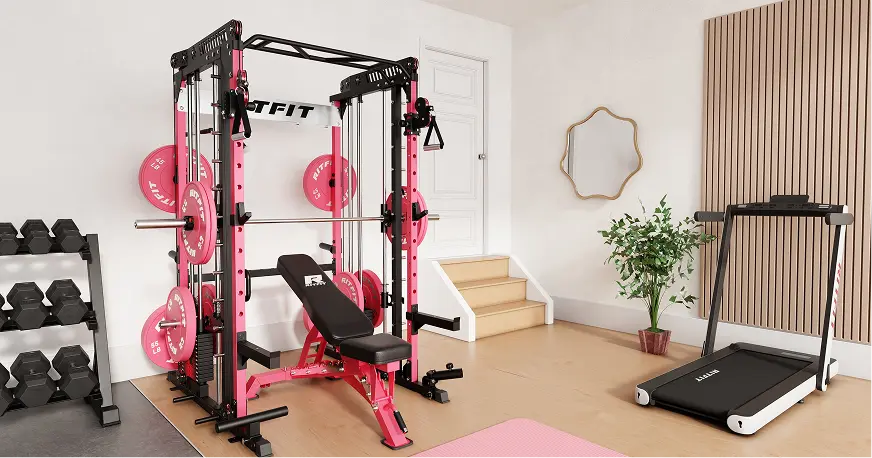
An angled vs vertical Smith machine comparison comes down to the bar path you want for your regular lifts. The rail design sets a guided route, so match that route to your bench, squat, and standing exercises before you compare a particular machine.
This guide explains what each track changes, offers a practical decision matrix, and shows how to verify the exact model, total setup cost, and room fit. A rail angle alone does not establish that a machine is safer or better for muscle growth.
Quick Answer: An angled Smith machine may suit a gym where you want a guided bar to travel along a tilted path for some presses, while a vertical Smith machine fits lifts you want to keep straight. Neither is best for everyone, so test the exact machine with an unloaded bar and check its specifications before buying.
Key Takeaways
- Track: A vertical Smith machine guides the bar straight up and down, while an angled Smith machine follows a fixed tilted path.
- Exercise fit: Your usual lifts and the path that feels comfortable matter more than a universal "better" label.
- Model details: Verify rail direction, any stated angle, footprint, bar setup, and included stations on the exact model.
- Value: Pay for a rail style only when it serves the lifts and future setup you expect to use.
Angled vs. Vertical Smith Machine: What Changes?
A vertical Smith machine guides its bar in a straight up-and-down path, while an angled Smith machine uses a fixed track tilted from vertical. The exact direction and degree of tilt depend on the model, so check the manufacturer's specifications rather than assuming every angled machine is built the same way.
Women's Health describes two main designs, standard vertical and angled. The article's examples are a 90-degree vertical path and an angled track of 5 to 7 degrees, not a universal specification.[1]
Verify the route on the actual model before treating those examples as its specification.
- Vertical track: The guided bar travels straight up and down.
- Angled track: The guided bar travels along a fixed line tilted relative to vertical.
- What does not change: Both designs constrain the bar to a track; neither becomes a free barbell just because its rails are tilted.
That distinction is useful when comparing equipment, but it does not prove that one path is universally more natural, joint-friendly, or effective. Check the rail direction and test the setup for the lifts you intend to perform.
How the Bar Path Affects Presses, Squats, and Vertical Lifts
The rail path affects where the guided bar travels relative to your body during each repetition. Adam Toffan, M.Sc, NSCA-CSCS, CSEP-CPT, describes angled tracks as an option for presses that move diagonally and vertical tracks as a fit for lifts that move vertically.
For a bench press, set the bench and test the empty bar from the start to the finish of your range.
A diagonal route may line up with the way you prefer to press; a vertical route may also work if the bar clears your body and the movement feels comfortable.
Do not assume that every lifter or press variation follows the same path.
For squats, shrugs, and calf raises, ask whether you want a strictly vertical guide path and whether your stance works with the actual machine. On an angled track, the direction of travel matters, so identify which way the bar moves before loading plates.
A resistance-training study found that strength gains were specific to the exercise trained, with better transfer to non-trained strength tasks in the free-weight group. The study compared training conditions, not angled and vertical rails, so it cannot establish which Smith-machine track is better.[2]
"It really depends on what you want to do. The angled Smith machine is more versatile because you can do exercises with straight or angled bar paths. However, the vertical path is acceptable if you use the Smith strictly for leg exercises or shrugs."Adam Toffan, M.Sc, NSCA-CSCS, CSEP-CPT, Assistant Fitness Training and Assessment Coordinator, Recreation Services, University of Manitoba. Angled vs Vertical Smith Machine: Which Is Better?
Which Smith Machine Rail Fits Your Training?
The better Smith-machine rail for you is the one that fits your main lifts, body position, and comfort on the specific machine. If you cannot try it in person, ask the seller for the manufacturer's rail specification, manual, and a clear demonstration of bar travel.
- You bench and press often: Test whether the track lets you start and finish each press without the bar path feeling forced.
- You focus on straight-path lifts: A vertical track may be a straightforward fit for shrugs, calf raises, or other movements you prefer to keep vertical.
- You want one guided bar for varied lifts: Consider whether an angled path can serve both diagonal and straight-path exercises with your setup and positioning.
- You are building a mixed home gym: Compare the Smith's role with your rack, bench, free weights, and planned attachments instead of buying based on the rail label alone.
The choice is personal because the machine constrains the bar while your proportions, setup, and chosen exercise determine whether that route feels workable. Try a full unloaded repetition and stop if the track pulls you into an uncomfortable position.
Decision Matrix: Match Rail Style to Your Use
Your most frequent lifts are the best starting point for choosing a Smith-machine track. Use this matrix to narrow the rail style, then confirm that the exact machine and your setup work together.
| Your use | Rail style to consider | Why it may fit | Verify before buying |
|---|---|---|---|
| Bench and pressing variations are a regular priority | Angled, if its direction suits your setup | A tilted fixed path may accommodate a diagonal press route | Direction of travel, bench placement, and full range with an unloaded bar |
| Shrugs, calf raises, or other lifts you want to keep vertical | Vertical | The bar is guided straight up and down | Starting position, clearance, safety catches, and comfortable range |
| You plan to use a mix of vertical and diagonal movements | Compare both; consider angled if it works for each priority lift | Exercise fit depends on the track and how you position yourself | Test each planned lift instead of assuming one path works for all |
| You are buying for a compact or evolving home gym | Either, based on the whole equipment plan | Rail style is only one part of floor-space use and future expansion | Published footprint, bench storage, attachment compatibility, and complete cost |
This is a category-level decision guide, not a ranking of brands or model specifications. Confirm rail geometry and dimensions with the manufacturer for the exact machine.
For a real-world RitFit home-gym example, watch the official My Fitness Journey with RITFIT M1 2.0 video. It shows product use but does not verify the M1's rail geometry.
Is an Angled Smith Machine Worth the Added Cost?
An angled Smith machine is worth considering when its verified track supports the lifts you expect to do and the complete machine fits your room and budget. If you mainly use vertical-path movements, paying more for an angled option may not add value for your routine.
Compare the exact machine's published price, dimensions, included stations, warranty, and compatibility before deciding. Those details vary by product and can change the real cost of a future setup; do not infer them from rail style or a model name.
- Worth considering: You regularly press along a diagonal path and the machine's orientation works for your setup.
- Potentially unnecessary: Your planned lifts fit a vertical path and the angled model adds cost or functions you will not use.
- Long-term check: Confirm the bench, attachments, storage, and floor area you may need later before committing to a larger station.
A third-party review can help you see a product in use, but it does not replace model specifications. The M2 Pro 3D review below should not be treated as proof that this model is a conventional angled or vertical Smith machine.
Check the Actual Machine Before You Buy
A short model check can prevent a mismatch between the rail description and your intended lifts. Use the same checks whether you shop online or try a machine at a gym.
- Read the specification: Confirm whether the bar path is vertical, angled, or another guided design, and note the stated angle only when the manufacturer provides it.
- Watch the travel: Move the unloaded bar through a repetition and identify the direction it follows.
- Test your lifts: Check bench placement, squat stance, and standing movements with no plates.
- Check safety hardware: Learn how the hooks lock and set the safety stops at a height that catches the bar for your intended range.
- Plan the room: Compare the published footprint with space for the bench, plate loading, walking access, and any attachments you expect to add.
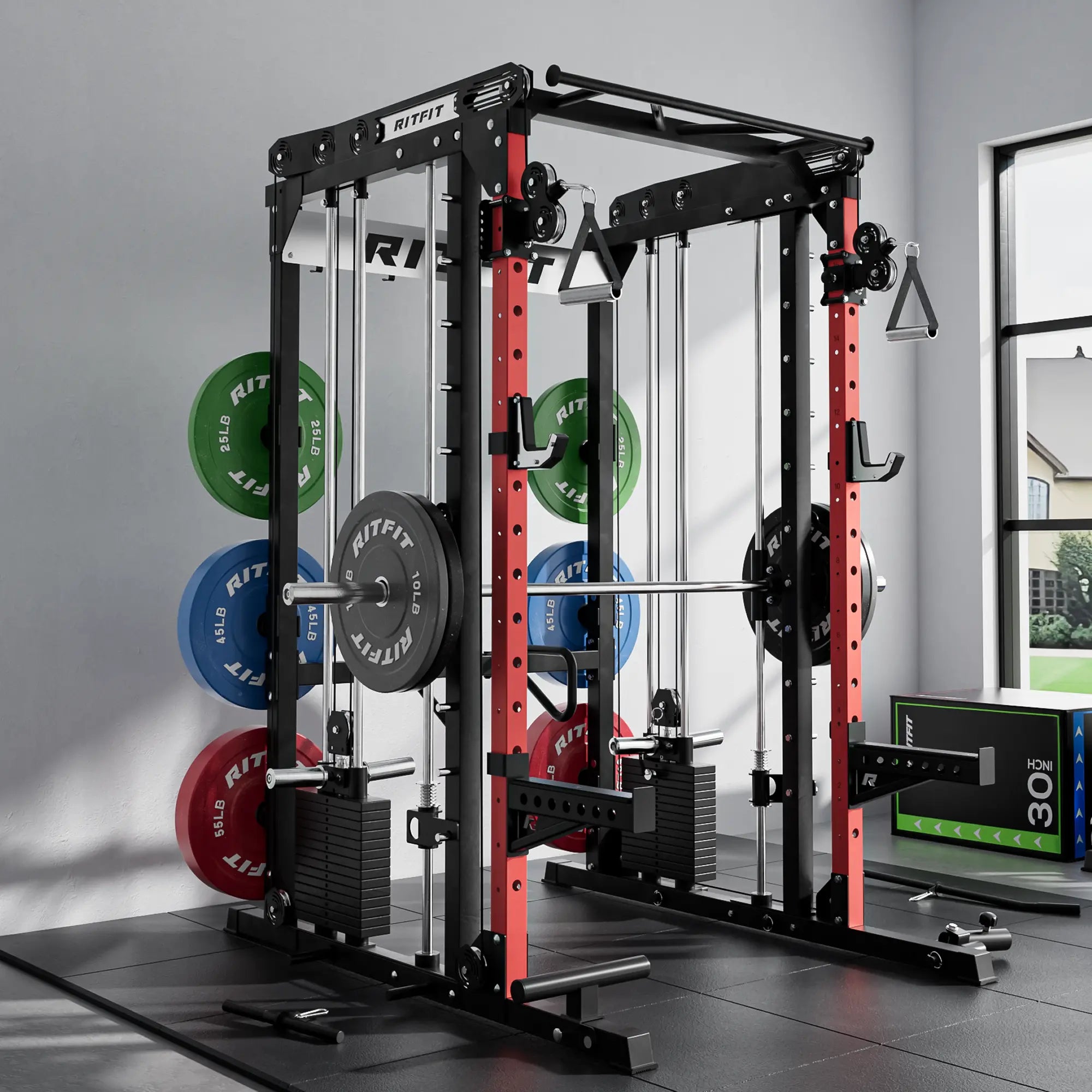
For a Smith machine category overview, browse the RitFit Smith machine collection. The RitFit M1 PRO Smith Machine is one catalog option; verify the rail details in current manufacturer specifications before treating it as angled or vertical.
For more setup context, read the Smith machine squat setup and rail direction guide, Smith machine setup basics, and Smith machine and power rack differences.
Readers planning a broader setup can compare Smith machine workout ideas and revisit this Smith machine guide.
For room layout, review the home gym equipment planning guide. Before checkout, read the RitFit discount guide.
FAQs About Angled vs. Vertical Smith Machines
Is an angled Smith machine better than a vertical one?
Neither track is best for every lifter. An angled path may suit you if you want one guided bar to travel vertically and diagonally for different lifts, while a vertical path fits exercises you prefer to keep straight. Try the actual machine with an unloaded bar, check which way it travels, and set the safety stops before adding plates.
Can you bench press on a vertical Smith machine?
Yes, you can bench press on a vertical Smith machine if the fixed path lets you reach a comfortable position through the full repetition. Set the bench and bar with no load first, confirm the bar clears your face and chest, and stop if the path forces an uncomfortable position. A machine's rail direction does not determine a universal bench setup.
Does an angled Smith machine make squats safer?
No rail angle by itself proves that a squat is safer. Comfort depends on the machine, your setup, the exercise, and the safety catches. Check the path with an unloaded bar, place the stops just below the depth you can control, and choose a setup that does not force you into discomfort.
How do you know whether a Smith machine is angled?
Look at the guide rails and the manufacturer's specifications or manual. An angled machine moves its bar along a track tilted from vertical, while a vertical machine keeps the track straight up and down. Do not assume the angle from a product name or a photo alone.
Is it worth paying extra for an angled Smith machine?
It may be worth considering when your regular lifts include both straight and diagonal bar paths and the model fits your room and budget. Compare the verified rail direction, footprint, included functions, and future compatibility before paying more. If you mainly do vertical-path lifts, a verified vertical model may meet your needs without the added cost.
Conclusion
An angled vs. vertical Smith machine decision should follow your regular lifts and a test of the exact track. An angled path may suit varied press routes, while a vertical path can fit lifts you want to keep straight; neither rail style guarantees better results.
Check model specifications, room fit, safety stops, and future attachments before you buy. For purchase-planning details, read the RitFit discount guide.
Disclaimer
This article provides general equipment-selection information and does not replace instruction from a qualified fitness professional. Stop if a machine's path causes discomfort, and consult a qualified professional about exercise technique or individual concerns.
References
[1] Tavel R. How to Use a Smith Machine: Experts Explain What It's Great For and How to Get Started. Women's Health. 2025. www.womenshealthmag.com/how-to-use-a-smith-machine/
[2] Saeterbakken AH, Olsen A, Behm DG, Bardstu HB, Andersen V. The short- and long-term effects of resistance training with different stability requirements. PLoS One. 2019;14(4):e0214302. PMCID: PMC6443166