
The average bicep curl for men is about 99 lb on a barbell or 46 lb per dumbbell for an estimated one-rep max, based on Strength Level community-lifter standards. The barbell figure includes the bar, while the dumbbell figure is for one hand.
These are comparison points from people who logged lifts, not a representative survey of all men or a recommended workout load. This guide compares experience levels, explains how to choose a practical working weight, and shows how body weight and equipment affect comparisons.
Quick Answer: The average male bicep curl benchmark is about 99 lb for a barbell one-rep max or 46 lb per dumbbell, while beginner benchmarks are about 42 lb and 16 lb respectively. These community-lifter estimates are comparisons, not required training weights.
 Click the image to visit the RITFIT Black Friday Deals page.
Key Takeaways
- Average male barbell curl: Strength Level lists about 99 lb as the intermediate estimated 1RM benchmark.
- Average male dumbbell curl: The intermediate benchmark is about 46 lb per dumbbell, not the combined weight of a pair.
- Beginner references: The listed benchmarks are about 42 lb for a barbell and 16 lb per dumbbell, but actual working weights should allow controlled reps.
- Compare the same setup: Barbell figures include the bar and both arms, while dumbbell figures refer to one hand.
- Use the number carefully: Community lift logs are not a representative population survey, and technique affects comparisons.
What Is the Average Bicep Curl Weight for Men?
Strength Level's intermediate male benchmark is about 99 lb for a barbell curl and 46 lb per dumbbell for an estimated one-rep max. The barbell value includes the bar, and the dumbbell value is for one dumbbell.
- Barbell curl: About 99 lb (45 kg) for the intermediate male benchmark.
- Dumbbell curl: About 46 lb (21 kg) per hand for the intermediate male benchmark.
- Working sets: These are estimated one-rep max references, not prescribed loads for routine sets.
Strength Level aggregates user-submitted lift logs, so its standards describe its participating lifters rather than all men. Compare the same curl variation, repetition standard, and equipment before treating two numbers as equivalent.
Average Curl Weight by Experience Level
Strength Level's male estimated 1RM standards range from 42 lb at beginner to 180 lb at elite for barbell curls, and from 16 lb to 93 lb per dumbbell. The site's labels are percentile tiers among logged lifters, not fixed milestones based on years of training.
| Strength Level | Barbell Curl 1RM | Dumbbell Curl 1RM, per hand |
|---|---|---|
| Beginner | 42 lb (19 kg) | 16 lb (7 kg) |
| Novice | 67 lb (30 kg) | 29 lb (13 kg) |
| Intermediate, average | 99 lb (45 kg) | 46 lb (21 kg) |
| Advanced | 138 lb (63 kg) | 68 lb (31 kg) |
| Elite | 180 lb (82 kg) | 93 lb (42 kg) |
Source: Strength Level male barbell curl standards and male dumbbell curl standards, accessed October 27, 2026. Values are estimated one-rep maxes; barbell values include the bar, and dumbbell values refer to one dumbbell.
Strength Level defines its tiers by approximate percentile thresholds among its users. Its community data is not a representative survey of all men.
A person's body weight, practice, limb proportions, curl variation, and technique can all affect the comparison. The source also presents standards across body-weight categories, so compare within a similar category when available rather than treating one overall average as universal.
Barbell vs Dumbbell Curl: How to Compare the Numbers
A barbell curl benchmark is the total weight moved by both arms, while a dumbbell curl benchmark is listed for one dumbbell. Those are different reporting units, so the figures are not a direct equipment-conversion formula.
- Count the full barbell: The listed barbell load includes the bar and plates.
- Read dumbbell values per hand: Do not mistake one dumbbell's benchmark for the combined load of a pair.
- Match the variation: A straight bar, EZ bar, preacher curl, and dumbbell curl differ in setup and should be tracked separately.
For a practical equipment comparison, see cable curls versus dumbbell curls.
What Changes Your Curl Weight?
A curl number is comparable only when the exercise setup and repetition standard are similar. Swinging the torso, shortening the range, or changing grip can make a heavier lift a poor match for a strict curl benchmark.
- Keep your setup consistent: Track the same curl variation, range of motion, and body position.
- Control momentum: Reduce the load if your hips or torso have to drive the weight.
- Choose a comfortable range: Move through a pain-free range you can control.
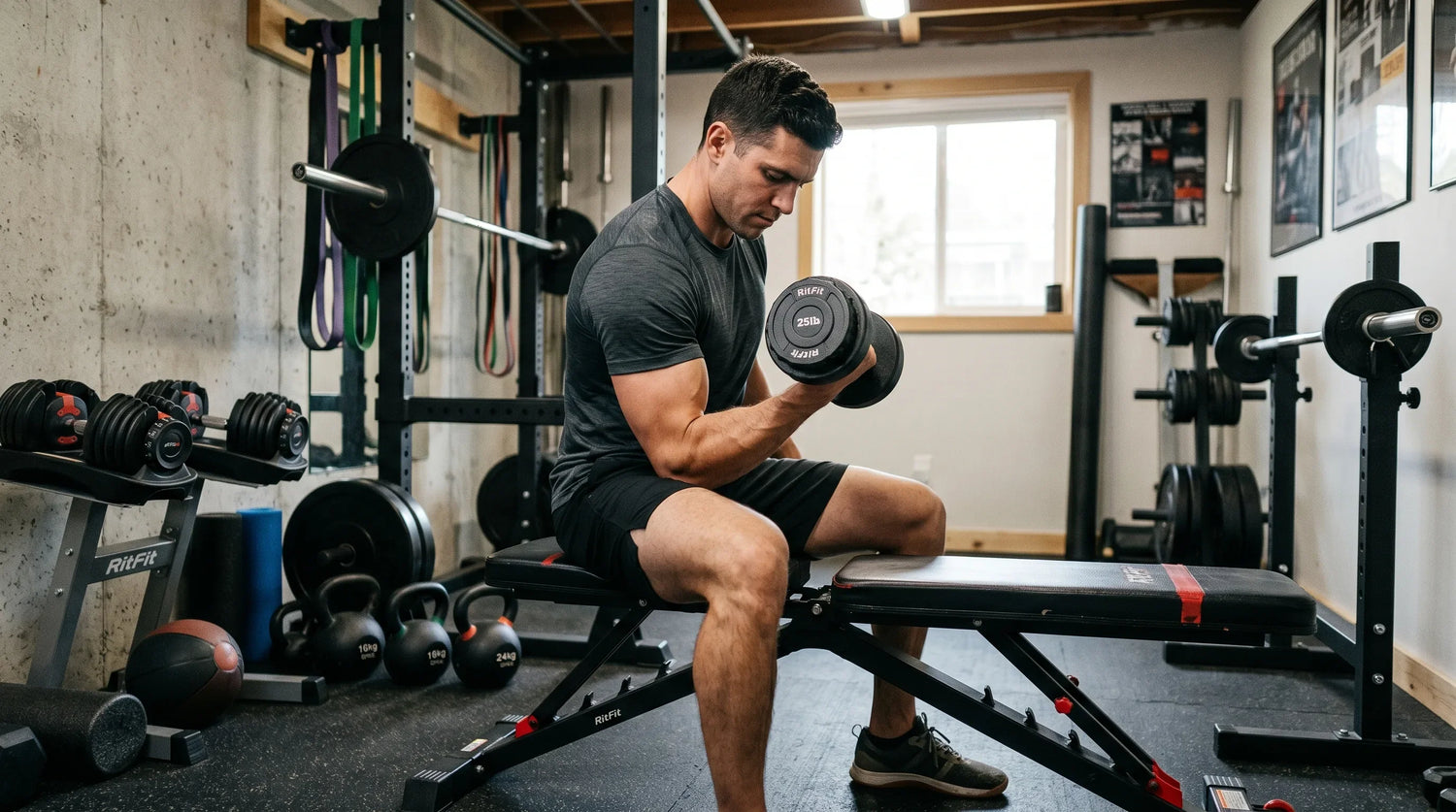
See our guide to how to do a dumbbell bicep curl. A dumbbell hammer curl uses a different grip and exercise setup.
"Deaden the wrist. Keep it bent backwards. If we keep the wrist backwards at the top, your hand is facing the ceiling. And we've got the stationary elbow. This keeps the dumbbell closer to us, and we get more of that drag feel to it, and that drag feel is going to be good for that outer part of the bicep, the long head, and really intensify the contraction."
Jeff Cavaliere, CSCS, Athlean-X, "Top Trainer Shared the Best Advice He Ever Received About Building Muscle," Men's Health
How to Choose a Working Curl Weight
A practical working weight is one you can lift for your planned repetitions without changing your technique. Start with a manageable load, then increase it only when you can complete the target reps consistently.
- Choose your rep target: Select a weight you can curl for 8 to 12 controlled repetitions.
- Progress in small steps: When you can complete the top of the range with the same technique, add the smallest available increment.
- Make load changes practical: Adjustable dumbbells allow smaller increases; a RitFit Preacher Curl Pad supports preacher-style curls.
For barbell training at home, see our guide to a home gym barbell and our free-weight set guide.
FAQs About Average Bicep Curl for Men
What is a good bicep curl weight for the average man?
A good benchmark for the average man is about 99 lb for a barbell curl and 46 lb per dumbbell for an estimated one-rep max, based on Strength Level community-lifter standards. These figures sit at the intermediate level. A beginner reference is about 42 lb for a barbell or 16 lb per dumbbell.
How much should a beginner man curl?
Strength Level lists beginner male curl standards of about 42 lb for a barbell curl and 16 lb per dumbbell for an estimated one-rep max. These figures describe its user-log percentile, not a required workout weight. Start with a load you can lift for controlled reps and reduce it if your technique changes.
Why is my barbell curl so much heavier than my dumbbell curl?
A barbell loads both arms at the same time, so its reported total is higher than the load for one dumbbell. Strength Level reports barbell weight including the bar and dumbbell weight per hand. The two standards use different units and are not a direct conversion formula.
Is a dumbbell or barbell better for bigger biceps?
Both can be used for biceps training, and the better choice depends on your setup and preference. Dumbbells let each arm work independently, while a barbell records a combined load. A study comparing cable and barbell preacher curl training found similar biceps thickness gains across those two tested setups.[1]
How do I increase my bicep curl weight safely?
Choose a load you can lift for controlled repetitions, then add a small amount when you complete the top of your planned range with consistent technique. Reduce the load if you need momentum or shorten the range to finish the set. Adjustable dumbbells make small load increases practical.
Does curling heavier always build more muscle?
A heavier number alone does not show whether a repetition used the same range of motion or technique. Track a consistent curl setup and use a load you can control. Research comparing preacher curl variations examined both strength and muscle-thickness outcomes, so it does not establish that simply lifting more weight always builds more muscle.[1]
How does body weight affect average curl numbers?
Strength Level provides standards across body-weight categories, which can make comparisons more specific than using one overall average. Its figures still come from user-submitted lift logs, so they do not represent a population survey. Compare the same curl variation and body-weight category where possible.
How often should men train biceps to improve curls?
There is no single weekly frequency that fits every lifter, because total training volume and recovery differ. Consider your overall program, pulling exercises, and how well you recover between sessions. Adjust the schedule if your technique, comfort, or performance declines, and seek guidance from a qualified coach when you need an individualized plan.
Should I count the bar weight in my curl number?
Yes. Strength Level's barbell curl standards include the bar's weight, so log the bar and plates together when comparing with those values. The total barbell load is used for the curl benchmark, even when the bar is not an Olympic bar. Dumbbell standards are listed for one dumbbell, not the pair's combined weight. Use the same method each time you record a lift so your own training log remains comparable from session to session.
Conclusion
The average male curl reference is about 99 lb on a barbell or 46 lb per dumbbell for an estimated one-rep max, while the beginner benchmarks are about 42 lb and 16 lb respectively. These are community-lifter comparisons, not required workout weights or population averages.
Choose a controlled working load for your planned reps and progress in small steps. For home training equipment, compare our RitFit discount guide before deciding what fits your setup.
Disclaimer
This article is for general information and education only, and the curl figures cited come from community-reported data that may not reflect your individual capacity. Consult a qualified coach or healthcare professional before starting a new training program, especially if you have an injury or medical condition.
References
1. Nunes JP, Jacinto JL, Ribeiro AS, et al. Placing Greater Torque at Shorter or Longer Muscle Lengths? Effects of Cable vs. Barbell Preacher Curl Training on Muscular Strength and Hypertrophy in Young Adults. Int J Environ Res Public Health. 2020;17(16). PMCID: PMC7460162.
2. Coratella G, Tornatore G, Longo S, Esposito F, Cè E. Bilateral Biceps Curl Shows Distinct Biceps Brachii and Anterior Deltoid Excitation Comparing Straight vs. EZ Barbell Coupled with Arms Flexion/No-Flexion. J Funct Morphol Kinesiol. 2023;8(1). PMCID: PMC9944112.
3. Kojić F, Ranisavljev I, Ćosić D, et al. Effects of resistance training on hypertrophy, strength and tensiomyography parameters of elbow flexors: role of eccentric phase duration. Biol Sport. 2021;38(4):587-594. PMCID: PMC8670796.