Wondering whether you can get a real ab workout at home without equipment?
Yes, you can.
The best abs workout at home without equipment for beginners needs no machines, no dumbbells, and no gym membership, just a small patch of floor and about 15 minutes.
This guide covers a proven routine, step-by-step form for ten core moves, a simple three-day weekly plan, and the honest truth about when equipment actually matters. You will learn how to start, how to progress, and what to do when your routine starts feeling too easy.
Quick Answer: The best abs workout at home without equipment for beginners combines a 20-second plank, 12-15 crunches, 10 bicycle crunches per side, and 10-12 leg raises in three rounds, done three days a week. This routine builds core strength and endurance with nothing but a mat and floor space.
Key Takeaways
- No equipment required: Planks, crunches, bicycle crunches, and leg raises build a strong core with zero gear.
- Evidence backed: A 12-week trial of plank training improved abdominal endurance and body composition in beginners.
- Three sessions a week: A consistent three-day schedule produces results without overtraining.
- Progress matters: Add hold time, reps, and rounds as the routine gets easier.
- Diet reveals abs: Definition comes from lower body fat, so pair core work with total-body training.
Can You Really Build Abs at Home With No Equipment?
Yes, you can build strong abs at home with no equipment. Bodyweight moves like planks, crunches, bicycle crunches, and leg raises train your entire core with zero gear and minimal space.
A 12-week randomized controlled trial of plank training in 61 young adults found improvements in abdominal muscle endurance, body composition, and respiratory capacity.[1] The training was performed three days per week with no machines involved, which shows how far consistency can take you in your own living room.
- Zero barrier to start: You need only enough floor to lie down and stretch your arms overhead, so there is no excuse to delay.
- Your body is the load: Planks, leg raises, and bicycle crunches use bodyweight resistance that scales naturally as you get stronger.
- Core responds to frequency: Regular practice three times a week builds endurance faster than a single intense session.
For a balanced program, pair your core work with full-body bodyweight moves. A solid start is a lower chest push up workout at home without machines that trains your upper body while your core stays active.
Core Anatomy: Which Muscles You Are Training
Your core is a group of muscles, not a single six-pack. The main players are the rectus abdominis, the obliques, and the deep transverse abdominis that wraps around your trunk.
Understanding which muscle each move targets helps you build a balanced routine instead of endlessly repeating one exercise.
- Rectus abdominis: The visible front sheath, trained by crunches and leg raises.
- External and internal obliques: The side muscles that rotate your trunk, trained by bicycle crunches and side planks.
- Transverse abdominis: The deep stabilizer that protects your spine, trained by planks and hollow holds.
- Hip flexors and lower back: Supporting muscles that co-ordinate with the core during leg raises and bridges.
A balanced beginner program hits all of these, which is why the routine in this guide mixes hold-based and movement-based exercises.
10 Best Ab Exercises Without Equipment, Step by Step
The ten moves below cover every core function a beginner needs, from stability to rotation to lower-ab control. Perform each one slowly and with control rather than rushing for speed.
- Forearm plank: Support on forearms and toes, body in a straight line from head to heels, hold for 20-40 seconds.
- Basic crunch: Lie on your back, knees bent, hands behind your head, and roll your shoulders off the floor without pulling your neck.
- Bicycle crunch: Alternate your elbow to the opposite knee while extending the other leg, done for 10 reps per side.
- Leg raise: Lie flat with legs straight and lift them to vertical, lowering slowly without arching your back.
- Side plank: Support on one forearm with stacked feet and lift your hips to form a straight line, holding 15-25 seconds per side.
- Mountain climber: From a high plank, drive your knees toward your chest alternately at a controlled pace.
- Dead bug: Lie on your back with arms up and knees bent, lowering the opposite arm and leg while keeping your lower back pressed down.
- Bird dog: On hands and knees, extend the opposite arm and leg while keeping your spine neutral, alternating sides.
- Reverse crunch: From a flat-back position, curl your knees toward your chest and lift your hips slightly off the floor.
- Flutter kick: Lie on your back with legs lifted and alternate small scissor kicks while keeping your lower back flat.
A 4-week study of 30 healthy adults reported that the prone plank increased rectus abdominis and oblique activation and thickness more than reverse plank or bridge variations. That makes the plank a strong anchor exercise for any beginner routine.
The Beginner Abs Workout Routine: 3 Sessions a Week
A simple three-session weekly routine works best for beginners. Each session pairs a plank, crunches, bicycle crunches, and leg raises in three rounds.
A randomized pilot study of 25 recreational athletes found mat-based core exercises significantly improved core stability after one month of three-days-per-week training.[2] That schedule is a proven and realistic starting point.
- Warm-up (2 minutes): March in place and circle your arms to raise body temperature.
- Round 1: 20-second plank, 12 crunches, 10 bicycle crunches per side, 10 leg raises.
- Round 2: 25-second plank, 12 crunches, 10 bicycle crunches per side, 10 leg raises.
- Round 3: 30-second plank, 12 crunches, 10 bicycle crunches per side, 10 leg raises.
- Rest: Take 30-45 seconds between rounds and 1 minute between sessions.
Space your three sessions across the week with a rest day between them. Support the work by adding best back workouts at home so your posture and core stay balanced, and try an ab roller plus workout for beginners when you want a new variation.
How to Progress: Reps, Time, and Load
Progress comes from making the same moves harder over time. Extend hold times, add reps and rounds, and shorten rest between exercises.
When the routine feels easy for two weeks in a row, move to the next level of challenge rather than repeating the same numbers forever.
- Add hold time: Increase planks from 20 seconds to 40 seconds, then to 60 seconds.
- Add reps and rounds: Raise crunches to 20 and leg raises to 15, then add a fourth round.
- Shorten rest: Drop rest from 45 seconds to 30 seconds to raise intensity.
- Use harder variations: Try elevated legs for crunches, straight-arm planks, and slower negatives on leg raises.
- Add load later: When bodyweight stops challenging you, a dumbbell or resistance band provides the next step.
Progress steadily and keep your form clean. Working out harder than your body can control raises the risk of strain and slows long-term gains.
The Abs Equation: Why Diet and Total-Body Training Matter
No ab routine reveals definition on its own. Visible abs come from lowering body fat, which needs a calorie deficit and total-body training.
A randomized controlled trial found that six weeks of mat-based home core training improved core muscle endurance, reinforcing that regular practice matters more than equipment.[3] Your core strengthens with bodyweight work, but the layer of fat covering it changes through diet and whole-body effort.
- A calorie deficit drives visibility: Consistent, moderate eating that trims body fat is what makes trained abs show.
- Total-body training burns more: Compound moves like squats and push-ups raise your heart rate and energy use more than crunches alone.
- Spot reduction is a myth: You cannot burn belly fat by doing endless ab work, so pair core training with full-body strength and cardio.
Add lower-body work to the equation with leg workouts at home with bench so the largest muscle groups in your body stay part of the plan.
"Real fat loss requires total-body strength training and conditioning that drives results. That means combining functional movements with compound lifts, aiming for the largest muscle groups that elevate heart rate and improve energy expenditure the most."
Jeff Cavaliere, MSPT, CSCS, Physical Therapist and Strength Coach, ATHLEAN-X
Common Mistakes Beginners Make
Most beginner mistakes come down to rushing form for more reps. Neck strain, sagging hips, and holding your breath all undercut the work.
Fix these five habits early and your routine will feel better and deliver more for the same effort.
- Pulling your neck in crunches: Keep your chin lifted and your hands light behind your head so your abs do the work.
- Sagging hips in planks: Brace your core and squeeze your glutes to hold a straight line from head to heels.
- Holding your breath: Breathe steadily through every hold, since shallow breathing raises tension and cuts hold time.
- Training every day: Abs are muscles that need recovery, so stick to the three-session weekly plan.
- Only doing crunches: A routine that skips planks and rotation leaves the deep stabilizers and obliques untrained.
When to Level Up: Adding Home Gym Equipment
Bodyweight core work will carry you far, but load and variety eventually matter. When a routine feels easy for weeks, add tools in order of cost and space.
The table below compares the natural upgrade path so you can choose based on your budget and the space you have.
| Option | Typical cost | Floor space | Best for |
|---|---|---|---|
| Bodyweight only | $0 | Zero | Your first month with no budget |
| Mat plus bodyweight | $10-$30 | 6 x 2 ft | Comfort and grip for daily training |
| Adjustable dumbbells | $150-$400 | 1 x 3 ft | Weighted ab and total-body moves |
| RitFit M1 all-in-one | $899-$1099 | 5 x 5 ft | Cable core work and full compound training |
Prices are typical retail ranges and can change. Options are compared within the RitFit product line only.
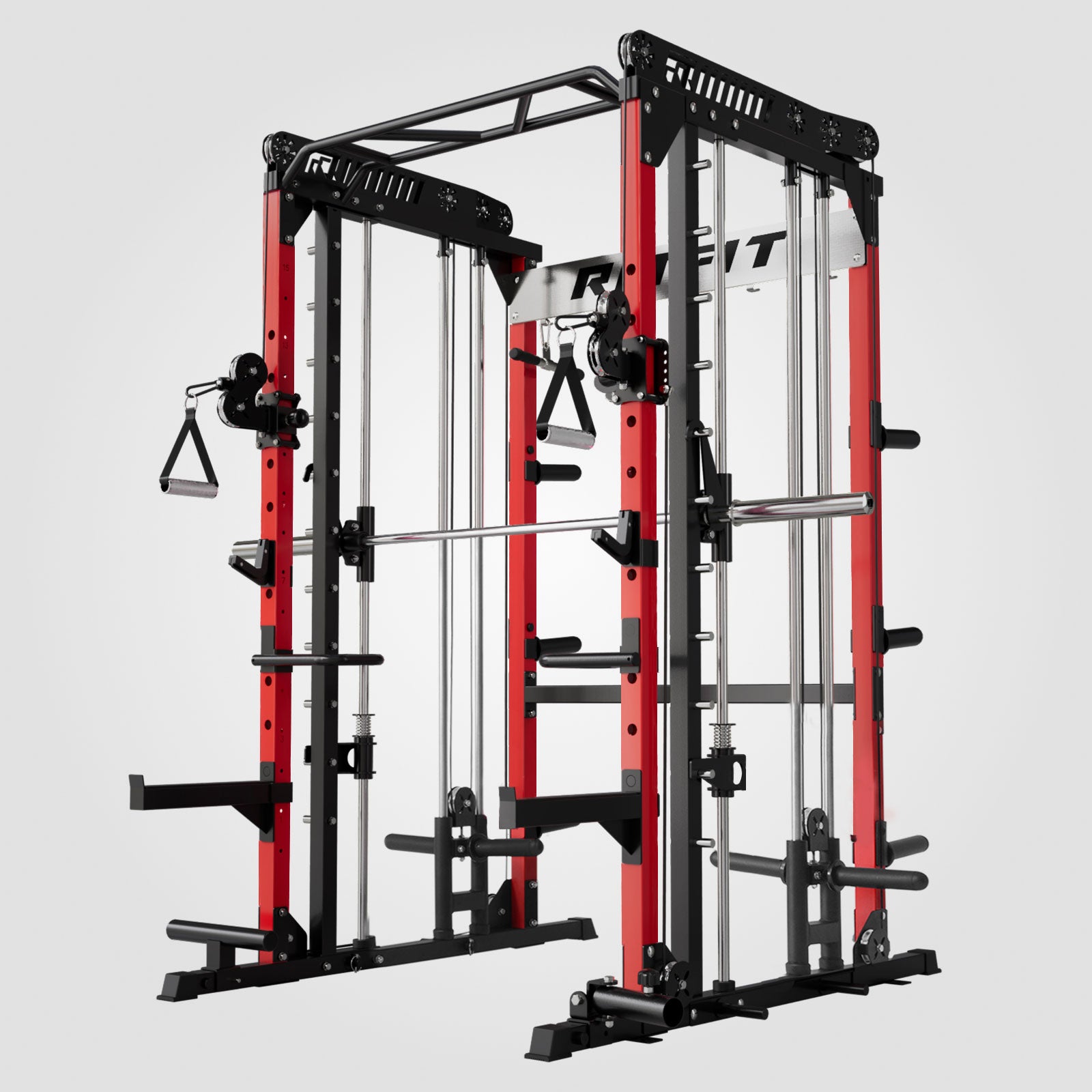
If you train in a small bedroom, adjustable dumbbells add load without eating up the floor. If you want a complete setup that also trains your legs, back, and chest, the RitFit M1 Multi Functional Home Gym Smith Machine brings cable and pulley core work into one footprint.
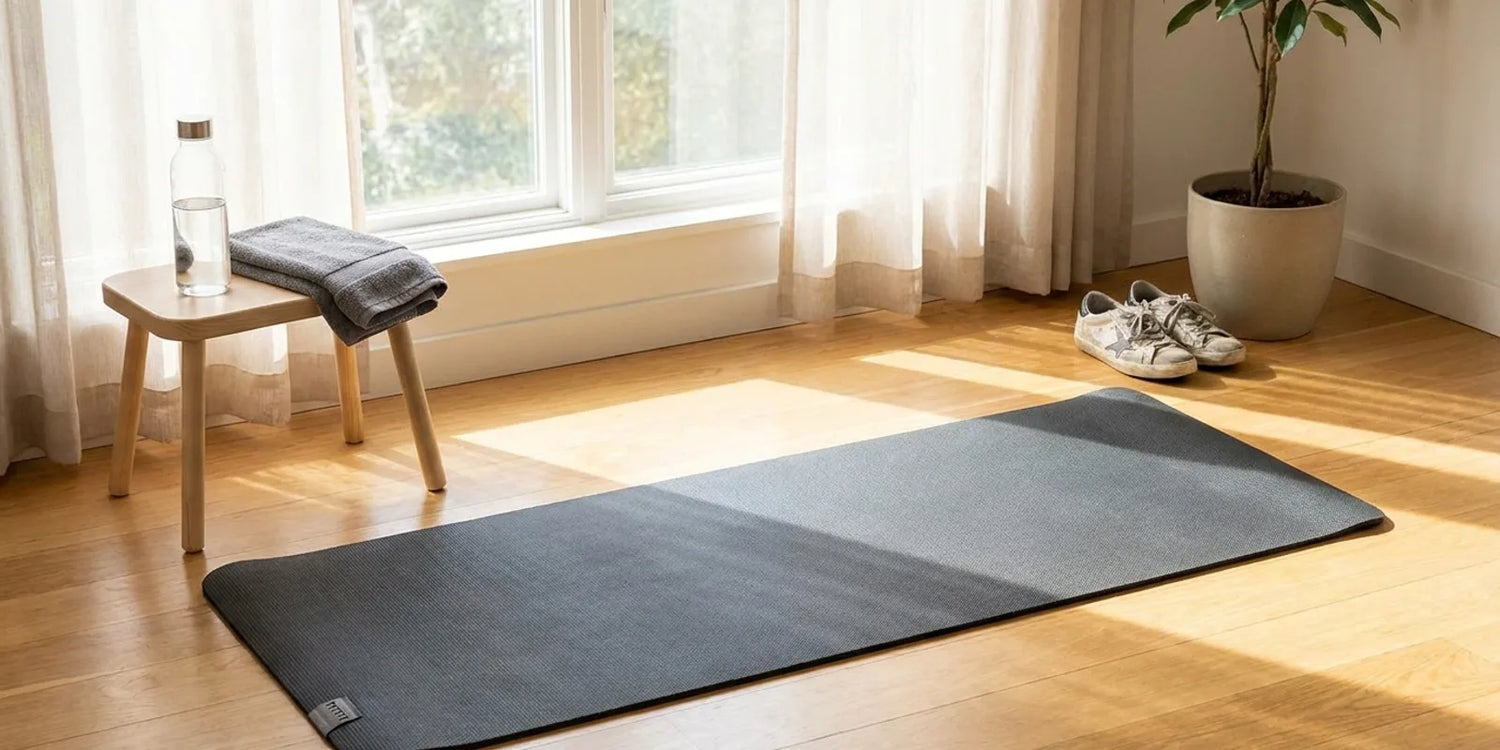
- Start with a mat: It is the only purchase most beginners need in their first month.
- Add dumbbells for load: Weighted crunches and Russian twists keep progressing when bodyweight plateaus.
- Grow into an all-in-one: A machine with a cable stack adds resisted core work plus full total-body training.
Build your setup step by step with the best home gym equipment complete guide for beginners, see how to strengthen your back at home with RitFit equipment, and explore best affordable home gym equipment for home workouts for budget-friendly picks.
FAQs About Best Abs Workout at Home Without Equipment
Can you get abs at home without equipment?
Yes, you can build a strong core with bodyweight ab exercises such as planks, crunches, bicycle crunches, and leg raises.
A 12-week study of plank training found improvements in abdominal muscle endurance and body composition.
What a no-equipment routine cannot do alone is reveal the visible six-pack that also depends on diet and total-body training.
What is the best abs workout for beginners at home?
A balanced beginner routine pairs a plank hold, crunches, bicycle crunches, leg raises, and a side plank, done for three rounds three days a week.
Each move trains a different core function from stability to rotation.
Start with short holds and low reps, then add time and reps as your form stays clean.
How many times a week should beginners train abs?
Three sessions a week is a practical starting point for beginners, matching the schedule used in core-training research.
Your abs recover like any muscle, so space sessions out with a rest day between them.
Once the routine feels easy, increase hold times, reps, or add a loaded exercise rather than training daily.
How long does it take to see abs from working out at home?
Core strength improvements can show up within weeks, but visible abs depend on lowering body fat, which needs a calorie deficit and total-body training. Spot reduction is not possible, so pair your ab routine with compound movements and a balanced diet to see the definition you are working toward.
What equipment do I need to start ab workouts at home?
None beyond a comfortable mat and enough floor space for a plank.
Bodyweight exercises like planks, crunches, and leg raises require no gear.
As you progress, a pair of adjustable dumbbells or a compact all-in-one home gym adds the load and total-body variety that bodyweight alone cannot provide.
Why are planks better than crunches for beginners?
Planks build core stability and endurance while training the deeper muscles that protect your spine, and a 4-week study found the prone plank increased rectus abdominis and oblique activation more than other variations.
Crunches still have a place for direct abdominal work.
Beginners benefit from including both in one routine.
How can I make my home abs workout harder without equipment?
Progress by extending hold times, adding reps and rounds, and reducing rest between moves.
You can also shift to harder variations such as elevated legs for crunches, straight-arm planks, and slower negative phases on leg raises.
When bodyweight stops challenging you, add a dumbbell or resistance for the next step.
Conclusion
The best abs workout at home without equipment for beginners is a simple, consistent plan built from planks, crunches, bicycle crunches, and leg raises done three days a week. Bodyweight work builds real core strength, and progress comes from slowly adding hold time, reps, and variety.
Start with a mat and this routine today, then let your results guide when you upgrade. When you are ready to grow your home gym, check the current RitFit sales to build your setup at the best price.
Disclaimer
This article is for general information only and is not a substitute for professional medical or fitness advice. Consult a qualified professional before starting any new exercise program, especially if you have an injury or a medical condition.
References
1. Park S, Kim YC, Jee YS. Plank exercise improves respiratory capacity through positive changes in body composition, abdominis function, and autonomic nerves' activities. Eur J Sport Sci. 2024;24(3):330-40. doi:10.1002/ejsc.12086. PMCID: PMC11235748
2. Srivastav P, Nayak N, Nair S, Sherpa LB, Dsouza D. Swiss Ball Versus Mat Exercises For Core Activation of Transverse Abdominis in Recreational Athletes. J Clin Diagn Res. 2016;10(12):YC01-YC03. doi:10.7860/JCDR/2016/23102.8972. PMCID: PMC5296563
3. Suner-Keklik S, Numanoglu-Akbas A, Cobanoglu G, Kafa N, Guzel NA. An online pilates exercise program is effective on proprioception and core muscle endurance in a randomized controlled trial. Ir J Med Sci. 2022;191(5):2133-2139. doi:10.1007/s11845-021-02840-8. PMCID: PMC8556804