








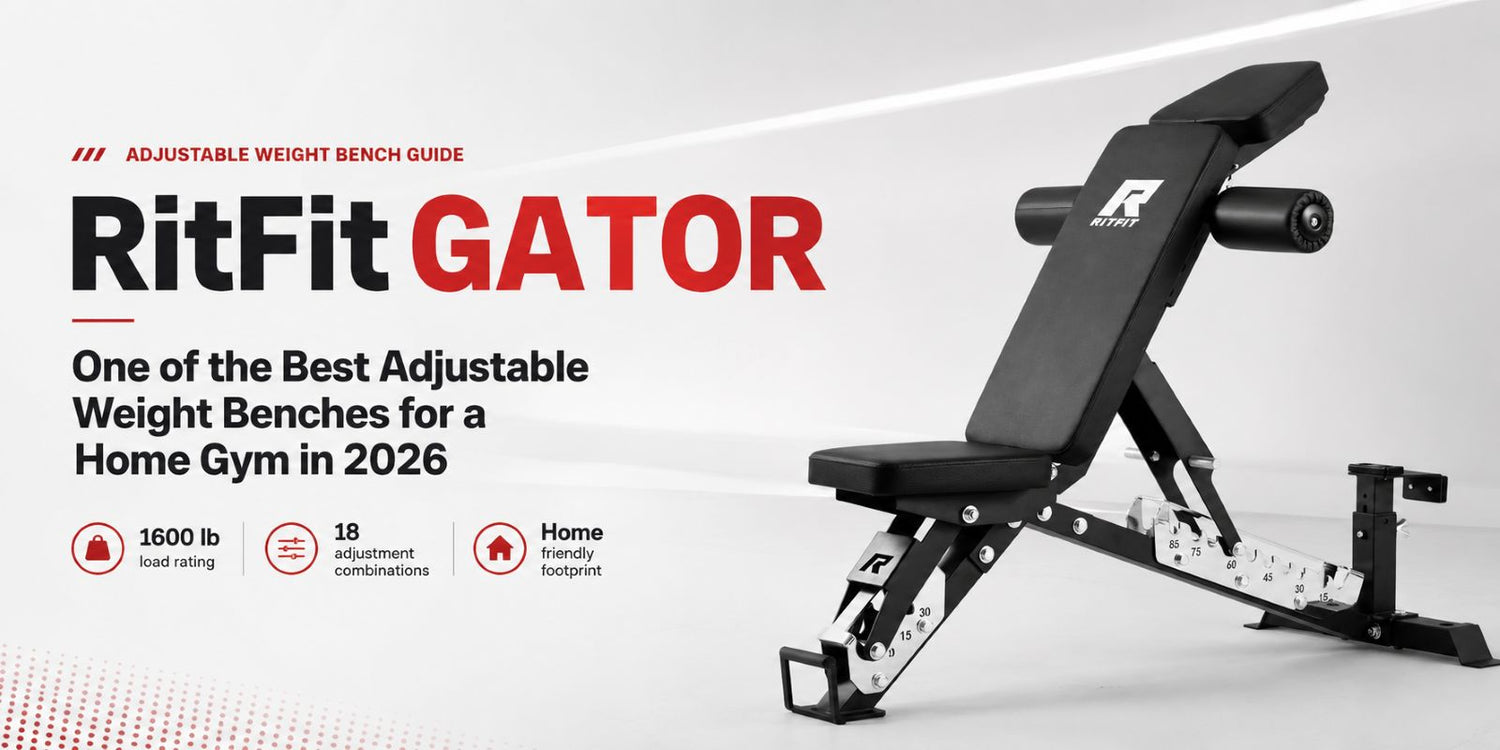
Selecting the best adjustable weight bench for home gym training requires balancing structural load capacity, multi-angle versatility, and compact floor space efficiency.
This guide examines heavy-duty commercial builds, biomechanical pressing angles, and compact folding options to help you choose the ideal strength foundation.
Quick Answer: The best adjustable weight bench for home gym setups is the heavy-duty RitFit Gator FID bench featuring 1,600 pounds capacity, 14-gauge steel construction, and 10 backrest angles. It delivers unyielding stability for heavy dumbbell pressing, incline hypertrophy work, and decline core training across all experience levels.
Key Takeaways
- Load Capacity: Heavy-duty home benches engineered with 14-gauge steel safely support up to 1,600 pounds for maximum lifting stability.
- Angle Versatility: Fully adjustable FID benches provide 10 backrest positions and 3 decline angles to target upper chest, shoulders, and core.
- Optimal Incline: Biomechanical research indicates a 30-degree incline maximizes upper clavicular pectoral activation without excessive shoulder strain.
- Space Efficiency: Integrated transport wheels and fold-flat frames allow seamless mobility and compact storage in home gyms.
- Long-Term Value: Investing in commercial-grade adjustment ladders prevents pad wobble and ensures lifelong durability during progressive overload.
How Do You Choose the Best Adjustable Weight Bench?
Choosing the best adjustable weight bench requires prioritizing steel gauge thickness, total weight capacity, and precise angle adjustments for flat, incline, and decline exercises. A commercial-grade 14-gauge steel frame with a 1,600 lb load rating guarantees zero frame deflection during heavy lifts.
When evaluating home gym equipment, frame stability is the single most critical factor for lifter safety. The RitFit Gator Adjustable Weight Bench utilizes a heavy-duty triangular steel chassis and wide rubberized foot stabilizers.
Lifters should also inspect adjustment mechanisms to ensure rapid transitions between training sets. Ladder-style adjustment systems allow instant angle changes without the hassle of finicky pop-pins during intense supersets.
Browsing the full weight benches collection helps athletes match bench footprints to their available training floor space. Ensuring adequate pad density prevents lower back bottoming out under heavy working loads.
What Are the Top Adjustable Weight Benches Compared?
The top adjustable weight benches balance heavy load capacities with ergonomic pad geometry and compact home gym footprints. High-capacity commercial FID models provide maximum lifting stability, while folding utility benches offer premium space-saving convenience.
| Bench Model | Weight Capacity | Backrest Positions | Steel Frame | Primary Advantage |
|---|---|---|---|---|
| RitFit Gator FID Bench | 1,600 lbs | 10 Incline / Flat / 3 Decline | 14-Gauge Steel | Commercial stability with 5-way adjustable headrest |
| RitFit 1300LB Bench | 1,300 lbs | 6 Incline / Flat / Decline | Heavy-Duty Steel | Compact all-around strength and dumbbell training |
| Foldable Utility Bench | 800 lbs | Multi-Position Ladder | Reinforced Steel | Space-saving fold-flat design for compact rooms |
Specifications based on manufacturer structural testing and standardized home gym load ratings.
For lifters prioritizing heavy compound pressing and maximum structural rigidity, the RitFit 1300lb Adjustable Weight Bench delivers exceptional durability for home strength progression.
Athletes with strict room constraints can opt for a foldable utility bench that collapses flat for under-bed or closet storage.
Why Does Backrest Incline Angle Matter for Muscle Growth?
Adjusting the backrest incline angle alters mechanical tension across the clavicular upper chest, sternal mid-chest, and anterior deltoids. Electromyographic research demonstrates that moderate incline settings maximize upper chest activation while minimizing unwanted anterior shoulder strain.
In biomechanical research comparing five bench inclinations, scientists found that a 30-degree incline significantly heightened electromyographic activity in the upper clavicular pectoralis major[1]. Raising backrest angles beyond 45 degrees transferred primary recruitment away from chest musculature toward the anterior deltoids.
Furthermore, laboratory trials measuring barbell bench press mechanics confirmed that muscle activation across the chest, shoulders, and triceps increases progressively as training loads approach 1RM intensities during the concentric pressing phase[2].
"Built with 14-gauge steel, the RitFit Gator Adjustable Weight Bench offers a robust weight capacity of 1,600 pounds. With 10 back pad angles, three seat pad positions, three decline settings, and a five-way adjustable head rest, you have ample options to support your strength and muscle building goals."
, Stephen Sheehan, CPT, CNC, Certified Personal Trainer and Nutritionist at Garage Gym Reviews (Source)
How Should You Program Home Dumbbell Bench Exercises?
Programming home dumbbell bench workouts requires combining multi-angle compound presses with chest-supported rowing exercises across progressive resistance tiers. Systematic meta-analyses indicate that training loads at or above 60% of one-rep max stimulate optimal muscular strength and hypertrophy adaptations[3].
Lifters should establish a dedicated workout space with an organized dumbbell rack stand to facilitate smooth weight selection between pressing sets.
Pairing flat bench presses with 30-degree incline presses and chest-supported rows creates a balanced upper-body stimulus. For specialized room configurations, review our guides on selecting an adjustable weight bench for garage gym setups or an adjustable weight bench for basement gym environments.
Consult our comprehensive home gym setup guide to optimize floor clearances around your bench and power rack.
FAQs About Adjustable Weight Benches
Is the RitFit GATOR adjustable weight bench worth it for a home gym?
Yes, the RitFit GATOR adjustable weight bench is worth it for home gym lifters who demand heavy duty durability, high weight capacity, and complete angle versatility. Built with solid 14-gauge steel and supporting up to 1,600 pounds, it delivers commercial level stability for flat, incline, decline, and upright pressing.
Can the RitFit GATOR adjustable weight bench fit a small garage gym?
Yes, the RitFit GATOR fits comfortably in most garage gym floor plans while providing professional stability. Its integrated transport wheels and ergonomic front handle allow you to roll and store the bench against the wall or inside a compact power rack when your workout concludes.
How stable is the RitFit GATOR adjustable weight bench for dumbbell presses?
The RitFit GATOR provides remarkable stability during heavy dumbbell pressing due to its wide triangular base, precision laser-cut ladder adjustments, reinforced steel spine, and non-slip rubber feet. Lifters experience zero frame wobble or unwanted pad shift even when handling substantial working loads at home.
Does the RitFit GATOR adjustable weight bench work for taller lifters?
Yes, the RitFit GATOR accommodates taller lifters exceptionally well thanks to its extended backrest and five-way adjustable headrest. Lifters over six feet tall receive full head, neck, and spinal support during flat bench presses, incline rows, and seated overhead dumbbell presses.
Which workouts can you do with the RitFit GATOR adjustable weight bench?
You can execute a comprehensive full-body training routine including flat barbell bench presses, steep incline dumbbell presses, decline chest flyes, seated overhead shoulder presses, chest-supported dumbbell rows, Bulgarian split squats, seated bicep curls, skull crushers, spider curls, and decline core crunches.
Should beginners choose the RitFit GATOR adjustable weight bench or a cheaper bench?
Beginners should invest in the RitFit GATOR adjustable weight bench if they want long-term structural safety, superior 1,600 lb load capacity, and rock-solid stability that grows with their strength. Cheaper lightweight benches often develop loose joints, wobbly pads, and safety concerns under progressive overload.
Conclusion
Investing in the best adjustable weight bench for home gym training unlocks versatile multi-angle pressing, rowing, and core exercises while maintaining structural safety. A commercial-grade 14-gauge steel bench with a 1,600 lb capacity provides the stability needed for lifelong strength progression.
Start by measuring your available training footprint, then check out current bundle promotions through the RitFit discount guide to upgrade your setup.
Disclaimer
Consult a qualified healthcare provider or certified fitness trainer before beginning any intense home resistance training program. Always inspect bench adjustment pins, bolts, and load ratings prior to lifting heavy weights.
References
1. Rodriguez-Ridao D, Antequera-Vique JA, Martin-Fuentes I, Muyor JM. Effect of Five Bench Inclinations on the Electromyographic Activity of the Pectoralis Major, Anterior Deltoid, and Triceps Brachii during the Bench Press Exercise. Int J Environ Res Public Health. 2020. PMCID: PMC7579505
2. Krol H, Golas A. Effect of Barbell Weight on the Structure of the Flat Bench Press. J Strength Cond Res. 2017;31(5):1321-1337. PMCID: PMC5400411
3. Lopez P, Radaelli R, Taaffe DR, et al. Resistance Training Load Effects on Muscle Hypertrophy and Strength Gain: Systematic Review and Network Meta-analysis. Med Sci Sports Exerc. 2021;53(6):1206-1216. doi:10.1249/MSS.0000000000002585. PMCID: PMC8126497





