The best arm machines at the gym target biceps and triceps through guided resistance, letting you load each muscle cleanly without relying on balance or momentum. Whether you train at a commercial gym or plan to build a home setup, knowing which machines deliver the most direct stimulus saves time and gets you stronger arms faster.
This guide covers the seven most effective arm machines, how to set up and use each one correctly, progressive overload protocols per machine, and how multi-functional home gym equipment can replace an entire rack of arm stations.
Quick Answer: The best arm machines at the gym are the cable machine, preacher curl machine, tricep pushdown station, seated tricep extension machine, lat pulldown machine, assisted pull-up machine, and seated dip machine. Cable machines rank highest for overall versatility, while the preacher curl and tricep pushdown isolate each muscle most precisely for hypertrophy.
Key Takeaways
- Top biceps machine: The cable machine and preacher curl machine provide the most consistent tension through the full range of elbow flexion.
- Top triceps machine: The cable tricep pushdown isolates all three heads of the triceps brachii and is the most accessible station in any gym.
- Form first: Aligning your elbow with the machine pivot point is the single most important setup step on any selectorized arm machine.
- Home gym replacement: A multi-functional smith machine with cable crossover replaces four or more separate arm stations in a single compact footprint.
- Progressive overload: Add one to two reps per week until you reach 12, then increase load by the smallest available increment and restart at 8 reps.
Why Machine-Based Arm Training Works
Machine-based arm training works because guided resistance eliminates balance demand, allowing the biceps and triceps to absorb more of the workload directly. A 2023 systematic review and meta-analysis found that machine-based strength training allowed higher maximum loads to be lifted compared to free-weight exercises within similar movement patterns.[1]
- Constant tension: Cable machines in particular keep the target muscle loaded through both the concentric and eccentric phases, unlike free weights where tension drops at the top or bottom of the movement.
- Controlled path: Selectorized machines fix the movement arc, reducing the chance of compensating with shoulder or wrist momentum.
- Beginner-friendly: Machines let new lifters focus entirely on contracting the right muscle without managing bar path or grip width.
- Form flexibility: One study in untrained individuals found that strict form and externally assisted momentum produced similar biceps and triceps hypertrophy over 8 weeks of training.[2]
Machines and free weights complement rather than compete with each other. Most lifters benefit by using machines for primary isolation sets and adding cables or dumbbells for variety.
The 7 Best Arm Machines at the Gym
The seven best arm machines at the gym each target the biceps, triceps, or both through distinct movement patterns and resistance profiles. Choosing the right combination depends on your goal, available equipment, and experience level.
1. Cable Machine (Functional Trainer), Most Versatile
The cable machine is the most versatile arm training tool in any gym, covering bicep curls, tricep pushdowns, hammer curls, and overhead extensions from one station by changing pulley height and attachment. According to one trainer resource citing American Council on Exercise testing, the cable bicep curl ranks among the top exercises for biceps brachii activation, second only to the concentration curl.
- Key exercises: Cable bicep curl (straight bar), rope hammer curl, cable preacher curl, tricep rope pushdown, overhead tricep extension.
- Setup tip: Set the low pulley for curls and the high pulley for pushdowns; keep elbows pinned to your sides for both.
- Beginner advantage: The weight stack adjusts in small increments, making it easy to find the right starting load.
For a deeper look at every station type, see the guide to Arm Workout Machines Names.
2. Bicep Curl / Preacher Curl Machine
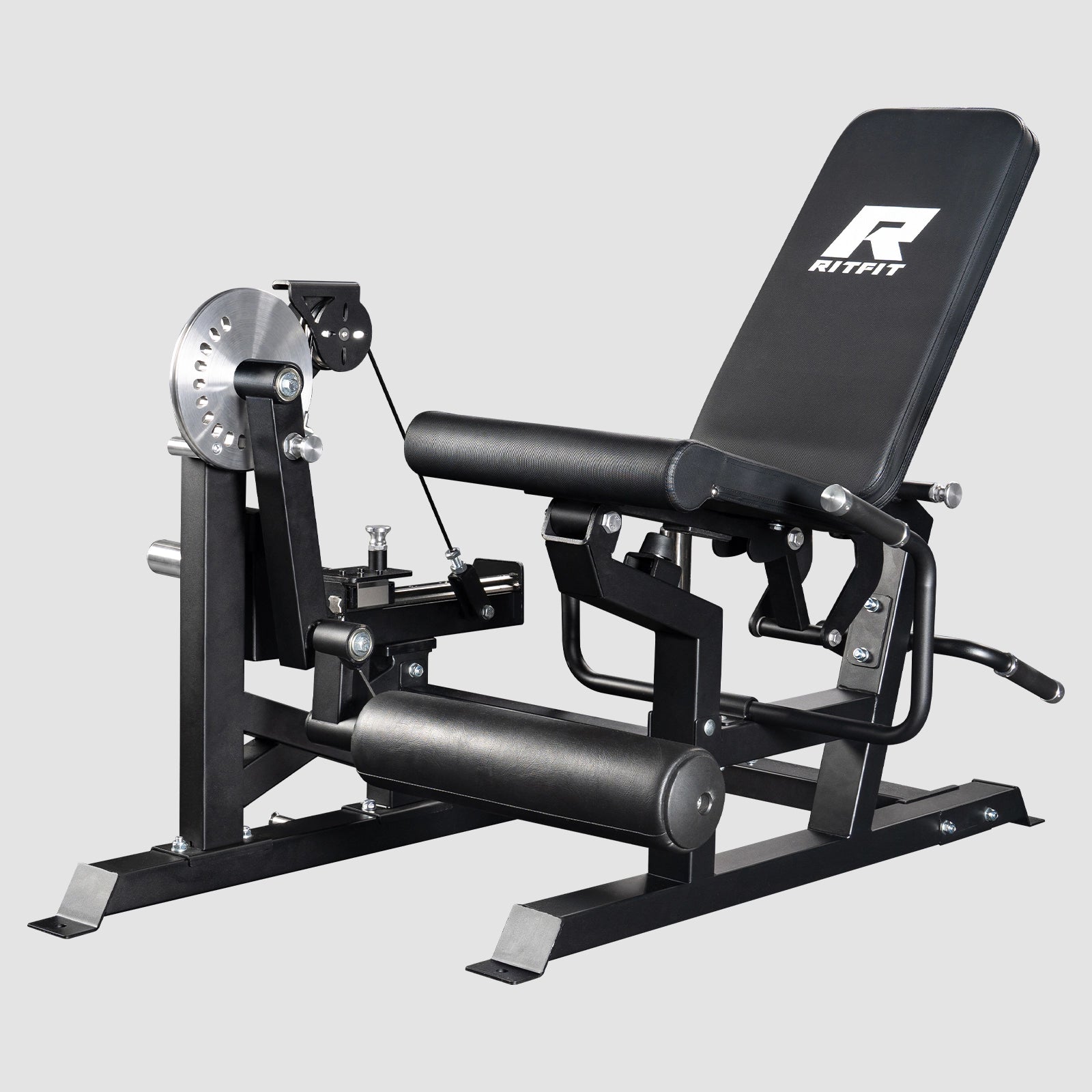
The preacher curl machine anchors the upper arm against a sloped pad, removing swing and placing peak tension on the biceps near full elbow extension. This isolation makes it one of the most effective machines for targeting biceps long-head and short-head development depending on grip width.
- Pad angle matters: A steeper forward-angled pad shifts emphasis toward the short head of the biceps brachii.
- Range of motion: Training through the full lengthened range (from nearly full extension) produces greater distal biceps hypertrophy, based on one study of elbow flexor training in young women.[3]
- Grip variations: Supinated (palms up) targets the biceps; neutral grip shifts load to the brachialis and long head.
Read more about biceps machine mechanics in the arm workout machines guide.
3. Tricep Pushdown Station (Cable)
The cable tricep pushdown station is the most reliable machine for isolating all three heads of the triceps, using a high pulley and bar or rope attachment to drive elbow extension against constant cable resistance. Keeping elbows fixed at your sides throughout the movement ensures the triceps brachii does the work rather than the anterior deltoid.
- Straight bar vs. rope: A straight bar allows heavier load and emphasizes the long head; a rope attachment increases range of motion and shifts emphasis to the lateral head.
- Common error: Letting elbows flare forward reduces triceps range and recruits the front shoulder, reducing effectiveness.
- Superset option: Pair tricep pushdowns immediately with cable curls for an efficient arm superset with zero equipment changes.
4. Seated Tricep Extension Machine
The seated tricep extension machine provides back support while driving elbow extension overhead or behind the torso, loading the long head of the triceps in a stretched position. Because the long head crosses the shoulder joint, training it in an overhead or lengthened position produces high mechanical tension.
- Long head emphasis: Overhead or behind-the-head extension positions place the triceps long head at its longest muscle length, maximizing mechanical tension.
- Back support advantage: The seat pad removes lumbar stress, allowing heavier loading than standing cable extensions.
- Pair with pushdowns: Use this machine after tricep pushdowns to hit the long head with more targeted volume.
For a complete look at upper body push machine options that pair well with tricep work, see Best Chest Machines For Home Gyms.
More Top Arm Machines: Lat Pulldown, Assisted Pull-Up, and Dip
Three additional machines round out the best arm machine list by targeting biceps and triceps through compound pulling and pushing patterns rather than pure isolation.
5. Lat Pulldown Machine, Arms and Back Combo
The lat pulldown machine primarily trains the latissimus dorsi but strongly recruits the biceps and brachialis as secondary movers during elbow flexion, making it a valuable addition to any arm training day. Grip width and handle type determine how much work shifts to the arms versus the back.
- Reverse grip advantage: An underhand (supinated) grip increases biceps brachii activation relative to a standard overhand grip.
- Shoulder-width grip: A narrower grip allows fuller elbow flexion, increasing biceps involvement through a greater range of motion.
- Pair with bicep curls: Place lat pulldowns early in your session as a compound warm-up before isolation curls.
Find multi-station equipment that includes a lat pulldown attachment in the strength equipment collection.
6. Assisted Pull-Up / Chin-Up Machine
The assisted pull-up machine lets beginners develop biceps and back strength through the pull-up movement pattern before progressing to bodyweight reps, using a counterbalanced platform to reduce effective bodyweight. Chin-up grip (underhand) places more load on the biceps brachii compared to overhand pull-up grip.
- Progression method: Reduce the counterbalance weight by 5 to 10 pounds every two to three weeks as upper body strength improves.
- Chin-up vs. pull-up: Underhand chin-up grip recruits more biceps; overhand pull-up grip shifts load to the lats and rear deltoids.
- Dual function: The same machine typically includes a dip platform for triceps training, making it a two-in-one arm station.
7. Seated Dip Machine
The seated dip machine simulates the parallel bar dip with added back support and a weight stack, making it safer and more accessible for beginners who need extra triceps volume without the shoulder instability risk of free dips. The fixed movement path keeps tension on the triceps throughout the range.
- Grip width: Keep handles at or slightly narrower than shoulder width to minimize shoulder impingement risk and maximize triceps engagement.
- Seat height: Adjust the seat so the start position has elbows bent at roughly 90 degrees, not fully locked out.
- Volume use: This machine works well for higher-rep finishing sets after heavier pushdown work.
For a related full-body machine workout plan, see the guide to Best Gym Machines For Glutes.
Beginner Setup Guide: How to Use Each Arm Machine Correctly
Correct machine setup for beginners means aligning the joint being trained with the machine pivot point and choosing a starting weight that allows full range of motion with controlled tempo. Watch the video below for a practical walkthrough of common gym arm machines and exact setup steps.
- Cable machine: Set pulley height before loading the weight. For curls, position the low pulley at ankle height and face the stack. For pushdowns, set the pulley at head height and stand upright with elbows at your sides from the start.
- Bicep curl / preacher curl machine: Sit and press your upper arms flat against the pad. Align your elbows with the machine pivot point, which is usually marked with a dot or sticker on the side frame. Lower the weight to near full extension on every rep to use the lengthened range, which a 2023 study found promotes greater distal biceps growth.[3]
- Tricep pushdown station: Stand with your feet shoulder-width apart, grip the bar or rope at chest height, and press elbows firmly against your torso before the first rep. Pull the attachment down until elbows fully extend, then control the return to the start position.
- Seated tricep extension machine: Adjust the seat so the handles align at shoulder height when seated. Press back firmly against the pad and extend the elbows fully on each rep without arching the lower back.
- Lat pulldown machine: Sit and tuck your knees under the pad, which prevents the body from being lifted. Grip the bar slightly wider than shoulder width for back focus, or at shoulder width with an underhand grip for more biceps involvement. Pull to the upper chest, not behind the neck.
- Assisted pull-up machine: Step onto the platform and select a counterbalance weight. The higher the counterbalance number, the easier the movement. Hang with arms fully extended before each rep and pull until your chin clears the bar.
- Seated dip machine: Adjust the seat height so elbows start at 90 degrees. Keep elbows tracking straight back, not flaring outward, and press to full extension at the bottom of the movement.
For more detail on each machine type and what it is called in different gyms, the arm workout machines guide covers every station with diagrams.
Progressive Overload Protocols for Each Arm Machine
Progressive overload on arm machines means systematically increasing training stress each week so the biceps and triceps continue to adapt and grow. The most practical method for machine training is double progression: add reps first, then increase weight.
- Double progression (all machines): Start each exercise at 3 sets of 8 reps. Add 1 rep per set each week. Once you reach 3 sets of 12, increase the weight by the smallest available increment (usually 5 lb) and restart at 8 reps.
- Cable machine curls and pushdowns: Cable stacks often allow 2.5 to 5 lb increments. Use the half-pin (if available) for finer steps when 5 lb feels too large a jump.
- Preacher curl machine: Because the pad removes momentum, strength gains here tend to be slower. Increase weight only when all reps are completed with a 2-second lowering tempo.
- Lat pulldown: Progress is usually faster here than isolation machines. Move up one weight plate when you can complete 12 reps with a full 2-second descent.
- Assisted pull-up machine: Reduce the counterbalance weight by 5 to 10 lb every 2 to 3 weeks as a form of progressive overload, working toward unassisted bodyweight reps.
- Seated dip and tricep extension machines: Add volume (an extra set) before adding load, since these machines tend to stress the elbow joint more at higher weights.
- Training frequency: Training each arm muscle group twice per week is a practical starting point for consistent progressive overload with adequate recovery.
Track weights and reps in a notebook or phone app after every session. Without records, it is nearly impossible to know whether you are consistently progressing or stalling.
Home Gym Arm Machine Alternatives: What to Buy
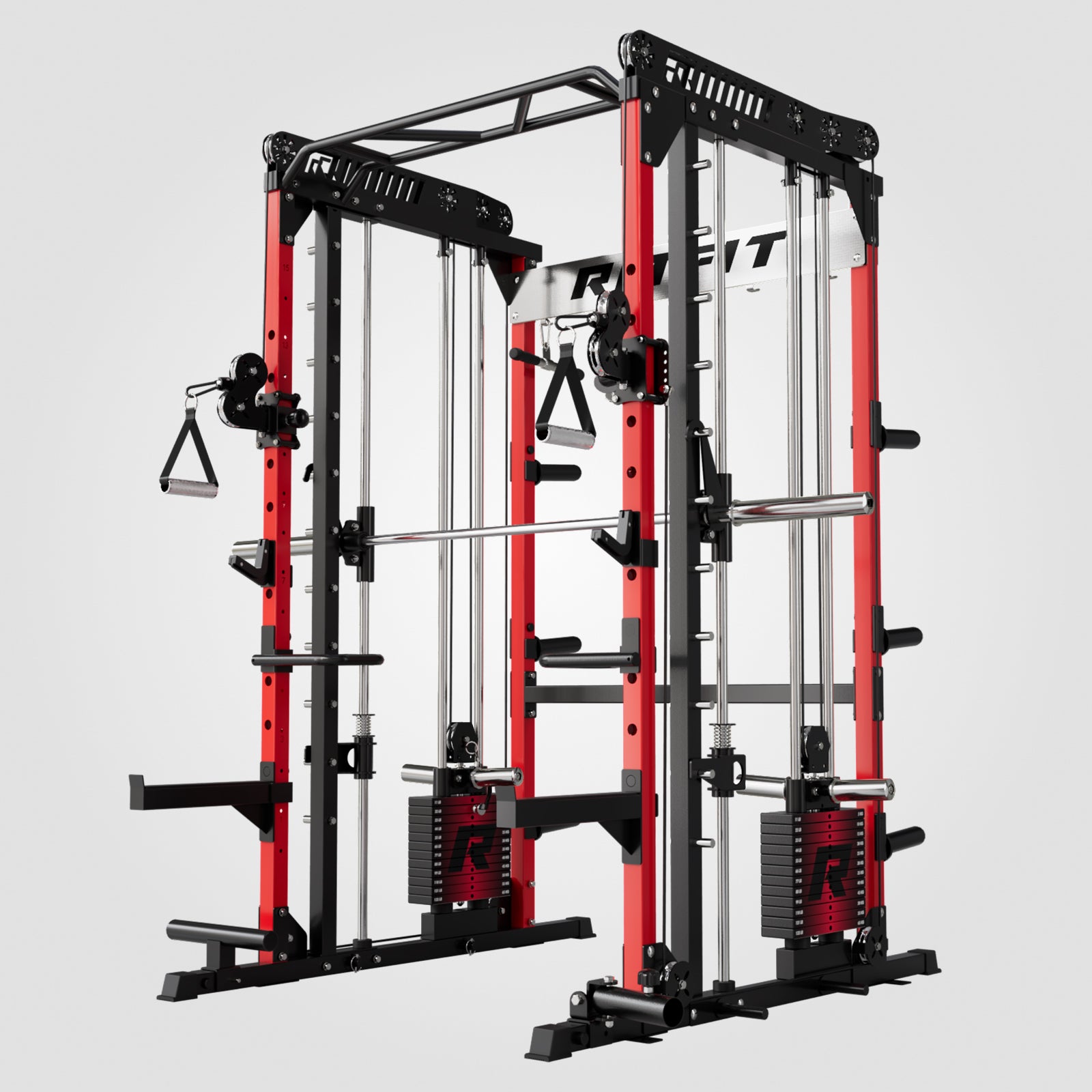
Home gym owners can replace four to six separate commercial gym arm stations with a single multi-functional smith machine that includes a cable crossover system. The cable attachment on these units handles bicep curls, tricep pushdowns, hammer curls, and lat pulldowns from one frame.
| Model | Cable Crossover | Smith Machine | Lat Pulldown | Best For |
|---|---|---|---|---|
| RitFit M1 PRO | Yes | Yes | Yes | Complete arm station replacement |
| RitFit M3 | Yes | Yes | Yes | Powerlifting and arm training combo |
| RitFit PSR05 | Partial | Yes | Yes | Lat pulldown and arm-focused buyers |
All models are within the RitFit product line. Selection should be based on budget, available floor space, and training goals.
RitFit M1 PRO Smith Machine as a Complete Arm Station
The RitFit M1 PRO Multi-Functional Smith Machine combines a cable crossover system, smith machine bar, and lat pulldown attachment in one unit, directly replacing the cable machine, lat pulldown machine, and assisted chin-up station found in a commercial gym.
- Cable arm exercises available: Bicep curls (low pulley), tricep pushdowns (high pulley), hammer curls (rope), overhead extensions, and face pulls.
- Lat pulldown: The integrated lat attachment allows underhand-grip pulldowns for added biceps and back volume without a separate machine.
- Space footprint: A single all-in-one unit takes up significantly less floor space than four or five separate arm stations stacked side by side.
- Weight stack option: The M1 PRO Weight Stack Home Gym Package adds a built-in weight stack for faster loading without separate plate changes.
For a full walkthrough of home gym setup and space planning, see the Home Gym Builder's Guide. For smith machine comparisons within the RitFit line, see Best Smith Machines For Home Gyms.

Sample Beginner Arm Machine Workout
This sample routine uses the machines covered in this guide to train both biceps and triceps in a single session, twice per week. Rest 60 to 90 seconds between sets.
| Exercise | Machine | Sets | Reps |
|---|---|---|---|
| Cable Bicep Curl (straight bar) | Cable machine (low pulley) | 3 | 8-12 |
| Tricep Rope Pushdown | Cable machine (high pulley) | 3 | 8-12 |
| Preacher Curl Machine | Bicep curl / preacher machine | 3 | 10-12 |
| Seated Tricep Extension | Tricep extension machine | 3 | 10-12 |
| Reverse-Grip Lat Pulldown | Lat pulldown machine | 3 | 10-12 |
Apply double progression: add 1 rep per week until reaching the top of the range, then increase weight and restart at the bottom.
For a related machine-based routine targeting the lower body, see Best Leg Machines At The Gym. For equipment that supports upper body training, browse the Strength Training Equipment collection.
Expert Insight on Arm Machine Training
Understanding how arm anatomy interacts with machine position helps you select the right equipment for each training goal. Biceps exercises that angle the upper arm forward in front of the torso load the short head differently than exercises with the upper arm at the side.
The Smith Machines With Weight Stacks guide explains how integrated cable systems on smith machines replicate many of these machine positions at home.
"Exercises such as preacher curls and concentration curls (where the upper arm is positioned in front of the torso) work more in the short head, as do exercises such as cross cable curls on a high pulley apparatus."
Brad Schoenfeld, PhD, Exercise Science Researcher specializing in Muscle Hypertrophy, CUNY Lehman College, The Science of Biceps Training ↗
FAQs About Best Arm Machines at the Gym
What is the best machine at the gym for biceps?
The cable machine and preacher curl machine are the top choices for biceps. The cable machine keeps constant tension through the full range of motion, while the preacher curl pad locks your upper arm in place to eliminate momentum and maximize isolation of the bicep muscle.
What machine is best for triceps at the gym?
The cable tricep pushdown station is the most effective and accessible machine for triceps. By keeping your elbows fixed at your sides and pressing a bar or rope attachment downward, you isolate all three heads of the triceps through a controlled, full range of elbow extension.
Are arm machines better than free weights for building muscle?
Arm machines and free weights each offer distinct advantages. Machines guide movement and isolate the target muscle with less balance demand, making them ideal for beginners and hypertrophy-focused sets, while free weights and cables recruit more stabilizing muscles. Most experienced lifters combine both for complete arm development.
How do I set up a bicep curl machine correctly?
Sit down and align your elbows with the machine's rotation axis, usually marked by a dot or pin on the side frame. Adjust the seat so your arms rest flat on the pad with elbows slightly bent at the start, then select a weight you can complete 10 reps with controlled tempo before increasing load.
Can I train arms at home without a commercial gym?
Yes. A multi-functional home gym machine with cable crossover can perform bicep curls, tricep pushdowns, lat pulldowns, and overhead extensions from a single compact unit, replicating four to six separate commercial gym arm stations without needing a full gym membership.
How many sets and reps should I do on arm machines?
For muscle growth, aim for three to four sets of eight to twelve reps per exercise, training each muscle group twice per week, resting sixty to ninety seconds between sets. Start with a weight you can complete with controlled form, and add five to ten percent load once you consistently reach the top of the rep range.
What is progressive overload on arm machines?
Progressive overload means gradually increasing training stress over time so muscles continue to adapt. On arm machines, apply it by adding one to two reps per set each week until you reach twelve reps, then increase the weight by the smallest increment available and restart at eight reps, repeating the cycle each training block.
Conclusion
The best arm machines at the gym cover both biceps isolation and triceps extension through guided resistance that allows heavier loads and cleaner muscle targeting than free weights alone. Start with the cable machine for versatility, add the preacher curl and tricep pushdown for direct isolation, and include the lat pulldown for compound biceps volume.
For home gym training, browse the full Strength Machines collection to find multi-functional equipment that replaces an entire arm machine rack in a single unit.
Disclaimer
The information in this article is intended for general fitness education and does not constitute medical or clinical advice for any individual. Consult a qualified fitness professional or healthcare provider before beginning any new exercise program, especially if you have pre-existing joint conditions or prior injuries.
Save on your next RitFit order
Tap the button to copy your code, then paste it at checkout.
References
1. Haugen ME, Vårvik FT, Larsen S, Haugen AS, van den Tillaar R, Bjørnsen T. Effect of free-weight vs. machine-based strength training on maximal strength, hypertrophy and jump performance - a systematic review and meta-analysis. BMC Sports Sci Med Rehabil. 2023;15(1):103. doi:10.1186/s13102-023-00713-4. https://pmc.ncbi.nlm.nih.gov/articles/PMC10426227/
2. Augustin F, Piñero A, Enes A, et al. Do Cheaters Prosper? Effect of Externally Supplied Momentum During Resistance Training on Measures of Upper Body Muscle Hypertrophy. Int J Exerc Sci. 2025;18(3):329-342. https://pmc.ncbi.nlm.nih.gov/articles/PMC11970409/
3. Pedrosa GF, Simões MG, Figueiredo MOC, et al. Training in the Initial Range of Motion Promotes Greater Muscle Adaptations Than at Final in the Arm Curl. Sports (Basel). 2023;11(2):39. doi:10.3390/sports11020039. https://pmc.ncbi.nlm.nih.gov/articles/PMC9960616/