








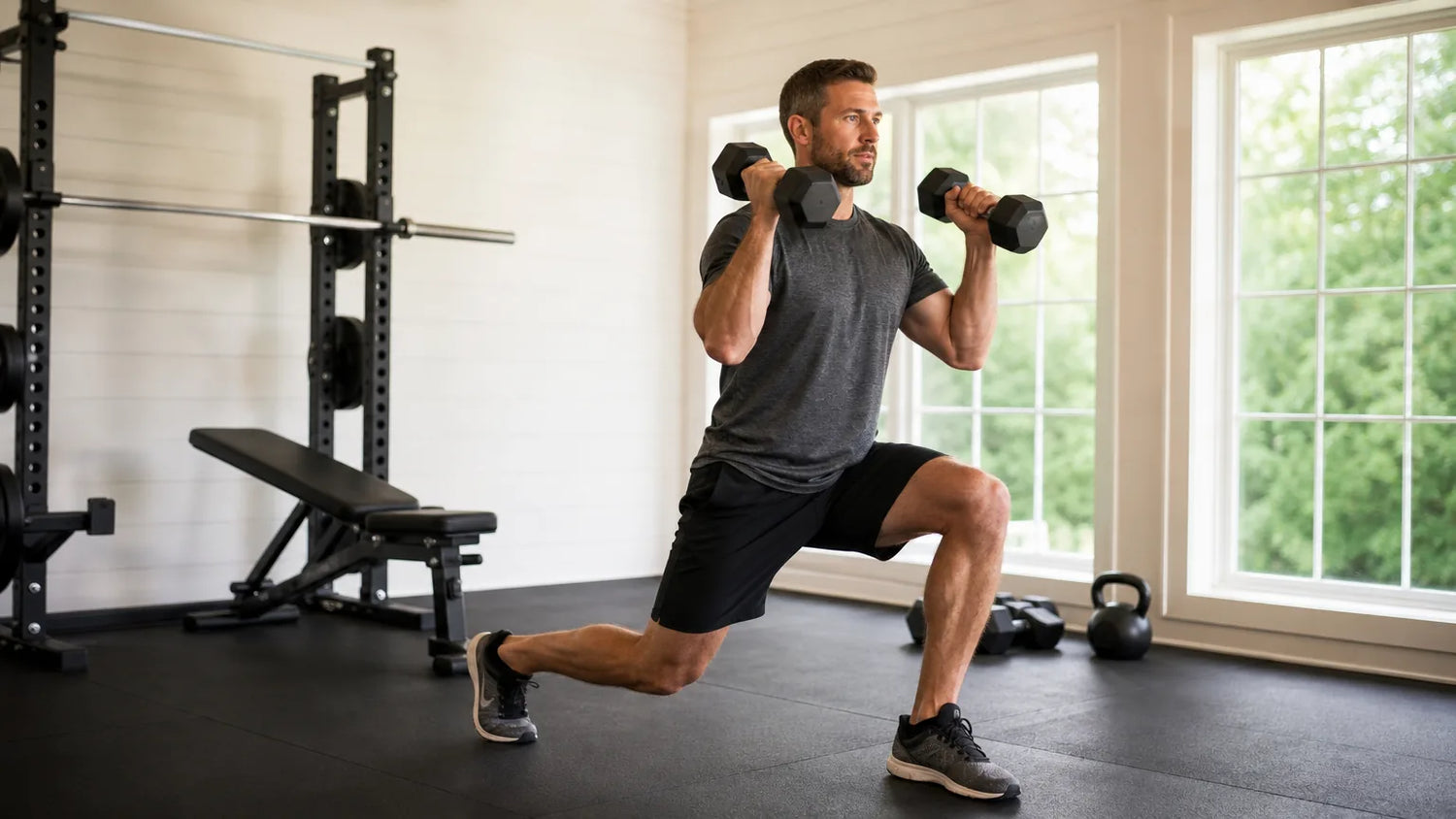
Finding the best athletic club is less about a brand name and more about matching a facility to your goals, schedule, and budget. This guide gives you the criteria that separate a great gym from an average one.
It also shows when building a home gym becomes the smarter long term move, and how a hybrid setup can give you the best of both worlds.
Quick Answer: The best athletic club is the one you will actually use consistently, judged on equipment depth, coaching quality, cleanliness, convenient hours, useful amenities, community, and honest value. For self motivated lifters with space, a well equipped home gym often wins on cost and convenience over the long term.
Key Takeaways
- Consistency beats prestige: The best athletic club is simply the one you will visit often, so location and hours matter as much as equipment.
- Judge on seven criteria: Equipment depth, coaching, cleanliness, access hours, amenities, community, and value tell you more than any ranking.
- Cost flips over time: Memberships run about 30 to 80 dollars monthly, while a home gym is a larger upfront cost that gets cheaper per workout.
- Environment shapes results: Supervised gym settings tend to support higher adherence and load, which can matter for measurable outcomes.
- Hybrid often wins: Keeping essentials at home while using a club for machines, pools, and classes removes barriers on both sides.
What Makes an Athletic Club the Best Choice?
The best athletic club for you is the one that removes barriers to training rather than the one with the flashiest marketing. A great club scores well across seven practical criteria that you can check on a single tour.
- Equipment depth: Look for enough racks, benches, cable systems, and free weights that you rarely wait during peak hours.
- Coaching quality: Certified trainers and clear onboarding help beginners avoid early mistakes and progress faster.
- Cleanliness: Wiped equipment, stocked sanitizer, and clean locker rooms signal a facility that respects members.
- Access hours and location: A club close to home or work with hours that fit your schedule protects consistency.
- Amenities: Pools, saunas, group classes, and childcare add value only if you will actually use them.
- Community feel: A welcoming crowd and staff who know your name can boost accountability and motivation.
- Honest value: Weigh the full price, including add on fees, against how often you realistically expect to attend.
Tour at your usual workout time so you see real crowd levels, not a quiet off peak snapshot. If you are still deciding between models, our breakdown of home gym vs gym membership: the pros and cons can help frame the choice.
Athletic Club vs Home Gym: What Are the Real Trade Offs?
The real trade off between an athletic club and a home gym comes down to variety and social energy versus convenience and long term cost. Neither option is universally better, so the right pick depends on your space, budget, and motivation style.
| Model | Cost pattern | Access | Equipment | Best for |
|---|---|---|---|---|
| Club membership | 30 to 80 dollars monthly standard, 200 to 400 boutique | Facility hours | Full variety plus machines | Social lifters, variety seekers, no space at home |
| Home gym | 1,000 to 2,000 upfront, then near zero | 24 hours a day | Whatever you buy | Busy, private, self motivated, long term trainers |
| Hybrid | Membership plus basic home gear | Both | Home essentials plus club machines | People wanting variety plus everyday convenience |
A home gym removes commute time and gives round the clock access, which many parents and remote workers value. You can read more about the unique benefits of a home gym before committing.
A club, by contrast, offers deep equipment variety, pools, and a social atmosphere that some people need to stay accountable. If you are unsure whether gear pays off, see whether buying home gym equipment is worth it for your situation.
What Does a Good Membership Actually Cost?
A good gym membership commonly costs about 30 to 80 dollars per month for standard access, while premium boutique studios with small classes can reach 200 to 400 dollars monthly. A quality home gym is a larger upfront cost, roughly 1,000 to 2,000 dollars for essentials, that gets cheaper per workout over time.
- Watch the add on fees: Enrollment charges, class surcharges, and premium location fees can raise the real monthly cost well above the headline price.
- Find your breakeven point: Divide your total home gym cost by your monthly membership to see how many months it takes to pay off.
- Factor in usage: A cheap membership you skip still wastes money, so honest attendance matters more than the sticker price.
For typical market ranges by facility type, our overview of gym membership prices gives helpful context. Home setups usually win long term if you train consistently and actually use the space.
Does Where You Train Affect Your Results?
Where you train can affect your results, mainly because environment shapes adherence, loading, and equipment access rather than changing your muscles directly. A well equipped, consistently used space usually beats a fancier one you rarely visit.
A systematic review and meta analysis found that gym based resistance training effectively reduced HbA1c in people with type 2 diabetes, while home based resistance training did not, with authors linking the gap largely to lower adherence and less precise load dosing at home[1]. In a study of New York City residents, those reporting gym or recreation facility membership showed substantially higher objectively measured physical activity, and nearby facilities benefited members more than non members[2].
A randomized controlled trial comparing home based and gym based multicomponent training concluded that home training minimized losses during lockdown but did not match gym based training for cardiorespiratory fitness gains[3]. These findings point to adherence and equipment as the levers, which is exactly why a serious home gym can close much of the gap.
- Adherence is the hidden variable: The setup you reach for most often drives the majority of your results.
- Load precision matters: Adjustable, well spaced equipment lets you progress steadily instead of guessing at intensity.
How Do You Build a Home Gym That Rivals a Club?
You build a home gym that rivals a club by layering equipment in tiers, starting with versatile essentials and adding specialty pieces as space and budget allow. A basic setup needs at least 50 square feet of usable floor space and a modest starter budget.
- Tier one essentials: A sturdy bench, an adjustable set of dumbbells suited to a home gym, and resistance bands cover most strength basics in a small footprint.
- Tier two backbone: Add a power rack or squat stand so you can safely load squats, presses, and pulls without a spotter.
- Tier three expansion: A cable or functional trainer replicates many machine exercises found in a club setting.
Plan the layout before you buy, using our home gym size guide to confirm ceiling height and clearance for a barbell. For the core structure, browse RitFit power cages and racks and consider an anchor piece like the RitFit power cage.
For more inspiration on arranging a compact space, see our collection of home gym ideas and the broader home gym guide.
Is a Hybrid Approach the Best of Both Worlds?
A hybrid approach often is the best of both worlds because it removes barriers on both sides of the decision. You keep essentials at home for quick daily sessions and use a membership for heavy machines, pools, classes, or social motivation.
- Home for convenience: Adjustable dumbbells, a bench, and a rack let you train on busy days without a commute.
- Club for variety: Use the membership for specialty machines, group energy, and amenities you cannot fit at home.
- Lower total risk: A hybrid spreads your investment so an unused membership or idle gear costs you less.
This model suits people who value flexibility but still crave community a few days a week. Start small at home, then keep only the club perks you genuinely use.
What Are the Common Mistakes When Choosing Where to Train?
The most common mistake when choosing where to train is picking based on price or prestige rather than on what you will realistically use. Overbuying, underestimating fees, and ignoring your own motivation style all lead to wasted money.
- Chasing amenities you skip: Paying for pools and classes you never attend inflates cost without improving results.
- Ignoring the commute: A cheaper club far from home often loses to a slightly pricier one you can reach in minutes.
- Buying everything at once: A home gym works best built in tiers, so you avoid clutter and unused gear.
- Forgetting the trial period: Skipping a guest pass or tour means you miss red flags like crowding and poor upkeep.
Avoiding these traps keeps your spending aligned with actual training, which is the real measure of the best athletic club or home setup.
"The two largest reasons why people don't get results with their fitness training protocol is number one, adherence, and then number two, some sort of progressive overload."
Andy Galpin, PhD, Professor of Exercise Science and Human Performance, Parker University
FAQs About the Best Athletic Club
What makes an athletic club the best choice for me?
The best athletic club is the one you will actually use consistently. Judge it on equipment depth for your goals, staff and coaching quality, cleanliness, convenient hours and location, useful amenities, community feel, and honest value for the monthly price. A cheaper club you visit often beats a premium one you rarely reach.
How much does a good gym membership cost per month?
Standard commercial memberships commonly run about thirty to eighty dollars per month, while premium boutique studios with small classes and coaching can reach two hundred to four hundred dollars monthly. Add on fees for classes, guest passes, or premium locations can raise the real cost, so read the full pricing before you commit.
Is a home gym cheaper than a club membership?
A quality home gym costs more upfront, roughly one to two thousand dollars for essentials, but the cost per workout drops sharply over time. Compare your upfront gear cost against years of membership fees to find your breakeven point. Home setups usually win long term if you train consistently and use the space.
Does training at a gym get better results than training at home?
It can, mainly because gyms tend to support higher adherence, heavier loading, and more equipment variety. One meta analysis found gym based resistance training improved glycemic control while home based training did not, largely due to adherence and load precision, though a well equipped home gym can still deliver excellent results.
Can I combine a home gym and a gym membership?
Yes, and a hybrid setup often works best because it removes barriers on both sides. Keep essentials like adjustable dumbbells, a bench, and a rack at home for quick daily sessions, then use a membership for heavy specialty machines, pools, classes, or social motivation when you want variety and community.
Conclusion
The best athletic club is not a fixed brand but the option that fits your goals, budget, and schedule while keeping you consistent. Judge any club on the seven criteria, weigh the true monthly cost, and be honest about how often you will show up.
If space and self motivation are on your side, start building a home setup in tiers and explore RitFit adjustable dumbbells to anchor a club worthy space at home.
Disclaimer
This article is for general informational and educational purposes only and does not constitute medical, financial, or professional fitness advice. Consult a qualified healthcare provider or certified trainer before starting a new exercise program or making significant equipment purchases.
Save on your next RitFit order
Tap the button to copy your code, then paste it at checkout.
References
1. Bärg M, Idiart-Borda Polotto V, Geiger S, Held S, Brinkmann C. Effects of home- and gym-based resistance training on glycemic control in patients with type 2 diabetes mellitus-a systematic review and meta-analysis. Diabetol Metab Syndr. 2025;17(1):228. doi:10.1186/s13098-025-01793-7
2. Kaufman TK, Rundle A, Neckerman KM, Sheehan DM, Lovasi GS, Hirsch JA. Neighborhood Recreation Facilities and Facility Membership Are Jointly Associated with Objectively Measured Physical Activity. J Urban Health. 2019;96(4):570-582. doi:10.1007/s11524-019-00357-1
3. Melo X, Simão B, Catela C, et al. Home- vs gym-based exercise delivery modes of two multicomponent intensity training regimes on cardiorespiratory fitness and arterial stiffness in adults with intellectual and developmental disability during the COVID-19 pandemic - a randomized controlled trial. J Intellect Disabil. 2025;29(1):66-85. doi:10.1177/17446295241242507





