The best foam roller for most people is a medium density model sized to match how and where it will be used, since firmness, texture, and length each change how effectively it relieves muscle tightness. This guide breaks down every foam roller type so it becomes simple to match one to your body and routine.
It also covers what current evidence says about foam rolling for recovery, plus safe technique so beginners avoid common mistakes. Readers with a diagnosed injury or chronic pain condition should check with a physical therapist before starting a new rolling routine.
Quick Answer: The best foam roller for most users is a medium density, moderately textured roller between 24 and 36 inches long, since this combination balances comfortable pressure, effective muscle targeting, and full body coverage for post workout recovery, while beginners and sensitive users should start with a softer, smooth model instead.
Key Takeaways
- Density matters most: soft to medium density rollers suit beginners and sensitive muscles, while firm, textured rollers deliver deeper pressure for experienced users.
- Roller type does not change recovery speed: a study comparing smooth and grid foam rollers found no significant difference in how fast lactate cleared after exercise.
- Foam rolling can ease post workout soreness: a randomized controlled trial found that a single foam rolling session significantly reduced delayed onset muscle soreness and improved quadriceps strength.
- Size should match use case: full length 24-36 inch rollers suit home full body sessions, while 12-18 inch rollers travel easily for on the go recovery.
- Consistency beats intensity: rolling for 5-10 minutes per muscle group a few times weekly builds more lasting benefit than one aggressive session.
What Is a Foam Roller and How Does It Work?
A foam roller is a firm cylindrical foam tube used for self myofascial release, a form of self massage that uses body weight to apply sustained pressure to muscle and the surrounding fascia. Rolling slowly over a tight area helps loosen adhesions, increase local blood flow, and restore a fuller range of motion.
- Muscle tension relief: eases tightness in the quads, calves, IT band, and upper back.
- Improved circulation: pressure and release cycles encourage blood flow to worked muscles.
- Mobility support: regular rolling can improve range of motion when paired with stretching.
- Low cost recovery: a single roller replaces many recurring massage sessions over time.
Some people prefer a narrower roller stick recovery routine for targeted spots, and it is worth comparing the benefits of a massage roller stick against a traditional cylinder before buying either one.
What Types of Foam Rollers Are There?
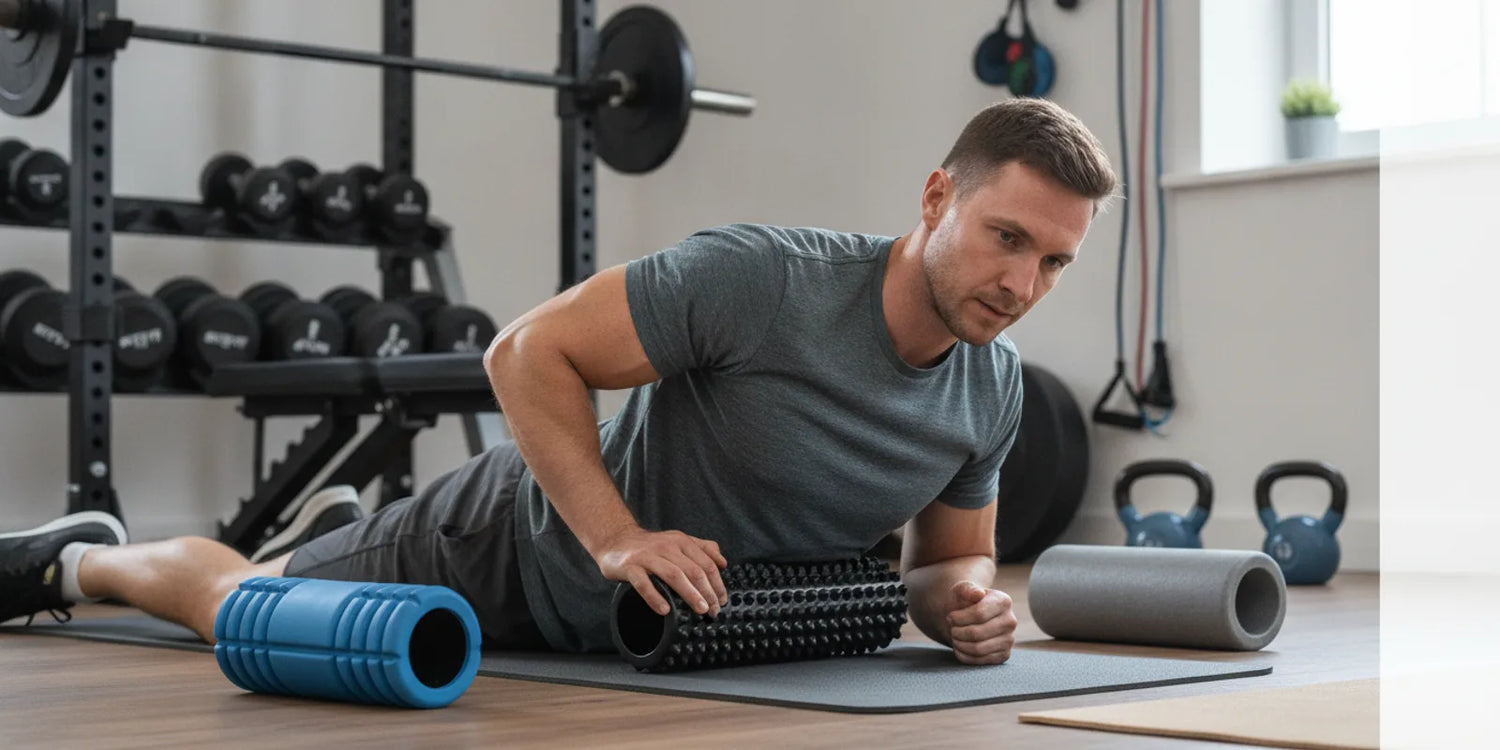
Foam rollers vary along four dimensions, density, surface texture, material, and length, and each one changes how the roller feels and performs. Picking the wrong combination is a common reason people give up on foam rolling after only a few uses.
| Density | Feel | Best For |
|---|---|---|
| Soft | Gentle, forgiving | Beginners, sensitive muscles, rehab |
| Medium | Balanced pressure | General fitness, everyday use |
| Firm | Intense, deep | Experienced users, deep tissue work |
Density ranges reflect common manufacturer descriptions rather than a single measured scale.
- Smooth surface: even pressure, easiest to control, good for daily use.
- Textured or grid surface: targets knots more precisely, better suited to advanced users.
- EPP foam: dense and durable, common in budget and mid range rollers.
- EVA foam: tear resistant and long lasting, often used in higher end designs. See how similar EVA foam flooring specs compare on density and durability.
A study comparing smooth and textured foam rollers found that while foam rolling helped clear blood lactate faster than passive rest after exercise, the type of roller used did not significantly change the recovery rate.[1] Shoppers weighing firmness options can also review soft foam box specifications to translate density language across other RitFit foam equipment.
How Do You Choose the Right Foam Roller for Your Needs?
The right foam roller depends on three factors, current rolling experience, the muscle groups being targeted, and how often it will travel with you. Matching those factors to density, size, and texture prevents buying a roller that ends up unused in a closet.
- Complete beginner: soft to medium density, smooth surface, 18-24 inch length for easy control.
- Desk worker with tight hips or back: medium density, lightly textured, 24-36 inch length for full back coverage.
- Experienced athlete managing frequent soreness: firm density, textured or grid surface, 24-36 inch length for deep pressure.
- Frequent traveler: firm, compact 12-18 inch roller that fits easily in a gym bag.
Anyone building a full home recovery and training corner can pair a foam roller with adjacent equipment like the RitFit foam plyo box for plyometric work, and browse the wider recovery and training accessories collection for complementary tools.
Does Foam Rolling Actually Work for Muscle Recovery?
Foam rolling appears to genuinely help with post exercise recovery, based on controlled evidence rather than anecdote alone. A randomized controlled trial found that a single foam rolling session significantly reduced pain from delayed onset muscle soreness and also improved quadriceps strength compared with pre treatment levels.[2]
A separate study using loaded, military style physical tasks found that twenty minutes of foam rolling after a soreness inducing workout led to significantly faster performance the next day on stair climbs, sprints, and other loaded tasks compared with passive rest, even though perceived pain levels between groups were not significantly different.[3]
Readers extending recovery work into core training can also explore ab roller exercises or read about ab roller for core strength for a complementary routine.
How Do You Use a Foam Roller Safely?
Safe foam rolling means moving slowly over each muscle for 30-60 seconds while breathing normally, rather than rushing back and forth or bracing against pain. Rolling directly on a joint, bone, or the lower spine should always be avoided, since pressure there can cause bruising instead of relief.
- Rolling too fast: quick back and forth motion skips the tissue release that slow rolling provides.
- Skipping warm up: cold muscles respond less to pressure than muscles already lightly warmed.
- Ignoring sharp pain: mild discomfort is normal, but sharp or radiating pain means stop immediately.
- Overdoing frequency: rolling the same spot for too long or too often can leave tissue irritated rather than relaxed.
Watching a guided full body routine can make the movement pattern easier to copy at home.
Beginners easing into a broader recovery habit may also like this ab roller workout for beginners for a gentle next step.
"We don't know exactly why, but it seems to help a lot of people manage some of their muscular-pain symptoms."
Laura Jorgensen, PT, DPT, Dartmouth-Hitchcock
FAQs About Best Foam Roller
What Is a Foam Roller Used For?
A foam roller is a cylindrical recovery tool used for self myofascial release, a technique where body weight applies pressure to tight muscles and connective tissue. Rolling slowly over sore areas like the quads, calves, hamstrings, and upper back can ease tension, support blood flow, and aid post workout recovery.
What Density Foam Roller Is Best for Beginners?
Beginners should start with a soft to medium density roller, since firmer, high pressure rollers can feel intense before the body adapts. A softer roller still delivers meaningful pressure relief while building comfort with proper technique, and users can move to firmer, more aggressive models as tolerance improves over time.
Are Textured Foam Rollers Better Than Smooth Ones?
Neither style is universally better, since smooth rollers spread pressure evenly and suit beginners or sensitive muscles, while textured or grid rollers mimic the fingers of a massage therapist to target specific knots. A study comparing roller types found similar recovery benefits from smooth and textured designs, so personal comfort should guide the choice.
What Size Foam Roller Should I Buy?
Standard rollers measuring 24-36 inches work well for full body use, allowing stable support while rolling the back, hamstrings, and quads. Shorter 12-18 inch rollers pack easily for travel and target smaller areas like the calves or shoulders, while a 5-6 inch diameter suits most body types comfortably.
Does Foam Rolling Actually Reduce Muscle Soreness?
A randomized controlled trial found that a single foam rolling session significantly reduced pain scores from delayed onset muscle soreness and also improved quadriceps strength compared with pre treatment levels, though a comparable manual therapy technique produced similar pain relief in the same study. Foam rolling appears genuinely helpful for recovery, even though the exact mechanism remains unclear.
How Long and How Often Should You Foam Roll?
Most recovery routines call for 5-10 minutes of foam rolling per major muscle group, spending 30-60 seconds on any especially tight or tender spot before moving to the next area. Rolling after workouts or on rest days a few times per week is typically enough to support flexibility and ease soreness without overworking the tissue.
Conclusion
Choosing the best foam roller for most people means matching density, texture, and length to current experience and how it will actually be used, not chasing the priciest or most aggressive option. Consistent short sessions beat one intense workout, and comfort should always come before intensity.
Start with a softer, medium roller if new to rolling, and progress from there as tolerance builds. For a broader recovery setup, check the RitFit sales page for current deals on training and recovery equipment.
Disclaimer
This article is for general informational purposes only and does not replace personalized medical or physical therapy advice. Anyone with an injury, chronic pain, or a medical condition should consult a qualified healthcare provider before starting a new foam rolling routine.
Save on your next RitFit order
Tap the button to copy your code, then paste it at checkout.
References
1. Adamczyk JG, Gryko K, Boguszewski D. Does the type of foam roller influence the recovery rate, thermal response and DOMS prevention?. PLoS One. 2020;15(6):e0235195. doi:10.1371/journal.pone.0235195. PMCID: PMC7319325
2. Romero-Moraleda B, La Touche R, Lerma-Lara S, et al. Neurodynamic mobilization and foam rolling improved delayed-onset muscle soreness in a healthy adult population: a randomized controlled clinical trial. PeerJ. 2017;5:e3908. doi:10.7717/peerj.3908. PMCID: PMC5642244
3. Scudamore EM, Sayer BL, Church JB, Bryant LG, Přibyslavská V. Effects of foam rolling for delayed onset muscle soreness on loaded military task performance and perceived recovery. J Exerc Sci Fit. 2021;19(3):166-170. doi:10.1016/j.jesf.2021.02.002. PMCID: PMC7970355