
Strength training for women at home builds real, measurable strength with dumbbells, bands, and a bench, and you do not need a gym membership to start. This guide ranks the 10 best exercises for women training at home, then hands you a 2 to 3 day weekly plan and the shortest equipment list that gets you there.
Every movement below works in a garage, a basement, or a corner of a living room. The plan suits beginners, with notes for women over 40 and for anyone adding weight over time.
Quick Answer: Strength training for women at home works best with 10 compound exercises: squats, Romanian deadlifts, reverse lunges, hip thrusts, push ups, overhead presses, rows, lat pulldowns, planks, and farmer carries. Trained 2 to 3 days per week with dumbbells and a bench, they build full body strength without a gym.
Key Takeaways
- Exercise priority: The 10 movements below cover every major muscle group using dumbbells, bodyweight, or a band, so a complete home program needs no machines.
- Weekly dose: Novice women build strength training the whole body 2 to 3 days per week, while advanced lifters can train 4 to 6 days per week.
- Effort beats weight: Lighter and heavier loads produced similar strength gains when total training volume was matched, so control and consistency matter more than loading a heavy bar.
- Older lifters: A 2024 systematic review of older women found resistance exercise improved body composition, muscular strength, and functional capacity.
- Minimal gear: Dumbbells, an adjustable bench, and a resistance band cover the whole plan, and a Smith machine or cable station only becomes useful once you need heavier loads.
10 Best Strength Training Exercises for Women at Home
The 10 best strength training exercises for women at home are squats, deadlifts, lunges, hip thrusts, push ups, presses, rows, pulldowns, planks, and carries. Each one below lists the muscles it trains, the gear it needs, and the reason it made the list.
| Exercise | Main muscles | Minimum gear | Why it made the list |
|---|---|---|---|
| Squats | Quads, glutes, core | Dumbbells or bodyweight | Trains the whole lower body in one movement |
| Romanian deadlifts | Hamstrings, glutes, back | Dumbbells | Teaches the hip hinge every home lifter needs |
| Reverse lunges | Quads, glutes, balance | Bodyweight or dumbbells | Single leg strength with less forward knee travel |
| Hip thrusts | Glutes | Bench and dumbbell | The top pick when the goal is glute growth |
| Push ups | Chest, shoulders, triceps | Bodyweight or bench | Upper body pressing with zero equipment |
| Dumbbell overhead press | Shoulders, triceps | Dumbbells | Builds overhead strength and shoulder stability |
| Dumbbell rows | Upper back, lats, biceps | Dumbbells and bench | Balances all the pressing you do |
| Lat pulldowns | Lats, upper back | Band, cable, or lat tower | Covers the pulling pattern push ups miss |
| Plank variations | Core, shoulders | A mat | Teaches bracing without loading the spine |
| Farmer carries | Grip, core, traps | Two dumbbells or kettlebells | Turns gym strength into real world capacity |
The gear column shows the minimum equipment each movement needs in a home setting, not the ideal setup.
Squats
Squats train your quads, glutes, and core at the same time, which is why they anchor almost every home program. Stand with your feet about shoulder width apart, sit down and back until your thighs reach at least parallel, then drive through your whole foot to stand up.
Romanian Deadlifts
Romanian deadlifts teach the hip hinge, the pattern behind picking up groceries, laundry baskets, and children without straining your back. Push your hips back with a slight bend in the knees and lower the dumbbells along your legs until you feel a stretch in your hamstrings.
Reverse Lunges
Reverse lunges build single leg strength and balance with less forward knee travel than walking lunges. Step back, lower until your front thigh is close to parallel with the floor, then push through the front foot to return.
Hip Thrusts
Hip thrusts are the strongest glute builder you can run at home, and a 2025 systematic review and meta-analysis of 11 studies found resistance training has a moderate effect on gluteus maximus hypertrophy with a standardized mean difference of 0.71, with hip extension exercises recommended as the priority[1]. Sit with your upper back on a bench, plant your feet flat, and drive your hips up until your body forms a straight line from knees to shoulders.
Push Ups
Push ups train your chest, shoulders, and triceps and need nothing but floor space. Put your hands on a bench if the full version is still out of reach, and lower your chest with your body in one straight line.
Dumbbell Overhead Press
The dumbbell overhead press builds shoulder strength and the stability your shoulders need for every other press. Press the dumbbells from shoulder height until your arms lock out overhead, keeping your ribs down and your core braced.
Dumbbell Rows
Dumbbell rows train your upper back, lats, and biceps, which balances all the pressing in this list. Brace one hand on a bench, pull the dumbbell toward your hip, and squeeze your shoulder blade toward your spine.
Lat Pulldowns
Lat pulldowns train the lats and upper back, the pulling pattern that push ups and presses leave out. Use a band anchored high, a cable station, or a lat tower, and pull the handle to your collarbone without leaning back.
Plank Variations
Planks teach you to brace your core, which is the skill that keeps your spine safe under load. Hold a front plank for 20 to 40 seconds, then progress to side planks and long lever planks as your control improves.
Farmer Carries
Farmer carries train your grip, core, and traps while teaching you to stay upright under load. Pick up two dumbbells, walk 30 to 50 feet with tall posture, and set them down under control.
Run two or three of these movements per session at first, then add volume as your form holds. For extra hip and glute work, the best hip exercises at home guide pairs well with this list, and this Smith machine hip thrust guide covers the loaded version.
Why Strength Training Matters for Women
Strength training for women at home builds muscle, strengthens bones, and improves how you move in daily life. According to the American College of Sports Medicine 2026 position stand, which synthesizes 137 systematic reviews covering more than 30,000 participants, resistance training significantly improves muscle strength, muscle size, power, and physical function[2].
- Muscle and strength: Resistance training adds muscle and strength in both beginners and experienced lifters, and the same position stand reports improvements in power and physical function.
- Bone health: A review in Endocrinology and Metabolism explains that bone tissue responds to mechanical load above everyday levels, which is why loaded strength work supports bone and muscle together[3].
- Everyday capacity: Squatting, hinging, carrying, and pressing are the same patterns you already use for stairs, groceries, and lifting a child.
- Time efficiency: A review of minimal dose training research found that short, low volume sessions can still improve strength in beginners, so a 20 minute session counts.
"Women lift about 67% as much as men in the squat, 56% in the bench, and 71% in the deadlift, on average. However, those gaps are larger when looking at less successful lifters and smaller when looking at more successful lifters."
Greg Nuckols, MA, Strength Researcher and Coach, Stronger By Science, Strength Training for Women
How to Start Strength Training at Home Safely
Beginners should start with 2 or 3 full body sessions a week using loads they can control. A review of minimal dose training research found that even short, low volume sessions improve strength in people who are new to resistance training, so small amounts of training beat none at all[4].
- Choose a starting weight you can control: Pick a load you can lift for 8 to 12 clean reps with 1 to 3 reps left in reserve, and expect to use lighter dumbbells for shoulders than for legs.
- Warm up before every session: Five minutes of easy movement plus one light set of each exercise raises tissue temperature and sharpens your technique before the working sets.
- Use progressive overload slowly: Add one rep first, then one small jump in weight, and only when the last set still feels controlled.
- Stop movements that cause sharp pain: Muscle effort is expected, but sharp or joint pain is not, so swap the exercise or reduce the range instead of pushing through it.
- Train the whole body: Full body sessions hit every major pattern twice a week, which is easier to recover from than stacking single muscle days as a beginner.
Keep sessions short enough that you finish with energy left, and write your weights down so progress stays visible. If you are unsure how hard to push, the training to failure at home guide explains where to stop, and this resistance band exercises at home routine covers the days you cannot load dumbbells.
Full Home Strength Training Plan for Women
A full home strength training plan for women runs three whole body sessions a week with a rest day between them. A 2025 review of resistance training in women recommends that novice women train the whole body 2 to 3 days per week, while advanced lifters can train 4 to 6 days per week[5].
- Day 1, lower body and core: Squats 3 sets of 8 to 12 reps, Romanian deadlifts 3 sets of 8 to 12, reverse lunges 2 sets of 10 per leg, hip thrusts 3 sets of 10 to 15, plank 3 sets of 20 to 40 seconds.
- Day 2, upper body and core: Push ups 3 sets of 6 to 12, dumbbell overhead press 3 sets of 8 to 12, dumbbell rows 3 sets of 10 per arm, lat pulldowns 3 sets of 10 to 15, farmer carries 3 sets of 30 to 50 feet.
- Day 3, full body strength: Squats 3 sets of 8 to 12, push ups 3 sets of 6 to 12, Romanian deadlifts 3 sets of 8 to 12, dumbbell rows 3 sets of 10 per arm, plank variations 3 sets of 30 seconds.
- How to progress: Rest 60 to 90 seconds between sets, leave one or two reps in reserve on most sets, and add a little weight once you reach the top of the rep range on every set.
- How to fit it in your week: Monday, Wednesday, and Friday works, and so does Tuesday, Thursday, and Saturday, so pick the days you will actually keep.
Dumbbell and bench choices matter more than brand names here, and the adjustable weight bench for beginners guide plus a pair of RitFit Hex Rubber Dumbbells cover this entire plan.
Strength Training for Women Over 40
Women over 40 can build strength at home with the same exercises, adjusting load and recovery rather than avoiding lifting. A 2024 systematic review of older women with sarcopenic obesity reports that resistance exercise improves body composition, muscular strength, and functional capacity[6].
- Protect recovery: Hard sessions land better when they are separated by a rest day, so two or three well spaced sessions beat five rushed ones.
- Keep load on bone: Loaded carries, squats, and presses keep mechanical load on bone, which is the stimulus bone tissue responds to.
- Add balance work: Single leg movements such as reverse lunges train balance at the same time as strength, which matters on stairs and uneven ground.
- Slow the pace down: A controlled tempo gives you more time under tension with lighter loads and makes form breakdown easier to spot.
- Restart gently after a break: Come back with roughly half your previous weights for one or two weeks before you rebuild.
Strength training after 40 is less about catching up and more about keeping what you have and adding to it. On mobility days, the best Pilates exercises for core strength routine complements this plan without adding heavy loading.
Common Mistakes and Myths About Strength Training for Women
The most common home strength mistakes are lifting loads that are too light to challenge you, skipping recovery, and treating soreness as proof of progress. Most of them come from myths about women and weights that the evidence does not support.
- Myth, lifting makes women bulky: Visible muscle takes years of consistent training and a calorie surplus, so the realistic outcome of a home program is a stronger, firmer look rather than bulk.
- Myth, women should only use light weights and high reps: A squat training comparison found light and heavy loads at 40% and 80% of one-rep max produced similar strength gains over 6 weeks when total volume was matched[7].
- Myth, cardio beats strength training for body composition: Cardio is worth doing for heart health, and resistance training is the training mode that builds and keeps muscle.
- Myth, home workouts cannot build real strength: Progressive overload works with dumbbells and bands, so home programs build strength as long as the load keeps climbing.
- Mistake, training every single day: Muscle adapts between sessions rather than during them, so a rest day between hard full body workouts is part of the plan.
- Mistake, chasing soreness: Soreness fades as you adapt, and it is not a reliable signal of a good session.
- Mistake, changing programs every few weeks: Pick one plan and run it for at least 8 weeks before you judge the results.
Fix the mistakes first and the myths stop mattering, because a program you repeat beats a program you keep swapping. If your main goal is glutes, the hip thrust and squat work above already covers it and the weight bench exercises at home guide adds bench based variations.
What Equipment Do Women Need for Home Strength Training?
Women need three things to start home strength training, which are a pair of dumbbells, a resistance band, and a bench or sturdy chair. Everything else is an upgrade you add once the basics stop challenging you.
| Setup | Typical budget | What it includes | Who it suits |
|---|---|---|---|
| Minimal setup | Under $150 | Mat, resistance band, one pair of dumbbells | A first month of training in a small apartment |
| Strong starter setup | $300 to $600 | Adjustable dumbbells, adjustable bench, bands, mat | Most women training 2 to 3 days a week at home |
| Complete setup | $900 and up | Smith machine or rack, barbell, plates, bench | Lifters who have outgrown dumbbell loading |
Budget figures are broad working ranges for planning a home setup rather than quotes, so check current product pages for exact pricing.
- Durability: A starter dumbbell set should handle the loads you will actually use, so check the stated weight range and the head material before buying, because rubber hex heads protect floors and hold up better than coated concrete.
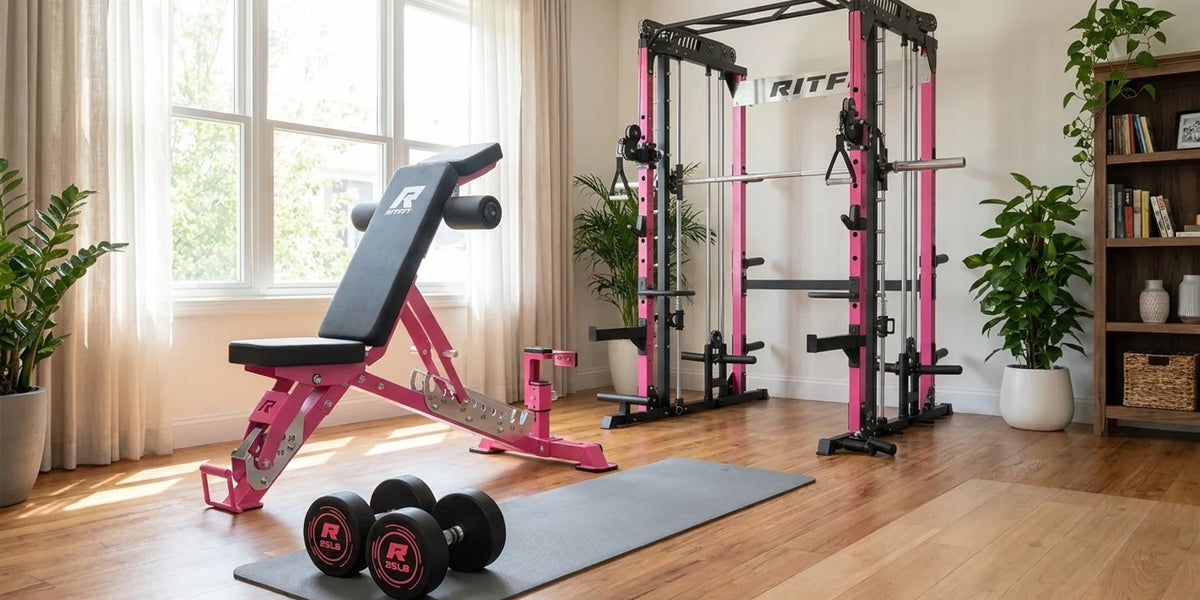
- Versatility: One pair of dumbbells covers squats, hinges, presses, rows, lunges, thrusts, and carries, which is why dumbbells come before any machine; an RitFit adjustable foldable utility bench adds incline pressing and supported rows.
- Warranty: Check the current warranty terms on the frame and the parts of any machine before buying, because coverage length is the clearest signal of how long the maker expects the steel to last.
- Performance: The details that matter day to day are set up speed, storage footprint, and whether the bench angle changes without tools.
- Value: A dumbbell, bench, and band setup is a one time cost, which is why it suits anyone planning to train at home 2 to 3 days a week.
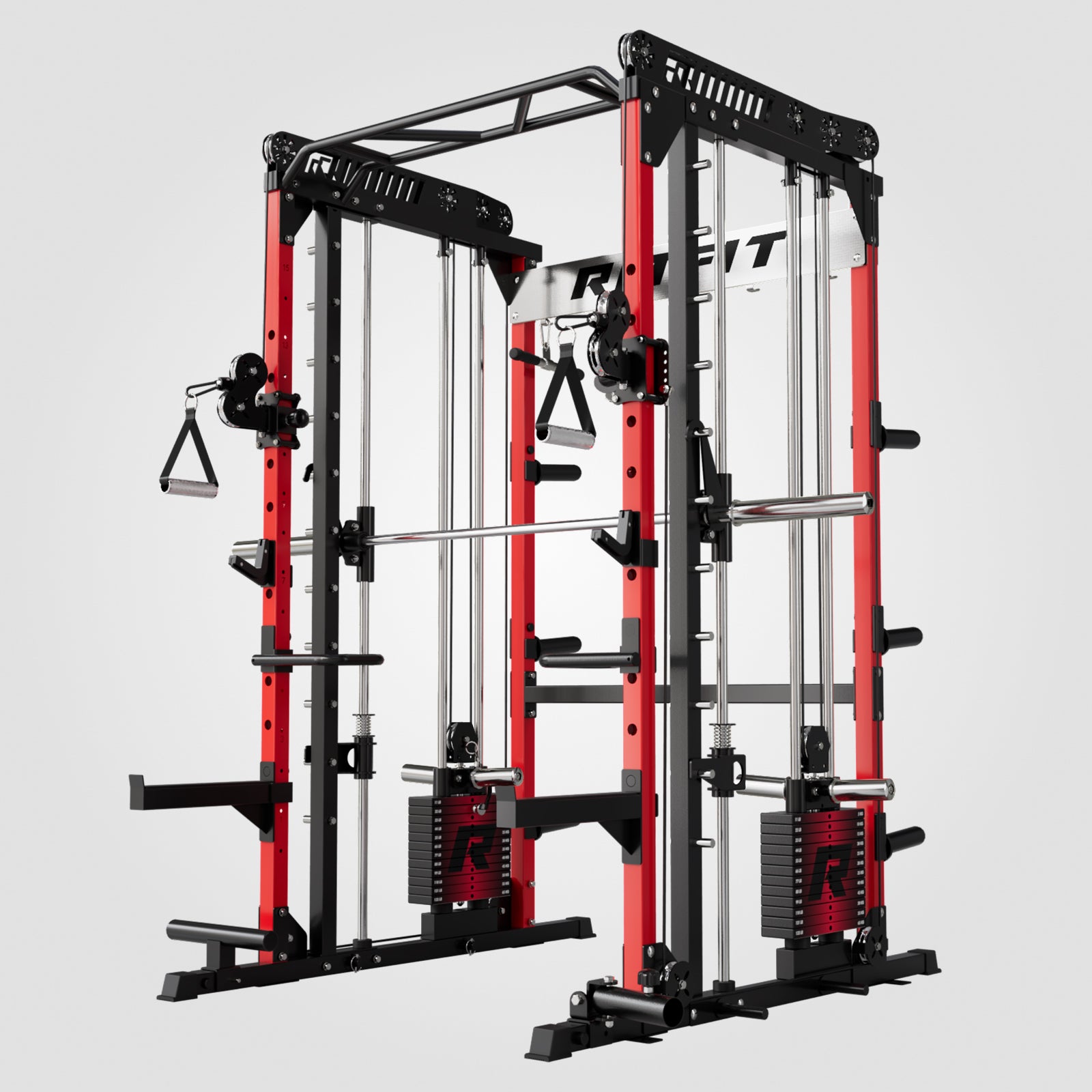
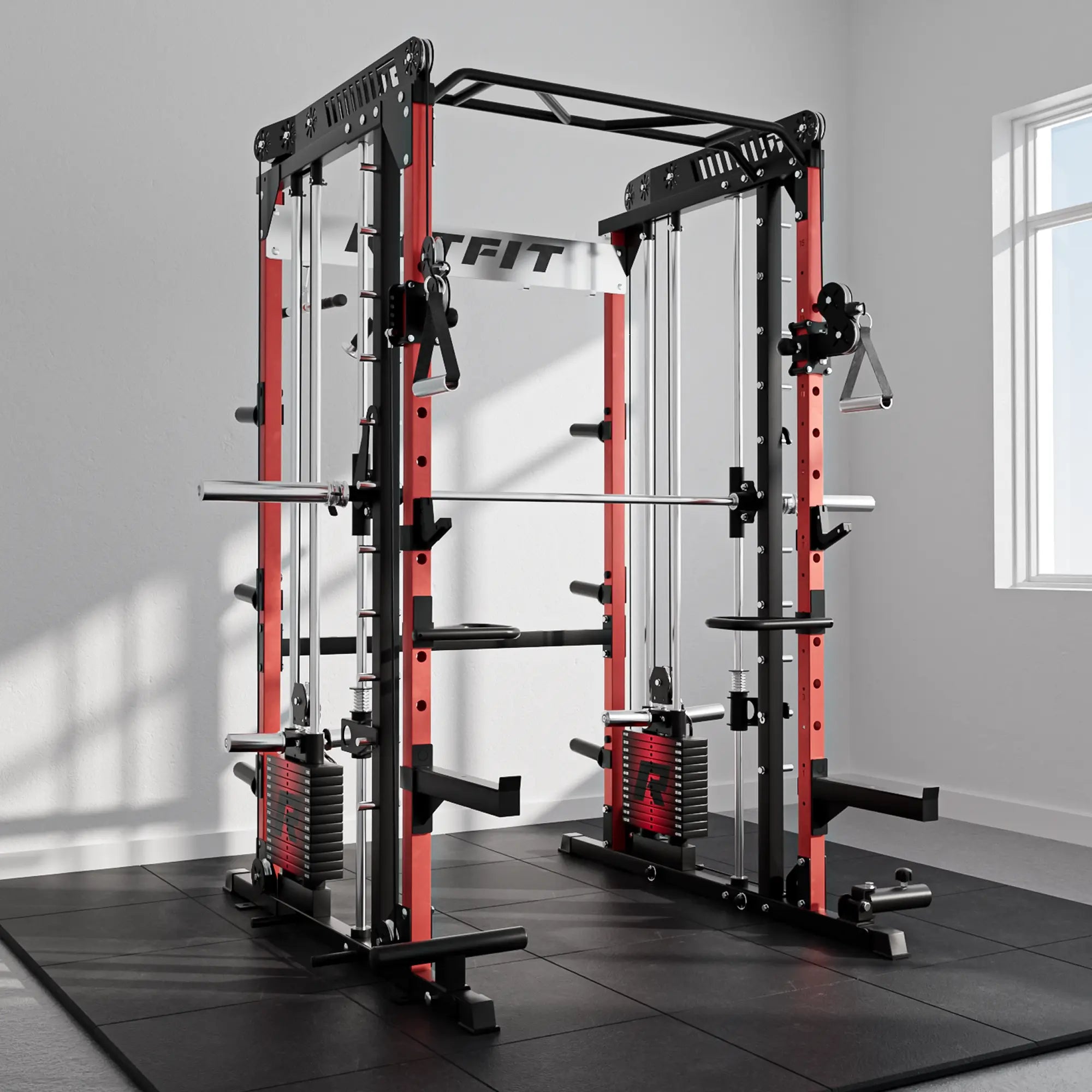
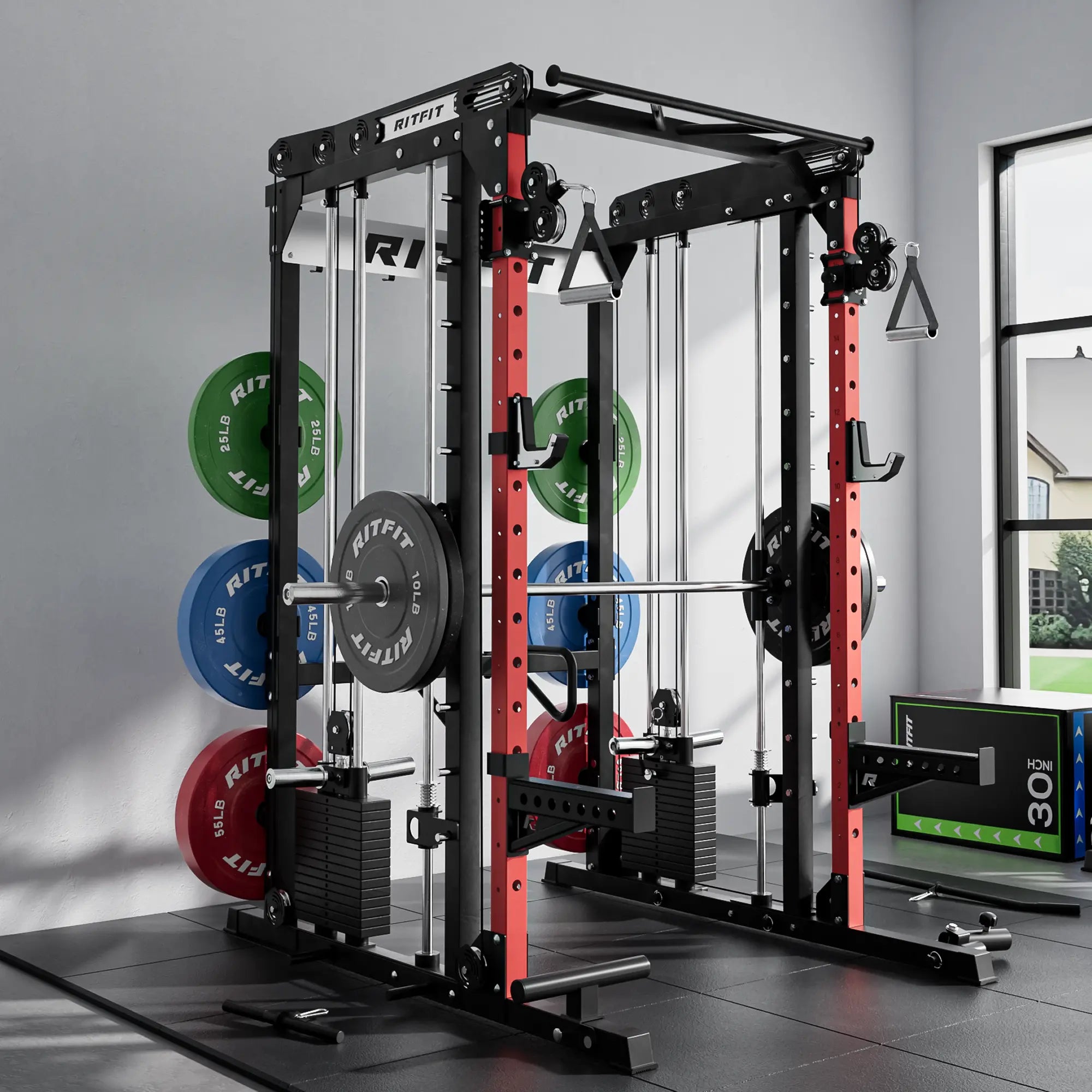
Once dumbbells stop being enough, the next step is a RitFit strength machines station or a RitFit home gym packages setup for heavier squatting and pressing. A RitFit Buffalo Multifunctional Smith Machine covers squats, lat pulldowns, and cable work in one station when floor space is tight, and the best Smith machine for women guide walks through the sizing questions first.
The RitFit dumbbells and RitFit adjustable benches collections cover the starter tier, and the RitFit best sellers list is a shortcut to the most popular pieces.
FAQs About Strength Training for Women at Home
How should beginners start strength training for women at home?
Start with 2 to 3 full body workouts per week using bodyweight moves, dumbbells, and controlled tempo. Focus on squats, hinges, rows, presses, lunges, and core stability before adding heavier loads or complex equipment.
What dumbbell weight should women start with for strength training?
Most beginners should choose a weight they can lift for 8 to 12 clean reps with 1 to 3 reps left. Many women need lighter dumbbells for shoulders and heavier dumbbells for legs, so multiple pairs are useful.
Can women build muscle with only dumbbells?
Yes. Dumbbells can build muscle when exercises are challenging, consistent, and progressively overloaded. Squats, Romanian deadlifts, presses, rows, lunges, hip thrusts, and carries can train the full body without machines.
Is strength training good for women over 40?
Yes. Strength training can help women over 40 maintain muscle, support bone health, improve balance, and protect daily function. Start with controlled movements, moderate loads, and enough recovery between hard sessions.
How many days a week should women lift weights?
Most women can lift weights 2 to 4 days per week depending on experience, recovery, and goals. Beginners often progress well with 3 full body sessions, while advanced lifters may use upper and lower body splits.
Should women do cardio or strength training first?
Do strength training first if building muscle or getting stronger is the main goal. Do cardio first if endurance is the main priority, or separate cardio and lifting on different days when recovery allows.
What equipment do women need for a home strength workout?
A strong starter setup includes dumbbells, resistance bands, a mat, and an adjustable bench. As goals progress, a barbell, plates, rack, Smith machine, or cable system can expand exercise variety and loading options.
How long does it take women to see strength training results?
Many women notice strength improvements within 2 to 4 weeks when training consistently. Visible muscle tone and body composition changes usually take longer, often 8 to 16 weeks with proper nutrition, recovery, and progressive overload.
What is a good weekly strength training routine for women at home?
A simple week has three full body sessions with one rest day between them, built from squats, hip hinges, pushes, pulls, and carries. Keep sets of 6 to 10 reps for strength, and add a little weight or one rep each week as the movements feel easier.
Do women need a gym membership to build strength at home?
No. A pair of dumbbells, an adjustable bench, and resistance bands cover the movements that drive most beginner and intermediate strength gains. A gym becomes useful later, when you want much heavier loads, cable machines, or a wider choice of exercises.
Conclusion
Start with the 10 exercises above, run the plan 2 to 3 days a week, and add a little weight whenever the last rep feels easy. Progress in strength training for women at home comes from showing up, not from perfect gear.
Choose dumbbells you can control, an adjustable bench if your space allows, and one band for pulls, then check the RitFit discount guide before you buy anything else.
Disclaimer
This article is general fitness information for healthy adults and is not medical advice. Talk with a qualified healthcare professional before starting a new strength training program, especially if you are pregnant, recovering from injury, or managing a health condition.
References
1. Krause Neto W, Krause TLV, Gama EF. The impact of resistance training on gluteus maximus hypertrophy: a systematic review and meta-analysis. Front Physiol. 2025;16:1542334. doi:10.3389/fphys.2025.1542334. PMCID: PMC12018462
2. Currier BS, D'Souza AC, Singh MAF, et al. American College of Sports Medicine Position Stand. Resistance Training Prescription for Muscle Function, Hypertrophy, and Physical Performance in Healthy Adults: An Overview of Reviews. Med Sci Sports Exerc. 2026;58(4):851-872. doi:10.1249/MSS.0000000000003897. PMCID: PMC12965823
3. Hong AR, Kim SW. Effects of Resistance Exercise on Bone Health. Endocrinol Metab (Seoul). 2018;33(4):435-444. doi:10.3803/EnM.2018.33.4.435. PMCID: PMC6279907
4. Nuzzo JL, Pinto MD, Kirk BJC, Nosaka K. Resistance Exercise Minimal Dose Strategies for Increasing Muscle Strength in the General Population: an Overview. Sports Med. 2024;54(5):1139-1162. doi:10.1007/s40279-024-02009-0. PMCID: PMC11127831
5. Kraemer WJ, Fragala MS, Ratamess NA. Evolution of resistance training in women: History and mechanisms for health and performance. Sports Med Health Sci. 2025;7(5):351-365. doi:10.1016/j.smhs.2025.01.005. PMCID: PMC12421175
6. Debes WA, Sadaqa M, Nemeth Z, Aldardour A, Premusz V, Hock M. Effect of Resistance Exercise on Body Composition and Functional Capacity in Older Women with Sarcopenic Obesity: A Systematic Review with Narrative Synthesis. J Clin Med. 2024;13(2):441. doi:10.3390/jcm13020441. PMCID: PMC10817090
7. Valenzuela-Barrero C, Nunez-Sanchez FJ, Loturco I, Pareja-Blanco F. Effects of light- vs. heavy-load squat training on velocity, strength, power, and total mechanical work in recreationally trained men and women. Biol Sport. 2024;41(2):3-11. doi:10.5114/biolsport.2024.129487. PMCID: PMC10955750