The Bradford press is an overhead press variation where the bar travels from the front of your head to behind your head without ever locking out. It keeps the shoulders under constant tension, and it fits a Smith machine better than most lifters expect.
This guide explains why the fixed rail suits the movement, walks through the exact setup and rep, and sets honest limits on shoulder mobility and load. If you cannot press behind your head comfortably, the sections below tell you when to stop.
Quick Answer: Yes, the Bradford press works on a Smith machine, and the fixed vertical rail suits it better than a free barbell because the bar never has to drift around your head. Set the J-cups near chest height, press to a point just above your head, and alternate front and back without locking out.
Key Takeaways
- Machine fit: The Bradford press works on a Smith machine because the whole movement stays in one vertical plane, which is exactly how the guide rail travels.
- No lockout: Keeping the elbows slightly bent at the top holds tension on the deltoids instead of resting the load on the joints.
- Three heads: Alternating the front and behind-the-head positions trains the anterior, medial, and posterior deltoid in the same set.
- Light load: Because the bar never rests on the shoulders, working weight usually sits well below a standard overhead press.
- Mobility first: The behind-the-head portion demands enough shoulder rotation, so stop the set if you feel pinching in the front of the joint.
What Is a Bradford Press and Why Does It Feel Different From a Shoulder Press?
The Bradford press is an overhead press that alternates the bar between the front of the head and behind the head, and it never locks out at the top. The lift takes its name from Jim Bradford, an American Olympic weightlifting champion in the 1960s who used the pattern to build shoulder work capacity.
A standard shoulder press stops at the top of every rep, which lets the joints carry the load for a beat. The Bradford press removes that pause, so the deltoids stay loaded from the first inch of the press to the last.
A study of eight competitive bodybuilders found that pressing behind the head raised posterior deltoid excitation far above the front press, with an effect size of 9.00 in the ascending phase.[1] Medial deltoid activity climbed as well, while the front position shifted emphasis toward the pectoralis major.
That split is the whole point of alternating the two positions in one set. You press forward, return the bar over your skull, press back, and repeat, without ever letting the elbows straighten fully.
Can You Do Bradford Presses on a Smith Machine?
Yes, the Bradford press can be done on a Smith machine, and the fixed rail removes the hardest part of the free-weight version. The bar path stays in one plane, so you can focus on the press instead of steering the bar around your head.
With a free barbell the bar has to clear your face on the way back, and any forward drift turns a shoulder exercise into a balancing act. The Smith machine holds the bar on its track, so the path behind the head opens up instead of fighting you.
- Hook height: Set both J-cups at the same height so you unrack from a level position near the top of your chest.
- Safety tabs: Set the rack pins just below the bottom of your press so a failed rep stops there.
- No spotter needed: The bar stays on the rail, which makes solo overhead work far less risky than a loaded free bar.
"The smith machine is great because it's going to take a lot of the pressure out of your shoulders because it's supporting itself and you can do a little bit more weight on here."
Scott Herman, YouTube Creator, ScottHermanFitness, How To: Smith Machine- Bench Press (YouTube)
How to Set Up a Smith Machine for the Bradford Press
A Smith machine Bradford press starts with the J-cups at upper chest height and the safety pins just below your lowest press position. From there the rep is a continuous loop: press, clear the crown of your head, press behind, and reverse.
- Step 1: Set both J-cups level at upper chest height, set the safety arms about one inch below your lowest press point, and unrack the bar with a grip slightly wider than shoulder width.
- Step 2: Stand with your feet under the bar, brace your midsection, and press the empty bar to a point about two inches above your head.
- Step 3: Without locking out, lower the bar behind your head until it reaches ear level, keeping the elbows under the bar.
- Step 4: Press back up to the same point above your head, then bring the bar forward to the front rack position to complete one rep.
- Step 5: Keep the bar moving in a smooth loop and stop the set when the tempo slows or your neck starts to shrug.
Setup Checklist: J-Cup Height, Grip Width, and Foot Position
Use a grip you can hold without the wrists rolling back, since a wide grip reduces how much room the bar has behind your head. Twisting one hand at a time between the front and back positions helps you find the groove before you add any load.
Why the Smith Machine May Suit the Bradford Press Better Than Free Weights
The Smith machine may suit the Bradford press better than a free barbell because the exercise is already a single plane movement, and the rail simply removes the drift. On a free bar the same press asks your shoulders and upper back to steer the load, which is the part that makes the movement feel awkward.
Every rep of a Bradford press travels up, back, and forward within inches of the same line, so the moment arm stays short and the deltoid keeps working. That is the shape a Smith machine rail already traces, so the equipment matches the movement rather than fighting it.
- Bar path control: The rail holds the bar behind your head, so your neck and shoulders do not have to stabilize a drifting load.
- Constant tension: Because the bar never leaves the track, you can keep a steady tempo through the front and back halves of every rep.
- Safety margin: Rack pins catch a missed rep at the same height every time, which matters when the bar is passing behind your head.
- Load control: A lighter, guided bar lets you learn the pattern before you test the position under real weight.
One small trial with twenty subjects found that the implement used for overhead pressing shifts shoulder muscle activity even when the load stays the same, with the different center of gravity of a kettlebell raising activity in every measured muscle except the upper trapezius.[2] That is a dumbbell and kettlebell comparison rather than a Smith machine test, but the lesson carries over: how you hold and guide the load changes what the shoulder does.
| Version | Bar path | Lockout | Mobility demand |
|---|---|---|---|
| Bradford press on Smith | Fixed vertical rail | None | Moderate to high |
| Standard Smith shoulder press | Fixed vertical rail | Every rep | Moderate |
| Behind-the-neck barbell press | Free, must be steered | Every rep | High |
Bradford Press vs Standard Smith Machine Shoulder Press
The Bradford press differs from a standard Smith machine shoulder press in two ways: it alternates the bar behind the head, and it never locks out. A regular shoulder press drives straight up in front of the face and finishes each rep with straight arms.
Those two changes shift the work across the shoulder. A study of thirteen experienced lifters found that the shoulder press activated the anterior deltoid at 33.3 percent MVIC versus 21.4 percent for the bench press, and the medial deltoid at 27.9 percent against 5 percent.[3]
- Bar position: The standard Smith machine shoulder press stays in front of the face, while the Bradford press crosses behind the head on every rep.
- Lockout: The standard press locks out at the top, and the Bradford press deliberately stays short of full extension.
- Time under tension: Continuous motion keeps the deltoids loaded through the whole set, and the shorter range of motion past the top favors hypertrophy over a strength lockout.
- Skill demand: The standard press is easier to learn, so it stays the better base lift for heavy overhead work.
If you are still dialing in the front press, the Smith machine overhead press form guide covers that pattern in full before you add the behind-the-head half.
Common Mistakes, Mobility Needs, and When to Stop
The most common Bradford press mistake is loading the bar like a standard overhead press and then losing the path behind the head. Treat the lift as a light, high-rep finisher and it behaves; chase heavy weight with it and your neck and shoulders pay for it.
- Loading too early: Start on the empty Smith bar and stay there until you can complete 100 total reps across as many sets as it takes.
- Locking out: Straightening the arms at the top dumps the tension and defeats the point of the exercise.
- Arching the back: Leaning back to clear your head with the bar turns the press into an incline, so keep the ribs down and the midsection braced.
- Shrugging: Letting the shoulders climb toward the ears usually means scapular upward rotation is being blocked, so reset the rack height or drop the load.
- Forcing range: The bar does not need to travel far behind the head, only far enough to clear the crown and reach ear level.
Train it for two or three sets at the end of a shoulder session, once or twice a week, and add reps before you add plates. If you want a heavier pressing alternative without the behind-the-head position, the RitFit Gorilla chest and shoulder press machine keeps the path fixed and in front of the body.
Stop the set immediately if you feel pinching at the front of the shoulder, numbness in the arm, or a sharp pull in the neck. Tight shoulders, a previous impingement flare, a rotator cuff problem, or a neck issue all warrant skipping the behind-the-head half, and the question of whether a Smith machine limits strength transfer is worth reading before you build a program around guided bars.
Does the RitFit M3 Pro Smith Machine Work for Bradford Presses?
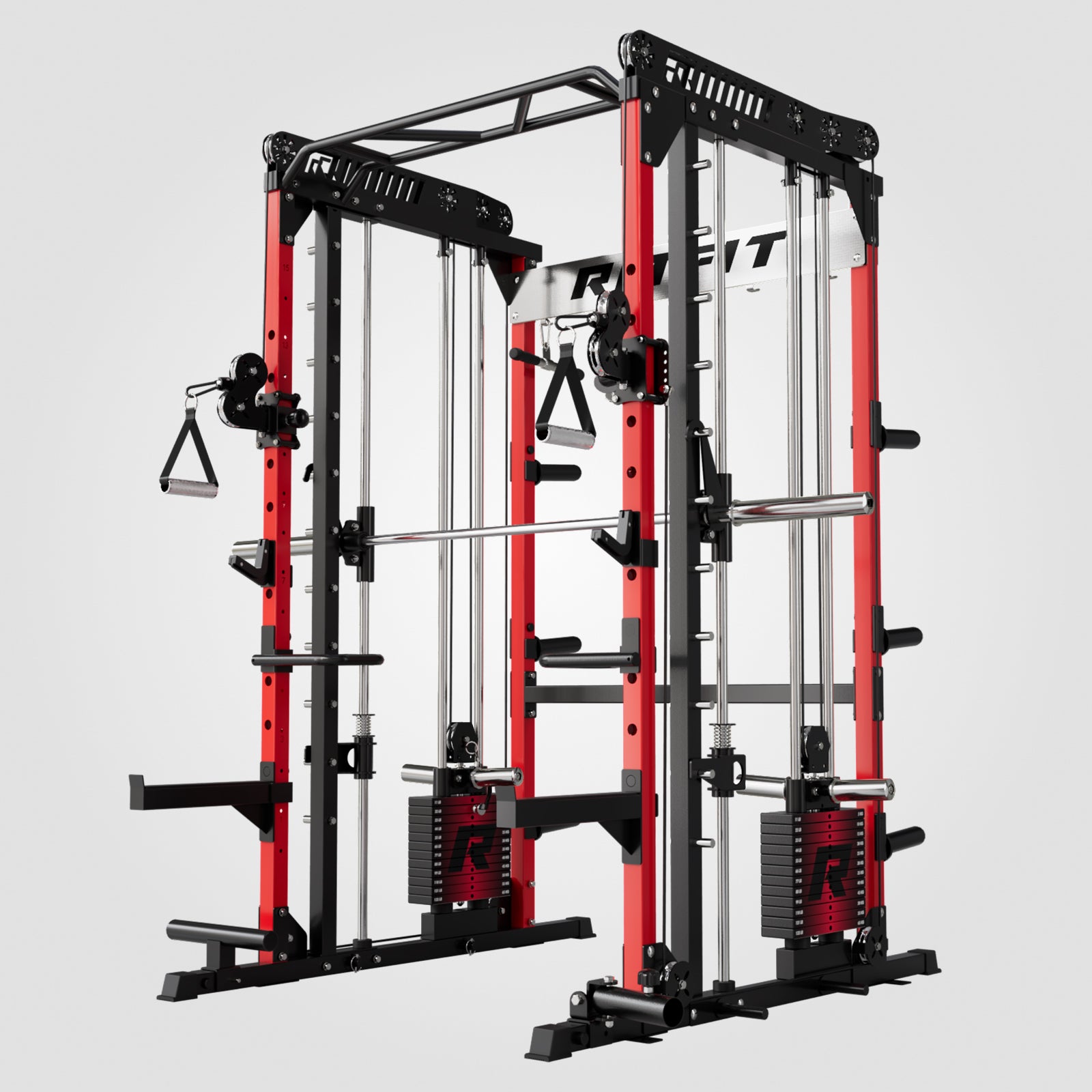
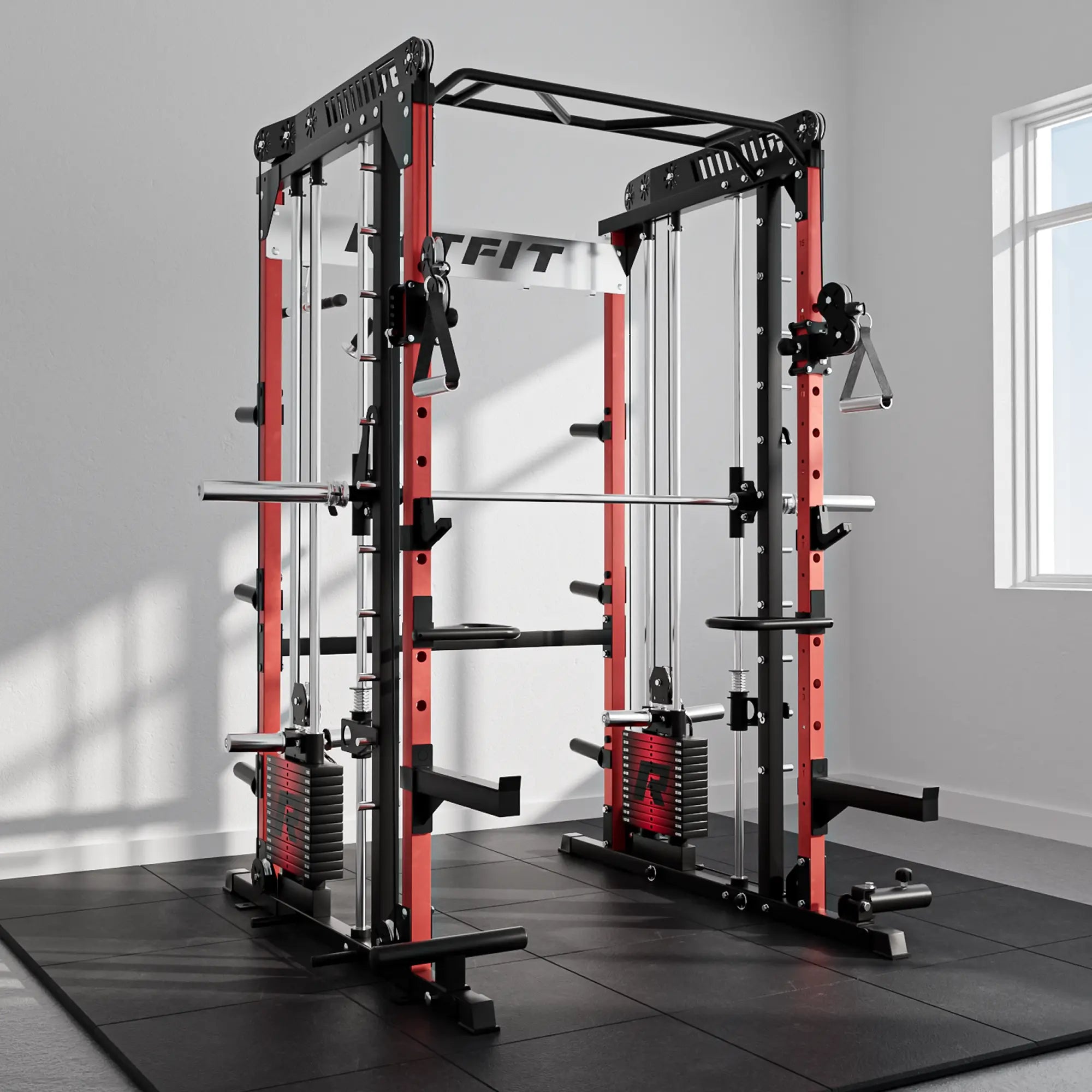
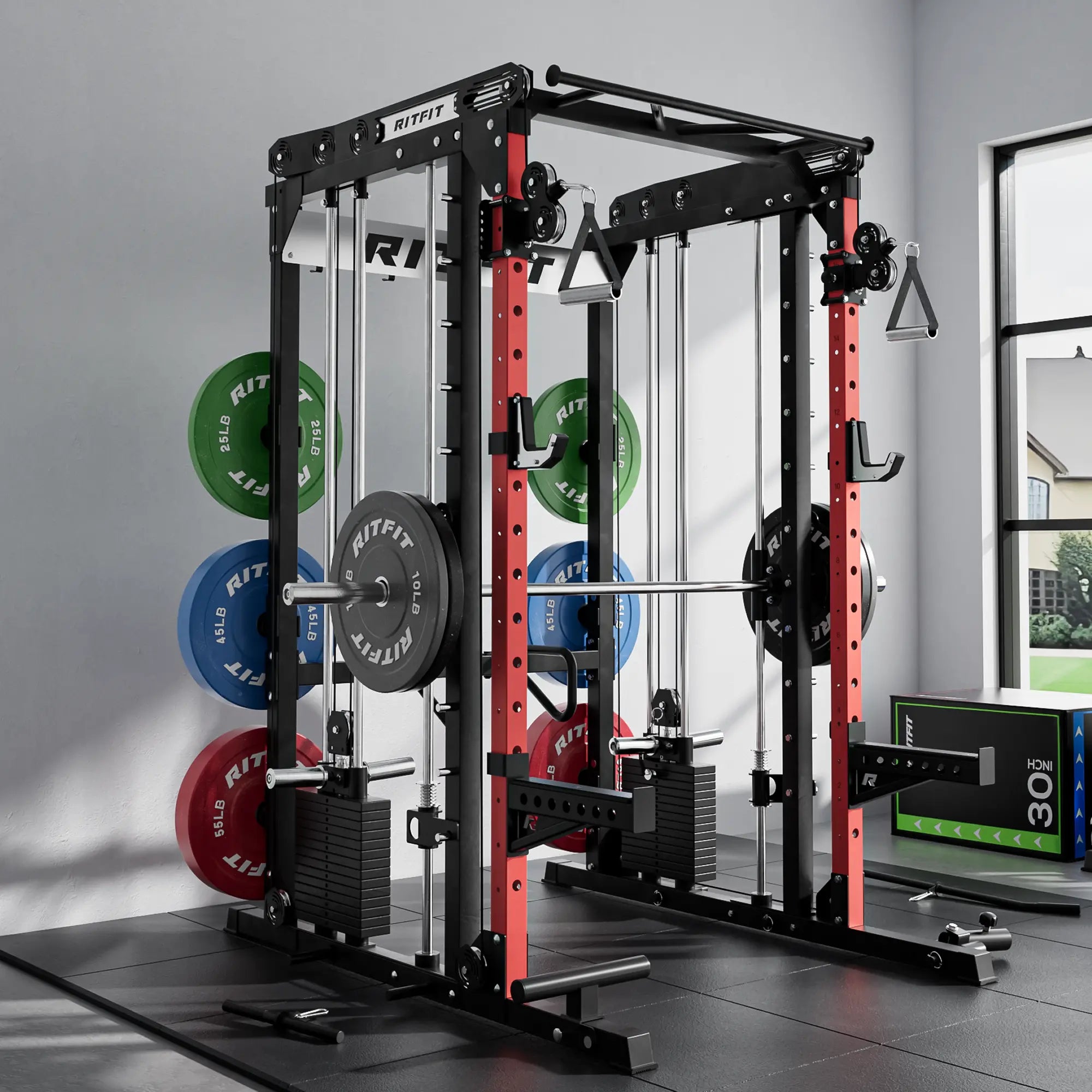
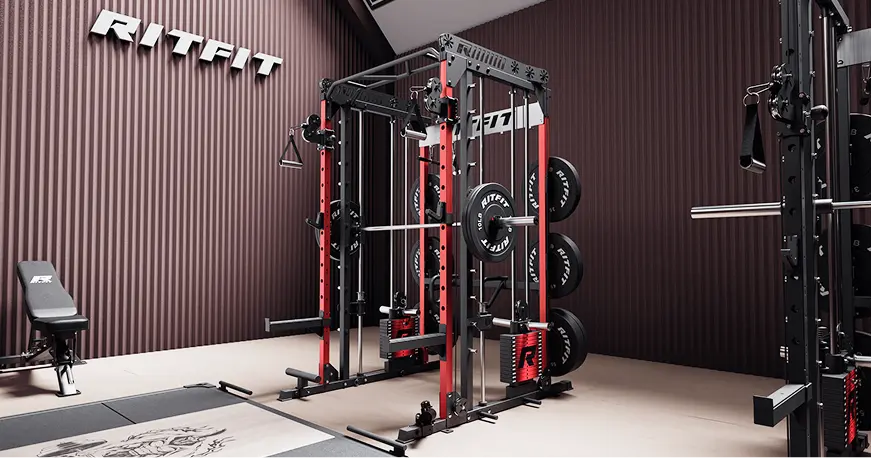
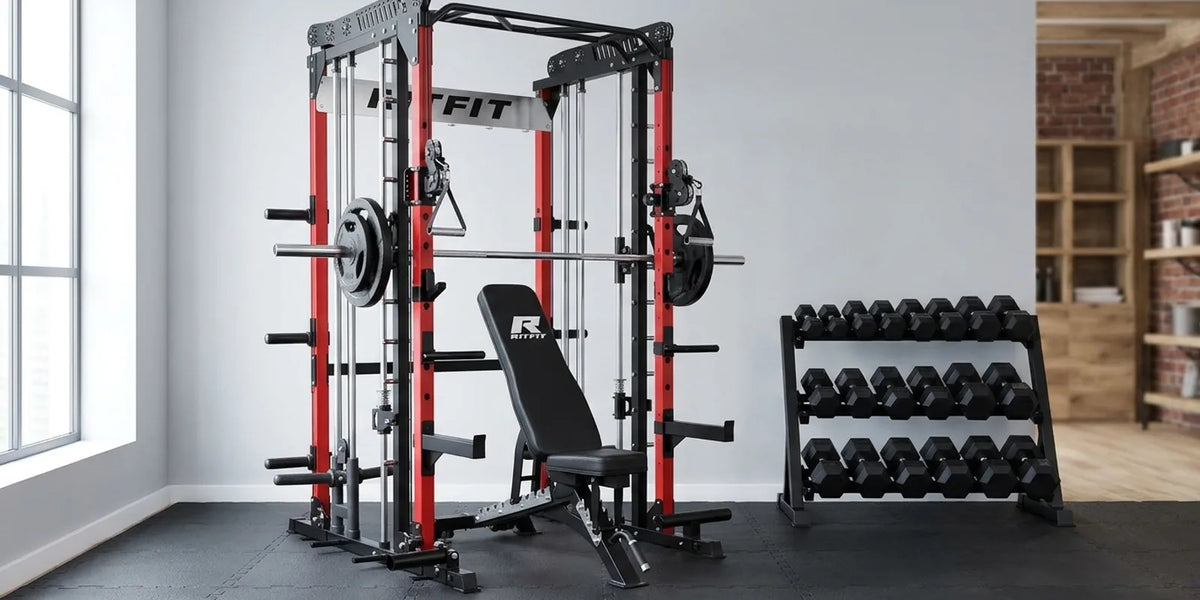
The RitFit M3 Pro Home Gym Smith Machine works for Bradford presses because its Smith bar runs on a full length guided track with ten rack positions. RitFit lists an 86.8 inch bar, a 2,500 lb frame capacity, and 3 inch by 3 inch 11 gauge uprights on the same spec front to back.
That uniform frame matters for a press that passes behind the head, since any flex in the rail shows up as bar wobble at the top of the rep. The safety arms reach 22 inches and carry a 650 lb static rating, which gives a solo lifter a fixed catch point below the lowest press position.
- Overhead clearance: The rack stands 84 inches tall with the highest upright hole at 78 inches, so check your ceiling before you press.
- Position range: Ten Smith positions let you set the unrack height near upper chest for a smooth start.
- Footprint: The frame covers 21.5 sqft, which keeps it workable in a garage bay or a basement corner.
- Lighter sibling: The RitFit M1 PRO Smith Machine uses the same fixed-rail principle in a smaller package.
If you are still comparing guided racks for a home setup, the full Smith machine lineup lays out the frame, capacity, and footprint differences side by side.
"This machine is fabulously sturdy and gives the opportunity to do a complete body workout in one place!"
Charla W. Verified Buyer, M3 Power Rack Cable Crossover Smith Machine
FAQs About Bradford Presses on a Smith Machine
Can you do Bradford presses on a Smith machine?
Yes. The Bradford press works on a Smith machine because the movement stays in one vertical plane, which matches the fixed rail. Set the hooks so the bar starts at chest height, then press to a point just above your head and alternate front and back without locking out.
How much weight should you use for Smith machine Bradford presses?
Start with the empty Smith bar and add weight only after you can complete 10 strict reps without locking out. Because the bar never rests on the shoulders, most lifters handle far less here than they use on a standard overhead press.
Why do you not lock out at the top of a Bradford press?
Skipping the lockout keeps tension on the deltoids for the whole set instead of letting the joints carry the load at the top. The bar travels a shorter path, so the shoulders stay under load through every inch of the front and back press.
Is the Bradford press bad for your shoulders?
The behind-the-head portion can irritate a shoulder with limited mobility or a history of impingement. Keep the load light, stop if you feel pinching, and skip the movement entirely if you cannot press behind your head without shrugging or arching your lower back.
How is a Bradford press different from a regular Smith machine shoulder press?
A regular shoulder press drives straight up in front of the face and locks out each rep. The Bradford press alternates front and behind-the-head positions without locking out, so it holds constant tension and adds medial and posterior deltoid work.
How often should you train the Bradford press?
Two or three sets at the end of a shoulder session, once or twice a week, is enough for most lifters. Treat it as a finisher rather than a main strength lift, and add reps before you add plates to the bar.
Does the RitFit M3 Pro work for Bradford presses?
Yes. The M3 Pro runs an 86.8 inch Smith bar on 3 by 3 inch 11 gauge uprights, so the bar tracks a fixed vertical path across 10 rack positions. That range covers both the front and behind-the-head press for most lifters.
Conclusion
The Bradford press is a genuine Smith machine exercise, and the fixed rail is what makes it workable: the bar travels one vertical plane, so it never has to fight around your head. Start on the empty bar, set the J-cups at chest height, and alternate front and back without locking out.
Check your ceiling clearance and rack height before your first set, and stop the moment you feel pinching in the front of the shoulder. Save on your next setup with the RitFit discount guide.
Disclaimer
This article offers general fitness information for healthy adults and is not medical advice. Anyone with a shoulder, neck, or spinal condition should consult a qualified professional before attempting an overhead press behind the head.
References
1. Coratella G, Tornatore G, Longo S, Esposito F, Cè E. Front vs Back and Barbell vs Machine Overhead Press: An Electromyographic Analysis and Implications For Resistance Training. Front Physiol. 2022;13:825880. doi:10.3389/fphys.2022.825880. PMCID: PMC9354811
2. Błażkiewicz M, Hadamus A. The Effect of the Weight and Type of Equipment on Shoulder and Back Muscle Activity in Surface Electromyography during the Overhead Press-Preliminary Report. Sensors (Basel). 2022;22(24). doi:10.3390/s22249762. PMCID: PMC9781216
3. Campos YAC, Vianna JM, Guimarães MP, et al. Different Shoulder Exercises Affect the Activation of Deltoid Portions in Resistance-Trained Individuals. J Hum Kinet. 2020;75:5-14. doi:10.2478/hukin-2020-0033. PMCID: PMC7706677