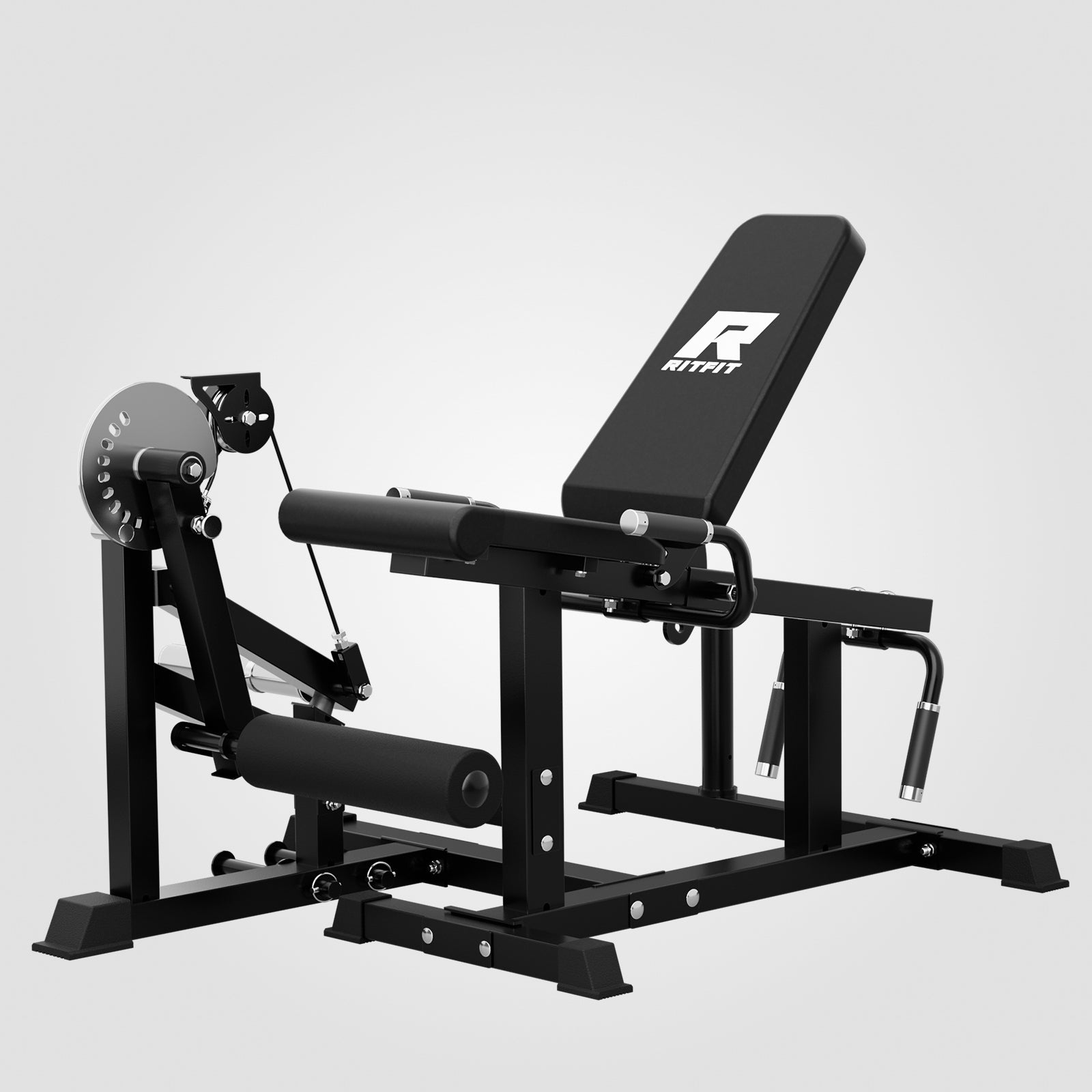
The best leg machines at the gym are the ones that train your lower body effectively, fit your goal, and can realistically work in a home gym. For most lifters, the strongest choices are a squat rack, power cage, Smith machine, leg press machine, hack squat machine, and hip thrust machine.
This guide compares each machine by training value, home gym practicality, space demand, and best use case. It also helps you decide which machines are worth using at the gym and which ones are worth bringing home.
Key Takeaways
- Best all around choice: A power cage gives the most training variety for squats, lunges, rack pulls, calf raises, and full body strength work.
- Best guided movement option: A Smith machine helps solo lifters train with a fixed bar path, but setup and technique still matter.
- Best lower body isolation machine: A leg press and hack squat machine is ideal for quad, glute, and calf focused training with less balance demand.
- Best compact starting point: A folding squat rack is usually the easiest option for smaller home gyms.
- Best glute focused machine: A hip thrust machine is useful when your main goal is stable and repeatable glute training.
Quick Comparison: Which Leg Machine Is Right for You?
The right leg machine depends on your training goal, available floor space, and comfort with free weights. Use this table as a fast decision guide before reading each section.
| Machine Type | Best For | Main Training Focus | Home Gym Fit | RitFit Option |
|---|---|---|---|---|
| Squat Rack | Barbell squats and compact strength training | Quads, glutes, hamstrings, core | Best for smaller spaces | PMW02 Folding Squat Rack |
| Power Cage | Heavy lifting with safety support | Full lower body and total body strength | Best for dedicated garage gyms | P3 Power Cage |
| Smith Machine | Solo training and guided barbell patterns | Quads, glutes, calves, upper body accessories | Best for all in one home gyms | RitFit Smith Machines |
| Leg Press Machine | High volume lower body training | Quads, glutes, hamstrings, calves | Best for dedicated leg day space | BLP01 Leg Press Hack Squat Machine |
| Hack Squat Machine | Quad focused squatting with back support | Quads, glutes, calves | Best for serious lower body training | GAZELLE PRO |
| Hip Thrust Machine | Glute focused strength and hypertrophy | Glutes, hamstrings, hip extension | Best as a dedicated accessory station | PAT01 Hip Thrust Attachment |
What Counts as a Leg Machine?
A leg machine is any strength training station that helps you train the quads, glutes, hamstrings, calves, or hip extensors with more structure than bodyweight movement alone. Some machines guide the path of motion, while others create a safer station for barbell or plate loaded lower body work.
For home gym buyers, the best leg machines are not always the biggest commercial machines. The smarter choice is usually the machine that gives you the most usable exercises for your space, budget, and training level.
Squat Rack
A squat rack is the most direct way to bring serious barbell leg training into a home gym. It supports back squats, front squats, split squats, good mornings, calf raises, and many basic strength exercises.

- Best for: Lifters who want barbell strength training without taking over an entire room.
- Training value: Squats are a major compound pattern that train the quads, glutes, hamstrings, trunk, and hip stabilizers.
- Home gym advantage: A folding rack like the RitFit PMW02 folding squat rack can work well when floor space is limited.
- Safety note: Set the spotter arms just below your lowest controlled squat depth before loading heavy weight.
Free weight squat variations can train strength and coordination effectively, but they require more balance and technical control than fixed path machines. Research on machine based and free weight strength training suggests that exercise choice should match how the lifter wants strength to transfer and be tested.[1]
Power Cage
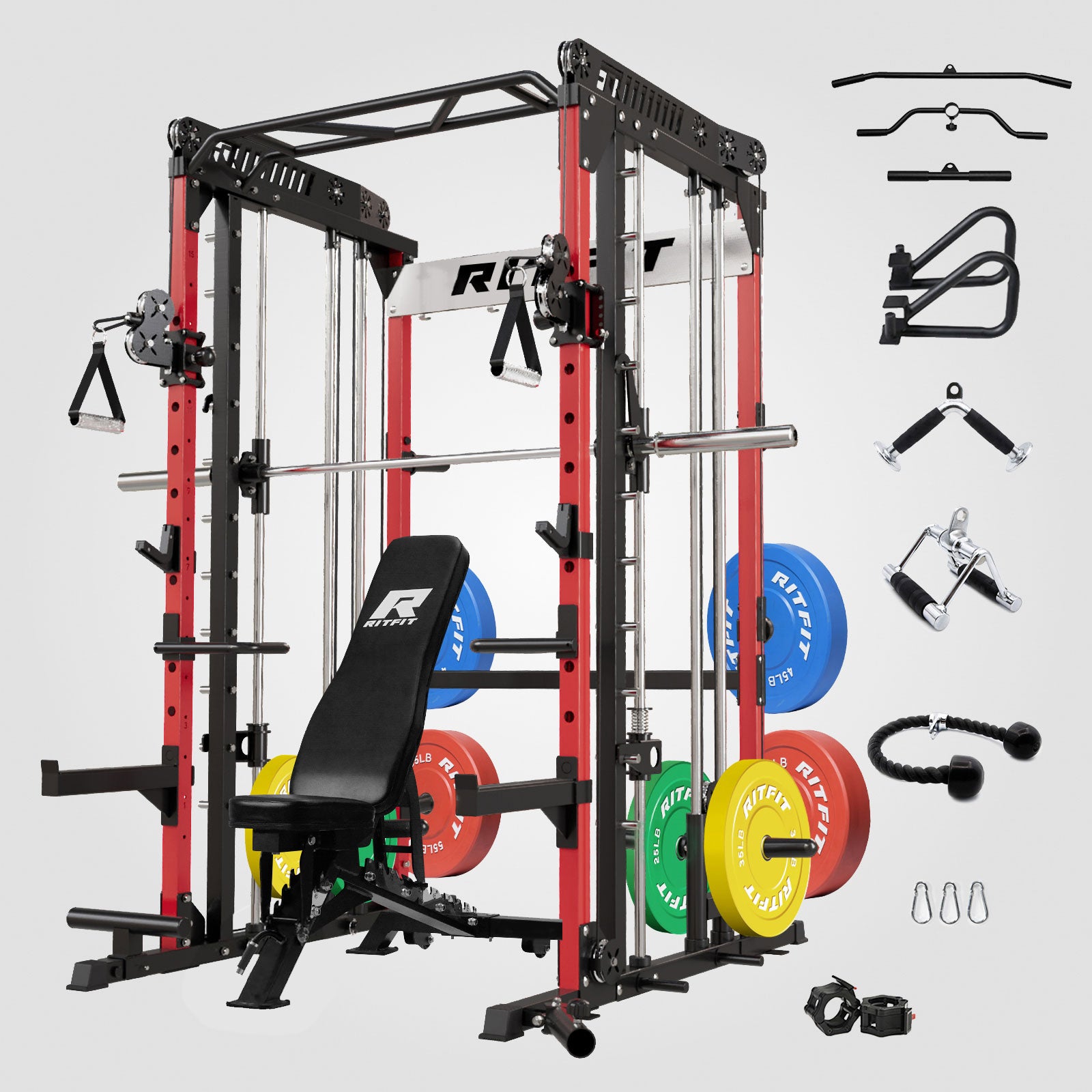
A power cage is a stronger and more versatile version of the basic rack for lifters who want heavier training and better safety control. It can support squats, rack pulls, lunges, calf raises, pull ups, cable work, and full body strength programs.

- Best for: Heavy lifters, garage gym owners, and anyone training without a human spotter.
- Training value: Safety bars and spotter arms make heavy barbell work more practical in a home setting.
- Home gym advantage: A cage with cable features can replace multiple single purpose machines.
- Good pairing: Add a bench, plates, and cable attachments to expand lower body and full body training options.
If you want one structure that can support leg day and upper body training, a power cage is usually a higher value choice than a single purpose leg station. You can also compare cage based setups with a Smith machine vs power rack guide before deciding.
Smith Machine
A Smith machine uses a guided bar path to make squats, lunges, split squats, calf raises, hip thrusts, and Romanian deadlifts easier to set up for solo training. It is useful for lifters who want repeatable positioning and more controlled lower body volume.

- Best for: Solo lifters, bodybuilding style training, and controlled lower body accessory work.
- Training value: The fixed bar path can reduce balance demand, which may help lifters focus on targeted muscles.
- Technique note: A fixed bar path does not guarantee perfect form, so stance, bracing, and range of motion still matter.
- Workout idea: Use Smith machine leg workouts to build a lower body routine around squats, lunges, calf raises, and hip thrusts.
Smith machine loading and leg press loading do not feel identical, even when the weight on the machine looks similar. A study comparing Smith machine squat and leg press found meaningful differences in perceived effort and quadriceps activation profiles, which means lifters should not treat the loads as directly interchangeable.[2]
Leg Press Machine
A leg press machine is one of the most recognizable leg machines because it lets lifters train the lower body with less balance demand than free squats. It is especially useful for higher volume quad and glute work when the back and trunk are supported.

- Best for: Lifters who want high volume leg training without balancing a barbell.
- Training value: Leg press exercises heavily involve the quadriceps, with glutes, hamstrings, and calves also contributing.
- Home gym advantage: A plate loaded leg press can make serious leg training more repeatable in a home setup.
- Buying path: Start with this best leg press machine for beginners at home guide if you want a simpler selection framework.
A systematic review of leg press variants found that the vastus medialis and vastus lateralis showed the greatest activation among the studied quadriceps muscles, while foot position and knee angle can change how muscles contribute.[3] This makes the leg press valuable, but it should still be programmed with controlled range of motion and progressive loading.
Hack Squat Machine
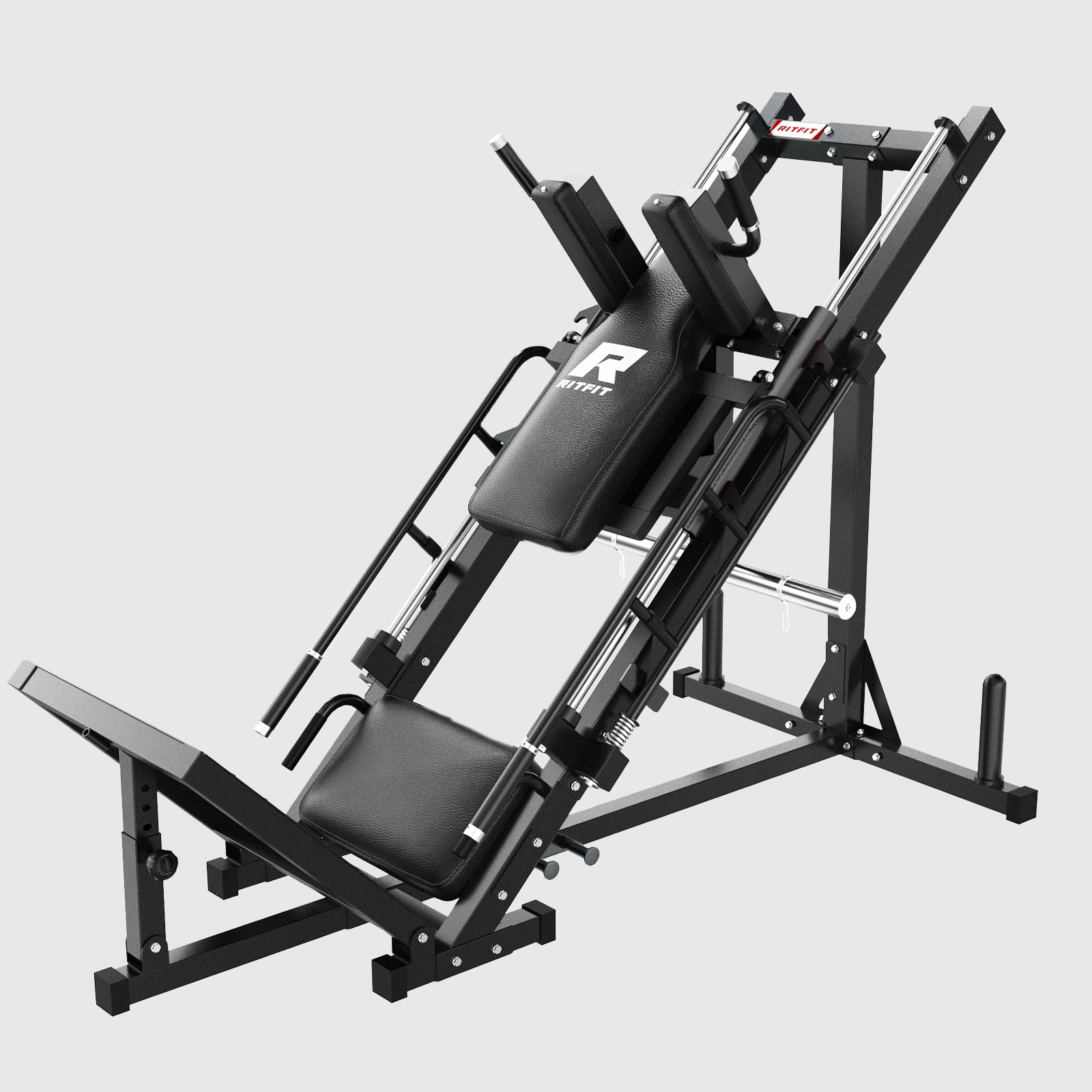
A hack squat machine is a guided squat machine that places the lifter on a fixed track with shoulder pads and a foot platform. It is a strong choice for quad focused training because it reduces the balance demands of free squats while still using a squat pattern.
- Best for: Lifters who want a squat like movement with more external support.
- Training value: Hack squats emphasize knee extension and can be useful for quad hypertrophy when loaded and controlled properly.
- Home gym advantage: A combination system such as the RitFit GAZELLE PRO 3 In 1 Leg Press and Hack Squat Machine can cover leg press, hack squat, and calf raise patterns in one station.
- Setup note: Keep your feet flat, brace before each rep, and avoid locking the knees aggressively at the top.
Hack squat machines and leg press machines are often grouped together because both use guided lower body mechanics. For more direct setup help, read the leg press hack squat machine setup guide.
Hip Thrust Machine
A hip thrust machine is designed to train hip extension with a stable back position and repeatable loading. It is one of the most focused leg machines for glute training, especially when the goal is strength and hypertrophy rather than total exercise variety.

- Best for: Lifters who want a dedicated glute training station.
- Training value: Hip thrusts train hip extension and can complement squats, lunges, and leg press work.
- Home gym advantage: A hip thrust attachment can be more space efficient than adding another full machine.
- Workout idea: Use the Smith machine hip thrust guide if you want to train glutes with a guided bar setup.
Squat variations can activate gluteal, thigh, and lower back muscles differently depending on stance, depth, and loading pattern.[4] That is why a hip thrust machine works best as a targeted complement, not as the only lower body tool in a complete program.
How to Choose the Best Leg Machine for Your Home Gym
The best home gym leg machine is the one that solves your biggest training constraint. Space, safety, exercise variety, and training goal should matter more than choosing the machine that looks most impressive.
- Choose a squat rack if space is limited: It gives you basic barbell leg training with a smaller footprint.
- Choose a power cage if safety is the priority: It gives better support for heavy squats and solo lifting.
- Choose a Smith machine if you want guided movement: It works well for controlled squats, lunges, calf raises, and bodybuilding style volume.
- Choose a leg press if you want lower body volume: It supports quad and glute work with less balance demand than free squats.
- Choose a hack squat if you want quad focused training: It gives a supported squat pattern that can be easier to repeat consistently.
- Choose a hip thrust machine if glutes are the main goal: It gives a stable setup for hip extension focused training.
If you want a broader buying path, browse the full RitFit strength machines collection to compare machines by training style and available space. If you are building a full setup, the RitFit racks package collection can help you plan around a rack, bench, barbell, and plates.
Home Gym Safety Checklist
Heavy leg equipment needs enough clearance, stable flooring, and correctly adjusted safety points before training. A good machine is only safe when it is assembled, loaded, and used correctly.
- Measure the room first: Leave enough clearance to load plates, step around the machine, and exit safely after a hard set.
- Protect the floor: Use dense rubber gym flooring or stall mats under heavy racks and plate loaded machines.
- Check the safety system: Adjust spotter arms, safety bars, Smith catches, or sled stops before adding heavy weight.
- Start lighter than expected: Machine resistance, bar path, and starting position can feel different across equipment types.
- Control the full rep: Use a range of motion you can manage without bouncing, twisting, or losing brace.
Best Two Machine Combinations for Home Leg Day
The most efficient home gym usually pairs one versatile strength station with one focused lower body station. This gives you both compound training and targeted leg volume without filling the room with single use machines.
- Best compact combo: Folding squat rack plus adjustable bench.
- Best heavy lifting combo: Power cage plus leg press and hack squat machine.
- Best solo training combo: Smith machine plus hip thrust attachment.
- Best bodybuilding combo: Smith machine plus leg press and hack squat machine.
- Best beginner combo: Power cage plus beginner friendly leg press setup.
FAQs
What leg machine is best for a home gym?
A power cage or Smith machine is usually best for a home gym because it supports more exercises than a single purpose machine. A leg press and hack squat machine is better when your main goal is lower body volume, quad training, and glute focused leg day work.
Is a Smith machine good for leg workouts?
Yes. A Smith machine is good for leg workouts because it supports squats, split squats, lunges, calf raises, hip thrusts, and Romanian deadlifts. The fixed path can help solo lifters repeat positions, but proper setup, bracing, and foot placement still matter.
Can a leg press machine replace squats?
No. A leg press machine can supplement squats, but it should not fully replace squat patterns for most lifters. The leg press is excellent for quad and glute volume, while squats train balance, trunk control, hip coordination, and whole body strength more directly.
Which leg machine is best for glutes?
A hip thrust machine is usually the most direct glute focused leg machine. A leg press with higher foot placement, a hack squat with controlled depth, and Smith machine hip thrusts can also train the glutes well when programmed with progressive loading and stable form.
Are hack squat machines worth it for home gyms?
Yes. Hack squat machines are worth it for home gyms when you want quad focused training and have enough floor space. A combination leg press and hack squat machine gives better value than a single function hack squat station because it supports multiple lower body patterns.
Should beginners use a power cage or Smith machine?
Beginners can use either, but the better choice depends on confidence and training goals. A power cage builds free weight skill and whole body coordination, while a Smith machine offers a guided path that may feel easier for solo practice and controlled accessory exercises.
How much space do you need for a home gym leg machine?
Most home gym leg machines need enough space for the frame, plate loading, walking clearance, and safe entry. Measure length, width, ceiling height, and at least two feet of working clearance around key loading areas before choosing a rack, Smith machine, or leg press.
What leg machine gives the best value for lower body training?
A power cage gives the best overall value when you want the most exercises from one station. A leg press and hack squat combo gives better lower body value when your priority is quads, glutes, calves, and repeatable machine based leg day volume.
Conclusion
The best leg machines at the gym are not always the ones with the biggest footprint or the heaviest stack. For home gyms, the smartest choice is the machine that matches your training goal, fits your room, supports safe loading, and gives you enough exercise variety to stay consistent.
Start with a squat rack, power cage, or Smith machine if you want maximum versatility. Add a leg press, hack squat, or hip thrust station when you want more focused lower body volume.
Disclaimer: This article is for general educational purposes only and is not medical advice. Consult a qualified clinician or certified fitness professional before starting if you have pain, injury, surgery history, numbness, dizziness, or medical restrictions. Stop any exercise that causes sharp pain or unusual symptoms.
References
- Wirth K Keiner M Hartmann H Sander A Mickel C. Effect of 8 weeks of free weight and machine based strength training on strength and power performance. J Hum Kinet. 2016;53:201 210. doi:10.1515/hukin 2016 0023
- Migliaccio GM Dello Iacono A Ardigò LP Samozino P Iuliano E Grgantov Z Padulo J. Leg press vs Smith machine, quadriceps activation and overall perceived effort profiles. Front Physiol. 2018;9:1481. doi:10.3389/fphys.2018.01481
- Martín Fuentes I Oliva Lozano JM Muyor JM. Evaluation of the lower limb muscles electromyographic activity during the leg press exercise and its variants, a systematic review. Int J Environ Res Public Health. 2020;17(13):4626. doi:10.3390/ijerph17134626
- Coratella G Tornatore G Caccavale F Longo S Esposito F Cè E. The activation of gluteal, thigh, and lower back muscles in different squat variations performed by competitive bodybuilders, implications for resistance training. Int J Environ Res Public Health. 2021;18(2):772. doi:10.3390/ijerph18020772