
A complete training plan for overall fitness for a true beginner does not need a gym membership, a coach, or a wall of machines. It needs a simple weekly structure, a handful of foundational exercises, and a way to progress that keeps you safe and consistent.
This guide lays out the full picture: how many days to train, which movement patterns matter, how to pick a starting weight, when to add more, and how to mix strength, cardio, mobility, and rest. Read it once, then start your first week this Monday.
Quick Answer: A complete training plan for overall fitness for a true beginner combines three full-body strength sessions per week with light cardio, daily walking, and at least one full rest day. Build the plan around squat, push, pull, hinge, and carry movements, start light, and add small amounts of weight only when your form is solid.
Key Takeaways
- Train three days a week: A true beginner needs three full-body sessions on non-consecutive days, with rest or light activity in between.
- Cover five patterns: A complete plan trains a squat, a push, a pull, a hip hinge, and a carry in every session.
- Start light and controlled: Choose a weight you can lift with clean form, finishing with about two reps left in the tank.
- Progress in small steps: Add weight only after two workouts of solid form, usually 5 pounds at a time.
- Rest is part of the plan: Recovery days and one full rest day are where your body builds strength.
What Is a Complete Training Plan for Overall Fitness?
A complete training plan for overall fitness combines strength training, cardiovascular conditioning, mobility work, and planned rest into one balanced weekly schedule. Each piece trains a different physical quality, so no single workout type is enough on its own.
- Strength: builds muscle and bone and supports everyday lifting
- Cardio: improves heart and lung capacity
- Mobility: keeps joints moving through a full range of motion
- Rest: lets your body adapt and prevents burnout
This kind of plan differs from a bodybuilding split or a marathon program because it balances all qualities instead of chasing one. Your first version only needs to be good enough to repeat, and a basic complete workout plan built the same way can grow with you.
Why Does a Beginner Need a Structured Training Plan?
A structured training plan gives a beginner a clear schedule, removes decision fatigue, and builds the consistency that drives results. Showing up three times a week on a fixed plan beats guessing at a workout every day.
- Consistency over intensity: regular sessions matter most in the first months
- Measurable progress: a plan lets you track small wins instead of feeling stuck
- Scheduled rest: rest days prevent the all-or-nothing pattern that ends most beginner efforts
Evidence from a pilot study found that eight weeks of online home-based resistance training twice a week improved physical fitness and wellbeing scores in middle-aged adults [1]. The practical lesson is simple: a short, repeatable, home-based program can deliver measurable change in under two months.
Which Movement Patterns Should a Beginner Learn?
The five fundamental movement patterns are the squat, the push, the pull, the hip hinge, and the carry. These patterns cover nearly every functional movement the body makes, so they are the smartest place for a beginner to spend time.
- Squat: goblet squat or bodyweight squat
- Push: push-up or dumbbell press
- Pull: dumbbell row or lat pulldown
- Hip hinge: glute bridge or Romanian deadlift
- Carry: farmer carry
One or two exercises per pattern is enough for a complete beginner workout. You will train every major muscle group in about 45 minutes, and good coordination develops naturally as the movement patterns repeat week to week.
How to Structure a Beginner Full-Body Week
A true beginner trains three full-body days per week on non-consecutive days, with light cardio or rest in between. This schedule balances training stimulus with recovery, which beginners need most.
- Three strength sessions: Monday, Wednesday, and Friday
- Rest or active recovery: Tuesday, Thursday, and Saturday
- One full rest day: Sunday
- Session length: about 45 to 60 minutes including warm-up
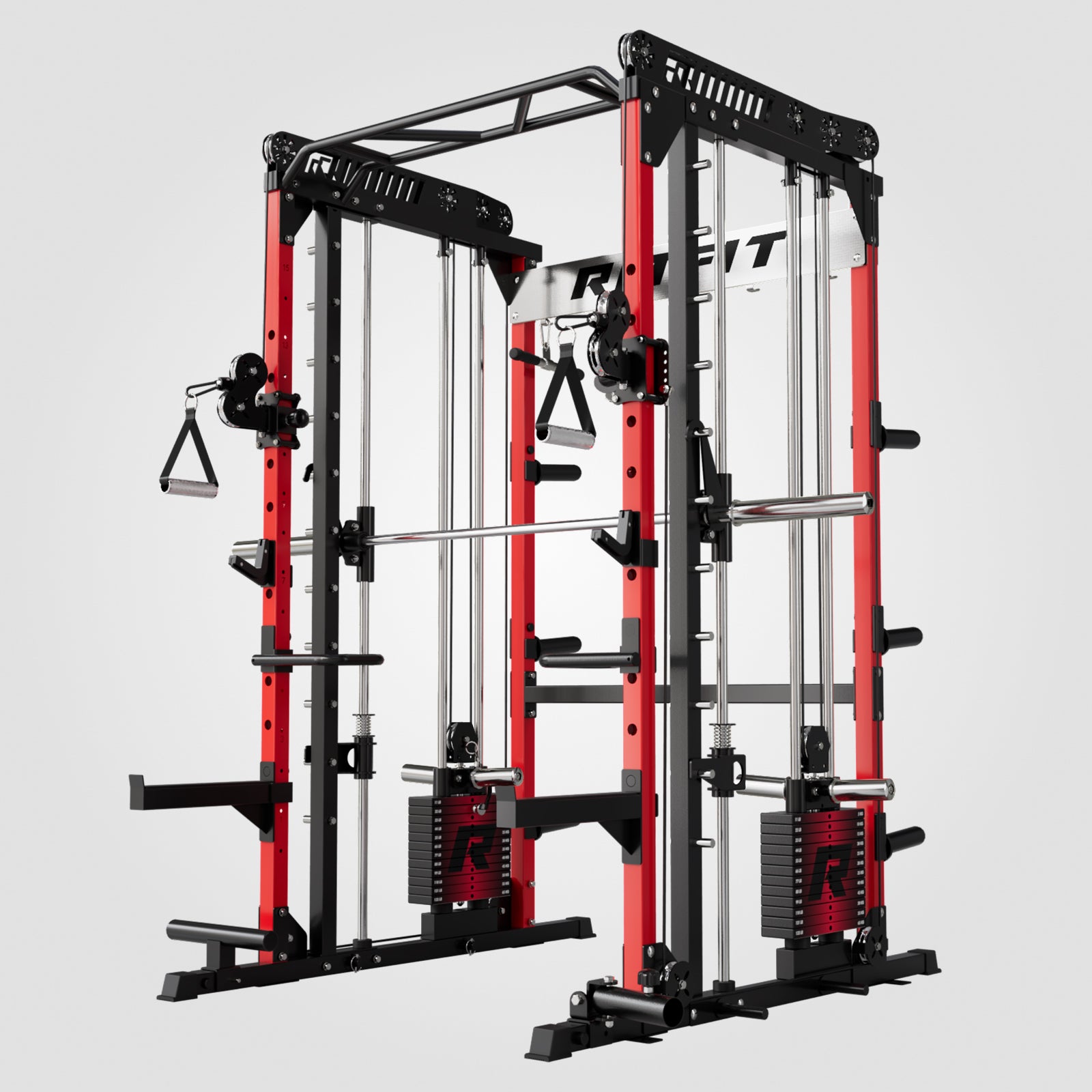
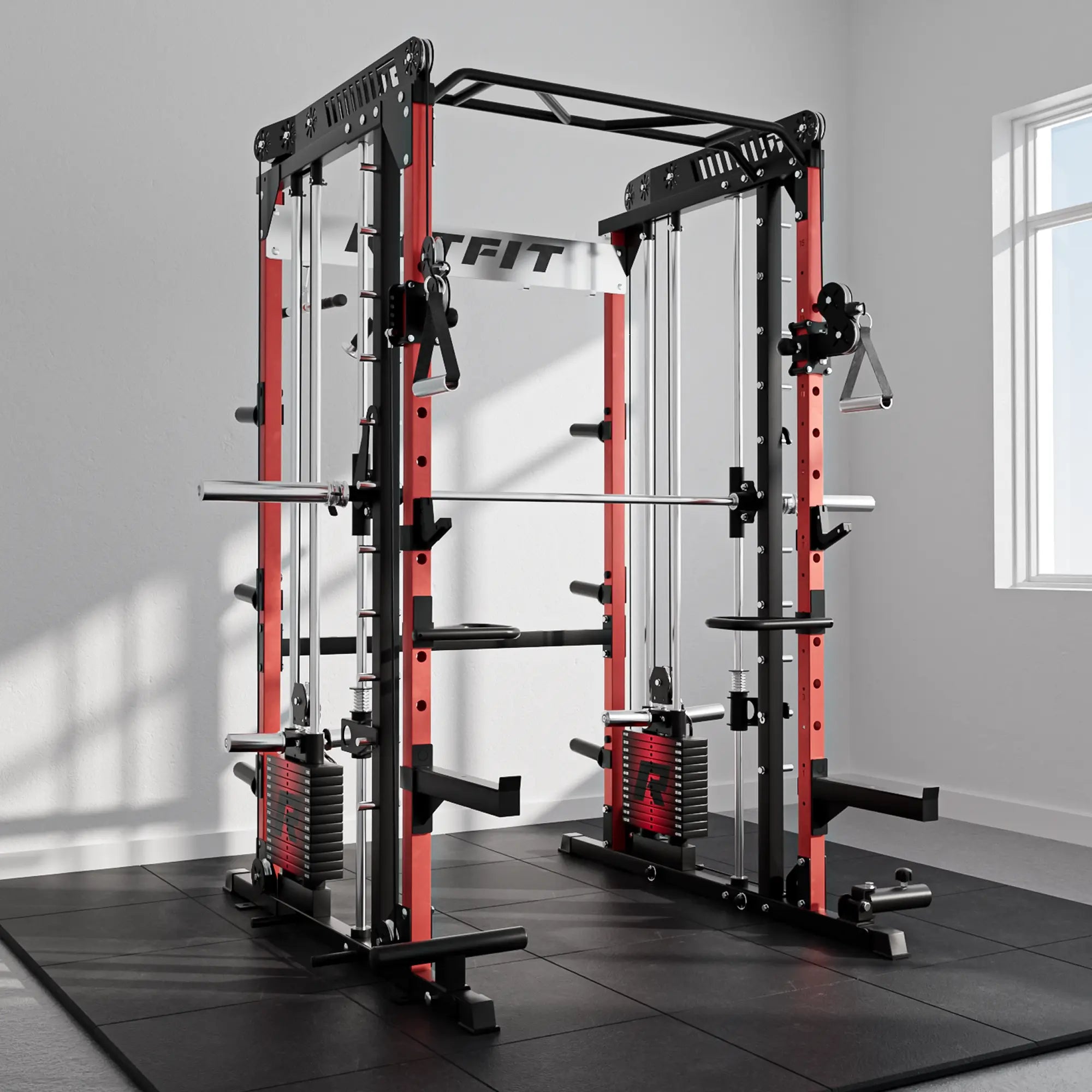
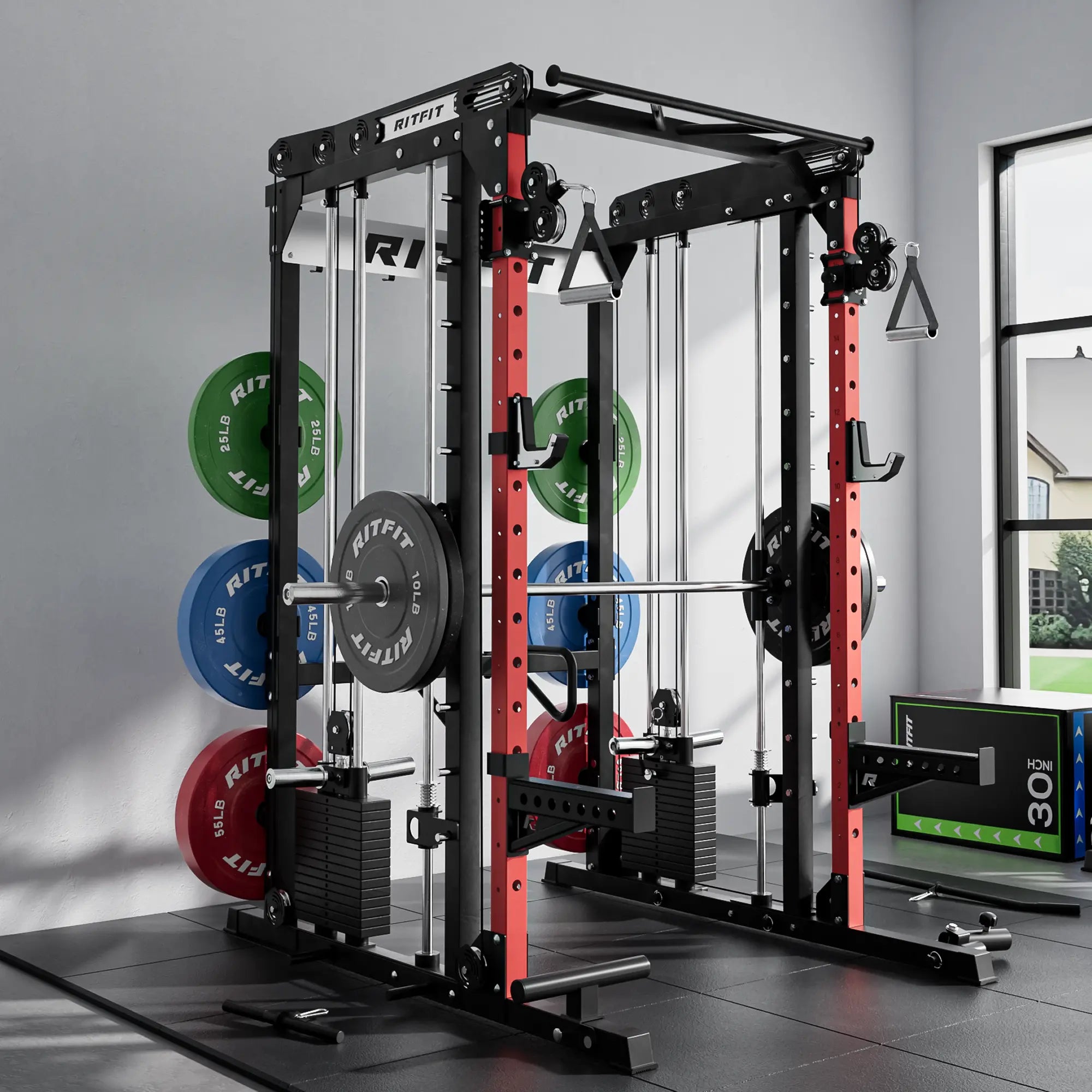
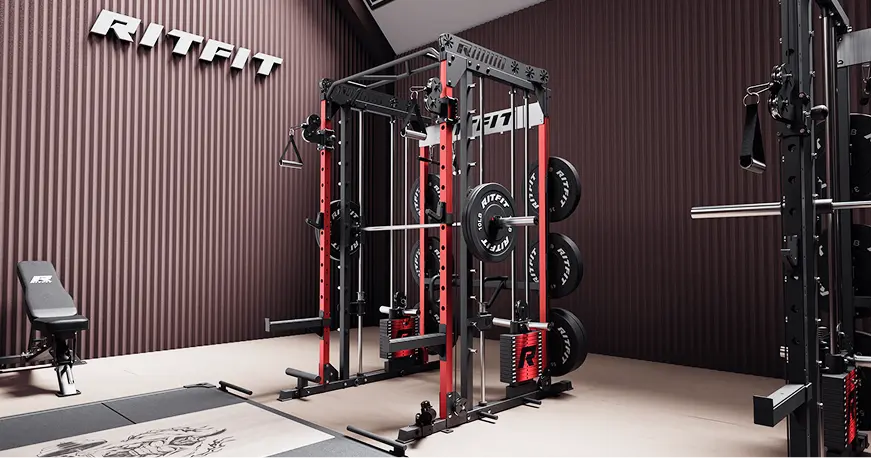
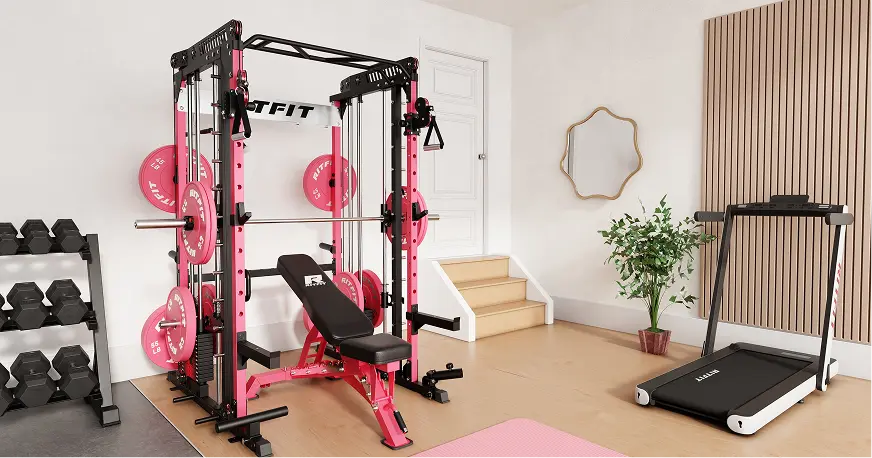
If three days feel like too much, start with two. Consistency at two days still beats a more aggressive plan you abandon, and an all-in-one setup like the RitFit M2 multifunctional home gym makes running the whole week from one corner of a room straightforward.
What Does a Beginner Full-Body Workout Plan Look Like?
Three full-body workouts, labeled A, B, and C, give a beginner a complete week of training. Each one hits every movement pattern with five to six exercises, three sets, and weights you control.
- Workout A: goblet squat 3x10-15, push-up 3x8-12, dumbbell row 3x10-12, glute bridge 3x12-15, plank 3x30-45 seconds
- Workout B: dumbbell Romanian deadlift 3x10-12, dumbbell shoulder press 3x10-12, lat pulldown or band row 3x12-15, reverse lunge 3x8-10 per leg, farmer carry 3x30-45 seconds
- Workout C: bodyweight squat 3x15-20, dumbbell floor press 3x10-12, bent-over row 3x10-12, hip thrust 3x12-15, dead bug 3x8-10 per side
Rotate workouts A, B, and C across your three training days each week. A compact RitFit adjustable utility bench gives you a safe spot for floor presses and seated rows, and the short video below walks through a full-body session you can follow at home.
How Much Weight Should a Beginner Use?
A beginner should choose a weight they can lift with clean form for every set and rep, finishing with about two reps left in the tank. If form breaks or the last rep turns into a struggle, go lighter.
- Bodyweight first: use push-ups, squats, and lunges before adding load
- Light dumbbells: 5 to 15 pounds is plenty for pressing and rowing at the start
- Control is the test: there are no benchmark weights, only your own control
- Challenge on the last reps: you should feel effort on the final two or three reps without losing form
For every exercise the same rule applies: if you cannot finish every rep with control, the load is too heavy. Start at about 50 to 60 percent of what feels challenging, and a light bar like the RitFit 15kg Olympic training barbell makes small, honest loading steps easy to take.
"What I advise in most cases is, instead of looking for a spotter to take you through those areas of a lift that are more difficult, think of other ways you can improve your ability to complete that lift, if strength is your goal."
Jeff Cavaliere, MSPT, CSCS, Physical Therapist and Strength Coach, former Head Physical Therapist for the NY Mets, Workout Spotting Tips (Men's Health)
What Can You Do if You Do Not Have Gym Equipment?
When you lack equipment, substitute a bodyweight or band version of the same movement pattern rather than skipping it. A squat stays a squat whether you hold a dumbbell, a jug of water, or nothing at all.
- No dumbbells: use bodyweight, resistance bands, or filled water jugs
- No bench: do floor presses and counter incline push-ups
- No pull-up bar: use band rows or bent-over dumbbell rows
- No gym: a full-body plan works in a small living room
The equipment list for this plan is short: a few dumbbells, a bench or sturdy chair, and a mat. As you progress you can expand your setup with a functional training equipment package or a dedicated strength training equipment collection without changing the plan itself.
How Often Should a Beginner Train and Rest?
A true beginner trains three days a week and rests or does light activity on the other four. Recovery is where your body builds strength, so rest days are part of the plan, not a failure of it.
- Three training days: space them with at least one rest day in between
- Active recovery: a 20 to 30 minute walk or easy bike ride
- One full rest day: do little beyond normal daily activity
- Listen to your body: if joints ache or energy is gone, swap training for a walk
A beginner who trains hard for two weeks and quits for three gains nothing. The schedule only works if it is one you can repeat, which is why a home gym training plan built around a few sessions a week is easier to keep than one that demands daily gym visits.
When and How to Add Weight (Progressive Overload)
A beginner adds weight only after completing every set with clean form for two consecutive workouts, then increases by the smallest step available, usually 5 pounds. This slow, steady climb is called progressive overload.
- Add reps first, then weight: extra reps are the smallest honest step
- Increase one exercise at a time: never change everything in one session
- Use the smallest step: about 5 pounds or one rep added to one set
- Back off if form worsens: drop a step when control slips
Research on muscle activity found that in the bench press, activation of the pectoralis major, anterior deltoid, triceps, and latissimus dorsi rises as load intensity increases from 70% to 100% of one-rep max [2]. For a beginner the takeaway is simple: loading must rise gradually for the muscles to keep adapting, and hitting a fitness plateau usually just means it is time for a small planned step up.
How Do You Balance Strength, Cardio, and Mobility?
Mobility and core work keep joints moving freely and protect the lower back, and they belong in every beginner session. Ten minutes of mobility after a workout plus a few core holds each week is enough.
- Warm up dynamically: leg swings and arm circles for 5 to 10 minutes before training
- Train the core: plank, dead bug, and bird dog two to three times per week
- Recover on rest days: foam rolling or gentle stretching between sessions
Research on resistance-based core training found that adjustable resistance increased rectus abdominis and internal oblique muscle activity compared with a fixed platform [3]. Even light core work done consistently builds the stabilizing strength a beginner needs for the bigger lifts.
Common Beginner Mistakes to Avoid
The most common beginner mistakes are starting too heavy, adding volume too fast, skipping warm-ups, and abandoning the plan after one missed week. Each one is easy to avoid with a simple rule.
- Starting too heavy: use the two-reps-left test
- Adding too much too soon: change one variable at a time
- Skipping rest: recovery is part of the plan
- Comparing to others: your only benchmark is your last session
- Quitting after one bad week: one missed day never ends a plan, a full stop does
When life interrupts, do a 15 minute version instead of doing nothing, and add high-energy conditioning moves like burpees on days when you want a cardio boost inside the same session.
When Should a Beginner Stop an Exercise?
Stop an exercise immediately if you feel sharp pain, joint pain, dizziness, or chest discomfort, and speak with a doctor before resuming. Muscle soreness is normal; sharp pain is not.
- Muscle soreness the next day: normal, and light movement often helps
- Sharp or sudden pain during an exercise: stop immediately
- Warm up before every session: never lift cold
- Stop with reps in reserve: finish sets two reps short of failure on most exercises
Beginners who respect their limits stay consistent, and consistency is the whole game. When in doubt, choose the lighter weight and the slower progression, and let a deeper look at how weight training builds strength guide how you balance your sessions.
FAQs About a Complete Training Plan for Overall Fitness
How many days a week should a beginner work out?
A true beginner can start with three full-body workouts per week on non-consecutive days, with rest or active recovery in between.
Three sessions are enough to build a solid foundation and recover properly.
If three days are too much, two full-body days still work.
How much weight should a beginner lift?
Start light enough that you can finish every set with clean form and about two reps left in the tank.
For most beginners that means empty or light dumbbells and bodyweight exercises at first.
Choose a load you can handle on your own.
What exercises should a beginner do?
Build your plan around five fundamental movement patterns: a squat, a push, a pull, a hip hinge, and a carry.
Goblet squats, push-ups, dumbbell rows, glute bridges, and farmer carries are excellent first choices.
These compound movements train many muscles at once and build a strong base.
How long should a beginner workout last?
Plan for about 45 to 60 minutes per session including your warm-up.
Focus on six or seven compound exercises rather than dozens of isolation moves.
If a session runs much longer, rest intervals or the number of exercises are probably too generous for your goals.
When should a beginner add weight or reps?
Add weight or an extra rep only after you can complete every set with solid form for two consecutive workouts.
Increase the load by the smallest step available, usually five pounds.
Progress slowly and in small steps so your body can adapt and recover safely.
Conclusion
A complete training plan for overall fitness for a true beginner is not complicated.
Train three days a week, build each session around a squat, a push, a pull, a hinge, and a carry, choose weights you can control, and add a little only when form is solid.
Add walking, mobility work, and a full rest day, and the pieces fall into place.
Start lighter than feels right, stay consistent, and give the plan eight weeks before you judge it. If you need gear to build out your home setup, check the RitFit sale page before you buy.
Disclaimer
This article is for general information only and does not replace professional medical or fitness advice. Consult a qualified professional before starting any exercise program, especially if you have an injury or a health condition.
References
1. Kikuchi N, Ohta T, Hashimoto Y, et al. Effect of Online Home-Based Resistance Exercise Training on Physical Fitness, Depression, Stress, and Well-Being in Middle-Aged Persons: A Pilot Study. Int J Environ Res Public Health. 2023;20(3). doi:10.3390/ijerph20031769. PMCID: PMC9914297
2. Krol H, Golas A. Effect of Barbell Weight on the Structure of the Flat Bench Press. J Strength Cond Res. 2017;31(5):1321-1337. PMCID: PMC5400411
3. Kim HJ, Sung JH, Ryu JK, Jung HC, Wang J. Effect of Reformer Spring Resistance Modifications on Core Muscle Activity During Basic Core Muscle Exercises. Healthcare (Basel). 2024;12(23). PMCID: PMC11641042