A flat tummy comes from two things working together: lower overall body fat and a strong, well-trained core. You cannot crunch your way to a flat stomach, but the right mix of movement and habits makes it realistic.
This guide covers the best exercises for a flat tummy, plus the cardio, strength, and nutrition basics that actually drive results. It is written for everyday adults seeking sustainable change.
Quick Answer: Getting a flat tummy requires lowering overall body fat through a calorie deficit while strengthening the core with exercises like planks, dead bugs, and leg raises. No single move or crash diet will do it alone, the combination of smart training, cardio, and consistent nutrition habits delivers lasting results.
Key Takeaways
- No spot reduction: Ab moves tone the muscle underneath, but a flat tummy needs lower total body fat.
- Core work still matters: Planks, dead bugs, leg raises, and side planks build deep stability and posture.
- Fat loss drives the look: A calorie deficit plus cardio and strength training is what flattens the midsection.
- Combine modalities: Pairing aerobic work with resistance training preserves muscle and improves results.
- Be patient: Steady, sustainable habits beat crash diets and quick fix promises every time.
What Does It Really Take to Get a Flat Tummy?
A flat tummy comes from reducing the fat layer over your abdomen while strengthening the core beneath it. Both pieces matter, and neither works alone.
- Lower body fat: Visible flatness depends on shedding fat through an overall calorie deficit, not on endless crunches.
- Core strength: A trained core improves posture and how your midsection looks as fat comes off.
- Consistency: The habits you can maintain for months matter more than any single intense week.
Think of it as a package: train the core, burn the fat, and support both with smart nutrition and recovery.
Why Can't You Spot Reduce Belly Fat?
No, you cannot spot reduce belly fat because fat loss happens across the whole body when you burn more energy than you take in. Doing hundreds of crunches will not melt fat from your stomach specifically.
In one trial, six weeks of abdominal exercise alone in 24 sedentary adults did not significantly reduce abdominal fat or waist circumference, though it improved core muscular endurance[1].
- The takeaway: Ab exercises build and firm the muscle, but the fat layer responds to your overall energy balance.
- The fix: Combine core training with cardio, strength work, and a sensible diet for visible change.
"Doing ab exercises won't directly burn belly fat, but they will strengthen and grow your abdominal and core muscles, making them more prominent. Once total body fat is reduced through a sustained calorie deficit, that increased muscle definition will become more visible, creating a leaner and more sculpted look."
Amy Dockery, RD, Registered Dietitian (BC and Alberta), NutriProCan, Fat Loss Facts: The Biggest Myths Busted By A Dietitian
What Are the Best Core Exercises for a Flat Tummy?
The best core exercises for a flat tummy target the entire core, the deep stabilizers, obliques, and front abdominal wall. Quality and control beat high rep speed work.
Selective deep core and lumbar stabilization exercises have been shown to thicken the transversus abdominis, the deep muscle that supports posture and trunk stability[2]. Continuous bridge and plank style work with an abdominal drawing in maneuver produced similar deep core gains in healthy adults[3].
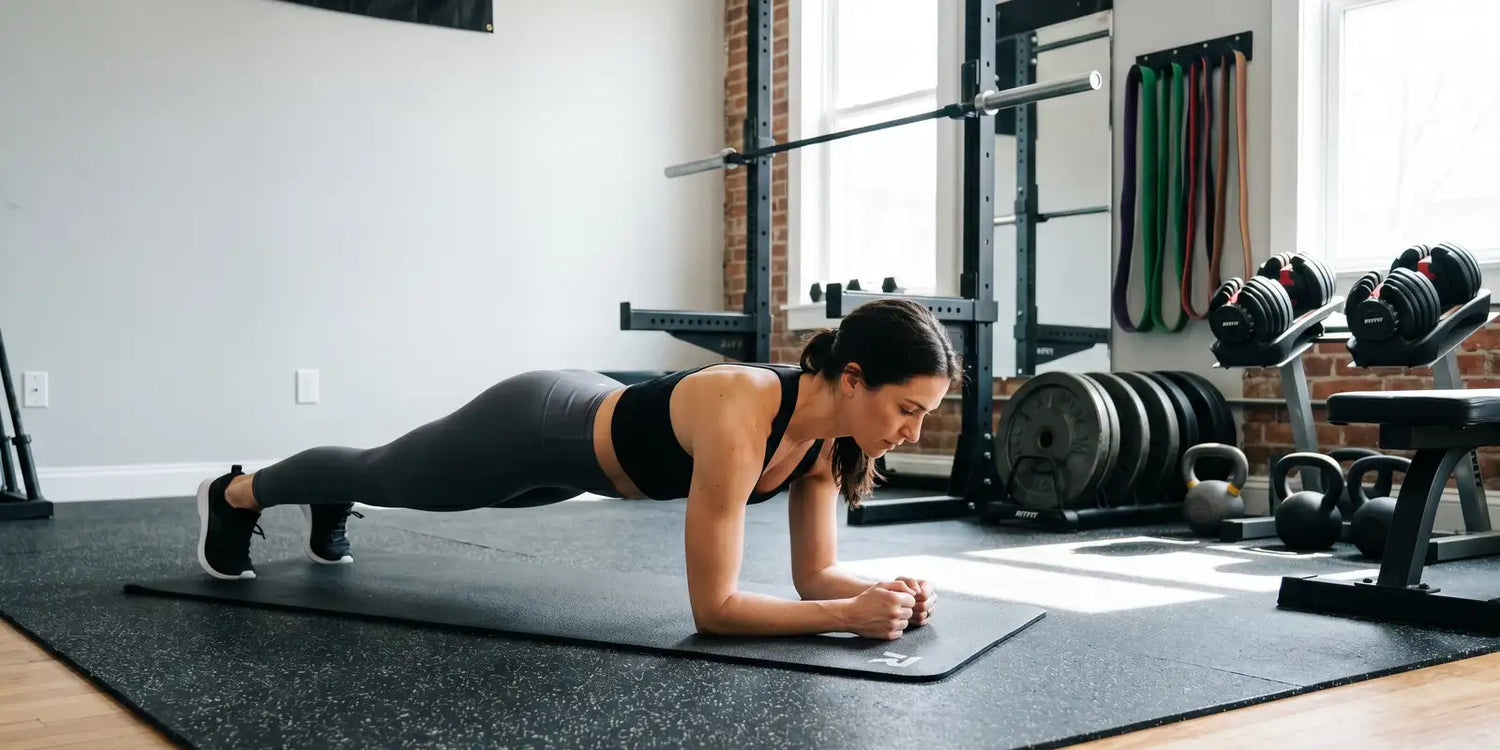
- Plank: Engages the deep core, obliques, back, and shoulders at once, making it one of the most efficient moves.
- Dead bug: Trains core control while protecting the lower back, ideal for beginners.
- Leg raises: Target the lower abdominal region while teaching you to keep the core braced.
- Bicycle crunches: Work the rectus abdominis and obliques together for all around toning.
- Side planks: Carve the obliques and build lateral stability that crunches miss.
You can build a strong core at home on a mat, and you can add light resistance later with simple exercise ball core moves for variety.
Does Cardio and HIIT Help Burn Belly Fat?
Yes, cardio and HIIT help burn belly fat by raising your daily calorie burn, which is what actually reduces the fat over your abs. Both steady sessions and intervals work well.
A systematic review and meta analysis of 61 randomized trials found that all exercise types significantly reduced visceral fat versus no exercise, with high intensity interval training the most effective modality[1].
- Brisk walking: Accessible, low impact, and easy to repeat most days for a steady calorie burn.
- HIIT: Short bursts of hard effort deliver a strong fat loss stimulus in less time.
- Mix it up: Rowing, cycling, and stair work all add to your weekly energy output.
If you want to maximize each session, see which exercises burn the most calories or try a simple stepping cardio guide at home.
How Does Resistance Training Help Build a Flat Tummy Look?
Resistance training preserves muscle while you lose fat, which keeps your metabolism higher and your midsection firmer. Compound lifts work the core hard as they move bigger muscle groups.
- Squats and lunges: Recruit large muscles, burn more calories, and demand core bracing throughout.
- Hip hinges and deadlifts: Build the back of the body while the core stabilizes the spine.
- Presses and push ups: Create full body tension that includes deep core engagement.
You can start with a pair of dumbbells and weights and add grip and accessory tools as you progress.
How Do Diet, Sleep, and Stress Affect Your Tummy?
Nutrition is the biggest lever for a flat tummy because fat loss requires a calorie deficit. Training supports the result, but food choices decide most of it.
- Modest deficit: One guide suggests a daily deficit of roughly 300 to 500 calories supports steady fat loss without crash dieting.
- Protein and fiber: Prioritize protein at meals and plenty of vegetables to stay full and protect muscle.
- Sleep and stress: Aim for adequate rest, since poor sleep and high stress can work against fat loss.
Small, repeatable habits beat extreme restriction that you cannot sustain for the long run.
What Does a Sample Weekly Flat Tummy Routine Look Like?
A balanced week blends strength, cardio, and core work without overdoing any single piece. According to WHO guidance, adults benefit from 150 to 300 minutes of moderate aerobic activity plus two or more resistance sessions weekly.
- 3 strength days: Full body sessions of squats, hinges, pushes, and pulls, around 30 to 40 minutes each.
- Daily movement: Brisk walks most days, with one or two HIIT sessions for extra burn.
- Core 3 times weekly: A short circuit of planks, dead bugs, leg raises, and side planks.
- Recovery: Keep at least one full rest day and prioritize sleep to support progress.
For balance and stability that complement core work, explore balance and stability training on lighter days.
How Long Does It Take and What Mistakes to Avoid?
A flat stomach takes weeks to months, not days, and the timeline depends on your starting body fat and consistency. Quick fix promises rarely hold up.
- Chasing spot reduction: Endless crunches without fat loss will not flatten the tummy.
- Crash dieting: Aggressive cuts cost muscle and rebound hunger, stalling long term progress.
- Skipping strength: Cardio alone can sacrifice the muscle that gives the midsection a firm look.
- Ignoring recovery: Too little sleep and constant stress quietly undermine results.
Focus on habits you can keep, and the midsection follows over a realistic span of time.
FAQs About Flat Tummy Exercises
Can ab exercises alone give me a flat tummy?
No, ab exercises alone cannot give you a flat tummy because you cannot spot reduce fat.
Crunches and planks strengthen and tone the muscles underneath, but the visible flatness comes from lowering overall body fat through a calorie deficit, regular cardio, resistance training, and good sleep.
Combine core work with these fundamentals.
What is the single best exercise for a flat tummy?
There is no single best exercise, but planks are among the most efficient because they engage the deep core, obliques, back, and shoulders at once.
Pair planks with full body compound moves like squats and lunges that burn more calories.
The most effective approach blends core stability work with cardio, strength training, and a sensible diet.
How long does it take to get a flat stomach?
Timelines vary with your starting body fat, diet, and consistency, so a flat stomach usually takes weeks to months rather than days.
A modest calorie deficit supports steady, sustainable fat loss of roughly half a pound to one pound per week.
Avoid crash diets and quick fix promises, and focus on habits you can maintain.
Do I need equipment to flatten my tummy at home?
No, you do not need equipment to start.
Bodyweight moves like planks, dead bugs, leg raises, bicycle crunches, and side planks build core strength on a mat at home.
Adding brisk walking or HIIT raises your calorie burn.
Light dumbbells or resistance bands can help later, but consistency and nutrition matter far more than gear.
Is cardio or strength training better for a flat tummy?
Both help, so the best plan uses them together.
Cardio burns more calories during the session, while strength training preserves muscle and keeps your resting metabolism higher.
Combining the two within an overall calorie deficit gives the best flat tummy result.
Add core work for stability and posture, and stay consistent across the week.
Conclusion
A flat tummy is built by lowering overall body fat and strengthening the core, not by chasing spot reduction. Pair core moves like planks and dead bugs with cardio, resistance training, and a modest calorie deficit.
Start with bodyweight basics and brisk walking, then add light weights and intervals as you progress. Give your plan the weeks it realistically needs, and browse the latest RitFit deals to support your home gym setup.
Disclaimer
This article is for general fitness education only and is not medical advice. Consult a qualified healthcare or fitness professional before starting a new exercise or nutrition program, especially if you have any health conditions.
References
1. Gong W. The effects of the continuous bridge exercise on the thickness of abdominal muscles in normal adults. Journal of Physical Therapy Science. 2018;30(7):921-925. doi:10.1589/jpts.30.921. PMCID: PMC6047969
2. Lee JS, Kim TH, Kim DY, Shim JH, Lim JY. Effects of selective exercise for the deep abdominal muscles and lumbar stabilization exercise on the thickness of the transversus abdominis and postural maintenance. Journal of Physical Therapy Science. 2015;27(2):367-370. doi:10.1589/jpts.27.367. PMCID: PMC4339139
3. Moreira SE, Debs AL, de Oliveira EH, da Silva MCN, Pinto RMC, Pereira-Baldon VS. Hypopressive exercises for diastasis recti and pelvic floor symptoms in postpartum women: A randomized trial. Brazilian Journal of Physical Therapy. 2026;30(3):101584. doi:10.1016/j.bjpt.2026.101584. PMCID: PMC12961203