
Fitness exercises at home for ladies are one of the simplest ways to build strength, burn calories, and stay consistent without a gym membership. This guide covers the best moves for every muscle group, plus a realistic weekly plan you can start today.
You will learn how to warm up, how much equipment you need, how much weight to lift, and when to progress. The plan works in a small space, needs little or no gear, and fits into 20 to 30 minutes a few times a week.
Quick Answer: Fitness exercises at home for ladies work best when you combine bodyweight strength moves like squats, lunges, glute bridges, push-ups, and planks with light cardio and short rest days. Beginners should train three days a week, choose weights they can lift for 8 to 12 reps, and progress gradually.
Key Takeaways
- Strength: Compound moves like squats, lunges, and glute bridges build the most muscle in the least time.
- Schedule: Three short home workouts a week are enough for beginners to see steady progress.
- Equipment: Bodyweight alone works, and one set of dumbbells or bands lets you progress without a full gym.
- Weight: Pick a dumbbell weight you can lift cleanly for 8 to 12 reps, then add weight every few weeks.
- Safety: Warm up first and stop any move that causes sharp joint pain, especially around the knees.
Why Home Workouts Work for Women
Home workouts work for women because they remove the commute, the cost, and the scheduling pressure that often stop beginners from training consistently.
Consistency is the single biggest predictor of results.
One trial showed that eight weeks of twice-weekly home-based resistance training improved depression scores and physical fitness in middle-aged adults [1].
That means a simple routine you keep beats a complicated plan you drop.
- Saves time: No driving, parking, or waiting for equipment, so a 25-minute session really takes 25 minutes.
- Lowers cost: A mat and one set of dumbbells replace a monthly membership and an annual contract.
- Removes pressure: You train in your own space at your own pace, which helps beginners stay consistent.
- Fits family life: Short sessions slot into mornings, lunch breaks, or after bedtime, whichever works best for your household.
If you are setting up a space for the first time, the Home Gym Guide walks through the essentials for a room you can actually use.
Getting Started: Space, Equipment, and Scheduling
You need only a small cleared floor area, comfortable shoes, and a few basic pieces of equipment to start fitness exercises at home for ladies.
A space about the size of a yoga mat, roughly 6 feet by 3 feet, is enough for most moves. Clear furniture, keep a water bottle nearby, and train on a stable floor rather than a bed or sofa.
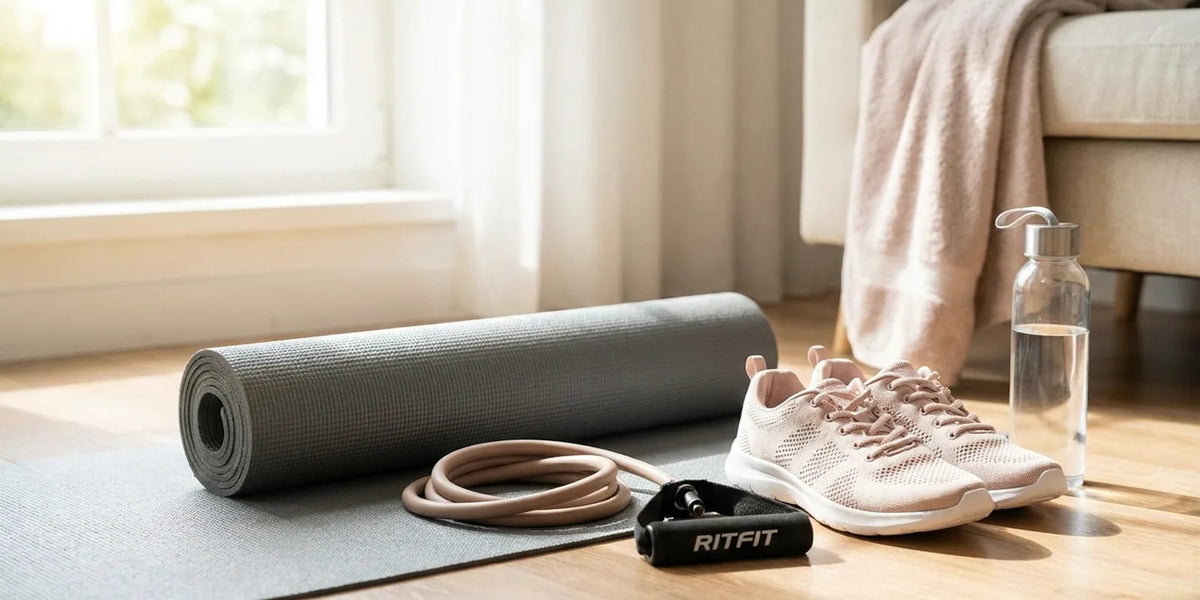
- Workout mat: Cushions knees and wrists for floor moves like planks, glute bridges, and dead bugs.
- Dumbbells: One set from 5 to 15 pounds covers most beginner exercises and supports progressive overload.
- Resistance bands: Add load without weight and travel easily. See resistance band exercises you can do at home for ready-made options.
- Adjustable choices: If you prefer to grow one piece over time, browse the Dumbbells collection for a set that fits your space.
For scheduling, block the same 30-minute slot on the same days each week. Treating the session like an appointment is the easiest way to build the habit.
Best Lower-Body Exercises at Home for Women
The best lower-body exercises at home for women are glute bridges, squats, lunges, and calf raises because they train the largest muscles in the body and burn the most calories.
Foot and torso position change how a squat loads your hips and knees.
A 2023 study in Physical Therapy in Sport found that trunk angle and shank angle each contribute to the hip-to-knee moment ratio in a bilateral squat, which means small adjustments shift the emphasis between hips and knees [2].
A 2024 biomechanical review in Int J Sports Phys Ther explains that trunk and tibia inclination have opposite effects on knee flexion moments [3].
- Bodyweight or dumbbell squats: Stand with feet shoulder-width apart, push hips back, and lower until thighs are parallel. Do 2 to 3 sets of 10 to 15 reps.
- Lunges: Step forward and lower the back knee toward the floor. Alternate legs for 2 sets of 8 to 10 reps per side.
- Glute bridges: Lie on your back with knees bent, drive through the heels, and squeeze the glutes at the top. Do 2 to 3 sets of 12 to 15 reps.
- Calf raises: Stand on the edge of a step and rise onto your toes for 2 sets of 15 reps to finish the lower body.
For more lower-body variety, the best hip exercises at home and best calf exercises at home guides add targeted options for strength, mobility, and glutes.
"Strengthening the muscles around the knee is the way to go to get rid of some of this knee pain. A lot of us are probably using the wrong exercises and focusing on the wrong muscles."
Jeff Cavaliere, MSPT, CSCS, Physical Therapist and Strength Coach, former Head Physical Therapist for the NY Mets, Athlean-X
Best Upper-Body and Core Exercises at Home
The best upper-body and core exercises at home for women are incline push-ups, dumbbell rows, shoulder presses, planks, and dead bugs because they balance the whole body.
You do not need a heavy bench to train the upper body. A chair, a wall, or a pair of dumbbells gives beginners everything they need to build strength and improve posture.
- Incline push-ups: Place hands on a sturdy chair or counter and lower your chest toward the surface. Do 2 to 3 sets of 8 to 12 reps.
- Dumbbell rows: Hinge at the hips with a flat back and pull the dumbbell toward your ribs. Do 2 sets of 8 to 10 reps per side.
- Shoulder presses: Press dumbbells overhead from shoulder height for 2 sets of 8 to 12 reps.
- Planks: Hold a straight line from head to heels for 20 to 40 seconds and repeat for 3 rounds.
- Dead bugs: Lie on your back and lower opposite arm and leg toward the floor for 2 sets of 10 reps per side.
Pair this section with the best back workouts at home and best pilates exercises for core strength for a fuller upper body and core library.
How Do You Add Cardio and HIIT at Home?
Adding two short cardio sessions a week raises your heart rate and supports fat loss between strength days.
You do not need a treadmill or bike at home. Marching in place, jumping jacks, high knees, and step-ups all count as effective cardio when done in short intervals.
- Interval structure: Work hard for 30 seconds, then move at a light pace for 60 to 90 seconds, and repeat for 15 to 20 minutes.
- Keep it conversational: You should be able to speak in short sentences, which means the intensity is sustainable.
- Combine with strength: Do one cardio and core day and one dedicated cardio day each week for a balanced schedule.
Follow along with a timed session to keep your pacing honest and your form consistent.
What Is a Simple Weekly Home Workout Plan for Women?
A simple weekly plan for women is three strength days with at least one rest day between them, plus one light cardio day and one active recovery day.
Each strength session takes about 25 to 30 minutes, including a 5-minute warm-up and a 5-minute cool-down. This schedule leaves room for rest so muscles can recover and adapt.
| Day | Workout |
|---|---|
| Day 1 | Full Body Strength A: lower body and core |
| Day 2 | Rest or light walking |
| Day 3 | Cardio intervals and core |
| Day 4 | Rest |
| Day 5 | Full Body Strength B: upper body and core |
| Day 6 | Active recovery: yoga, stretching, or a slow walk |
| Day 7 | Rest |
Sample weekly schedule for a beginner doing fitness exercises at home for ladies.
- Full Body Strength A: Glute bridges, squats, lunges, calf raises, planks, and dead bugs.
- Full Body Strength B: Incline push-ups, dumbbell rows, shoulder presses, planks, and bicycle crunches.
- Progression: Repeat the same plan for 3 to 4 weeks, then add one set, more reps, or a heavier dumbbell.
- Need variety: Swap in exercises from the weight bench exercises at home guide when you are ready for more options.
How Much Weight to Use and When to Progress
For home dumbbell exercises, choose a weight you can lift with good form for 8 to 12 reps, with the last two reps feeling challenging.
Most beginners start with 5 to 10 pound dumbbells for upper-body moves and 10 to 15 pounds for lower-body moves. The right weight is personal, so test and adjust each session.
- Start light: If you can finish every rep easily on every set, the weight is too light.
- Add weight: When you can complete all sets and reps cleanly for two weeks in a row, add 2.5 to 5 pounds or switch to a heavier band.
- Add reps first: Beginners can also progress by adding 1 to 2 reps per set before reaching for heavier weight.
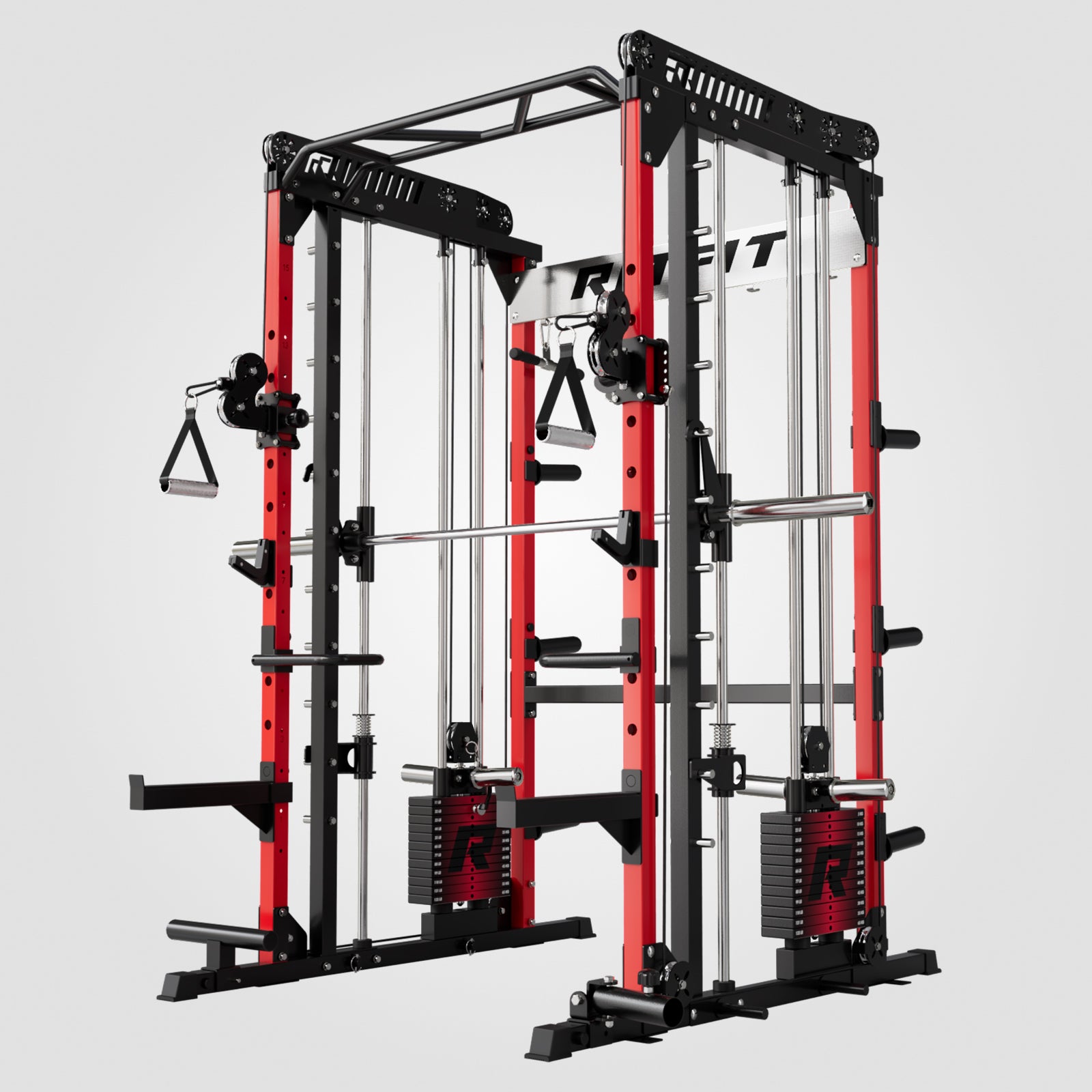
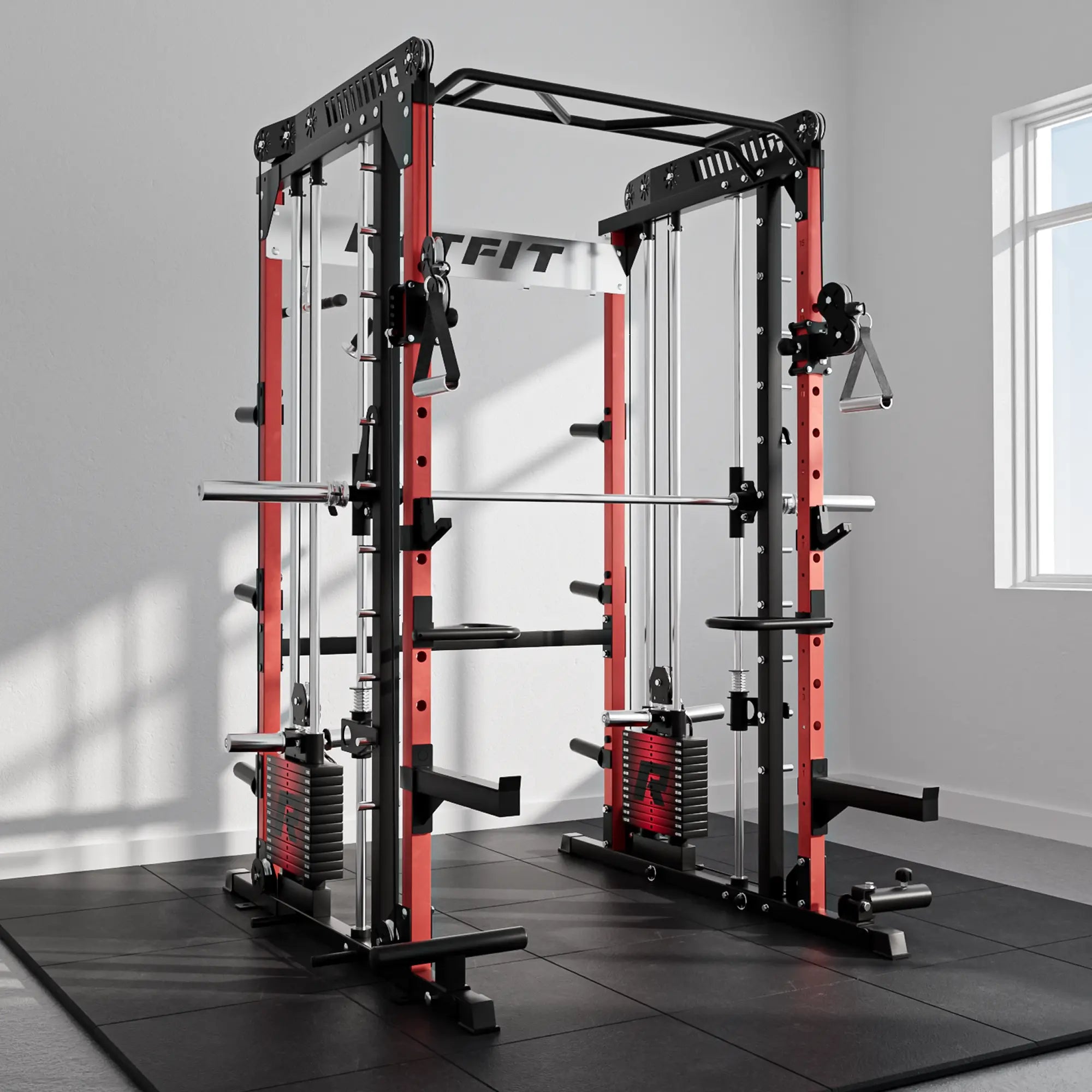
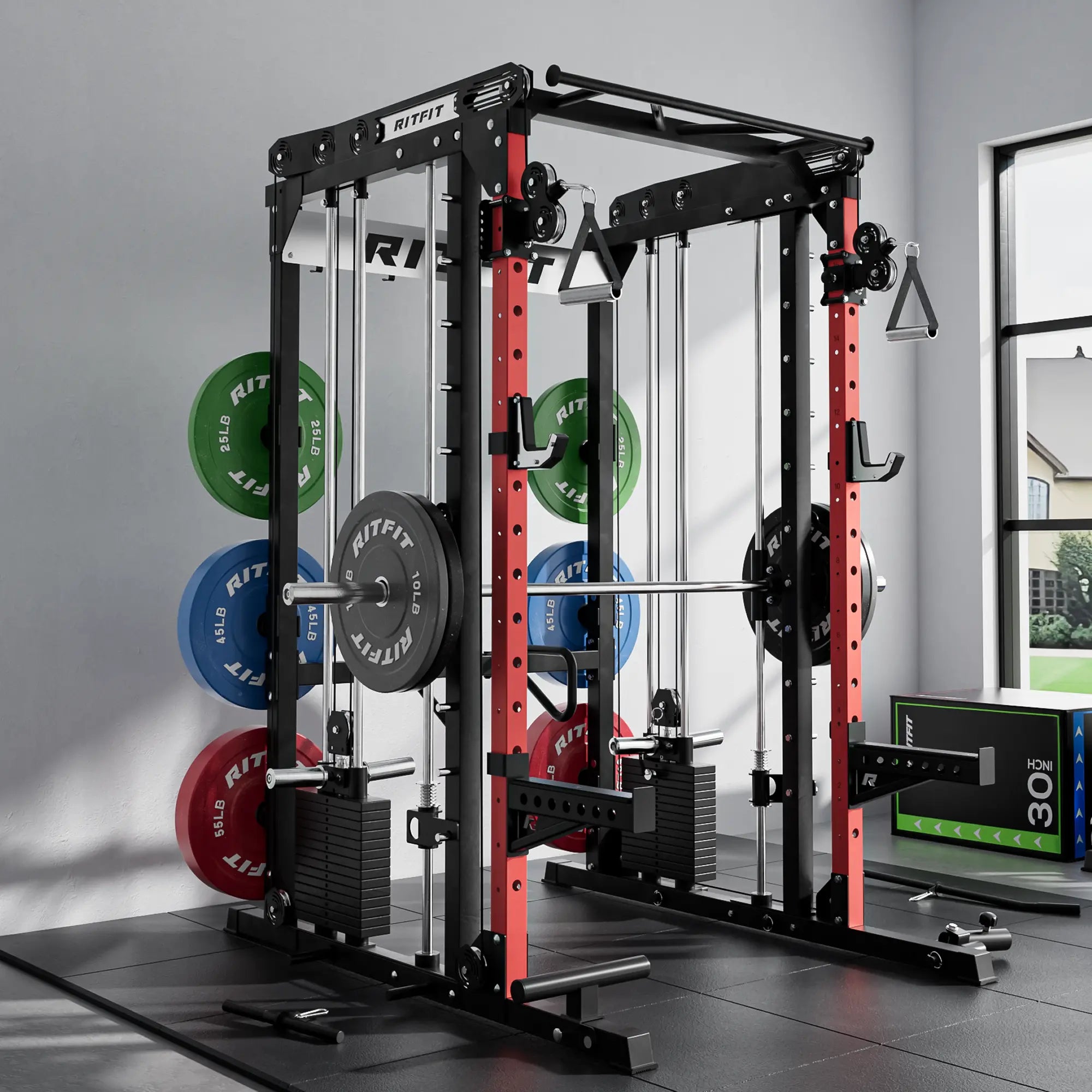
- Upgrade path: When you outgrow free weights, a machine like the M1 Multi Functional Home Gym Smith Machine or the RitFit M2 Multi Functional Modular Home Gym Smith Machine offers a wider loading range. The RitFit Home Gym Package M1 Smith Machine bundles everything into one setup.
What Are Common Mistakes and When Should You Stop?
The most common home workout mistakes are skipping warm-ups, using too much weight, training through pain, and adding days too quickly.
Avoiding these errors keeps you consistent and protects your joints, especially the knees, which are the most common complaint for new exercisers.
- Skip the warm-up: Five minutes of marching, arm circles, and leg swings lowers injury risk.
- Use too much weight: Form breaks, and you train bad movement patterns instead of building strength.
- Train through sharp pain: Muscle soreness is normal, but sharp joint pain is a signal to stop the move.
- Add days too fast: Jumping from zero to five sessions a week causes burnout and overuse injuries.
Stop any exercise immediately if you feel sharp joint pain, dizziness, or chest discomfort, and talk to a healthcare professional before continuing.
FAQs About Home Fitness Exercises for Women
What are the best fitness exercises to do at home for women?
The best at-home exercises for women are compound moves that train several muscles at once, including bodyweight or dumbbell squats, lunges, glute bridges, push-ups, planks, and rows.
These build strength, support fat loss, and need little equipment.
Start with two to three sets of eight to twelve reps per move.
How often should a beginner woman work out at home?
Beginners should aim for three workouts a week, with at least one rest day between strength sessions.
You can add a lighter cardio or mobility day on off days.
Consistency beats intensity, so choose a schedule you can keep for several weeks before adding more days.
Do you need equipment to exercise at home?
No, you can get a complete workout using just bodyweight moves like squats, push-ups, and planks.
For progressive strength, a set of dumbbells or resistance bands adds load without taking up space.
A mat and comfortable shoes are enough to start today.
Can home workouts help with weight loss?
Yes.
A consistent home routine that combines strength training with cardio burns calories and builds muscle, which supports healthy weight management.
Results depend on how regularly you train and on your overall eating habits, not on the equipment you own.
How much weight should a woman use for home dumbbell exercises?
Choose a weight you can lift with good form for the last few reps of each set.
If you can easily finish all reps, go heavier.
If form breaks early, go lighter.
Many beginners start with five to ten pound dumbbells and progress as strength improves.
How long should a home workout be for beginners?
A beginner home workout of twenty to thirty minutes is enough to build a strong foundation.
Warm up for five minutes, complete the strength or cardio circuit, and cool down with light stretching.
Shorter consistent sessions beat long irregular ones.
When should you stop a home workout exercise?
Stop any exercise immediately if you feel sharp joint pain, dizziness, or chest discomfort.
Muscle soreness during the session is normal, but sharp or sudden pain is a clear signal to stop that move.
Rest the area and talk to a healthcare professional before returning to training.
How often should you increase workout difficulty?
Increase difficulty when you can finish all sets and reps with good form for two weeks in a row.
Add one or two reps, an extra set, or two to five pounds of weight.
Most beginners progress every three to four weeks when they train consistently three days a week.
How much equipment do you need for home workouts?
You need very little to start, a mat, comfortable shoes, and your own bodyweight.
A set of dumbbells from 5 to 15 pounds or a few resistance bands lets you add load as you get stronger.
You can build a complete routine with just these three items.
Conclusion
Fitness exercises at home for ladies are simple, effective, and do not require a full gym. Combine lower-body and upper-body strength with short cardio sessions, follow a three-day weekly plan, and progress the weight every few weeks.
Start with your first session today. For a guided next step, check the current deals on the RitFit sales page before you buy equipment.
Disclaimer
This article is for general information only and is not a substitute for professional medical or fitness advice. Consult a qualified healthcare provider before starting a new exercise program, especially if you have an injury or a medical condition.
References
1. Kikuchi N, Ohta T, Hashimoto Y, et al. Effect of Online Home-Based Resistance Exercise Training on Physical Fitness, Depression, Stress, and Well-Being in Middle-Aged Persons: A Pilot Study. Int J Environ Res Public Health. 2023;20(3). doi:10.3390/ijerph20031769. PMCID: PMC9914297
2. Graber KA, Halverstadt AL, Gill SV, Kulkarni VS, Lewis CL. The effect of trunk and shank position on the hip-to-knee moment ratio in a bilateral squat. Phys Ther Sport. 2023;61:102-107. PMCID: PMC10518215
3. Straub RK, Powers CM. A Biomechanical Review of the Squat Exercise: Implications for Clinical Practice. Int J Sports Phys Ther. 2024;19(4):490-501. PMCID: PMC10987311