A 20 minute full body workout for women is the fastest way to build strength, burn calories and stay consistent when your schedule is tight. This no-equipment plan gives you the exact order, timings and rounds so you can finish the whole session at home in 20 minutes.
You get a 3 minute warm-up, a 7-move compound circuit run twice, and a 2 minute cool-down, all with no equipment beyond a mat. Beginner modifications, progressions and a weekly schedule are built in.
Quick Answer: Yes, a 20 minute full body workout for women is enough to build strength and improve fitness when you train two to four times a week. The plan below covers every major muscle group with compound bodyweight moves, runs two timed circuits and needs nothing more than a mat and a small clear space.
Key Takeaways
- Short sessions count: A 20 minute full body workout done two to four times a week is enough to build strength for women who are new to training.
- Seven compounds cover the whole body: Squats, lunges, glute bridges, push ups, planks, dead bugs and mountain climbers hit the lower body, upper body and core in one pass.
- The timing is what makes it 20 minutes: A 3 minute warm-up, two 7 minute circuits with a 1 minute rest between them, and a 2 minute cool-down.
- Consistency wins: Two to four quality sessions a week with rest days beats one long session you never repeat.
- Progress on purpose: Add reps, shorten rest or introduce resistance bands only when you can finish every interval with good form.
Is 20 Minutes of Full Body Work Enough?
Yes, a 20 minute full body workout for women is enough to build strength, improve conditioning and support a daily exercise habit, especially when you are new to training or rebuilding a routine.
Every session pairs several compound moves back to back, so the lower body, upper body and core all work inside the same short block.
- Time is the biggest barrier: A lack of time is one of the most common reasons women skip workouts, and a short session removes that excuse.
- Full body coverage: Compound moves train the largest muscle groups in a single pass, which keeps energy expenditure high while you train.
- Better than none: Small amounts of resistance training beat skipping the session entirely, and short sessions are far easier to repeat.
- Frequency beats duration: Two to four short sessions a week accumulate more useful work than one long session you rarely repeat.
A review of minimal dose training found that even low-volume resistance sessions, such as single sets of several exercises done at least twice a week, improve muscle strength in people new to training, and that small amounts are better than none [1].
A separate review of time-efficient strength training recommends prioritizing bilateral, multi-joint compound exercises such as squats, an upper-body push and an upper-body pull, and notes that techniques like supersets can roughly halve training time while preserving training volume [2].
That is why this routine alternates lower-body and upper-body moves instead of grouping muscles together. For more circuit formats with extra exercises and timings, see our full body circuit training workouts for beginners.
What Muscle Groups a Full Body Workout Covers
A full body workout trains movement patterns rather than isolated muscles, so one circuit loads the legs, hips, chest, back, shoulders and core before you finish.
The table below maps every pattern in this plan to the muscles it works and the bodyweight move that trains it.
| Movement pattern | Primary muscles worked | Move in this 20 minute plan |
|---|---|---|
| Squat, knee-dominant | Quadriceps, glutes | Bodyweight squat |
| Single-leg lunge | Quadriceps, glutes, calves, balance | Reverse lunge |
| Hip bridge, hip-dominant | Glutes, hamstrings, lower back | Glute bridge |
| Horizontal push | Chest, front shoulders, triceps | Knee push up |
| Core, anti-extension | Rectus abdominis, deep core | Plank |
| Core, anti-rotation | Obliques, hip flexors | Dead bug |
| Conditioning, core and hips | Obliques, hip flexors, quadriceps | Mountain climbers |
Muscle groupings list the primary movers for each bodyweight pattern. Secondary stabilizers such as the calves and forearms also work in every hold.
Bodyweight circuits cover squatting, hinging and pushing patterns well, but they have no true pulling movement, so the back works isometrically to hold plank and dead bug positions. Add resistance band workouts for all body parts later if you want direct rowing and pull-apart work.
Covering a push, a squat, a hinge and a core pattern in one session is what makes this a full body workout rather than a leg routine with a few planks bolted on.
"Real fat loss requires total-body strength training and conditioning that drives results. That means combining functional movements with compound lifts, aiming for the largest muscle groups that elevate heart rate and improve energy expenditure the most."
Jeff Cavaliere, MSPT, CSCS, Physical Therapist and Strength Coach, Athlean-X
The 20 Minute No-Equipment Full Body Workout Routine
A 20 minute full body workout for women runs as a 3 minute warm-up, two 7 minute circuits separated by a 1 minute rest, and a 2 minute cool-down, and it needs only your body weight, a mat and a small clear space.
Work each move for 40 seconds, rest 20 seconds, then move straight to the next exercise in the order listed.
Warm-Up, 3 minutes: March in place for 30 seconds, arm circles forward and back for 30 seconds and bodyweight squats for 30 seconds. Run those three moves again with high knees in place of the march to make three minutes.
Circuit, 7 minutes per round: Perform the seven moves below in order, 40 seconds of work and 20 seconds of rest each. Rest 60 seconds between rounds, then repeat the circuit a second time.
- Bodyweight squat: Stand with feet shoulder width apart, sit your hips back and down, then drive through your heels to stand.
- Reverse lunge: Step back into a lunge, lower until both knees form right angles, then press through the front heel to return.
- Knee push up: Start in a high plank with knees down, lower your chest to the floor, then press back up with elbows tucked.
- Glute bridge: Lie on your back with knees bent, press your hips up, squeeze your glutes at the top, then lower slowly.
- Plank: Hold a straight line from head to heels, brace your core and keep your hips level without sagging.
- Dead bug: Lie on your back with arms up and knees bent, lower one arm and the opposite leg, then return and switch sides.
- Mountain climbers: From a high plank, drive one knee toward your chest and switch legs quickly while keeping your hips low.
Alternating a lower-body move with an upper-body or core move keeps local fatigue down, so form holds up through both rounds. If you finish every interval comfortably, it is time to progress rather than to add a third round straight away.
Cool-Down, 2 minutes: Child pose for 30 seconds, a standing forward fold for 30 seconds, then a gentle quad or hamstring stretch for 30 seconds on each side. That brings the session to 20 minutes, warm-up and cool-down included.
When bodyweight stops being enough, the same circuit works with a bench for step-ups and incline push ups, as shown in our full body workouts with a home workout bench.
Modifications and Progressions for Every Level
Every move in this routine has an easier version and a harder version, so you can start where you are and advance when the reps feel controlled.
- Squat modification: Hold the back of a chair for balance, or reduce depth until your hips reach just above parallel.
- Lunge modification: Keep the step small and hold a wall or chair for support, then advance to a full step and a knee lift at the top.
- Push up modification: Drop to your knees or place your hands on a raised surface, then progress to full toes and slower reps.
- Plank modification: Hold a forearm plank with knees down, then progress to toes and add shoulder taps once you feel stable.
- Progress the intensity: Increase the work interval from 40 to 45 seconds, shorten rest to 10 seconds, or add a third circuit round.
- Regress when form breaks: Cutting the interval short is a smarter option than grinding through reps with a sagging hip or a collapsing knee.
Choose the version that lets you hold good form for the whole work interval, and stay there for a full week before moving up.
For more upper-body strength ideas, our push up workouts for total body strength guide breaks down push-up progressions step by step.
How Often to Do This Workout and How to Progress
Aim for two to four full body sessions per week with at least one rest day between challenging sessions.
A crossover study in resistance-trained women found that shorter, well-structured sessions feel less effortful while producing solid training volume, which supports keeping sessions short and consistent [3].
- Start with three sessions: Train Monday, Wednesday and Friday, with walking or light stretching on the other days.
- Fix a time you can keep: A morning slot before work or an evening slot after dinner both work, as long as you repeat the same window on most days.
- Progress the reps: Add 5 to 10 seconds to each work interval, or add a third round once you complete two rounds comfortably.
- Progress the load: Introduce light exercise weights or resistance bands for squats, lunges and rows when bodyweight no longer challenges you.
- Build on your routine: Once you are consistent, add a dedicated chest and back workout for women on a fourth day.
- Train alongside other women: A partner or a group keeps the schedule honest, much like the women who joined our Women's Day strength event.
- Plan for the long term: If you decide to build a full home gym later, an all-in-one option like a 3-in-1 leg press home gym package adds machine-based compound training to your weekly plan.
Track your progress simply by noting how many rounds and reps you complete each session.
When a session feels easy, advance only one variable, whether that is time, rounds or added resistance.
Machine training is the next step once bodyweight volume plateaus, and the demo below shows how a full body session works when the load is on a Smith machine instead of your own body weight.
Common Mistakes and When to Stop
Good form matters more than speed or rep count, and a short session still needs proper positioning to stay safe.
Watch for these common errors and know the clear signs that it is time to stop a move.
- Knees collapsing inward on squats: Push your knees out toward your toes and keep your weight in your heels, and reduce depth if your knees cave.
- Letting the plank sag: Brace your core and keep hips level, or drop to your knees and shorten the hold if your lower back starts to arch.
- Rushing through reps: Move with control and take your full rest intervals, because sloppy speed adds injury risk without adding fitness.
- Wrist pressure in planks and push ups: Distribute weight across your whole hand or use a soft surface to ease wrist strain.
- Stop immediately if: You feel sharp pain, dizziness, chest pain or unusual shortness of breath, and check with a doctor before returning to training.
If a move causes joint pain rather than muscle effort, choose the easier modification or skip it and substitute a similar pattern.
If you are exploring machine training later, our best full body smith machine workout for a home gym explains the safest machine setup for full body training.
FAQs About 20 Minute Full Body Workouts for Women
Is a 20 minute full body workout enough for women?
Yes.
Research on minimal dose training shows short, well-structured strength sessions can improve muscle strength, especially for beginners.
A consistent 20 minute routine done several times a week builds strength and fitness, and small amounts of training are better than none at all.
Can I do this workout every day?
Most people can do a 20 minute full body workout four to five times a week with at least one rest day.
Daily is fine for a lighter routine, but your muscles need recovery to grow.
Aim for two to four quality sessions weekly, plus active recovery like walking.
Do I need equipment for this full body workout?
No.
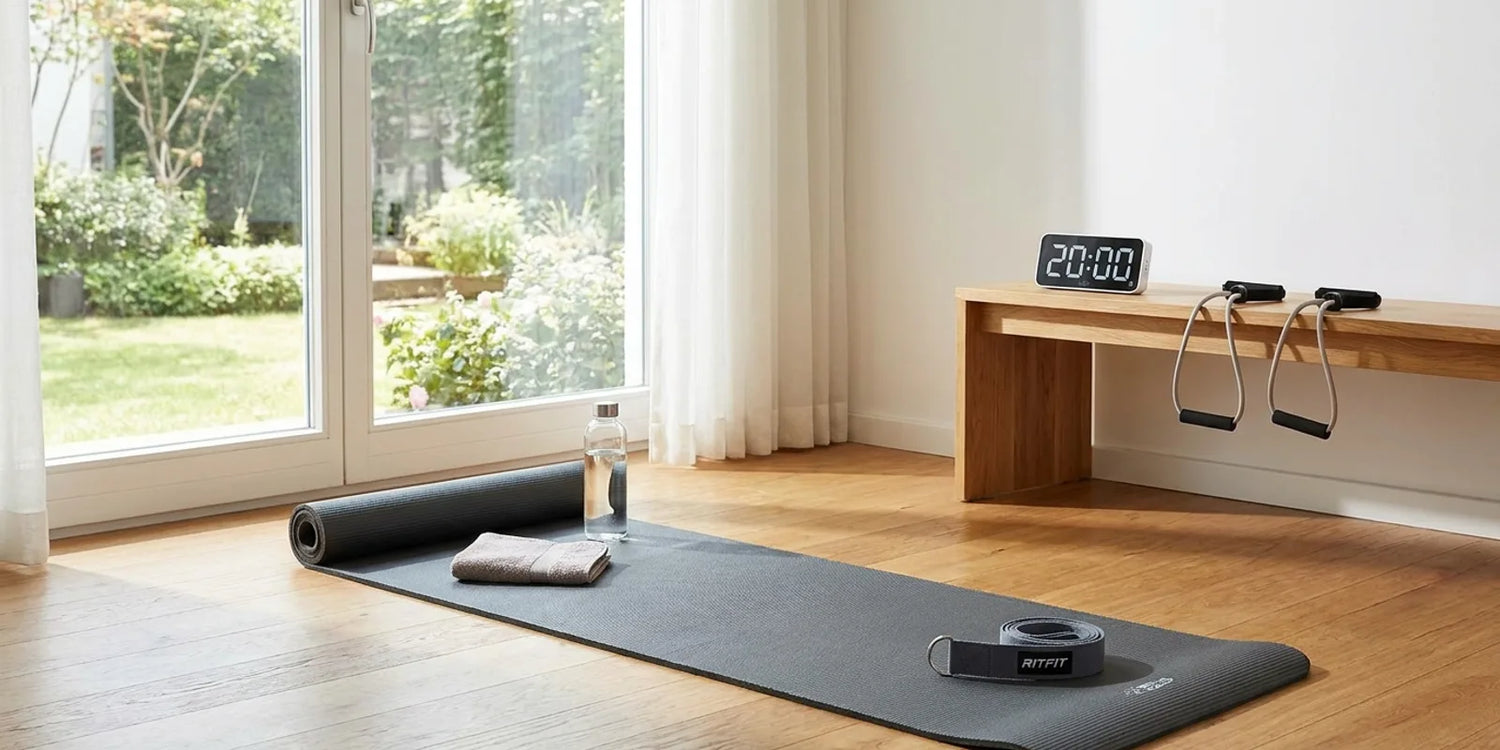
This routine uses only your body weight, a floor mat and a small space.
Bodyweight compound exercises like squats, lunges, push ups and planks target every major muscle group.
Later you can add resistance bands or light weights to keep progressing.
What should I do if a move is too hard?
Choose the easier modification shown for each exercise.
For push ups, drop to your knees.
For lunges, hold a wall or chair for balance.
Slow the pace and take extra rest between moves.
Progress only when you can finish each interval with good form.
How soon will I see results from a 20 minute daily workout?
Consistency matters more than session length.
Most women notice improved energy, easier movement and better mood within a few weeks of training two to four times weekly.
Visible strength and body composition changes typically take eight to twelve weeks when you combine progressive overload with a balanced diet and enough sleep.
What order should I do a 20 minute full body workout in?
Start with a 3 minute warm-up, then run the circuit twice.
Work the squat, reverse lunge, knee push up, glute bridge, plank, dead bug and mountain climbers in that order, 40 seconds of work and 20 seconds of rest on each move.
Rest 60 seconds between rounds and finish with a 2 minute cool-down.
Can I build muscle with this no-equipment workout for women?
Yes.
Bodyweight moves like squats, lunges, push ups and glute bridges load the lower body, upper body and core, and two to four sessions a week is enough to build strength as a beginner.
Add a harder variation or light weights once every interval feels comfortable.
Conclusion
A 20 minute full body workout for women is a realistic, science-backed way to build strength and improve fitness at home with no equipment. Prioritize compound bodyweight moves, train two to four times a week and progress one variable at a time.
Start with three sessions this week and track your rounds. When the circuit feels comfortable, add a round or light resistance, then visit the RitFit sales page for home gym equipment that supports longer-term training.
Disclaimer
This article is for general information only and is not medical advice. Consult a qualified healthcare professional before starting any new exercise program, especially if you have an existing condition, injury or are returning to training, and stop any exercise that causes pain or discomfort.
References
1. Nuzzo JL, Pinto MD, Kirk BJC, Nosaka K. Resistance Exercise Minimal Dose Strategies for Increasing Muscle Strength in the General Population: an Overview. Sports Med. 2024;54(5):1139-1162. doi:10.1007/s40279-024-02009-0. PMCID: PMC11127831
2. Iversen VM, Norum M, Schoenfeld BJ, Fimland MS. No Time to Lift? Designing Time-Efficient Training Programs for Strength and Hypertrophy: A Narrative Review. Sports Med. 2021;51(10):2079-2095. doi:10.1007/s40279-021-01490-1. PMCID: PMC8449772
3. Pedersen H, Saeterbakken AH, Fimland MS, et al. Effects of one long vs. two short resistance training sessions on training volume and affective responses in resistance-trained women. Front Psychol. 2022;13:1010596. doi:10.3389/fpsyg.2022.1010596. PMCID: PMC9557220