Knowing how to get bigger legs fast at home comes down to one thing, forcing your legs to handle more work than they did last week. Most home programs fail because they run out of load, not out of effort.
This guide maps the twelve week equipment progression that keeps overload coming, from bodyweight to dumbbells to a bench to a leg press. You will get weekly set targets, upgrade triggers, and the mistakes that keep home legs small.
Quick Answer: To get bigger legs fast at home, train legs twice a week, take every set within two reps of failure, and add load or reps each session. Most lifters see visible thigh growth in six to twelve weeks by progressing from bodyweight to dumbbells to a bench or leg press.
Key Takeaways
- Realistic timeline: Visible thigh growth at home usually takes six to twelve weeks of two hard leg sessions per week.
- The real limiter: Home legs stall because load runs out, not because effort runs out, so plan an equipment upgrade path from day one.
- Volume target: Ten to twenty hard sets per week across quads, hamstrings, glutes, and calves is the working range for growth.
- Upgrade triggers: Move to dumbbells at twenty clean bodyweight reps, add a bench when range of motion caps out, and add a leg press when grip fails before your quads.
- Food matters: Legs will not grow on maintenance calories, so pair training with a small surplus and roughly 0.7 to 1 gram of protein per pound of bodyweight.
Why Do Legs Stall at Home Before They Get Bigger?
Home leg training stalls because your available load stops climbing long before your muscles stop adapting. Your quads and glutes are the strongest muscles you own, and they outgrow household resistance faster than any other body part.
Three specific ceilings show up, and each one has a different fix. Recognizing which ceiling you are hitting is the fastest way to restart growth.
- The bodyweight ceiling: Once you can do twenty clean, deep squats per set, your bodyweight is warm-up load rather than growth stimulus.
- The grip ceiling: On goblet squats and Romanian deadlifts your hands and forearms give out while your quads still have five reps left.
- The balance ceiling: Bulgarian split squats and lunges get wobbly before they get heavy, so stability limits the load instead of the target muscle.
None of these are motivation problems. They are equipment problems, and our home gym builder's guide covers how to sequence purchases so you never sit at a ceiling for long.
What Are the Three Growth Levers You Control at Home?
Three levers drive leg growth at home, mechanical tension, progressive overload, and proximity to failure. You can pull all three without owning a single machine, which is why the first eight weeks of home training can be extremely productive.
Mechanical tension comes from taking each rep through a full, deep range of motion under control. A squat to parallel or below loads far more muscle fiber than a quarter squat with double the weight.
Progressive overload is the requirement that something goes up every week, whether that is weight, reps, sets, or time under tension. A study comparing light and heavy squat loads found that both produced comparable strength gains when total volume load was matched over six weeks[1].
Proximity to failure decides whether a set counts. Research on squat and deadlift patterns found that both produced significant lower body strength and power gains across six weeks of consistent, technically sound training[2].
That matters for home lifters because it means moderate dumbbell loads are not a consolation prize. They work, provided you accumulate the volume and finish sets close to failure.
Weeks 1 to 3: How Do You Grow Legs With No Equipment?
Bodyweight training grows legs in the first three weeks when you replace weight with tempo, range, and rep volume. The goal in this block is to build depth, control, and enough work capacity to handle real load later.
Run this twice a week with at least two days between sessions. Every set should finish within two or three reps of failure.
- Deep bodyweight squat: Four sets of fifteen to twenty five reps with a three second lowering phase and a one second pause at the bottom.
- Split squat: Three sets of twelve to twenty reps per leg, back knee lightly touching the floor.
- Single leg hip hinge: Three sets of twelve to fifteen reps per leg, focused on stretching the hamstring rather than standing tall fast.
- Standing calf raise off a step: Four sets of twenty to thirty reps with a two second pause in the stretched position.
- Wall sit finisher: Two holds of forty five to ninety seconds at the end of the session.
Adding tension without weight is where bands earn their place, and these resistance band exercises slot straight into the same slots. Your exit trigger for this stage is twenty clean reps per set on the deep squat.
Weeks 3 to 8: How Do You Make Dumbbells Feel Heavy?
Dumbbells build bigger legs when you use them to punish stretched positions and single leg patterns rather than trying to out-load a barbell. A pair of moderate dumbbell sets covers the entire quad, hamstring, glute, and calf map if the technique is right.
Keep rest at sixty to ninety seconds so each set arrives with fatigue already in the tank. Add one rep per set each week, then add weight and drop back to the bottom of the rep range.
| Exercise | Sets x Reps | Growth Cue |
|---|---|---|
| Goblet squat | 4 x 10 to 15 | Elbows inside knees, full depth, no bounce |
| Bulgarian split squat | 3 x 8 to 12 per leg | Torso slightly forward, back knee low |
| Dumbbell Romanian deadlift | 4 x 10 to 12 | Push hips back until hamstrings burn, then stop |
| Walking or reverse lunge | 3 x 10 to 12 per leg | Long stride for glutes, short stride for quads |
| Single leg calf raise | 4 x 15 to 25 | Two second stretch, full contraction at the top |
Rep ranges assume every set finishes within two or three reps of failure. Increase load once you hit the top of the range on all sets.
The video below shows the exact principle in action, one light pair of dumbbells driving growth through range, tempo, and repeated approaches to failure. If you want a full session already written out, use our dumbbell leg workout you can run at home.
Weeks 6 to 12: What Does Adding a Bench Unlock?
An adjustable bench turns one pair of dumbbells into a full lower body toolkit by adding elevation, support, and extra range of motion. It is the cheapest single upgrade that meaningfully extends how long dumbbells keep working.
Three movement families open up the moment a bench arrives. Each one either lengthens the working range or lets you load a muscle you could not reach before.
- Elevated split squats: Placing the rear foot on the bench deepens the stretch on the front leg and removes most of the balance ceiling.
- Weighted step-ups: A twelve to eighteen inch step forces the working leg to produce force from a deep knee angle with no help from the other side.
- Dumbbell hip thrusts: Bracing your upper back on the bench lets you load glutes and hamstrings far heavier than any floor bridge allows.
Match the bench height to your leg length rather than buying the tallest option available. Our guide to leg workouts at home with a bench pairs well with any stable adjustable weight bench rated for your bodyweight plus your heaviest dumbbells.
Week 8 and Beyond: When Should You Add a Leg Press?
Add a leg press or hack squat when grip, balance, or torso fatigue is failing before your quads do. That single symptom is the clearest sign your legs are stronger than your loading method.
A plate loaded leg press removes the two ceilings free weights cannot solve. Your hands stop being part of the equation, and your spine stops being the weak link on heavy sets.
"There's no better machine for the quads. The tilted foot plate promotes normal biomechanics at the knee and hip."
Jeff Cavaliere, MSPT, CSCS, Physical Therapist and Strength Coach, Athlean-X
The implement you load matters more than most lifters assume. A biomechanical comparison of squat variations found that the bar or implement used changes joint loading and where the sticking region appears[3].
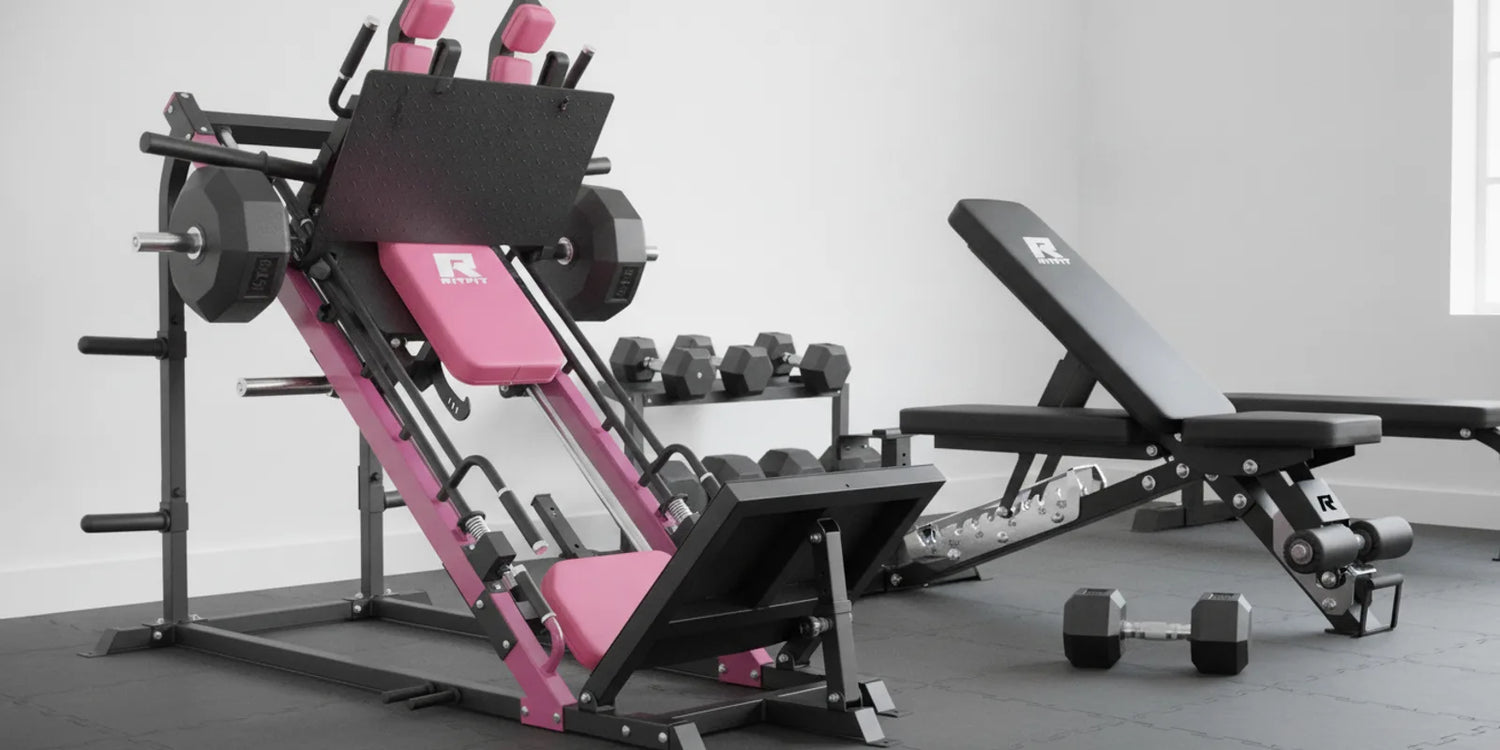
For most home gyms the highest value pick is a combination unit such as the RitFit Gazelle 3-in-1 leg press and hack squat machine, because it covers three loading angles in one footprint. Browse the full range of home leg press machines before committing to a frame size.
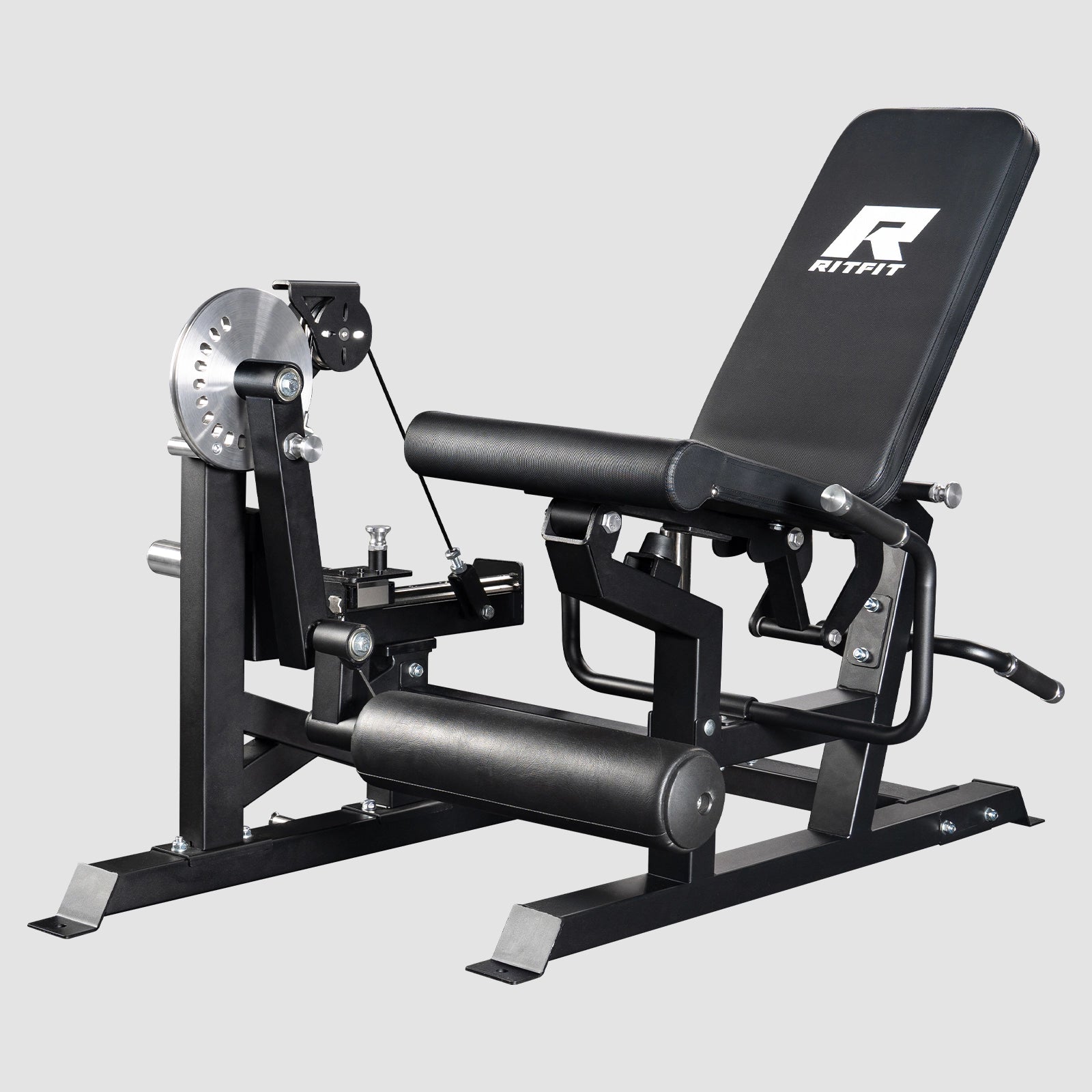
If your weak point is hip width rather than quad size, a leg adduction and abduction machine targets the inner and outer thighs that free weights barely touch. Sizing advice differs by build, so check the best leg press machine for beginners at home, the leg press machine picks for men, and the home leg press options for women.
Space is usually the deciding factor rather than price. Compare footprints across the wider leg machines for home gyms range and read how to bring the best leg machines home without rebuilding your garage.
What Does a Two Day Home Leg Split Look Like?
A two day leg split spreads ten to twenty weekly hard sets across one quad focused session and one hip focused session. Splitting the volume keeps set quality high and shortens each workout to roughly forty minutes.
Leave at least forty-eight hours between the two days. Soreness is not the target, repeatable performance is.
| Day | Focus | Main Lifts | Hard Sets |
|---|---|---|---|
| Day A | Quads and calves | Goblet or hack squat, step-up, leg press, calf raise | 8 to 10 |
| Day B | Hamstrings and glutes | Romanian deadlift, hip thrust, Bulgarian split squat, calf raise | 7 to 10 |
Hard sets means sets taken within two or three reps of failure. Warm-up sets do not count toward the weekly total.
Beginners should start at the bottom of each range and add one set per muscle group every two weeks. Stop adding volume when session quality or recovery starts sliding.
How Should You Eat and Recover to Add Leg Size?
Leg growth requires a small calorie surplus and consistent protein, because muscle cannot be built from nothing. Training hard while eating at maintenance for months is the most common reason home legs stay the same size.
Keep the nutrition side simple and repeatable. Four habits cover almost everything that matters for a natural home lifter.
- Protein: Roughly 0.7 to 1 gram per pound of bodyweight daily, split across three or four meals.
- Surplus: Two to three hundred calories above maintenance, which is enough to grow without adding much fat.
- Sleep: Seven to nine hours, since short sleep blunts both training output and appetite control.
- Carbohydrates: Eat a real carbohydrate source before leg days so you can finish the last two sets properly.
Weigh yourself weekly and average the readings rather than reacting to daily swings. A gain of roughly two to four tenths of a percent of bodyweight per week is a sensible pace for most lifters.
Which Mistakes Keep Home Legs Small?
Six mistakes account for nearly every stalled home leg program, and five of them cost nothing to fix. Work through this list before you assume you need more equipment.
- Quarter reps: Cutting depth to lift more weight trains tendons and ego rather than muscle fiber.
- Frozen load: Using the same dumbbells for three months sends your legs no reason to change.
- Quad tunnel vision: Skipping hamstrings, glutes, and calves leaves half your leg mass untrained.
- Junk volume: Twenty easy sets stopped five reps short of failure do less than ten hard ones.
- Chronic dieting: Chasing visible abs and bigger legs at the same time usually delivers neither.
- No records: Training without a log makes progressive overload guesswork instead of a plan.
Fix depth first, then progression, then food. That order solves most cases within a single training block.
How Do You Track Whether Your Legs Are Growing?
Tracking leg growth requires three numbers, a mid-thigh tape measurement, your top working sets, and your bodyweight. Photos and mirror checks are too slow and too subjective to guide weekly decisions.
Measure the thigh at the same point each time, halfway between the hip crease and the top of the kneecap. Take the reading first thing in the morning, before training.
- Every four weeks: Mid-thigh and calf circumference, measured cold and relaxed.
- Every session: Weight, reps, and how many reps you left in reserve on the last set.
- Every week: Average bodyweight from at least four morning weigh-ins.
Half an inch of thigh gain in twelve weeks is a solid natural result. If both the tape and the logbook are flat after four weeks, change load or food before changing the program.
FAQs About Getting Bigger Legs at Home
How fast can you realistically build bigger legs at home?
Most home lifters add measurable thigh size within eight to twelve weeks of consistent training, with visible change usually appearing around week six. That timeline holds only if you train legs twice weekly, push sets close to failure, and add load or reps almost every session.
Can you build bigger legs with only dumbbells?
Dumbbells can build bigger legs as long as you make light loads feel heavy through unilateral moves, three-second lowering phases, deep stretched positions, and short rest periods. Once your heaviest pair stops challenging you at fifteen reps, you need heavier weights, a bench, or a loading machine.
How many days per week should I train legs to grow them fast?
Two leg sessions per week beat one for most home lifters, because the weekly volume splits into two quality efforts instead of one exhausting session. Aim for ten to twenty hard sets weekly across quads, hamstrings, and calves, leaving at least forty-eight hours between sessions.
Do I need a leg press machine to get bigger legs at home?
A leg press is not required, but it removes the two biggest home ceilings, grip and balance, so your quads fail before your hands do. Start with free weights and add a leg press or hack squat once dumbbell progress stalls for three straight weeks.
Why are my legs not growing even though I train them hard?
Legs usually stall for three reasons, short range of motion, stalled load, and too little food. Quarter squats train tendons more than muscle, repeating the same weight for months sends no growth signal, and eating at a deficit for months leaves nothing to build with.
How much protein do I need to build bigger legs?
Aim for roughly 0.7 to 1 gram of protein per pound of bodyweight daily, spread across three or four meals, alongside a small surplus of two to three hundred calories. Training alone will not add leg size if you eat at maintenance for months.
Are bodyweight exercises enough to make legs bigger?
Bodyweight training grows legs during the first few months only, and only when you push high-rep sets close to failure. After that your bodyweight stops being a challenge, so a loaded backpack, dumbbells, or a bench for elevated step-ups is what restores the overload your legs need.
Conclusion
Getting bigger legs fast at home is an equipment progression problem, not a motivation problem. Train legs twice weekly, chase depth and load, and upgrade your setup the moment your current gear stops fighting back.
Start today with the bodyweight block, log every session, and measure your thighs in week one. When dumbbells stop being heavy, browse the current RitFit deals and add the next piece of your leg setup.
Disclaimer
This article provides general fitness information for healthy adults and is not medical advice. Consult a qualified professional before starting any new training program, especially if you have existing joint, back, or health concerns.
References
1. Valenzuela-Barrero C, et al. Effects of light- vs. heavy-load squat training on velocity, strength, power, and total mechanical work in recreationally trained men and women. Biol Sport. 2024;41(2):3-11. PMCID: PMC10955750.
2. Nigro F, Bartolomei S. A Comparison Between the Squat and the Deadlift for Lower Body Strength and Power Training. J Hum Kinet. 2020;73:145-152. PMCID: PMC7386153.
3. Kristiansen E, Larsen S, Haugen ME, Helms E, van den Tillaar R. A Biomechanical Comparison of the Safety-Bar, High-Bar and Low-Bar Squat around the Sticking Region among Recreationally Resistance-Trained Men and Women. Int J Environ Res Public Health. 2021;18(16):8351. PMCID: PMC8392107.