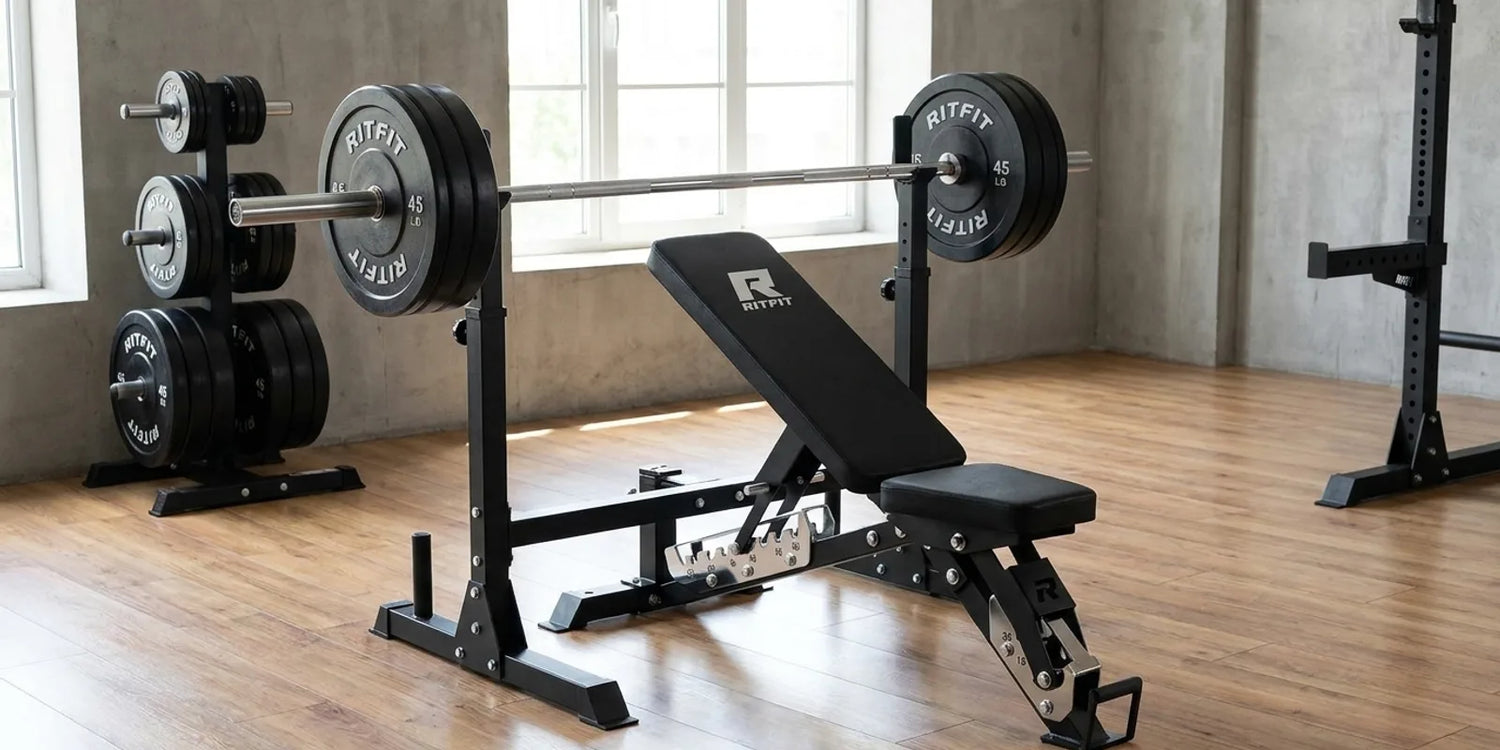
A standard bench press bar weighs 20 kg, or about 44.1 pounds, which most gyms round to 45 pounds. Knowing that empty weight matters, because it is always part of your total lift.
This guide explains how much each common bar type weighs, why the empty bar changes your real numbers, and how to verify an unmarked bar before you trust it for percentage based training.
Key Takeaways
- Standard weight: A men's Olympic bench press bar weighs 20 kg, or 44.1 pounds, commonly counted as 45 pounds.
- Women's bar: A women's Olympic bar weighs 15 kg, or 33.1 pounds, with a thinner 25 mm shaft.
- Include the bar: The empty bar is part of your total, so a 45 pound bar plus one 45 pound plate per side equals 135 pounds.
- Verify unmarked bars: Never assume a bar weighs 45 pounds, check the end cap or weigh it before tracking percentages.
- Load drives strength: Heavier loads at 80 to 100 percent of your one rep max optimize strength gains.
How heavy is a bench press bar really?
A standard bench press bar weighs 20 kg, or about 44.1 pounds, and most American gyms round that to 45 pounds. This is the same straight Olympic bar used for squats, rows, and overhead presses.
The 20 kg figure is the men's Olympic standard set by the International Weightlifting Federation. Women's, home gym, and specialty bars follow different standards, so assuming every bar is 45 pounds leads to logging errors.
If you want to bench with the right bar at home, browse a full range of barbells and weight plates built to recognized weight standards.
What are the common bar types and their weights?
The common bar types range from about 15 pounds to 45 pounds, depending on design and standard. The men's 20 kg Olympic bar is the most common, but women's, standard, and specialty bars all differ.
| Bar Type | Typical Weight | Shaft Diameter | Best For |
|---|---|---|---|
| Men's Olympic bar | 20 kg (44.1 lb, rounded to 45 lb) | 28 to 29 mm | Bench press, squat, deadlift |
| Women's Olympic bar | 15 kg (33.1 lb) | 25 mm | Thinner grip, lighter pressing |
| Standard 1 inch bar | 15 to 25 lb (7 to 11 kg) | 25 mm | Budget home gyms, light loads |
| EZ curl bar | 15 to 30 lb (6 to 14 kg) | 25 to 28 mm | Curls, skull crushers |
| Smith machine bar | Varies by machine | n/a | Guided pressing |
Weights reflect common manufacturer and IWF standards. Specialty and home bars vary, so always confirm the listed spec.
For pressing work you will pair the bar with a sturdy bench, so it helps to read up on choosing a weight bench before you build your setup.
Why does 20 kg get rounded to 45 pounds?
The men's Olympic bar is built to a 20 kg standard, which converts to 44.1 pounds, and gyms round it up to a cleaner 45 pounds for convenience. The gap is small, but precise lifters tracking percentages should note the true figure.
Why does the empty bar weight change your real lifting total?
The empty bar weight changes your total because the bar itself counts as part of every lift. A 45 pound bar means you are already pressing 45 pounds before adding a single plate.
This is where many beginners miscount their working weight. Understanding the math keeps your training log honest and your progress tracking accurate.
The 135 pound math most beginners get wrong
If you load one 45 pound plate on each side of a 45 pound bar, your total is 135 pounds, not 90 pounds, because the bar is included.
- Bar only: 45 lb empty bar.
- One plate per side: 45 + 45 + 45 = 135 lb.
- Two plates per side: 45 + 90 + 90 = 225 lb.
The short video below walks through this plate math, which is the fastest way to stop undercounting your bench numbers.
Once the math clicks, you can log loads correctly and compare your bench against an average bench press for context.
How do you identify and verify an unmarked bar?
You verify an unmarked bar by checking the end cap or shaft for a stamp, then weighing it on a scale if nothing is listed. Never assume an unmarked bar is 45 pounds.
- Check the markings: Many bars stamp the weight on the end cap or near the sleeve.
- Measure the sleeve: A 2 inch sleeve signals an Olympic bar, a 1 inch sleeve signals a lighter standard bar.
- Weigh it directly: Place the bare bar on a calibrated scale and read the number.
This quick check matters most before any one rep max test or program built on percentages, since a wrong bar weight throws off every working set.
Common mistakes when assuming bar weight
The most common mistake is treating every bar as 45 pounds, which inflates totals on light home bars and undercounts heavier specialty bars.
- Forgetting collars: Competition collars can add several pounds, so check whether your log counts them.
- Trusting the Smith bar: A Smith machine bar rarely equals 45 pounds, its starting resistance varies by model.
- Skipping the spec sheet: Specialty bars like trap and multi grip bars range widely, so confirm before you log.
When in doubt, stop and weigh the bar rather than guessing, especially if you are chasing a personal record.
Which bar should you choose for bench pressing at home?
For most home lifters the best choice is a 20 kg Olympic bar with a 28 to 29 mm shaft, because it matches gym standards and handles heavy pressing. Smaller lifters or tight spaces may prefer a 15 kg or shorter bar.
- Standard strength training: A 20 kg Olympic bar suits squat, bench, and deadlift in one purchase.
- Smaller hands or lighter loads: A 15 kg women's Olympic bar offers a thinner, easier grip.
- Tight rooms: A 6 foot bar still benches well as long as it clears your rack uprights with plate room.
Match your bar to a bench rated for your loads, such as the RitFit 1300lb adjustable bench or the RitFit Gator adjustable bench, and explore the full weight benches collection to pair the right support with your bar. Men can review the best adjustable bench for men while smaller lifters can check the best adjustable bench for women.
Does loading the bar heavier actually build more strength?
Loading the bar heavier does build more strength, because heavy loads recruit more muscle fibers and demand greater force production. The weight on the bar is the variable that matters most for raising your one rep max.
A review of loading recommendations notes that low rep schemes with heavy loads, roughly 80 to 100 percent of your one rep max for 1 to 5 reps, optimize strength increases[1]. Pooled data favor higher loads over lighter loads for one rep max strength.
In one 8 week trial, a high intensity group training at about 90 percent of one rep max improved bench press one rep max by 14.8 percent, compared with 6.9 percent for a high volume group at 70 percent[2]. The advantage held in resistance trained men.
Per Henneman's size principle, motor units are recruited from smallest to largest, and high loads drive near maximal recruitment, which a network meta-analysis links to strength and size gains[3]. This is why progressively adding plates beats staying light forever.
"You're generally going to be hedging more towards barbells and machines. There's just a certain amount of load you can't put on the lower body with just your body weight."
Andy Galpin, PhD, Professor of Exercise Science and Human Performance, Parker University
Build load gradually, and only once your form holds steady, which you can refine with our guide to proper bench press form and the right incline bench press angles.
FAQs About Bench Press Bar Weight
How heavy is a standard bench press bar?
A standard bench press bar in most commercial gyms is the men's Olympic barbell, which weighs 20 kg, or about 44.1 pounds. American gyms usually round this to 45 pounds for convenience. This empty bar weight is always part of your total lift, so include it before you add any plates and log your number.
Why is the bar called 45 pounds if it weighs 44.1 pounds?
The men's Olympic bar is built to a 20 kilogram standard set by the International Weightlifting Federation. Twenty kilograms converts to 44.1 pounds, and gyms simply round that up to a cleaner 45 pounds. The difference is small enough that it rarely matters, but precise lifters tracking percentages should note the true figure.
How much does a womens Olympic bar weigh?
A women's Olympic barbell weighs 15 kilograms, or about 33.1 pounds, and uses a thinner 25 millimeter shaft that is easier for smaller hands to grip. It is also slightly shorter than the men's bar. Many lifters of any gender prefer it for technique work, lighter pressing, or when a thinner grip feels more comfortable.
How do I check the weight of an unmarked bar?
First look for a stamp on the end cap or shaft, since many bars list their weight there. If nothing is marked, place the bare bar on a calibrated scale or a platform scale and read the number directly. Never assume an unmarked or specialty bar weighs 45 pounds before using it for percentage based training or personal records.
Does loading the bar heavier build more strength?
Yes. Heavier loads do drive strength gains. A review of loading recommendations notes that heavy loads, roughly 80 to 100 percent of your one rep max for low reps, optimize strength increases. That said, technique and consistency matter first, so add weight gradually and only once your form holds steady through every rep.
Conclusion
So how heavy is a bench press bar? For most lifters it is a 20 kg Olympic bar, 44.1 pounds, rounded to 45 pounds, and that empty weight always counts toward your total.
Check your bar before trusting it for percentages, verify unmarked bars on a scale, and add load gradually as your form holds. To build a complete pressing setup, pair your bar with a sturdy bench rated for your heaviest working sets and the right plates.
Disclaimer
This article is for general informational purposes only and does not replace professional fitness or medical guidance. Consult a qualified trainer or healthcare provider before starting heavy resistance training or testing a one rep max.
References
1. Schoenfeld BJ, Grgic J, Van Every DW, Plotkin DL. Loading Recommendations for Muscle Strength, Hypertrophy, and Local Endurance: A Re-Examination of the Repetition Continuum. Sports (Basel). 2021;9(2):32. doi:10.3390/sports9020032 https://pmc.ncbi.nlm.nih.gov/articles/PMC7927075/
2. Schoenfeld BJ, Contreras B, Vigotsky AD, et al. The effect of training volume and intensity on improvements in muscular strength and size in resistance-trained men. Physiol Rep. 2015;3(8):e12472. doi:10.14814/phy2.12472 https://pmc.ncbi.nlm.nih.gov/articles/PMC4562558/
3. Lopez P, Radaelli R, Taaffe DR, et al. Resistance Training Load Effects on Muscle Hypertrophy and Strength Gain: Systematic Review and Network Meta-analysis. Med Sci Sports Exerc. 2021;53(6):1206-1216. doi:10.1249/MSS.0000000000002585 https://pmc.ncbi.nlm.nih.gov/articles/PMC8126497/