








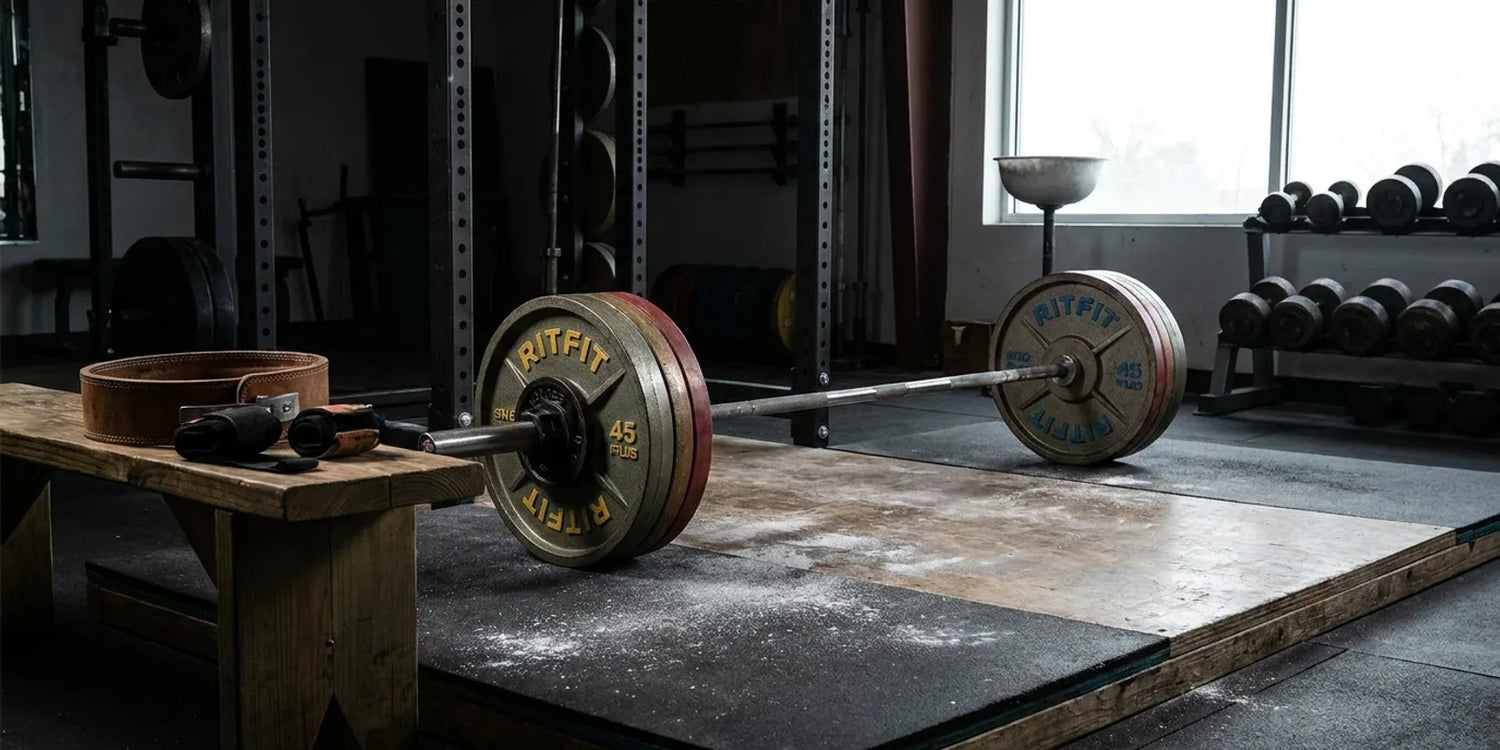
A 225 lb bench press is one of the most talked about strength milestones, and the honest answer to how many women can bench 225 is that very few can. It sits at the elite edge of female strength.
This guide gives you the real numbers behind that question, shows where your own bench stands by bodyweight, and lays out a realistic path to press more without chasing a milestone that suits only a small minority.
Key Takeaways
- Genuinely rare: One analysis estimates only about 0.4 percent of all Americans can bench 225, and for women it is elite territory.
- Average is far lower: One large lift database lists the average female bench near 111 lb, with an elite female standard around 223 lb.
- Above the 90th percentile: Even among competitive female powerlifters, 225 lb exceeds the 90th percentile bench of roughly 198 lb.
- Anatomy, not effort: The sex gap in strength is larger in the upper body than the lower body, making the bench feel disproportionately hard.
- Anchor goals to bodyweight: Aim for the next strength tier up from where you are now rather than a fixed 225 lb target.
How rare is a 225 lb bench for women?
A 225 lb bench is rare for women, landing at the elite end of female strength rather than a common gym achievement. One analysis estimates roughly 1.3 million Americans, about 0.4 percent of the population, can bench 225 at all, and only elite female lifters near 199 lb bodyweight and above are typically expected to reach it.
- Population context: The 225 lb bar represents two 45 lb plates per side plus the bar, a number that even most trained men do not press.
- Female context: For women it usually requires years of dedicated training plus a higher bodyweight, which is why it stays uncommon.
If you are benching nowhere near 225, that is normal and expected. The realistic question is not whether you can match an elite outlier but where you sit on the standards covered next, and a quality adjustable bench is enough to start building that strength.
What are the female bench press standards by bodyweight?
Female bench press standards rise with bodyweight and training experience, and the average sits far below 225 lb. According to one large lift tracking database, the average female bench press one rep max is around 111 lb, classed as intermediate, while the elite female standard is roughly 223 lb.
| Level | Bodyweight ratio | Example 1RM at 150 lb bodyweight |
|---|---|---|
| Beginner | 0.25x | about 43 lb |
| Novice | 0.50x | about 74 lb |
| Intermediate | 0.75x | about 114 lb |
| Advanced | 1.00x | about 163 lb |
| Elite | 1.50x | about 218 lb |
Ratios and example figures reflect one lift tracking database, not a clinical study, and individual results vary widely.
These tiers show why 225 lb is exceptional. A pressing program built on a sturdy bench workout routine moves most women steadily up these levels over time.
What percentile is a 225 lb bench for women?
A 225 lb bench places a woman above the 90th percentile, even within the strong population of competitive powerlifters. Competition data from drug tested meets shows women benching around 99 lb at the 10th percentile, 143 lb at the 50th, and 198 lb at the 90th percentile.
- Median competitor: Half of competitive female lifters bench under roughly 143 lb, well short of 225.
- Top tier: Since the 90th percentile sits near 198 lb, a 225 lb press is reserved for a small slice of elite competitors.
That percentile gap matters for goal setting. Comparing yourself to the median lifter or your own past numbers is far more useful than measuring against an elite outlier, and the bench workout routines guide helps you track that steady progress.
Why does upper-body strength differ more between sexes?
The bench press feels disproportionately hard for women because the sex difference in strength is larger in the upper body than the lower body. A meta-analysis of 34 studies covering 6634 participants found that among 14 to 17 year olds, boys averaged 50 percent greater upper-limb strength versus 30 percent greater lower-limb strength than girls.[1]
- Where the gap is widest: Pressing muscles like the chest, shoulders and triceps show the most pronounced difference, which is exactly what the bench loads.
- What it means for you: A lower starting bench relative to your squat or deadlift is anatomy, not a lack of effort or technique.
Muscle recruitment also climbs steeply as the load gets heavy. An EMG study of female and male athletes found that for women, muscle activity from 55 percent to 100 percent of one rep max rose 67.8 percent for the deltoid and 46.2 percent for the pectoralis major.[2] Strengthening these muscles directly, with targeted bench shoulder exercises, supports a bigger press.
How do you set a realistic bench goal for your bodyweight?
Set your bench goal as a multiple of your bodyweight rather than a fixed 225 lb target. Pick the strength tier just above your current level, novice at half bodyweight, intermediate at three quarters, advanced at roughly bodyweight, and treat that as your next milestone.
- Find your starting point: Divide your best clean single by your bodyweight to see which tier you fall into today.
- Choose a working load: Train most sets at a weight you can press for 6 to 12 controlled reps, not your one rep max.
Scaling expectations to your own body keeps motivation high and progress measurable. Andy Galpin frames this scaling directly when assessing strength.
"For men I like to see about a one to one ratio for the bench press, such that you should be able to bench press your body weight, so a 200 pound person should be aiming for something like a 200 lb bench press. For women, upper body strength is significantly less in women in general, and so you're going to have to scale that down a little bit more."
Andy Galpin, PhD, Professor of Exercise Science and Human Performance, Parker University
What does a bench progression roadmap look like?
A bench progression roadmap combines a sensible frequency, gradual load increases, and smart substitutions when a movement stalls. Train the bench 2 to 3 times per week, add weight only when you clean rep every set at the top of your range, and rotate in alternatives to fix weak points.
- Frequency: Press 2 to 3 times per week with at least one rest day between heavy sessions.
- When to add weight: Increase the bar by the smallest available jump once you hit the top of your rep range with clean form on every set.
- Substitutions and accessories: Swap in dumbbell presses, push-ups, or floor presses to build the chest, shoulders and triceps from new angles.
Volume may matter even more for women than men. A study on velocity-based resistance training concluded that women may need a greater within-set fatigue, especially in the bench press, suggesting higher training volume to maximize strength and power gains.[3]
Seeing the lift performed well helps you copy the setup and bar path. In the video below, a female powerlifter walks through starting weight, technique cues, and why you should not max out every session.
Dialing in your setup matters as much as adding plates, so review your proper bench press form before chasing heavier numbers.
When should you stop or back off a heavy bench?
Stop or lighten a set the moment your form breaks down or you feel sharp joint pain. Bar speed that suddenly stalls, uneven pressing, or shoulder and elbow pain are all signals to rack the weight rather than grind out a risky rep.
- Form breakdown: If your wrists collapse, your hips lift off the bench, or the bar drifts, end the set.
- Pain versus effort: Muscular burn is normal, but sharp or pinching joint pain means stop and reassess before continuing.
Use a spotter or safety arms for heavy singles so you can push hard without risk. Smart self-regulation protects your shoulders and keeps you training consistently, which is what actually drives long-term strength for women interested in fitness for women.
What equipment supports safe heavy benching at home?
A stable, high-capacity adjustable bench is the foundation for safe heavy benching at home. Look for a bench with a solid weight rating, adjustable back-pad angles for incline work, and a footprint that fits your training space.
- Capacity headroom: The RitFit 1300LB Adjustable Weight Bench offers a high weight rating that leaves plenty of margin as your press climbs.
- Adjustability: The RitFit Gator Adjustable Weight Bench adjusts to multiple angles for flat and incline pressing.
For a female-focused buyer breakdown, see our guide to the best adjustable weight bench for women to match a bench to your space and goals.
FAQs About How Many Women Can Bench 225
How many women can bench press 225 pounds?
Very few. One industry analysis estimates only about 0.4 percent of all Americans can bench 225, and among women a 225 lb bench is essentially elite territory. In practice it is typically reached only by larger, well trained competitive powerlifters, so it is genuinely rare for the average woman.
What is the average bench press for a woman?
According to one large lift tracking database, the average female bench press one rep max is around 111 pounds, which is classed as intermediate. Numbers vary widely with bodyweight and training experience, so a lighter beginner may press far less while an advanced lifter presses well over her own bodyweight.
What percentile is a 225 lb bench for a woman?
Among competitive female powerlifters, percentile data from drug tested meets places the 90th percentile bench near 198 pounds. A 225 lb bench therefore sits above the 90th percentile even within that already strong competitive group, making it an elite level lift for women rather than a typical gym benchmark.
Why is the bench press harder for women than men?
On average women carry less upper body muscle mass relative to men, and a meta analysis found the strength gap is larger in the upper limbs than the lower limbs. This anatomical difference, not effort or technique, is the main reason the bench press tends to feel disproportionately hard for women.
How should a woman set a realistic bench press goal?
Anchor the goal to bodyweight rather than a fixed number like 225. A common progression is aiming for roughly half your bodyweight as a novice, three quarters as an intermediate, and around bodyweight as an advanced lifter. Pick the next tier up from where you are now and build toward it gradually.
Conclusion
So how many women can bench 225? Only a small elite minority, since even competitive female powerlifters rarely exceed it. For nearly everyone else, 225 is an outlier, not a realistic near-term benchmark.
Anchor your goal to your bodyweight, train the bench consistently, and progress one tier at a time. Start with a dependable setup from our weight benches collection and build steadily.
Disclaimer
This article is for general informational and educational purposes only and does not constitute medical, fitness, or training advice. Consult a qualified healthcare or fitness professional before starting any new exercise program, especially if you have existing injuries or health conditions.
References
1. Nuzzo JL, Pinto MD. Sex Differences in Upper- and Lower-Limb Muscle Strength in Children and Adolescents: A Meta-Analysis. European Journal of Sport Science. 2025;25(5):e12282.
2. Gołaś A, Maszczyk A, Pietraszewski P, et al. Muscular activity patterns of female and male athletes during the flat bench press. Biology of Sport. 2018;35(2):175-179.
3. Rissanen J, Walker S, Pareja-Blanco F, Häkkinen K. Velocity-based resistance training: do women need greater velocity loss to maximize adaptations? European Journal of Applied Physiology. 2022;122(5):1269-1280.





