








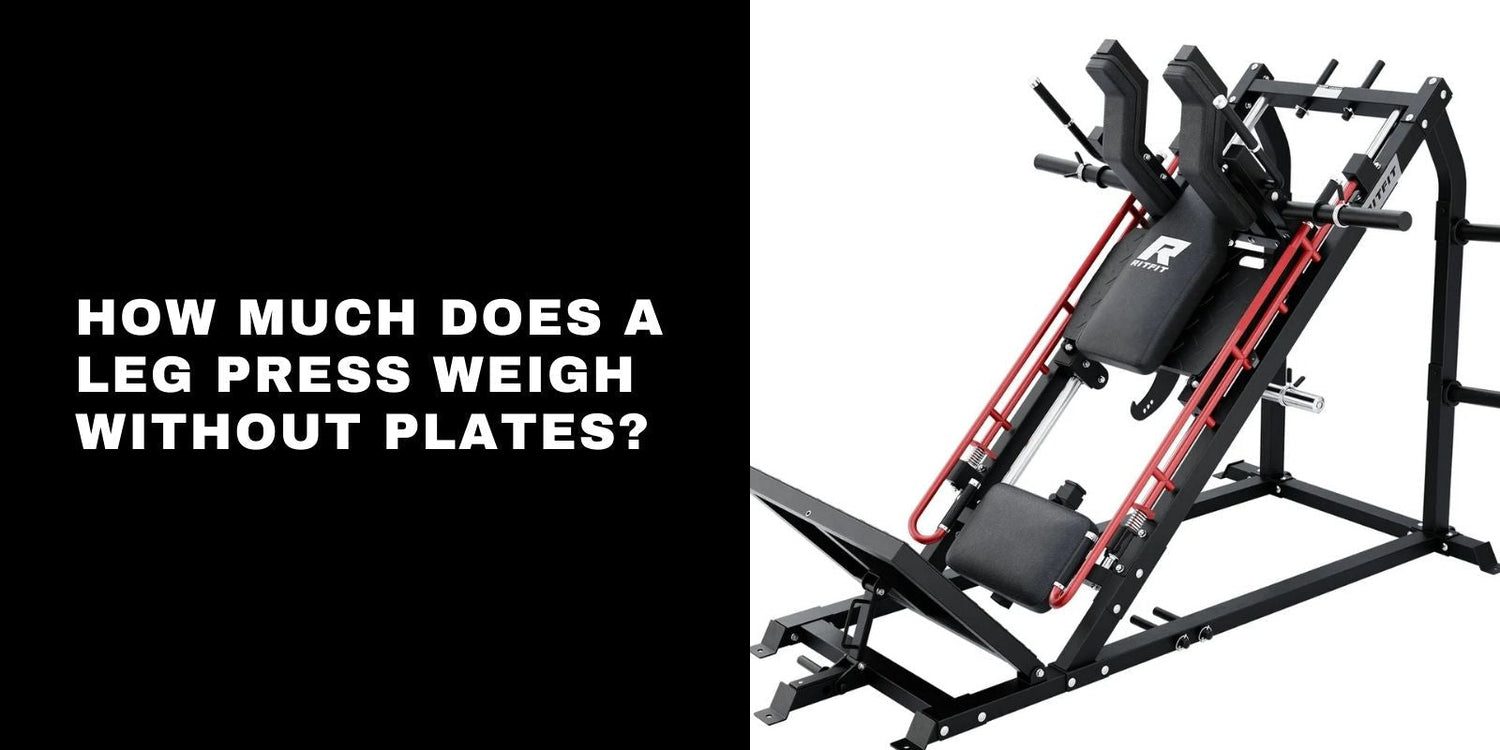
Most 45 degree leg press machines weigh about 75 to 125 lb without plates, but the exact starting resistance depends on the machine model, sled design, angle, and rail system.
This empty sled weight matters because it changes your real training load before you add a single plate.
Quick Answer: A standard 45 degree leg press weighs approximately 75 to 125 lb without plates, while horizontal seated machines start around 50 to 100 lb and vertical models fall between 40 to 80 lb. The precise figure depends on machine type and brand, so always check the manufacturer label or spec sheet before logging your total load.
Key Takeaways
- Empty sled weight: The leg press weight without plates is the empty sled, carriage, or platform resistance you move before adding any plates.
- Typical 45 degree range: A typical 45 degree plate loaded leg press often starts around 75 to 125 lb, but exact numbers vary by brand and design.
- Feel versus listed weight: Starting resistance is not always the same as the literal metal weight because angle, rails, friction, and leverage affect how heavy the sled feels.
- Logging method: For training logs, total load gives the clearest picture when you switch machines, while plates-only tracking works if you always use the same machine.
- Machine versus squat: A leg press number should not be compared directly to a squat because the machine changes stability, balance demands, and effective load.
Why Does the Empty Leg Press Weight Matter?
The empty sled matters because it is part of the load your legs must move on every rep. Ignoring it causes your training log to undercount total volume and makes one machine appear easier or harder than another.
This gap is especially important when comparing a home unit, a commercial gym machine, and a strength machine with a different carriage angle or rail system.
- Accurate tracking: Counting the empty sled helps you estimate total training volume more clearly.
- Better machine comparison: A 300 lb plate load can feel different on a light sled than on a heavy commercial carriage.
- Safer progression: Beginners may not need extra plates if the sled already provides enough starting resistance.
- Clearer programming: Progressive overload works best when the baseline stays consistent across sessions.
What Types of Leg Press Machines Have Different Weights Without Plates?
Leg press machines do not share one universal empty weight. Starting resistance changes based on machine type, frame size, carriage path, and whether the unit is plate loaded or selectorized.
45 Degree Sled Leg Press

A 45 degree sled leg press usually has the heaviest empty carriage, with many models starting around 75 to 125 lb before plates are added.
- Light commercial and home models: The leg press weight without plates often falls around 60 to 80 lb.
- Standard commercial models: Many gym sleds are commonly estimated around 75 to 125 lb.
- Heavy duty specialty models: Some large machines may exceed 150 lb before plates.
Horizontal Seated Leg Press

A horizontal seated leg press usually has lower starting resistance than a large 45 degree sled, especially when it uses a weight stack instead of plate pegs.
- Selectorized machines: Starting resistance is often around 20 to 50 lb, depending on the cable path and stack design.
- Plate loaded horizontal machines: The empty carriage is commonly estimated around 50 to 100 lb.
Vertical Leg Press

A vertical leg press may have a smaller carriage, but the load moves more directly against gravity, so each pound can feel more direct than on an angled sled.
- Typical empty carriage: Many vertical leg press machines are estimated around 40 to 80 lb without plates.
- Practical caution: Do not assume a lower sled weight means the exercise will feel easier.
Hack Squat and Leg Press Combo Machines

Hack squat and leg press combo machines often use a shared sled, so the empty weight can vary depending on the setup and movement configuration.
- Typical range: Many combo units are estimated around 60 to 100 lb without plates, though exact resistance depends on the model.
- Home gym relevance: A compact combo machine is useful when you want leg press, hack squat, and calf raise options in one footprint.
RitFit GAZELLE PRO 3-in-1 Leg Press & Hack Squat Machine Set
Leg press, hack squat, and calf raise in one compact home gym station. Plate-loaded sled for progressive overload.
View Details"This machine supports a high weight capacity, and even with added weights, it remains very stable. The padding and footplates are well designed, making workouts comfortable and secure."
William Harris, Verified Buyer, RitFit GAZELLE PRO 3-In-1 Leg Press and Hack Squat Machine
How Do You Find the Exact Leg Press Weight Without Plates?
The only reliable way to know the exact leg press weight without plates is to check the machine label, manufacturer spec sheet, or official user manual. If that information is missing, use a conservative estimate and keep your logging method consistent.
Check the Manufacturer Label
Look for terms such as starting resistance, sled weight, carriage weight, or unloaded resistance on the frame label.
Search the User Manual
Find the brand and model name on the machine, then search the official manual or product specification page.
Ask Gym Staff
Gym staff may have equipment documentation or maintenance records that list the manufacturer stated starting resistance.
Measure Only When It Is Safe
If you use a hanging scale or luggage scale, measure only when the machine is empty, stable, and locked on its safety stops.
- Never place your body under the sled: A carriage can move suddenly if safety stops are released incorrectly.
- Do not remove safety catches for curiosity: The measurement is not worth creating a crush hazard.
- Use staff supervision when possible: A gym employee may know the safest way to identify the starting resistance.
How Does Effective Load Differ From Sled Weight?
Sled weight is the physical or listed carriage weight, while effective load is the resistance your legs actually work against. On angled machines, gravity, rail friction, carriage angle, and leverage all change how heavy the movement feels.
Why the 45 Degree Angle Changes the Feel
A 45 degree sled does not feel identical to lifting the same weight straight up because part of the load travels along the rails instead of directly against gravity.
Why Lifters Still Log Total Loaded Weight
Most lifters log sled weight plus plates because it is simple, repeatable, and easier to compare inside a personal training history.
- Simple log example: If the sled starts at 100 lb and you add 180 lb in plates, your total logged load can be 280 lb.
- Detailed log example: You can also write 180 lb plates plus 100 lb sled if you want clarity across different machines.
- Important distinction: Training logs track consistency, while biomechanics describes the force your body experiences.
Typical Leg Press Weights Without Plates: Quick Reference Table
Use this table as a practical estimate only when exact manufacturer specs are unavailable. Always treat the machine label or official spec sheet as the higher trust source.
| Machine Type | Typical Starting Weight Without Plates | Best Use Case |
|---|---|---|
| 45 Degree Sled Leg Press | 75 to 125 lb | General strength training and heavy lower body work |
| Heavy Duty 45 Degree Leg Press | 120 to 200 lb or more | Commercial gyms and advanced lifters |
| Horizontal Plate Loaded Leg Press | 50 to 100 lb | Moderate loading with a seated path |
| Selectorized Seated Leg Press | 20 to 50 lb starting resistance | Beginners, rehab style training, and controlled progression |
| Vertical Leg Press | 40 to 80 lb | Compact setups and direct vertical pressing |
| Hack Squat and Leg Press Combo | 60 to 100 lb | Home gyms that need multiple lower body movements |
Typical leg press starting weights without plates. Treat these values as practical estimates to use only when manufacturer specs are unavailable.
If you are planning a home setup, compare starting resistance together with footprint, safety stops, plate capacity, and floor protection. For heavy lower body machines, rubber high density interlocking gym flooring mats can help protect the training area under loaded equipment.
How Should You Log Leg Press Weight in Your Training?
The best logging method is the one you can repeat consistently. For most lifters, total load is more useful when switching gyms, while plates-only tracking is acceptable when using the same machine every time.
Option 1: Total Load
Log sled weight plus plate weight when you want the most complete record of the work performed.
Option 2: Plates Only
Log only the added plates if you always train on the same machine and care mainly about personal progression.
Option 3: Machine Specific Notes
Add the machine type, estimated starting resistance, foot placement, and range of motion when comparing performance across gyms.
- Progression example: If you increase from 180 lb in plates to 200 lb in plates on the same 100 lb sled, your total load moves from 280 lb to 300 lb.
- Programming note: Progression can come from more load, more reps, better range of motion, or improved control, not only from adding plates.[4]
- Equipment note: Use consistent Olympic bumper plates when possible so your loaded weight is easy to repeat.

"This is a well constructed leg press/ hack sqwat machine. It was easy to assemble and works perfectly!"
Nate W. Verified Buyer, RitFit BLP01 3-in-1 Leg Press and Hack Squat Machine
How Do Leg Press Numbers Compare to Squat Strength?
A leg press number does not translate directly to a squat number. The leg press provides external stability, reduces balance demands, and changes joint loading compared with a free weight squat.
Studies on the biomechanics of the flywheel squat and leg press at maximal effort show clear differences in joint moments, knee flexion angle, and load distribution, supporting the idea that the two movements are not identical strength tests.[1]
Why You Can Usually Leg Press More Than You Squat
You can usually leg press more because the machine guides the movement and lets your legs focus on pushing rather than balancing a load.
Why Machine Training Still Has Value
Machine training can be useful for novices because it provides a stable path and can help lifters focus on controlled effort before handling more complex free weight patterns.[5]
- Leg press strength: Best for tracking lower body pressing strength on a guided path.
- Squat strength: Best for tracking whole body barbell strength, balance, bracing, and coordination.
- Perceived effort difference: Studies comparing leg press and Smith machine squat show that perceived exertion and quadriceps activation profiles differ significantly between the two exercises at matched nominal loads.[2]
Browse the full barbells and weight plates collection to compare options for loading your leg press before choosing.
What Safety and Technique Rules Apply at Any Weight?
Even an empty sled can be risky if it is unlocked, dropped, or used with poor control. Treat the empty carriage as real resistance, especially if you are new to the machine.
Set the Safety Stops First
Always set the safety stops before loading, unloading, or adjusting your seat position.
Control Your Range of Motion
Use a range of motion that you can control without your hips rolling off the pad or your knees collapsing inward.
Avoid Locking Out Hard
Stop just short of a forceful knee lockout so tension stays controlled and the joint is not slammed under load.
- Foot placement matters: Changes in stance can affect which thigh muscles are emphasized during leg press variations.[3]
- Beginner setup: Start with the empty sled, then add small plate increases only when reps feel stable.
- Home gym planning: Compare the RitFit GAZELLE 3 in 1 leg press hack squat machine, the RitFit GAZZELLE PRO, and the leg machine collection based on space, load capacity, and training goals.
"There's no better machine for the quads. The tilted foot plate promotes normal biomechanics at the knee and hip."
Jeff Cavaliere, MSPT, CSCS, Physical Therapist and Strength Coach, former Head Physical Therapist for the NY Mets, Athlean-X, 5 Worst Machine Exercises & 23 Better Alternatives
FAQs About Leg Press Weight Without Plates
How much does a leg press weigh without plates?
Most 45 degree leg press machines weigh about 75 to 125 lb without plates. The exact number depends on the brand, carriage design, angle, and rail system, so the best answer is always the listed starting resistance on the machine label or manufacturer spec sheet.
Should I count the sled weight on leg press?
Yes, count the sled weight if you want the most accurate total load in your training log. If you always use the same machine, tracking plates only can still work, but noting the machine type, estimated sled weight, and foot position keeps future comparisons clear and consistent.
What does starting resistance mean on a leg press?
Starting resistance means the load you feel before adding plates or selecting more weight. It may reflect the sled, carriage, cable path, leverage, or rail friction, so it is not always the same as the literal metal weight of the machine.
How can I compare leg press weight between gyms?
Compare leg press numbers by recording the machine type, estimated sled weight, plate load, foot position, and range of motion. A 300 lb plate load on one sled may not match the same plate load on another machine with a heavier carriage, so machine-specific notes give you the clearest long-term record.
Does a 45 degree leg press feel lighter than the listed weight?
Yes. A 45 degree leg press can feel lighter than the total listed weight because the sled moves along an angled path rather than straight up against gravity. However, rail friction and carriage design add resistance, so most lifters log the sled plus plates for practical and consistent training records.
Can beginners use an empty leg press sled?
Yes. Beginners can start with the empty sled if they can control the movement, maintain a safe range of motion, and keep the safety stops set correctly throughout the set. Some commercial sleds already provide meaningful resistance at 75 to 125 lb, so adding plates is not necessary until form and confidence are solid.
Which leg press machine is best for a home gym?
The best home gym leg press is usually the one that fits your space, training goals, safety needs, and plate capacity. Many lifters prefer a 3-in-1 combo machine that supports leg press, hack squat, and calf raise work in one footprint, which makes it more cost effective for a compact home setup.
Conclusion
The leg press weight without plates is real resistance, and it should be considered when tracking progress or comparing machines. Most 45 degree sleds are commonly estimated around 75 to 125 lb, but the exact answer always comes from the label, manual, or manufacturer specification.
For the cleanest training data, log the sled and plates consistently, note the machine type, and prioritize controlled reps over loading shortcuts.
Save on Your RitFit Leg Press Machine
Use code RFBLOG at checkout for an exclusive discount on your order.
Disclaimer
This article is for general fitness education and equipment comparison only and is not medical advice or a substitute for guidance from a qualified coach, clinician, or equipment technician. Always follow the manufacturer manual, use safety stops, and stop any exercise that causes pain, dizziness, numbness, or loss of control.
References
1. Sjöberg M, Berg HE, Norrbrand L, et al. Comparison of Joint and Muscle Biomechanics in Maximal Flywheel Squat and Leg Press. Front Sports Act Living. 2021;3:686335. doi:10.3389/fspor.2021.686335. PMCID: PMC8374053
2. Migliaccio GM, Dello Iacono A, Ardigò LP, et al. Leg Press vs. Smith Machine: Quadriceps Activation and Overall Perceived Effort Profiles. Front Physiol. 2018;9:1481. doi:10.3389/fphys.2018.01481. PMCID: PMC6206431
3. Martín-Fuentes I, Oliva-Lozano JM, Muyor JM. Evaluation of the Lower Limb Muscles' Electromyographic Activity during the Leg Press Exercise and Its Variants: A Systematic Review. Int J Environ Res Public Health. 2020;17(13):4626. doi:10.3390/ijerph17134626. PMCID: PMC7369968
4. Plotkin D, Coleman M, Van Every D, et al. Progressive overload without progressing load? The effects of load or repetition progression on muscular adaptations. PeerJ. 2022;10:e14142. doi:10.7717/peerj.14142. PMCID: PMC9528903
5. Aerenhouts D, D'Hondt E. Using Machines or Free Weights for Resistance Training in Novice Males? A Randomized Parallel Trial. Int J Environ Res Public Health. 2020;17(21):7848. doi:10.3390/ijerph17217848. PMCID: PMC7662789





