
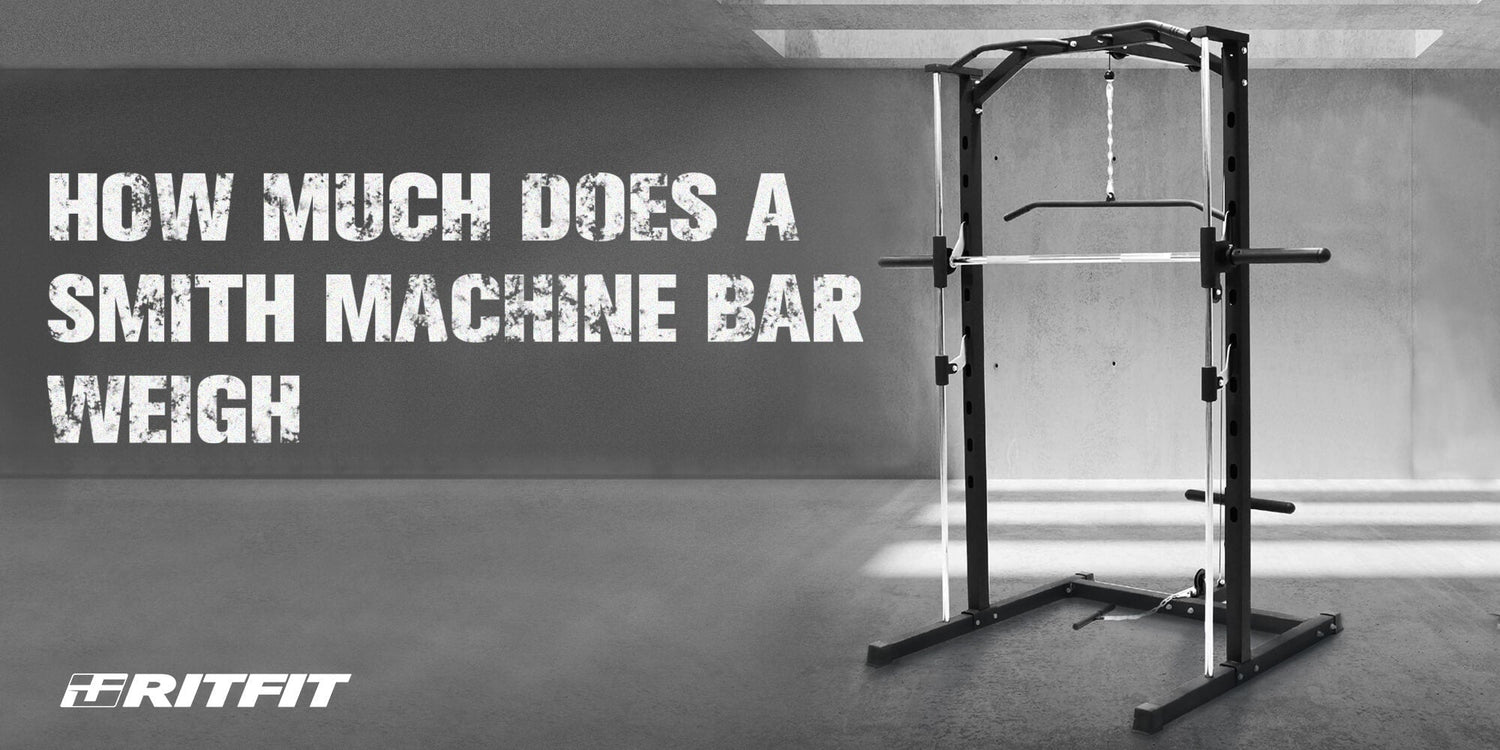
Smith machine bar weight does not have one universal value. To log the load accurately, first distinguish the bar assembly's physical mass from the machine's published or measured starting resistance.
Use the exact model manual or label when available. Learn how to identify the right figure, check it safely, calculate plate load, and log Smith-machine lifts separately.
Quick Answer: Smith machine bar weight is model-specific. Check the exact model manual to distinguish physical bar mass from starting resistance, then add both sides' plates to the documented starting value for your total load.
Key Takeaways
- Two different numbers: Physical bar mass describes the assembly; starting resistance describes the unloaded bar's specified or measured initial load.
- Model matters: Manufacturers publish different starting values, and some report bar weight instead. Read the label carefully.
- Use official documentation first: Match the number to the exact model and configuration before measuring.
- Log the machine value: Add both sides' plates and keep the Smith-machine record separate from free-bar lifts.
What Does Smith Machine Bar Weight Mean?
Smith machine bar weight can refer to physical bar mass or to the starting resistance the lifter moves, and those values are not interchangeable.
- Physical bar mass: The mass of the bar and attached moving parts, as described by the manufacturer.
- Starting resistance: The model's specified initial resistance or measured effort to move the unloaded assembly along its guides.
- Training log load: The machine-specific starting value plus the plates loaded on both sleeves, where the manufacturer defines the figure as starting resistance.
A product page that says "bar weight" may be reporting assembly mass, while one that says "starting resistance" may account for counterbalance. If the source does not define its term, do not convert one figure into the other.
Why Does Starting Resistance Vary by Machine?
Starting resistance varies because a Smith machine's moving assembly, counterbalance and guide system differ by model.
Counterbalanced Designs
A counterbalance offsets some of the moving assembly's mass. Spirit Fitness lists a 6.6 lb counterbalanced bar for its commercial Smith machine, a figure specific to that model rather than a universal standard.

Guides, Bearings and Machine Condition
Guides and bearings control the bar travel along the guided rail, while dirt, wear or poor maintenance can affect how smoothly a machine moves. A rough-feeling bar is not a valid measure of its designed starting resistance.
A Smith machine collection shows guided-bar formats, but only the exact model documentation confirms its starting figure.

Different Machine Formats
Multi-station and selectorized formats have different assemblies and resistance paths. Do not infer the Smith bar's starting resistance from the total machine weight, cable stack, or plate-storage capacity.

Selectorized Systems
A selectorized machine may use a stack for one station while retaining a separate guided bar. Check which resistance path a specification describes.

How Can You Find the Official Starting Resistance?
The exact model's manufacturer documentation is the best first source for its Smith-bar figure.
- Identify the model: Read its name and model number from the frame label or equipment records.
- Check the manual and specification page: Look for "starting resistance," "counterbalanced bar," or "Smith bar weight." Keep the manufacturer's wording.
- Confirm the configuration: Verify the manual matches the installed version and whether it describes the bar assembly or starting resistance.
- Ask the facility or manufacturer: If the figure is missing or unclear, request the specification for that exact model.
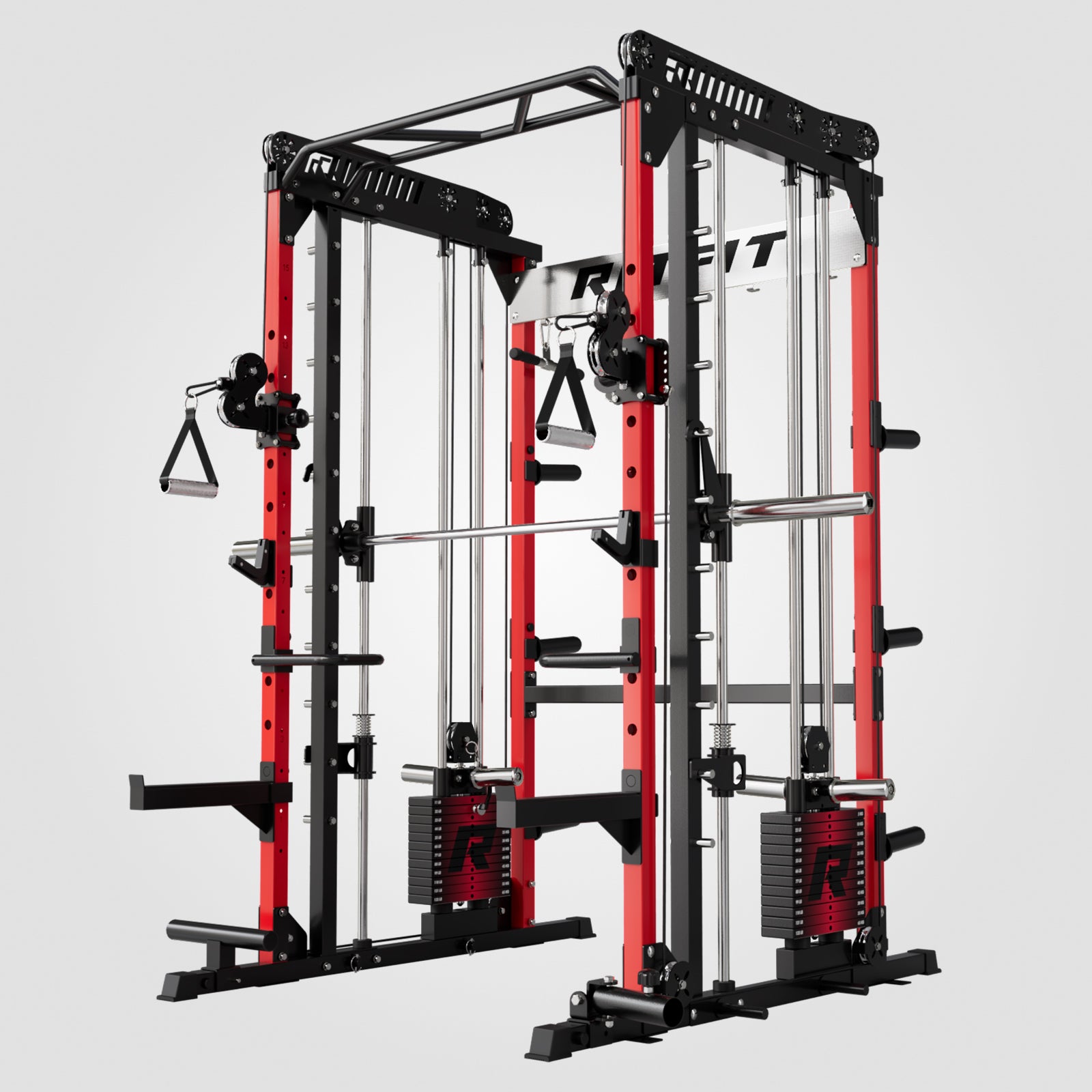
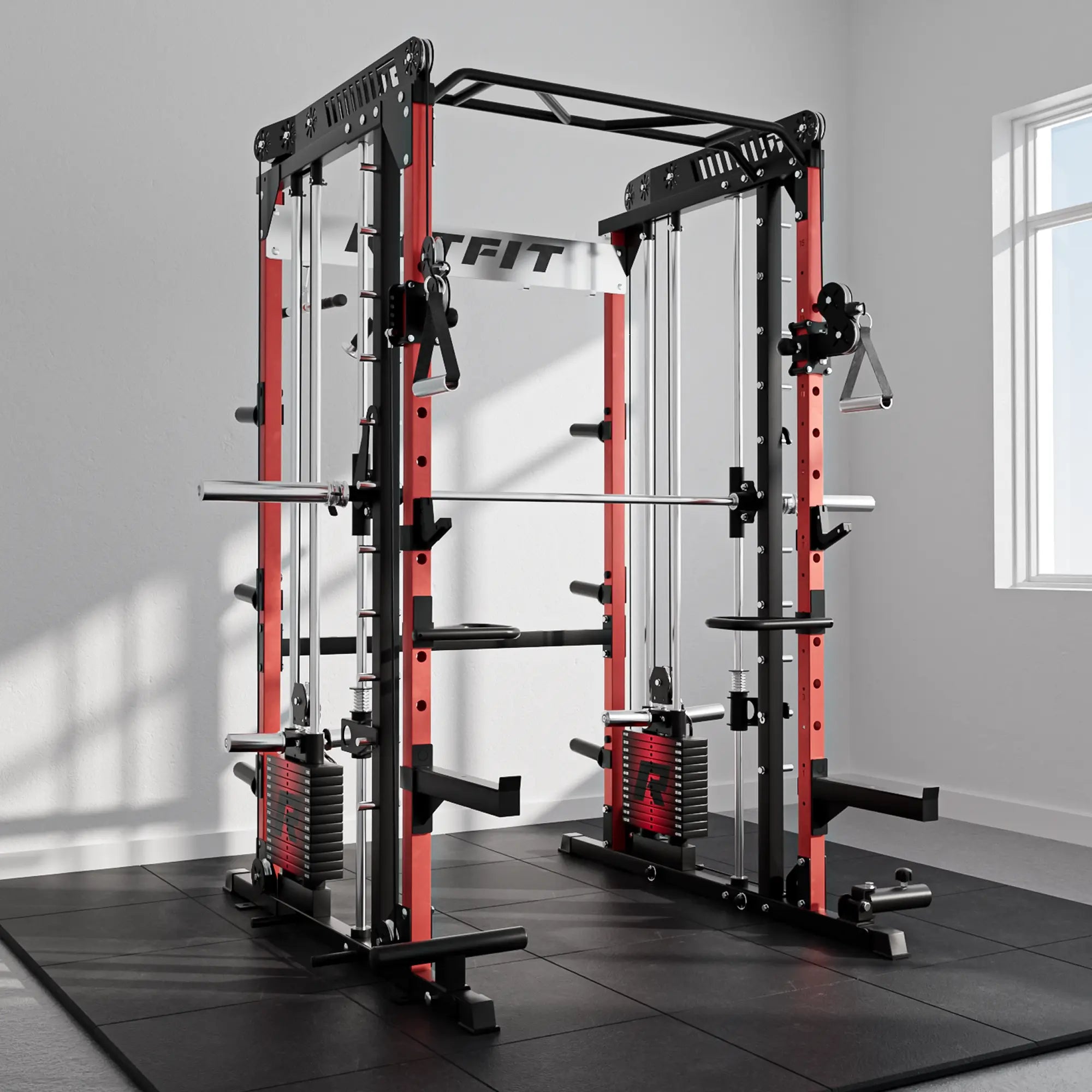
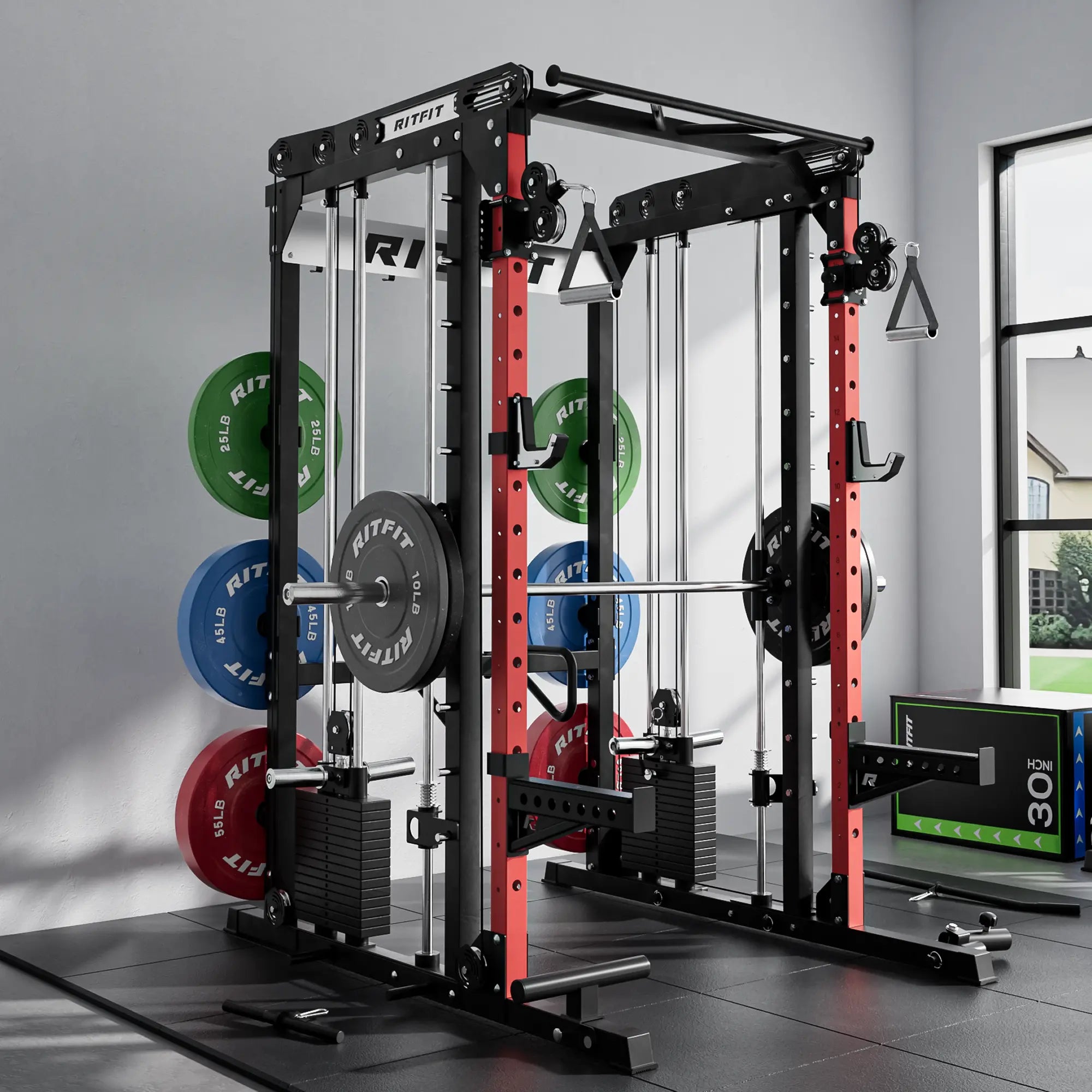
RitFit's M1 specifications and M2 specifications list "Smith Bar Weight" as 33 lbs. This is the published bar-weight label, not a separately stated starting-resistance measurement.
Hammer Strength lists 30 lb starting resistance for one named vertical Smith model, a model-specific value with a different label. For a RitFit example, check the product page and the documentation for your exact version.
Next, I do Smith machine squats for the quads and glutes.
Here I get as deep as I can and explode out of the hole.
Doing these on the Smith allows me to push my last set to failure without worrying about dumping the bar.
Jeff Nippard, Science-Based Natural Bodybuilder and Powerlifter, Jeff Nippard's Science-Backed Leg Workout for Massive Quads
How Can You Measure an Unloaded Smith Bar Safely?
If the manufacturer does not publish starting resistance, use a properly rated scale only when the equipment's manual or facility staff confirms a safe measurement method.
- Unload the sleeves: Remove plates and attachments, then secure the bar on its safety hooks before setting up any equipment.
- Choose a rated scale: Use a scale designed for the expected load and contact method. Follow its instructions; do not improvise a suspended or rope-and-plate setup.
- Keep the bar supported: Never stand under an unsupported bar or put fingers between the bar, rails, scale or stops.
- Repeat consistently: If the manual permits a direct scale reading, repeat it from the same position and note the method and scale resolution in your log.
A household bathroom scale may not be rated or shaped for a guided bar, and bodyweight subtraction can add measurement error.
If a scale cannot sit securely without compromising the machine safety, do not use that method.
Ask the manufacturer or gym operator instead.
How Do You Calculate and Log Total Load?
When a specification provides starting resistance, total Smith-machine load is that value plus the plate load on both sides.
| Example | Calculation | Approximate total |
|---|---|---|
| 20 lb starting resistance, one 45 lb plate each side | 20 + 45 + 45 | 110 lb |
| 9.1 kg starting resistance, one 20.4 kg plate each side | 9.1 + 20.4 + 20.4 | 49.9 kg |
These are arithmetic examples, not specifications for a particular machine. Use the model-specific starting resistance and actual plate labels.
Record the machine or model, the value source and units, plates per side, and repetitions. Keep the load calculation and plate configuration in your log.
A study of load versus repetition progression supports tracking both variables over time.[1] For counterbalance context, read the related Smith-machine explanation.
How Do You Compare a Smith Machine With Free-Weight Training?
A Smith-machine record and an Olympic-barbell record describe different equipment conditions, so matching displayed pounds does not establish equivalent effort or performance.
- Smith machine: The bar follows the machine's guided path, and the unloaded value depends on that model's resistance mechanism.
- Free barbell: The bar is not guided by the Smith rails, and the standard bar's stated mass is a separate equipment specification.
- For useful comparisons: Match the movement, range of motion, repetitions and effort, then compare your own records without applying a universal conversion factor.
A systematic review compared free-weight and machine-based training outcomes. It does not provide a universal load conversion between a Smith machine and a free bar.[2]
A separate study compared kinematic and EMG measures under specified unilateral squat conditions, not a general conversion formula.[3] Read the Olympic bar weight guide for a free-bar reference, or the Smith machine vs power rack guide for equipment context.
Common Mistakes and Safety Checks
Keep the number trustworthy by avoiding assumptions that mix machine specifications, bar mass and training load.
- Do not default to 45 lb: The Olympic-bar convention does not define an unrelated Smith machine's resistance.
- Do not mix terms: Bar weight, starting resistance and total loaded weight can refer to different quantities.
- Do not transfer a value between models: Even the same gym can have more than one design or configuration.
- Do not use feel as a scale: Friction or maintenance may affect movement but cannot identify the intended starting specification.
- Do not put yourself under an unsecured bar: Stop if the scale setup or machine position is unstable.
When a reliable starting value is unavailable, record the machine identity and plate load separately. Consistent notes are more useful than a guessed "bar weight."
FAQs About Smith Machine Bar Weight
How much does a Smith machine bar weigh?
A Smith machine bar usually feels like about 6 to 45 lb of starting resistance. Commercial counterbalanced machines often feel lighter, while many home gym systems feel closer to 25 to 35 lb. The most accurate number is the unloaded starting resistance of your own machine.
What is Smith machine starting resistance?
Smith machine starting resistance is the force needed to move the unloaded bar from rest. It matters more than physical bar mass because counterweights, rails, bearings, and friction change what the lifter actually feels. Use this number when logging total working weight.
Is a Smith machine bar always 45 pounds?
No. A Smith machine bar is not always 45 pounds. Some heavy hybrid units may approach that feel, but many commercial machines feel much lighter because of counterbalance systems. Always check the machine label, product manual, or measure the unloaded bar yourself.
How do you calculate total weight on a Smith machine?
Total Smith machine weight equals starting resistance plus all plates loaded on both sides. If the bar starts at 25 lb and you add one 45 lb plate on each side, your working load is about 115 lb. Keep that formula consistent in your training log.
Does a counterbalanced Smith machine feel lighter?
Yes. A counterbalanced Smith machine usually feels lighter because cables, pulleys, or internal counterweights offset part of the bar load. This is why some commercial Smith machines feel noticeably lighter and easier at takeoff than a standard free weight Olympic barbell.
Can you compare Smith machine weight to free weights?
Yes. You can compare Smith machine weight to free weights, but the comparison is not one to one. Match the same exercise, reps, range of motion, and effort level first. Then track your own pattern instead of relying on a universal conversion formula.
Should beginners count the Smith machine bar weight?
Yes. Beginners should count Smith machine bar weight because it affects total training load. The number does not need to be perfect on day one, but using a consistent starting resistance helps track progress, avoid sudden jumps, and compare workouts more honestly.
How do you measure Smith machine bar weight safely?
Measure Smith machine bar weight with the bar unloaded, hooks secured, and a stable scale setup. Use a floor scale, hanging scale, or controlled balance method. Take several readings and average them. Stop immediately if the bar shifts or the setup feels unstable.
Why does the same Smith machine feel different at different gyms?
The same Smith machine model can feel different across gyms because maintenance, rail wear, bearing condition, and lubrication all change friction and starting resistance. Even humidity and temperature shifts can slightly alter how the bar moves along the rails over time.
Conclusion
There is no universal Smith-machine bar weight. Find the exact model's published starting resistance or bar-weight figure, keep those labels distinct, and use a safe documented method if you must measure.
Add plates on both sides when you log a specified starting resistance, and keep Smith-machine records separate from free-bar lifts. Review the RitFit discount guide for current store offers.
Disclaimer
This article provides general equipment and training-log information and does not replace the machine manual. Follow manufacturer safety instructions and consult qualified facility staff before attempting a measurement that could leave a bar unsupported.
References
1. Plotkin D, Coleman M, Van Every D, et al. Progressive overload without progressing load? The effects of load or repetition progression on muscular adaptations. PeerJ. 2022;10:e14142. doi:10.7717/peerj.14142. PMCID: PMC9528903
2. Haugen ME, Vårvik FT, Larsen S, et al. Effect of free-weight vs. machine-based strength training on maximal strength, hypertrophy and jump performance: a systematic review and meta-analysis. BMC Sports Sci Med Rehabil. 2023;15(1):103. doi:10.1186/s13102-023-00713-4. PMCID: PMC10426227
3. van den Tillaar R, Larsen S. Kinematic and EMG comparison between variations of unilateral squats under different stabilities. Sports Med Int Open. 2020;4(2):E59-E66. doi:10.1055/a-1195-1039. PMCID: PMC7365712
4. Migliaccio GM, Dello Iacono A, Ardigò LP, et al. Leg press vs. Smith machine: quadriceps activation and overall perceived effort profiles. Front Physiol. 2018;9:1481. doi:10.3389/fphys.2018.01481. PMCID: PMC6206431
5. Schoenfeld BJ, Grgic J, Van Every DW, Plotkin DL. Loading recommendations for muscle strength, hypertrophy, and local endurance: a re-examination of the repetition continuum. Sports (Basel). 2021;9(2). doi:10.3390/sports9020032. PMCID: PMC7927075