Gaining muscle as a naturally skinny guy can feel like an uphill battle, yet it comes down to a few controllable habits. This guide breaks down exactly how to bulk up for skinny guys without the guesswork.
You will learn how to eat in a calorie surplus, train with compound lifts, and recover well, along with what realistic progress actually looks like.
Table of Contents
Key Takeaways
- Eat a surplus: Take in more calories than you burn, because muscle needs extra energy to grow.
- Prioritize protein: Aim for roughly 1.6 to 2 grams of protein per kilogram of body weight daily.
- Train compounds: Build sessions around squats, deadlifts, presses, and rows.
- Apply progressive overload: Add reps or weight over time to keep forcing growth.
- Stay patient: Expect steady, modest gains and track your weight weekly to adjust.
Why Skinny Guys Struggle to Gain Muscle
Skinny guys usually struggle because they eat too little for their activity level and metabolism. Building muscle requires surplus energy that the body can turn into new tissue.
- Fast metabolism: A higher daily calorie burn makes it easy to undereat without noticing.
- Small appetite: Feeling full quickly limits how much food fits into a day.
- Inconsistent training: Without a structured plan, the muscle-building signal stays weak.
The fix is rarely a secret program, it is eating and training with enough structure and consistency to grow.
Build Training Around Compound Lifts and Progressive Overload
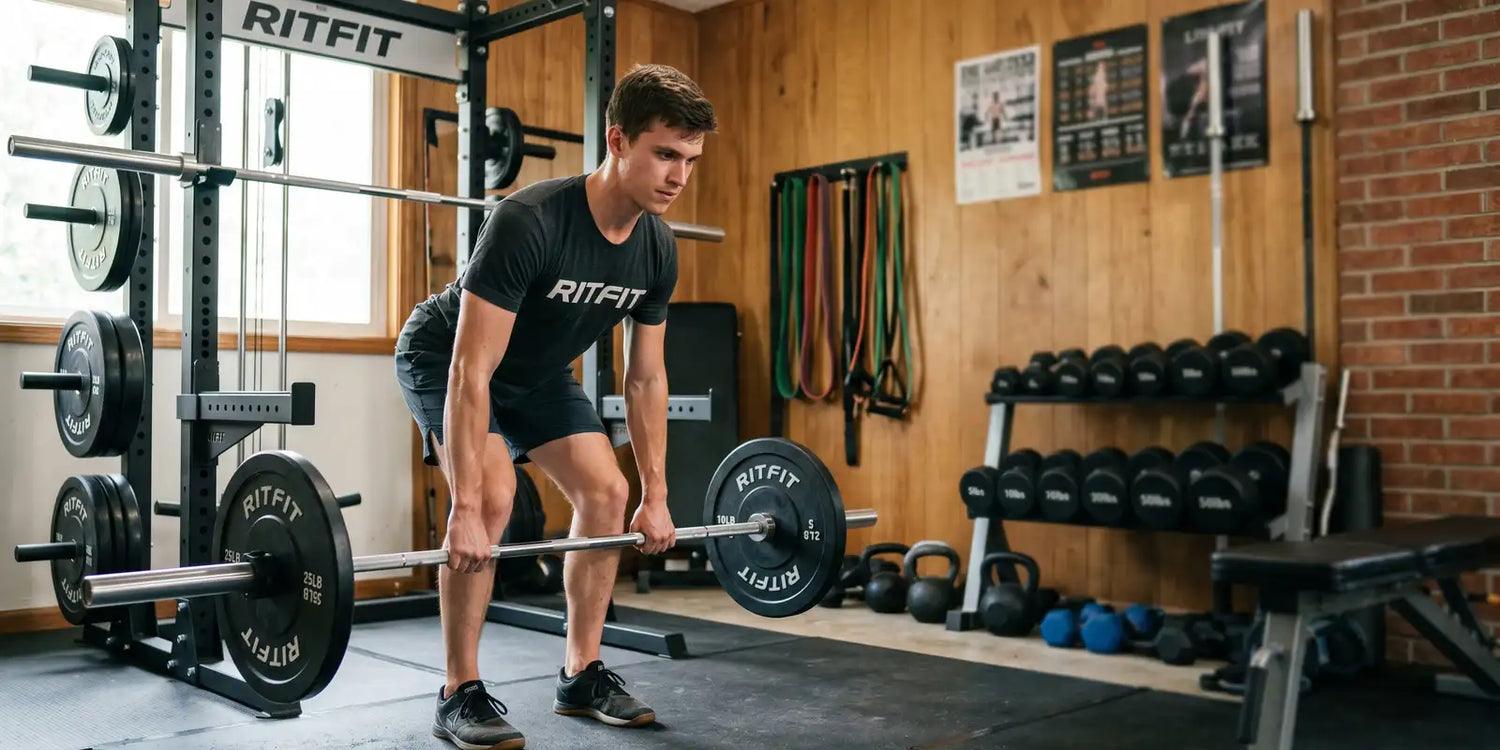
The fastest way to add size is to train big compound lifts and gradually do more over time. These multi-joint movements load many muscles at once and let you handle heavier weight.
An overview of reviews found that resistance training clearly increases muscle size, and that hypertrophy is enhanced by higher weekly volume of about 10 or more sets per muscle group.[1] The same evidence indicates that strength improves most with heavier loads at or above 80 percent of your one-repetition maximum, for 2 to 3 sets, at least twice per week.[1]
- Squat: Loads the quads, glutes, and core for full lower-body growth.
- Deadlift: Trains the entire posterior chain and grip.
- Bench and overhead press: Build the chest, shoulders, and triceps.
- Rows and pull-ups: Develop a wide, thick back.
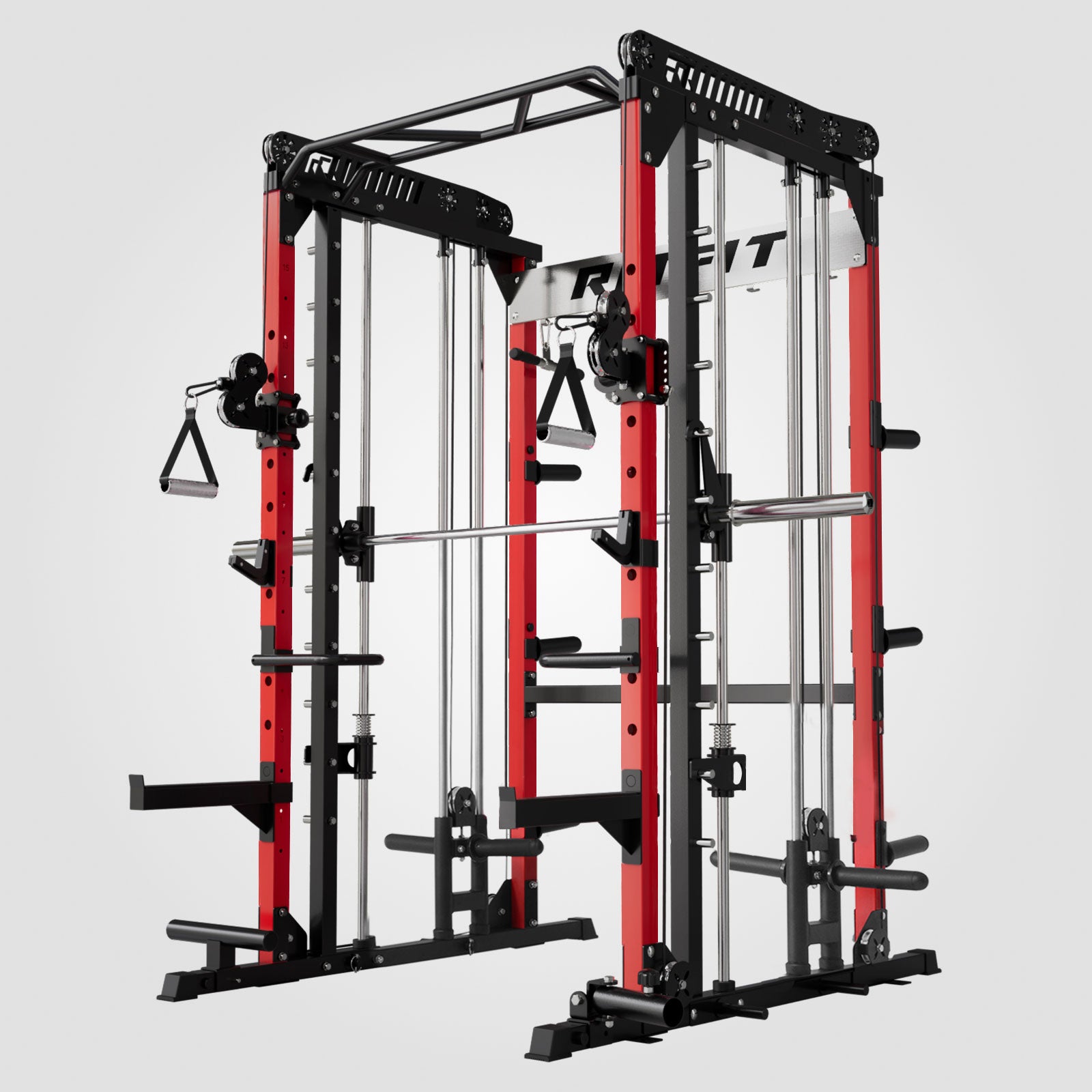
If you are setting up at home, learning how to choose the best barbell for training helps you load these lifts safely. A best power cage with a pull-up bar lets you push heavy squats and presses with safety bars, and an all-in-one option like the RitFit M1 multi-functional home gym covers most compound work in one footprint.
Eat in a Calorie Surplus
You cannot build muscle without extra energy, so a calorie surplus is non-negotiable for hardgainers. The goal is a controlled surplus, not eating everything in sight.
- Find your baseline: Estimate your total daily energy expenditure with a calculator or by tracking intake for a few days.
- Add a modest surplus: Many coaches recommend adding roughly 300 to 500 calories above maintenance to limit fat gain.
- Track and adjust: A common target is gaining about 0.25 to 0.5 kg per week, and you add food if the scale stalls.
For context, a lifter weighing around 150 lb might add a couple of calorie-dense snacks or a shake to close the gap. Liquid calories are an easy way to eat more without feeling overly full.
Protein and Macros That Drive Muscle Growth
Protein supplies the building blocks for new muscle, so it sits at the center of any bulking diet. Carbs and fats then fuel training and hormones.
A dose-response meta-analysis found that combining strength training with higher protein raises muscle strength up to about 1.5 grams per kilogram of body weight per day, with no extra benefit beyond that point.[2] A 16-week trial reported that around 1.6 grams per kilogram was sufficient to maximize lean mass and strength in healthy adults and was safely tolerated.[3]
- Protein: Aim for roughly 1.6 to 2 grams per kilogram of body weight, spread across the day.
- Carbs: Make them the bulk of your remaining calories to fuel hard training.
- Fats: Keep healthy fats in the diet for hormones and calorie density.
Quality home equipment makes hitting your sessions easier, and a quick look at the best dumbbell sets for a home gym helps you cover both compound and accessory work.
Recovery, Sleep, and Consistency
Muscle grows during recovery, not during the workout itself. Skinny guys who train hard but sleep poorly leave most of their gains on the table.
- Sleep: Target 7 to 9 hours nightly to support hormones and repair.
- Rest days: Schedule full recovery so muscles can rebuild between sessions.
- Manage stress: High stress and low energy blunt appetite and recovery.
A simple, repeatable routine beats a perfect plan you cannot stick to, so build a setup you enjoy using with our complete home gym guide.
Common Mistakes Skinny Guys Make
Most stalled bulks trace back to a handful of avoidable errors. Fixing them usually restarts progress quickly.
- Undereating: Many hardgainers think they eat a lot when they fall short of a true surplus.
- Program hopping: Switching plans weekly prevents the steady overload that drives growth.
- Skipping progression: Lifting the same weight for months gives the body no reason to adapt.
- Neglecting sleep: Cutting recovery short slows repair and appetite.
Starting affordable is fine, and a budget dumbbell set with a rack is enough to begin progressing at home.
FAQs About Bulking Up for Skinny Guys
Why is it so hard for skinny guys to gain muscle?
Naturally lean guys often have faster metabolisms and smaller appetites, so they burn through calories quickly and struggle to eat enough. Without a consistent calorie surplus and progressive training, the body has no extra energy to build new muscle tissue, which keeps weight stubbornly flat.
How many calories should a hardgainer eat to bulk up?
Start by estimating your total daily energy expenditure, then add a modest surplus that many coaches put around 300 to 500 calories. Track your weight weekly, and if the scale stays flat after a few weeks, add more carbs and fats until you gain steadily.
How much protein do skinny guys need to build muscle?
A meta-analysis found benefits up to about 1.5 grams per kilogram of body weight daily, and a 16-week trial reported 1.6 grams per kilogram was enough to maximize lean mass. Aiming near 1.6 to 2 grams per kilogram gives a practical, safe target for most lifters.
What is the best workout style for a skinny guy to grow?
Focus on compound lifts like squats, deadlifts, presses, and rows that load many muscles at once. Train each muscle group at least twice weekly, push challenging loads, and add reps or weight over time. This progressive overload is what forces real size.
How much muscle can a skinny guy gain in a few months?
Realistic gains for a dedicated beginner are modest and vary with genetics, training, and food intake. Some of any added weight will be fat, which is normal on a bulk. Consistency over many months matters far more than chasing fast, dramatic changes.
Do skinny guys need supplements to bulk up?
No. Whole food covers most needs, but protein powder and creatine can make hitting calories and protein easier. Treat them as convenient extras rather than requirements. Prioritize total daily calories, protein, sleep, and consistent training before spending money on supplements.
Conclusion
Bulking up as a skinny guy is simple in principle, eat a consistent surplus, prioritize protein, and train compound lifts with progressive overload. Recovery and patience turn that effort into steady, lasting size.
Start by tracking your food for a week, pick a basic compound program, and add a little weight or food whenever progress stalls.
Disclaimer
This article is for general educational purposes only and is not medical or nutritional advice. Consult a qualified healthcare or fitness professional before starting a new diet or training program, especially if you have any health conditions.
References
1. Currier BS, D'Souza AC, Singh MAF, et al. American College of Sports Medicine Position Stand. Resistance Training Prescription for Muscle Function, Hypertrophy, and Physical Performance in Healthy Adults. Medicine and Science in Sports and Exercise. 2026;58(4):851-872. https://pmc.ncbi.nlm.nih.gov/articles/PMC12965823/
2. Tagawa R, Watanabe D, Ito K, et al. Synergistic Effect of Increased Total Protein Intake and Strength Training on Muscle Strength: A Dose-Response Meta-analysis of Randomized Controlled Trials. Sports Medicine - Open. 2022;8(1):110. https://pmc.ncbi.nlm.nih.gov/articles/PMC9441410/
3. Bagheri R, Kargarfard M, Sadeghi R, et al. Effects of 16 weeks of two different high-protein diets with either resistance or concurrent training on body composition, muscular strength and performance in resistance-trained males. Journal of the International Society of Sports Nutrition. 2023;20(1):2236053. https://pmc.ncbi.nlm.nih.gov/articles/PMC10388821/