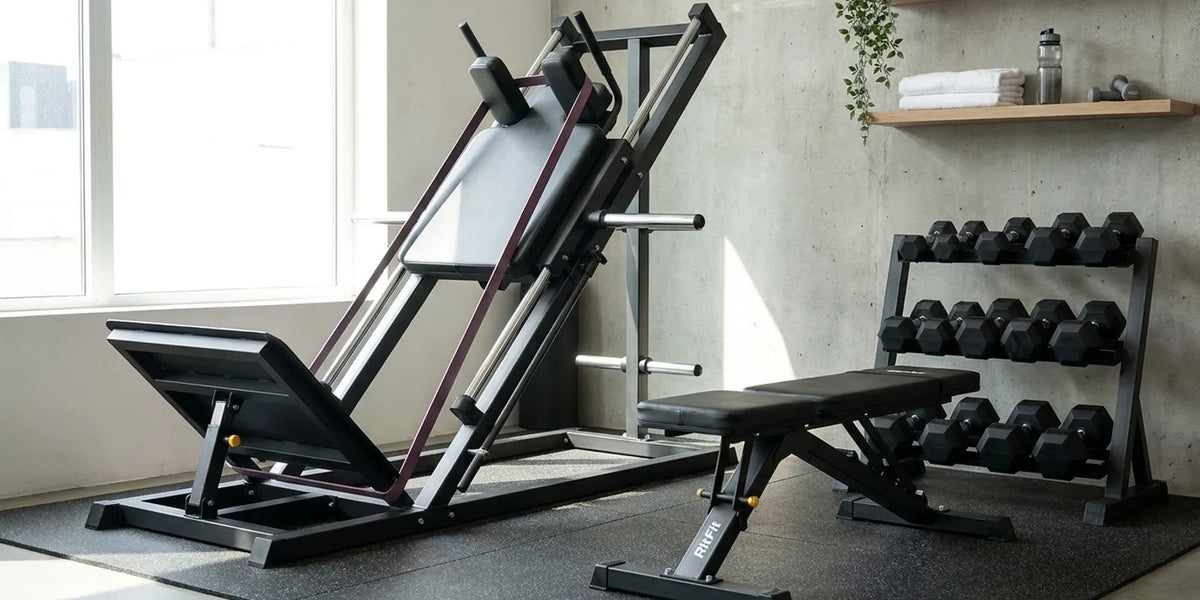
Yes, you can do donkey calf raises on a leg press and hack squat machine, and the movement works surprisingly well. The hack squat configuration reproduces the bent-over hip position that defines the donkey raise, so you can load it heavy without a partner on your back or a dedicated machine.
This guide covers the exact machine setup, a five-step form breakdown, muscles worked, benefits, common mistakes, and a simple programming template.
Quick Answer: You can do donkey calf raises on a leg press and hack squat machine by switching to the hack squat setup, hinging at the hips so the pad rests against your hips or lower back, locking your knees, and pressing through a full heel range against the sled.
Key Takeaways
- Machine configuration: The donkey variation is performed in the hack squat configuration, with the pad resting against the hips or the meaty part of the lower back, never the spine.
- Knee position decides the muscle: Straight knees bias the work toward the gastrocnemius, while bent knees shift effort to the deeper soleus.
- Execution: Five steps carry every set, with a controlled stretch, a brief pause at the bottom, and a deliberate rerack onto the safety stops.
- Programming: Two to four sessions per week work well, either 3 to 4 sets of 10 to 15 reps for hypertrophy or 2 to 3 sets of 15 to 25 reps.
- Safety first: Set the safety catches before loading, start light, and clear loaded calf work with a qualified professional if you have a lower-leg, ankle, or Achilles issue.
Machine Setup for Donkey Calf Raises
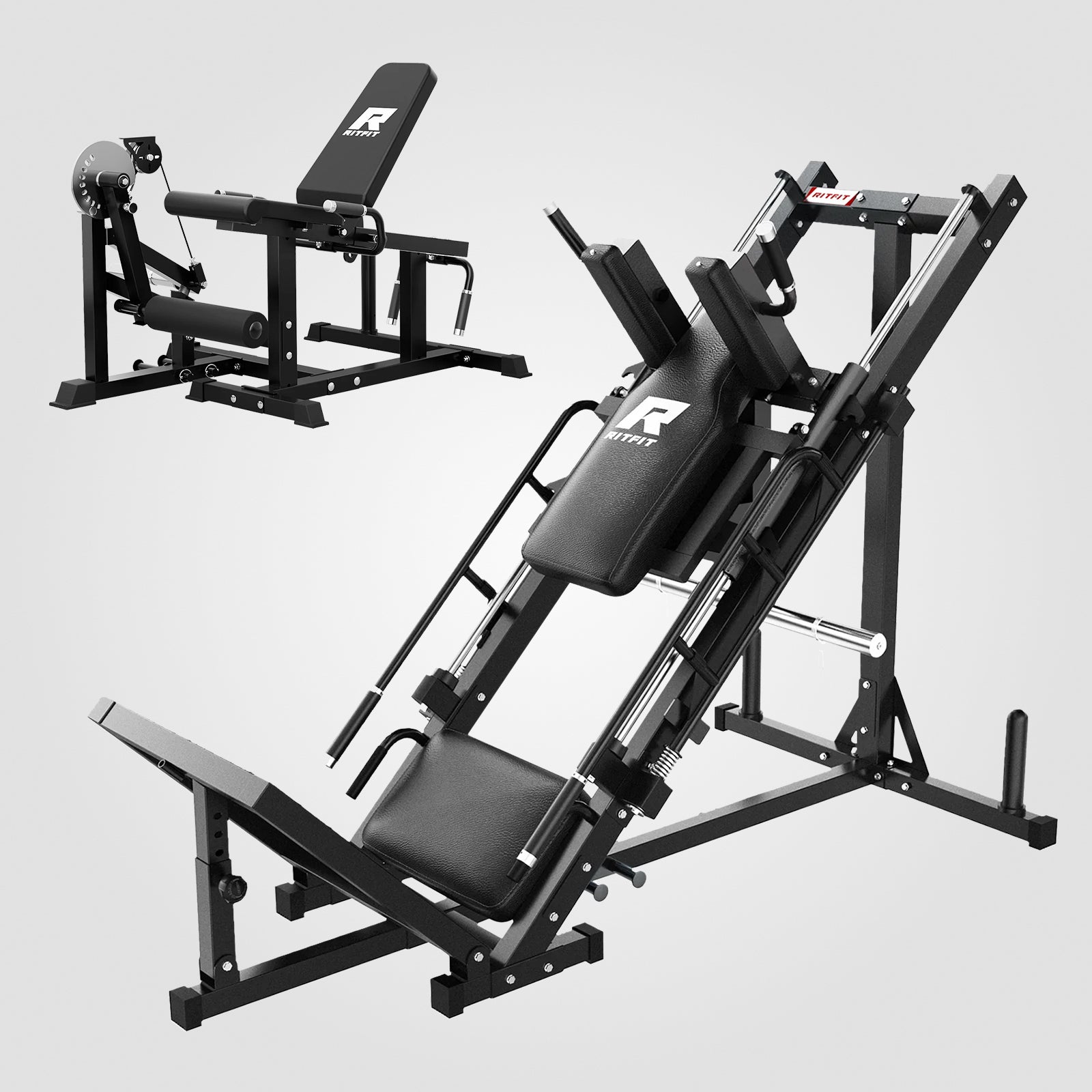
The donkey calf raise on a leg press and hack squat combo machine uses the hack squat configuration with the padded sled resting against your hips or lower back. Set the safety stops before loading, keep the load conservative at first, and place the balls of your feet on the platform edge with your heels hanging free.
Choose Your Machine: RitFit GAZELLE PRO 3-in-1
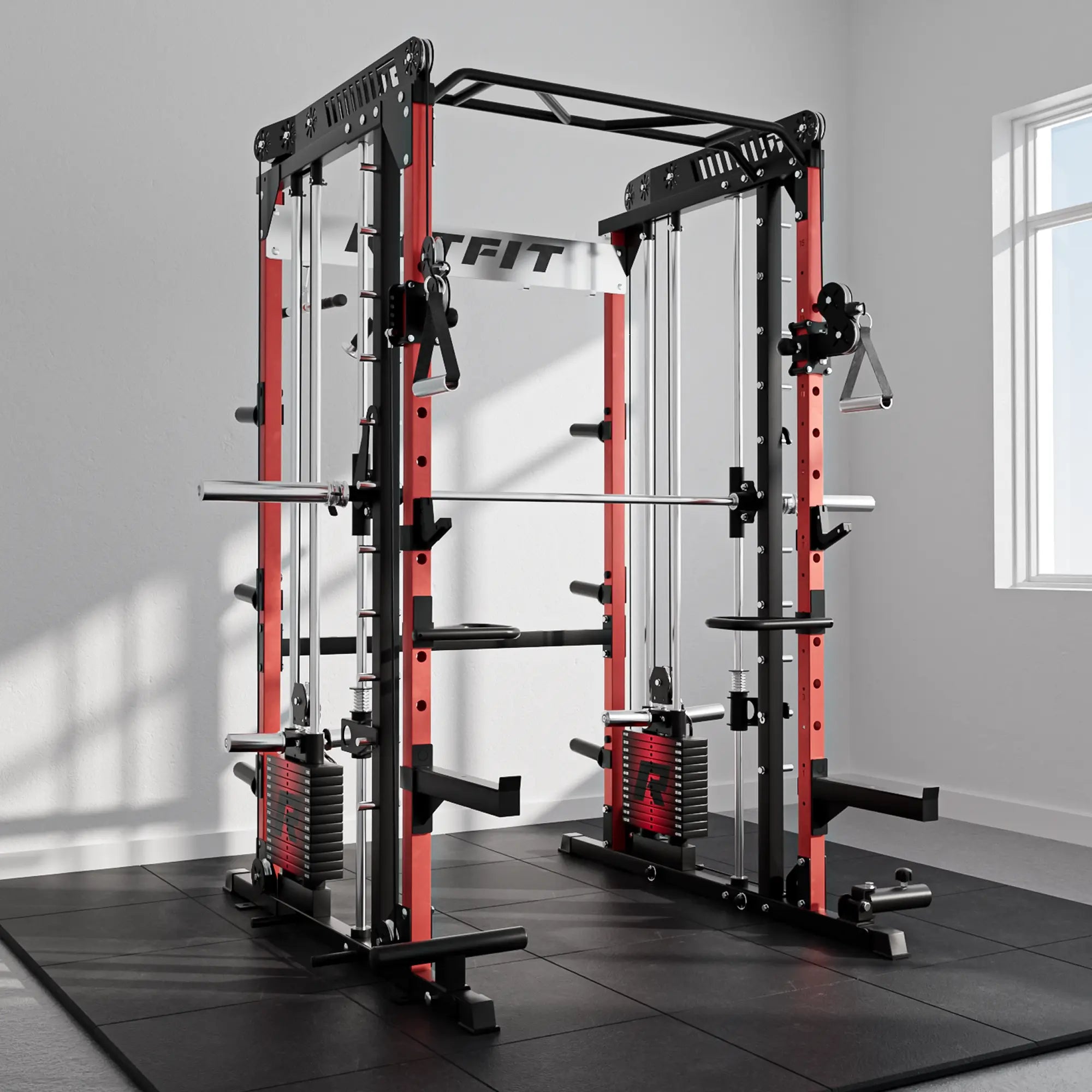
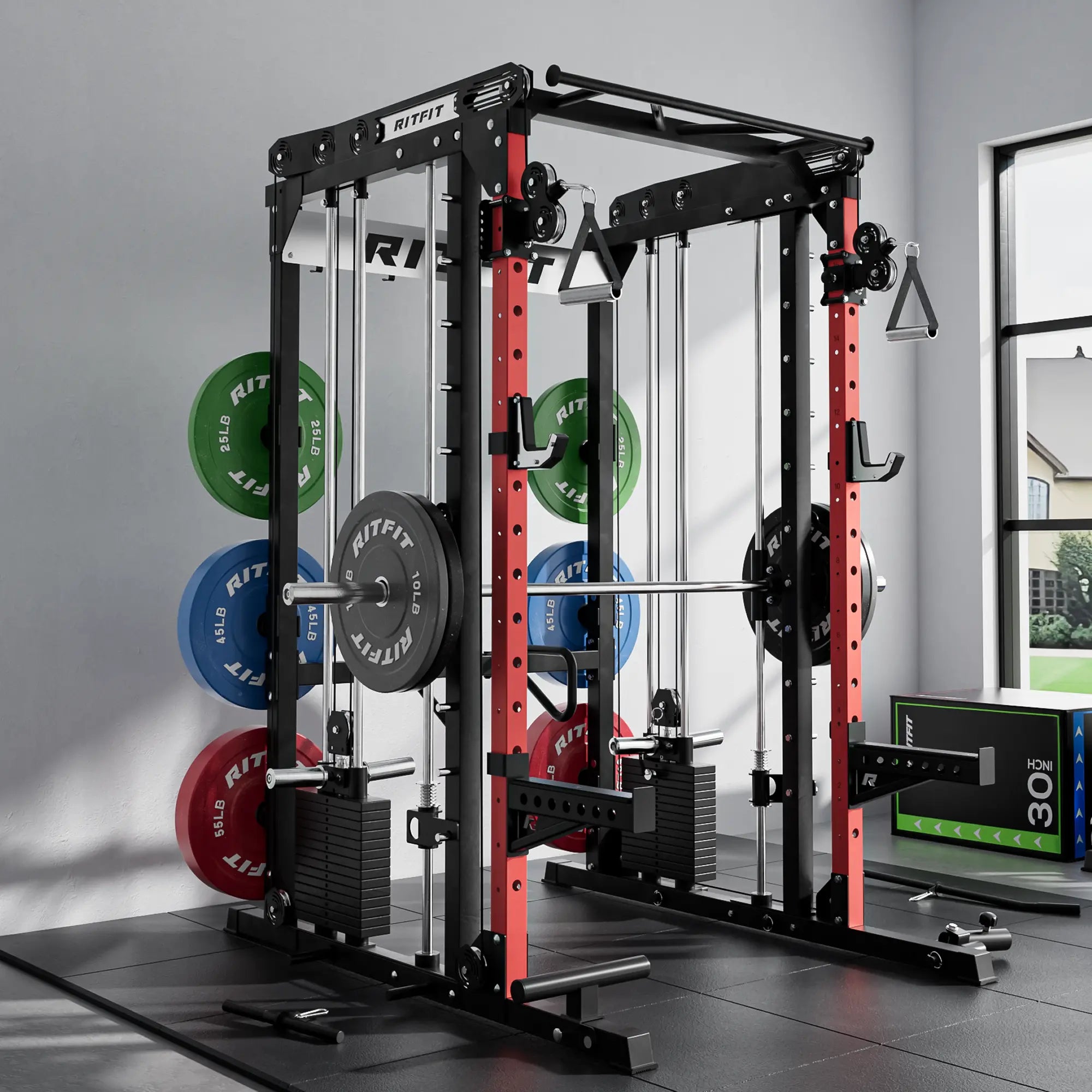
A leg press and hack squat combo machine is one of the most practical places to train the donkey calf raise at home, because the sled and pads do the loading work a training partner normally would. This setup works on the RitFit GAZELLE PRO 3-in-1 and the RitFit BLP01, and related listings such as the RitFit GAZELLE PRO 3-in-1 Machine Set and the standard RitFit GAZELLE 3-in-1 run the same movement pattern.
- Switch to hack squat mode: The donkey variation is performed in the hack squat configuration, not the leg press configuration. If the machine is new to you, read a full walkthrough of the leg press and hack squat machine setup before loading it for calf work.
- Position the pads against your hips or lower back: Stand facing the machine and flex at the hips until the padded roller or back pad rests against your hips or the meaty part of your lower back. The pad should never dig directly into the spine.
- Set the safety stops and range: Set the safety catches so the sled cannot travel below your comfortable ankle range or slam upward past lockout. Test the bottom and top of the range with no weight first.
- Place the balls of your feet on the platform edge: Your feet sit roughly hip-width apart on the lower platform with your heels hanging free off the edge. On combo units this is the same platform used for hack squats.
- Keep the load conservative at first: The donkey position shifts your balance and puts the pad against a different part of your body than a normal hack squat. Start with an empty sled or light plates to confirm pad placement and a clear heel range before adding load.
"The Gazelle Pro arrived in two different shipments, took 30minutes to open and place the parts and 3 hours to completely build. It's very helpful to have the manual and the video for confirmation on the steps. I am very happy with the Gazelle Pro as an addition to my small home gym."
Tim J. Verified Buyer, RitFit GAZELLE PRO 3-In-1 Leg Press and Hack Squat Machine
Step-by-Step Form
The donkey calf raise runs through five steps, from the hip-flexed setup to a deliberate rerack onto the safety stops. Work through the same sequence every set so each rep looks identical.
- Step 1: Get into the hip-flexed position. Stand facing the machine with your feet hip-width apart and the balls of your feet on the platform edge, then hinge at the hips until your torso is roughly parallel to the floor and the pad rests against your hips or lower back. Keep the knees extended and stable, since straight knees are what bias the movement toward the gastrocnemius.
- Step 2: Unrack the sled. Release the safety catches with your hands while bracing your hips against the pad. Your arms hold the handles mainly for balance and to operate the safeties, while the load is carried through the hips.
- Step 3: Lower your heels under control. Let your heels drop below the level of the platform until you feel a full stretch through the calves and Achilles, and do not bounce out of the bottom. A brief pause in the stretched position is valuable, because the Achilles tendon stores elastic energy that can rob your calves of work if every rep is bouncy.
- Step 4: Drive up through the balls of your feet. Push the front of your foot into the platform and raise your heels as high as you can, squeezing the calves hard at the top. Think of moving through the full range of the ankle, not just tipping up a couple of inches.
- Step 5: Repeat smoothly and rerack deliberately. Each rep should follow the same rhythm, stretch, pause, drive, squeeze, with a breath out as you press up and in as you lower. When the set is finished, lower the sled slowly onto the safety stops rather than dropping it.
Watch the full donkey calf raise setup and execution before your first working set.
Muscles Worked
The donkey calf raise on a hack squat machine trains the triceps surae group, the gastrocnemius and the soleus, with most of the emphasis on the two-headed gastrocnemius. The knee position is what decides the split.
The reason is anatomical. The gastrocnemius crosses both the knee and the ankle, so it is at its most mechanically effective when the knee is extended.
Research summarized in The Muscle PhD's Calf Training 101 puts it plainly, flexing the knee reduces gastrocnemius activation while increasing soleus activation, which is why bent-knee and straight-knee calf raises are complementary rather than interchangeable.[1]
Secondary involvement comes from the muscles that stabilize the position. The hamstrings and glutes hold the hip hinge, the core braces the torso, and the forearms grip the machine handles.
The hip-flexed position also pre-stretches the gastrocnemius at the hip, which is one reason many lifters feel a strong contraction compared with standing raises. For the fuller picture of how straight-knee and bent-knee work split the load, see our guide to calf raise sets, reps, and growth.
"include calf raise variations that involve a straight leg to target the gastroc and a bent leg to target the soleus"
The Muscle PhD, Calf Training 101
Benefits of Donkey Calf Raises on a Combo Machine
Donkey calf raises on a combo machine deliver heavy calf loading without a training partner while keeping the torso hinged in the position that defines the movement. The setup also removes the balance problem that limits standing calf work on a ledge.
- Heavy loading without a partner: The classic donkey calf raise asks a partner to sit across your lower back or requires a dedicated leverage machine. On a leg press and hack squat combo, the sled provides the resistance and the pads distribute it, so you can train heavy and alone.
- A genuine bent-over position: Many home donkey substitutes quietly become standing calf raises. Using the hack squat configuration with the pad against your hips keeps the torso hinged, which is the position that defines the movement.
- Built-in balance support: Holding the machine handles keeps your balance out of the equation, so you can focus on the stretch and squeeze of the calves instead of staying upright.
- Full range of motion with control: The guided sled path and safety stops let you work a deep, controlled stretch at the bottom, generally the most productive part of a calf raise rep, without the balance risk of free-weight work on a ledge.
- It rounds out a combo machine's value: The donkey calf raise turns calf day into one more exercise you can run on a machine you already own instead of buying a separate donkey raise station. If you are still choosing equipment, the leg press machine collection covers the combo units this movement needs, and the leg machine collection adds stations for the rest of lower-body day.
Common Mistakes and Safety
Soft knees, bouncy reps, and rushed safety stops are the most common donkey calf raise mistakes, and each one quietly shifts work away from the calves. The fixes are small, but they change what the exercise trains.
- Bending the knees: The most common form leak is soft knees. Once the knees bend significantly, the gastrocnemius slackens and the exercise quietly becomes a soleus exercise.
- Bouncing out of the bottom: Fast, springy reps let the Achilles tendon do the work. Pause briefly in the stretched position and drive up under control.
- Cutting the range short: Half reps in the calves tend to stay half results. Let the heels drop fully, then raise them as high as the ankle allows.
- Pad placement on the spine: The pad belongs on the hips or the soft part of the lower back, never pressing directly on the vertebrae. If the pad position feels sharp or uncomfortable, adjust before loading.
- Rushing the safeties: Set the stop points and test the travel of the sled with no weight first. The safety catches are what make heavy solo calf training sensible, so use them every session.
- Going too heavy too soon: Because your balance is supported, it is tempting to stack plates. Build load gradually while keeping the full range and the pause at the bottom intact, since controlled reps with a lighter sled beat sloppy reps with a heavier one.
Programming (Sets, Reps, and Frequency)
Most lifters train the donkey calf raise two to four times per week, using either hypertrophy sets of 10 to 15 reps or higher-rep sets of 15 to 25. Calves tend to recover quickly and tolerate frequent training.
- Hypertrophy focus: 3 to 4 sets of 10 to 15 reps with a controlled tempo and a pause at the bottom, leaving 1 to 2 reps in reserve on early sets. This is the standard size-building range and works well as a finisher on leg day.
- Higher-rep focus: 2 to 3 sets of 15 to 25 reps. Given that the calf complex is typically slow-twitch dominant, many lifters respond well to higher reps some of the time, and alternating the two approaches across the week is a reasonable default.
Place the movement after your main squat or leg press work, when the calves are warm but your legs are not yet exhausted, and warm up the ankles with light full-range sets first. Pairing this straight-knee work with a bent-knee variation, on the machine or with a standing or seated leg press calf raise setup, covers both heads of the calf complex across the week.
Use this donkey calf raise guide to check your tempo and weekly progression.
FAQs About Donkey Calf Raises on a Leg Press and Hack Squat Machine
Can you do donkey calf raises on a leg press and hack squat machine?
Yes. Use the hack squat configuration and stand facing the machine in a hip-flexed position with the pad against your hips or lower back, knees straight, and raise your heels against the sled. This reproduces the bent-over mechanics of a classic donkey calf raise, with the machine providing the load instead of a partner.
What is the difference between a donkey calf raise on a hack squat machine and a standing calf raise?
Body position. In a donkey calf raise the hips are flexed and the torso is hinged forward, which pre-stretches the gastrocnemius and keeps the load across the hips rather than the shoulders. Both are straight-knee exercises, but many lifters feel a stronger contraction in the donkey position. The standing variation remains valuable, and our Smith machine donkey calf raise guide covers one popular alternative.
Should the knees be bent or straight?
Straight. The knee position decides which muscle does the work, since straight knees bias the gastrocnemius and bent knees shift effort to the soleus. Keep the legs extended without aggressively locking them so the calves stay loaded through every rep of the donkey variation.
How heavy should I go?
Start with the empty sled or light plates until the pad placement, balance, and full range of motion feel secure. Add load gradually while keeping a controlled stretch at the bottom. Because the machine supports your balance, it is easy to overestimate how much weight you can handle with good form.
How often should I train the donkey calf raise?
Two to four sessions per week is a practical range for most lifters, since calves typically recover quickly. Keep at least one straight-knee variation and one bent-knee variation in the weekly mix, and warm up the ankles with light full-range sets before the first heavy set.
Conclusion
The donkey calf raise is one of the best straight-knee calf builders around, and a leg press and hack squat combo machine makes it a realistic home gym exercise rather than a gym-floor novelty. Switch to hack squat mode, hinge at the hips with the pad against your hips or lower back, lock the knees, and press through a full, controlled range against the sled.
Set the safeties first, keep the reps honest, and pair it with a bent-knee variation two to four times a week. Before you add plates, check the RitFit discount guide for current savings.
Disclaimer
This article is training guidance, not medical advice. If you have an existing lower-leg, ankle, or Achilles issue, check with a qualified professional before adding loaded calf work.
References
1. The Muscle PhD. Calf Training 101. themusclephd.com.