








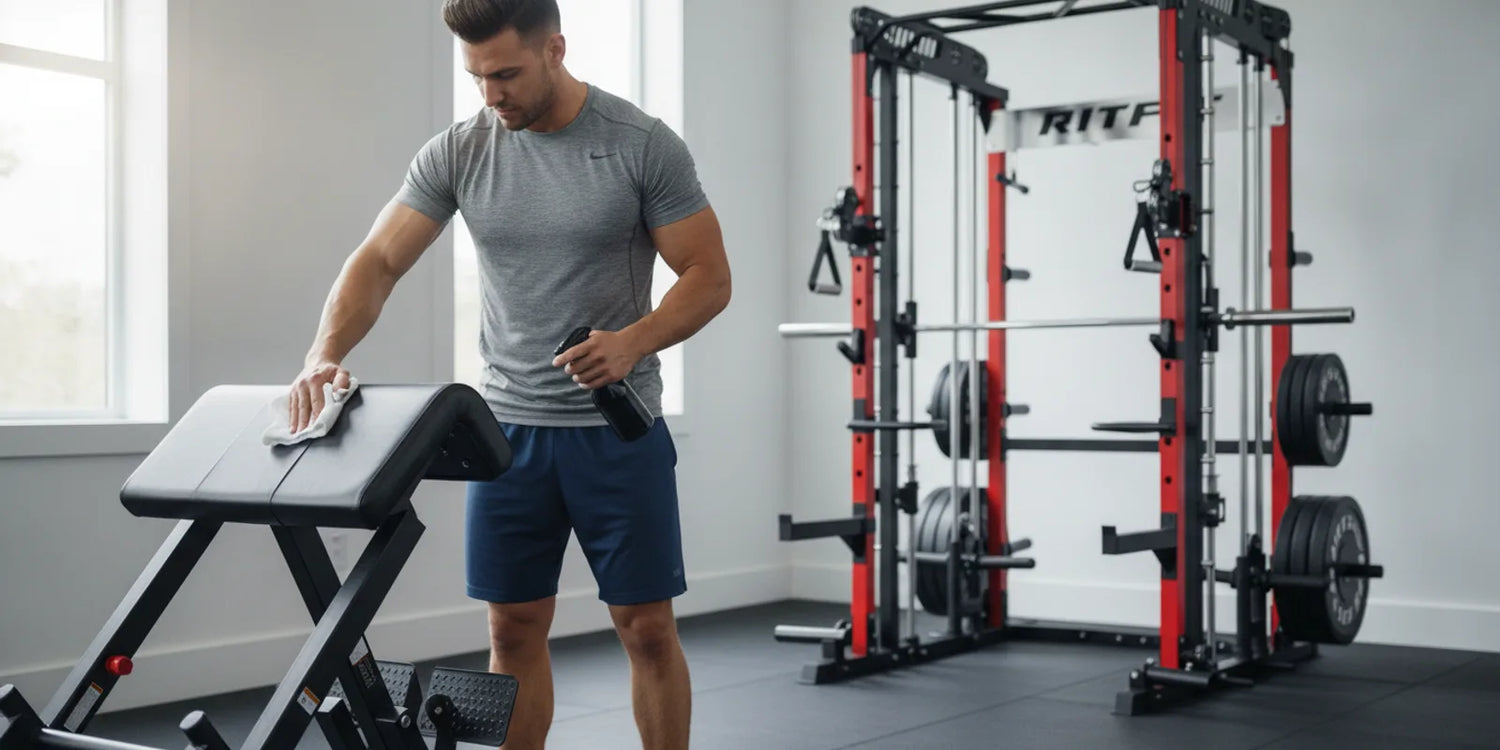
To maintain and clean your hip thruster machine, wipe the foam pad after every session, deep clean the vinyl weekly with a pH neutral cleaner, and inspect the frame and bolts monthly. This guide focuses on the standalone home and garage gym unit.
You will get a simple daily, weekly, and monthly routine, safe cleaning products, rust prevention tips, and clear signs that tell you when to repair or stop using the machine.
Quick Answer
To maintain and clean a hip thruster machine, wipe the foam hip pad with a damp microfiber cloth after each workout, deep clean the vinyl weekly using a pH neutral cleaner, and inspect bolts, welds, and band pegs monthly. Dry every surface afterward to prevent rust and protect the load bearing frame.
Key Takeaways
- Wipe after every session: Sweat is acidic and slowly corrodes both vinyl upholstery and the steel frame, so a quick post workout wipe is the single most important habit.
- Use gentle cleaners only: A pH neutral cleaner or diluted mild dish soap protects vinyl, while bleach, ammonia, and alcohol dry it out and cause cracking.
- Inspect the frame monthly: Check bolts, welds, and band pegs because the unit supports a heavily loaded barbell across your hips during each rep.
- Control moisture to stop rust: Dry the frame, keep the machine off bare concrete, and touch up chipped powder coating before bare steel begins to corrode.
- Know when to stop: Cracked welds, bent steel, stripped bolts, or wobble under load mean you stop training and replace parts before the next workout.
Why does hip thruster maintenance matter?
Hip thruster maintenance matters because the machine carries heavy, repeated load right where your body contacts sweat soaked padding. A biomechanical analysis found the barbell hip thrust places a large hip extensor demand, peaking near 3.52 N m per kg early in the lift[1], so the pad and frame absorb real force every rep.
- It protects your investment: The hip thrust is worth equipping for, since a 9 week study found it produced gluteal growth similar to back squats[2].
- It keeps training safe: A loaded barbell resting across your hips needs a frame and pad you can trust, workout after workout.
- It extends usable life: Regular care on a home or garage unit prevents small issues from becoming costly failures or replacements.
Frequent use only raises the stakes, as a 6 week program improved hip thrust strength by about 34 percent in young athletes with no injuries[3]. If you also train on a Smith machine hip thrust setup, the same care habits carry over to that equipment too.
"The Hip Thruster is the best way to do the hip thrust, stable and versatile."
Bret Contreras, PhD, The Glute Guy and inventor of The Hip Thruster, Contreras Strength Institute
What do you need to clean a hip thruster machine?
You need only a few gentle supplies to clean a hip thruster machine safely. A soft microfiber cloth, a pH neutral cleaner or diluted mild dish soap, and clean water cover almost every routine cleaning task without damaging vinyl or steel.
- Microfiber cloths: Two cloths, one damp for cleaning and one dry for buffing, lift sweat and grime without scratching upholstery.
- pH neutral cleaner: A gym safe, pH neutral spray or a few drops of mild dish soap in warm water is gentle on vinyl seams.
- Soft brush: A soft bristle brush reaches textured pad surfaces and band peg threads where sweat collects.
- Light machine oil or silicone: A small amount protects bare hardware and quiets squeaks at moving contact points.
- Hex or Allen keys: The set that came with your unit lets you check and tighten bolts during inspection.
Avoid harsh chemicals entirely, as covered in the next section. Keep these basics in a small caddy near your Smith machine or rack so cleaning never feels like a chore.
How do you clean the foam hip pad and upholstery?
You clean the foam hip pad and upholstery by wiping it with a damp microfiber cloth and a pH neutral cleaner, then drying it fully. This protects the vinyl from sweat damage while keeping trapped moisture out of the foam underneath.
Daily wipe down routine
After each session, spray a little pH neutral cleaner on a damp cloth, wipe the whole pad, then buff dry with a second cloth so no moisture lingers on the surface or seams.
Deep cleaning vinyl and foam padding
Weekly, work in small sections using mild soapy water and a soft brush on stubborn spots, then wipe with a clean damp cloth and dry thoroughly before your next workout.
- Spray the cloth, not the pad: Spraying directly can drive moisture into seams and stitching, where it degrades foam and feeds odor.
- Never soak the upholstery: Excess water seeps past the vinyl into the foam core and can also reach the metal base plate.
- Dry every time: A final dry buff is the step most people skip, yet it does the most to prevent cracking and rust.
For workout ideas that put the freshly cleaned pad to use, see this Smith machine hip thrust glute workout.
How do you care for the frame and hardware?
You care for the frame and hardware by inspecting and tightening bolts, protecting the powder coated steel, and keeping band pegs and barbell contact points clean. The frame is the load bearing structure, so its condition decides whether the machine stays safe under heavy weight.
Inspecting and tightening bolts
Monthly, run a hex key over every bolt and check welds for hairline cracks, since repeated loading slowly loosens fasteners and a loose joint can shift dangerously mid rep.
Preventing rust in a garage or basement gym
Keep humidity in check, dry the frame after sweaty sessions, and touch up any chips in the powder coating quickly, because exposed bare steel is where rust starts and spreads fastest.
Maintaining band pegs and barbell contact points
Wipe band pegs and the barbell saddle clean, then apply a thin film of silicone or light oil a few times a year to block moisture and stop squeaks at moving contact points.
- Keep it off bare concrete: A rubber mat under the machine limits moisture wicking up from the slab and protects both the frame and your floor.
- Match the hardware: Replace any worn bolt with the manufacturer specified size and grade, never a random substitute from the garage.
- Watch the band attachments: If you load bands often, inspect pegs and anchor points for bending or wear, much as you would on a cable machine.
If you are still choosing equipment, our guides on the hip abduction machine for glutes and the best hip abductor and adductor machine for beginners cover frame quality to look for.
What is a good hip thruster maintenance schedule?
A good hip thruster maintenance schedule layers quick daily wipe downs over deeper weekly cleaning and periodic hardware checks. Following a simple cadence means small tasks never pile up into a damaged pad or a rusted frame.
| Frequency | Tasks |
|---|---|
| After every session | Wipe the foam pad with a damp microfiber cloth, then buff dry. |
| Weekly | Deep clean vinyl with pH neutral cleaner, brush textured surfaces, dry fully. |
| Monthly | Inspect and tighten bolts, check welds, clean band pegs and barbell saddle. |
| Quarterly | Apply silicone or light oil to contact points, touch up chipped powder coating, check the floor mat. |
Adjust intervals to your training frequency and gym humidity. Hotter, sweatier, or more frequent use shifts every task earlier.
Pin this cadence near your machine so it becomes routine. The same logic extends to a full home gym abductor and adductor setup.
What common mistakes shorten machine life?
The most common mistakes that shorten machine life are harsh cleaners, soaking the pad, and skipping hardware checks. Each one quietly degrades either the upholstery or the load bearing frame until a problem surfaces under load.
- Using bleach or alcohol wipes: These strip plasticizers from vinyl, leaving the pad dry, stiff, and prone to cracking within months.
- Soaking the upholstery: Too much water seeps into the foam and reaches the metal base plate, breeding odor and rust you cannot see.
- Leaving sweat to dry: Dried sweat is acidic and corrosive, so an unwiped pad and frame age far faster than a wiped one.
- Ignoring loose bolts: A fastener left loose for weeks can elongate its hole or crack a weld, turning a quick fix into a structural repair.
- Storing on bare concrete: Moisture wicks up from the slab into the frame base, accelerating rust in garages and basements.
Avoiding these habits costs almost no time and adds years of safe use. A consistent routine keeps both the pad and frame performing like new.
When should you stop using or repair the machine?
You should stop using the machine the moment you see cracked welds, bent steel, stripped bolts, wobble under load, or torn upholstery exposing the base plate. These flaws compromise the structure that supports a loaded barbell across your hips.
- Stop signs: Visible weld cracks, frame flex or wobble under weight, or any bolt that will not hold torque means no more reps until it is fixed.
- Repair, do not improvise: Replace damaged hardware with manufacturer spec parts and never patch a load bearing frame with makeshift fixes.
- Replace the pad when torn: A split that exposes the foam or steel plate invites rust and pinching, so swap the pad rather than tape it.
When a dedicated thrust station is your goal, a purpose built option like the 2 in 1 hip thrust and bicep curl attachment keeps your setup simple and serviceable.
FAQs About Hip Thruster Machine Maintenance
How often should I clean my hip thruster machine?
Wipe down the foam pad and any contact surfaces after every workout with a damp microfiber cloth, since sweat is acidic and corrodes both vinyl and steel over time. Do a deeper clean weekly, and inspect bolts, welds, and band pegs monthly so small issues are caught before they become safety problems in your home gym.
What cleaner is safe for the hip thruster foam pad and upholstery?
Use a pH neutral cleaner or a few drops of mild dish soap diluted in warm water, applied with a soft microfiber cloth. Avoid bleach, ammonia, alcohol wipes, and abrasive scrubbers, because they dry out and crack vinyl upholstery. Wipe the pad dry afterward so trapped moisture does not seep into the foam or rust the frame.
How do I stop my hip thruster machine from rusting in a garage gym?
Keep the machine off bare concrete, control humidity with a dehumidifier if possible, and dry the frame after sweaty sessions. Inspect powder coated steel for chips, since exposed metal rusts fastest. Apply a thin coat of silicone or light machine oil to bare hardware and moving contact points a few times a year to block moisture.
When should I stop using my hip thruster machine?
Stop immediately if you notice cracked welds, bent steel, stripped or missing bolts, wobble under load, or torn upholstery exposing the metal base plate. These compromise the load bearing structure that supports a heavily loaded barbell across your hips. Replace damaged hardware with manufacturer spec parts before training again, and never improvise repairs on a load bearing frame.
Can I use disinfectant wipes on my hip thruster pad?
Use them sparingly and choose alcohol free, gym safe wipes. Most standard disinfectant wipes contain alcohol or bleach that dries vinyl and causes cracking over repeated use. For routine cleaning, a damp microfiber cloth with a pH neutral cleaner is gentler, and you should always buff the pad dry afterward to keep moisture out of the foam.
Conclusion
Maintaining and cleaning your hip thruster machine comes down to three habits, wipe the pad after every session, deep clean and inspect on a weekly and monthly cadence, and keep moisture away from the frame. These small steps protect both your upholstery and the load bearing steel.
Start your routine today, and explore matching equipment in our leg machine collection to round out your home gym.
Disclaimer
This article offers general maintenance guidance and is not a substitute for your machine manufacturer instructions or professional servicing. Always follow the manufacturer manual, and consult a qualified technician before repairing or continuing to use any equipment you suspect is damaged.
Save on your next RitFit order
Tap the button to copy your code, then paste it at checkout.
References
1. Brazil A, Needham L, Palmer JL, Bezodis IN. A comprehensive biomechanical analysis of the barbell hip thrust. PLoS One. 2021;16(3):e0249307. doi:10.1371/journal.pone.0249307 https://pmc.ncbi.nlm.nih.gov/articles/PMC8006986/
2. Plotkin DL, Rodas MA, Vigotsky AD, et al. Hip thrust and back squat training elicit similar gluteus muscle hypertrophy and transfer similarly to the deadlift. Front Physiol. 2023;14:1279170. doi:10.3389/fphys.2023.1279170 https://pmc.ncbi.nlm.nih.gov/articles/PMC10593473/
3. Millar NA, Colenso-Semple LM, Lockie RG, Marttinen RHJ, Galpin AJ. In-Season Hip Thrust vs. Back Squat Training in Female High School Soccer Players. Int J Exerc Sci. 2020;13(4):49-61. doi:10.70252/UELS8581 https://pmc.ncbi.nlm.nih.gov/articles/PMC7039497/





