What's the difference between leg extension and leg curl? The leg extension is an open kinetic chain knee extension movement that trains the quadriceps on the front of the thigh, while the leg curl is a knee flexion movement that trains the hamstrings on the back of the thigh.
This guide compares muscles worked, joint action, body position, and training order, then maps each reader to a RitFit setup that covers knee extension and knee flexion in one footprint. If you have knee discomfort, use a lighter load, stop the set if discomfort increases, and consult a qualified professional.
Quick Answer: The difference between leg extension and leg curl is the muscle group and joint action, since the leg extension trains the quadriceps through knee extension in open kinetic chain while the leg curl trains the hamstrings through knee flexion. The two movements balance the front and back of the thigh, and neither replaces the other.
Key Takeaways
- Opposite Muscle Groups: The leg extension trains the quadriceps through knee extension, and the leg curl trains the hamstrings through knee flexion, so each movement covers one side of the thigh.
- Hip Position Matters: The hamstrings cross both the hip and knee joints, so the hip angle you set changes how a leg curl loads them.
- Neither Movement Replaces the Other: A balanced leg day keeps both isolation movements alongside squats and hip hinges, because one movement cannot load both sides of the knee joint.
- Order Follows Your Goal: Put the movement that matches your main goal first while you are fresh, and alternate the order across sessions on a 2-in-1 machine.
- One Frame Can Cover Both: A 2-in-1 leg extension curl machine covers knee extension and knee flexion in one footprint, while a rack attachment suits lifters who already own a rack.
Leg Extension vs Leg Curl: Core Differences at a Glance
The leg extension and the leg curl are opposing isolation movements that share the knee joint but train opposite muscle groups. A leg extension straightens the knee against a padded lever in a seated position, while a leg curl bends the knee against a roller with the hips fixed. The comparison below shows where the two movements differ.
| Point of Difference | Leg Extension | Leg Curl |
|---|---|---|
| Primary Muscles | Quadriceps on the front of the thigh | Hamstrings on the back of the thigh |
| Joint Action | Knee extension against a padded lever | Knee flexion against a padded roller |
| Body Position | Seated with the hips fixed | Seated, prone, or standing with the hips fixed |
| Kinetic Chain | Open kinetic chain | Open kinetic chain |
| Role on Leg Day | Quad isolation after squats | Hamstring isolation after hip hinges |
Both movements are isolation work, so they complement compound lifts rather than replace them. Your range of motion depends on the pad and seat positions of your machine.
What a Leg Extension Is
The leg extension is a seated open kinetic chain movement in which the front of the lower leg lifts a padded lever until the knee is straight. The quadriceps do all of the work while the hips stay fixed, so the movement cannot turn into a hip exercise.
What a Leg Curl Is
The leg curl is a knee flexion movement in which the heels pull a padded roller toward the back of the thighs. The hamstrings do the work while the hips stay pinned to the pad, and the machine handles the balance demands for you.
"This was my very first piece of RitFit equipment but it won't be the last. Having the ability to do leg extensions and hamstring curls in my home gym is awesome! I love love love their pink series!"
CaSondra L. Verified Buyer, RitFit PLC01 Leg Extension Curl Machine
Muscles Worked: Quadriceps vs Hamstrings
The leg extension works the quadriceps, and the leg curl works the hamstrings. Knee extension loads all four heads of the quadriceps, including the rectus femoris, while knee flexion loads the biceps femoris, semitendinosus, and semimembranosus on the back of the thigh.
In a small MRI study of seven men, knee flexion with the hip flexed to 90 degrees produced significantly greater peak torque and total work than knee flexion with the hip fully extended, and the hamstring muscles, particularly the semitendinosus, were more involved in knee flexion than in hip extension.[1] The same men completed isokinetic testing at 30 and 180 degrees per second, so the finding describes that protocol and should not be generalized to every lifter or every leg curl machine.
- Quadriceps: All four heads straighten the knee on the leg extension, and the rectus femoris also crosses the hip, so seat position changes how hard it works.
- Hamstrings: The leg curl trains the biceps femoris, semitendinosus, and semimembranosus through knee flexion, and the finding above points to strong semitendinosus involvement in the movement.
- Practical Split: Front of the thigh on the extension and back of the thigh on the curl, which is why most leg programs keep both movements.
Joint Action and Body Position: Knee Extension vs Knee Flexion
The leg extension is an open kinetic chain knee extension movement, and the leg curl is an open kinetic chain knee flexion movement. In both movements the foot travels while the thigh stays fixed, so each movement trains one joint action without asking the hips or ankles to help.
Body position sets the starting length of the muscles you are about to train. A seated leg extension keeps the hips flexed and still, a seated leg curl does the same for knee flexion, and a prone or standing leg curl changes the angle the hamstrings start from.
Why Hip Position Changes the Leg Curl
Anatomy shows that the hamstrings are a predominantly biarticular muscle group: the semimembranosus, semitendinosus, and long head of the biceps femoris cross both the hip and knee joints, while the short head of the biceps femoris crosses only the knee.[2] Because 3 of the 4 hamstring heads change length whenever the hip angle changes, a lying leg curl and a seated leg curl challenge the hamstrings at different lengths.
Can One Movement Replace the Other?
A leg extension cannot replace a leg curl, and the reverse is also true, because the two movements load opposite sides of the knee joint. A program that keeps only one of them trains the front or the back of the thigh and leaves the other side waiting.
- Keep Both: The cleanest leg day pairs one knee extension movement with one knee flexion movement after your main squats and hip hinges.
- Temporary Priorities: If a knee bothers you during a set, lighten the load, shorten the range, or stop the exercise, and consult a qualified professional if discomfort persists.
- Long View: Thigh balance is built over months of training, so steady coverage of both sides matters more than maximizing either movement in one session.
Our guide to leg extension benefits makes the fuller case for keeping the movement in your program.
Leg Extension vs Leg Curl: Which Movement Should You Do First in a Session?
The movement that matches your main goal goes first, when you are freshest. Start with leg extensions if quad size is the priority, and start with leg curls if hamstring development or knee comfort is the priority.
- Goal Based: Fresh sets go to the muscle you care about most, and the second movement still gets quality work at the end of the session.
- On a 2-in-1 Machine: You can flip the order between sessions without losing time, because both movements live on the same frame.
- After Compounds: Either isolation movement works best after squats, leg presses, or hip hinges, when the big patterns are done and fatigue is easier to manage.
How to Get the Most From Each Movement
Setup and tempo decide what each movement actually trains. Align the machine's pivot with your knee joint, move at a controlled pace, and finish every rep with the target muscle instead of momentum.
One isometric EMG study on 20 male volunteers observed that the proximal to distal hamstring EMG ratio during leg curls was higher with the knee flexed to 90 degrees than to 30 degrees, tested at 40 percent and 100 percent maximal voluntary contraction.[3] At matched knee angles, prone leg curls and prone hip extensions showed no task-dependent difference in the biceps femoris to semitendinosus ratio, and the isometric conditions should not be read as a verdict on full-range training.
Leg Extension Setup and Tempo
Sit with the back pad snug and the roller resting just above the ankles so the knee joint lines up with the machine's pivot. Straighten the knee smoothly, pause at the top, and lower under control to keep the quadriceps under load through the full range.
Leg Curl Setup and Tempo
Set the roller just above the heels, keep the hips flat against the pad, and curl through a full knee flexion range without snapping the joint at the end. For the prone setup specifically, follow our walkthrough on how to do prone leg curls on a leg extension curl machine.
"Always start from a fully extended knee and always bring the pad to touch your butt with each rep. If you can't touch the pad to your butt, it doesn't count as a rep unless you're purposefully training lengthened partials."
Dr. Mike Israetel, PhD in Sport Physiology, Co-founder, Renaissance Periodization, Complete Hamstring Training Guide (RP Strength)
Which RitFit Machine Covers Both Movements?
One machine can cover both movements, and the right pick depends on your height, your floor space, and the equipment you already own. The matrix below matches each kind of reader to the RitFit setup that fits.
| Who You Are | Machine | Why It Fits |
|---|---|---|
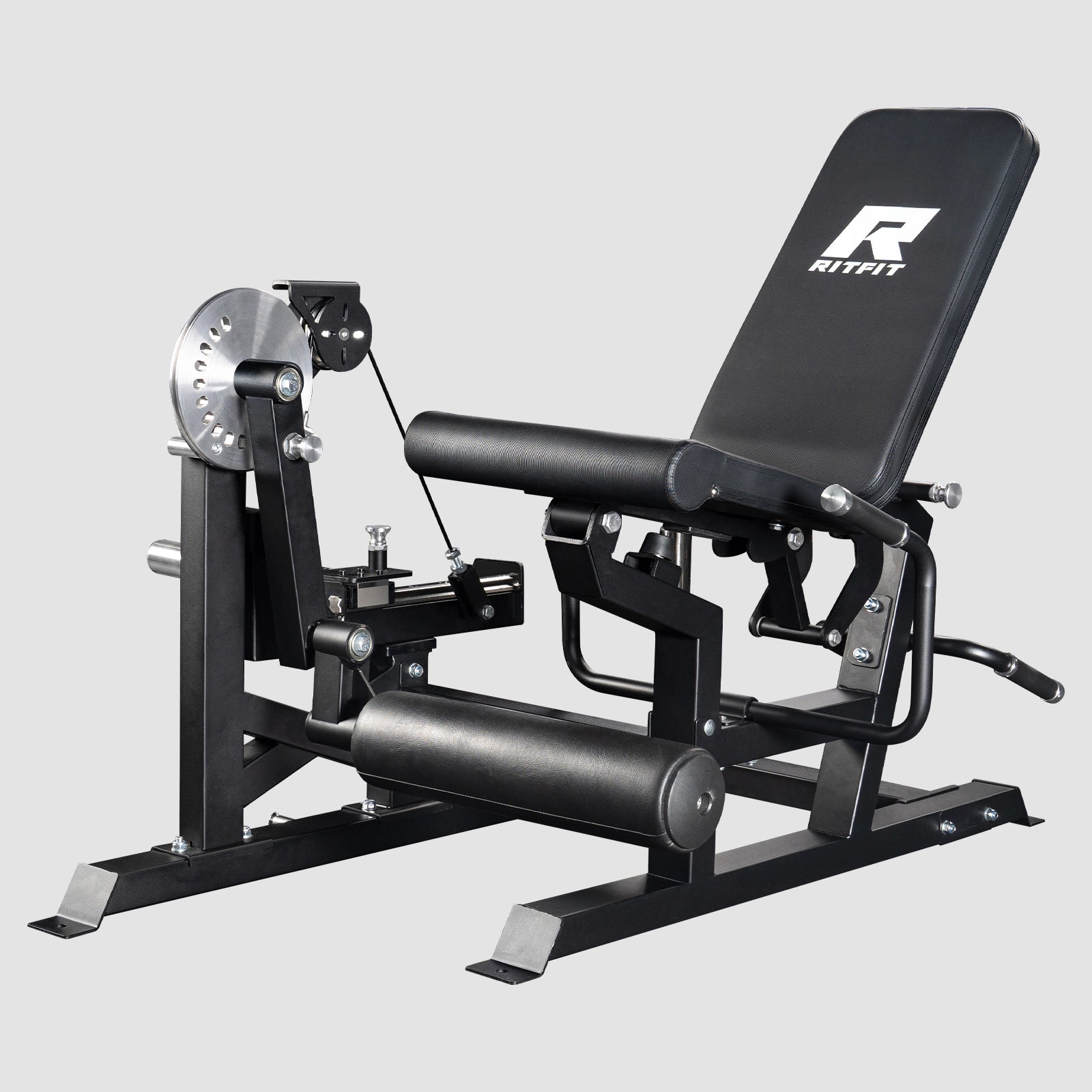
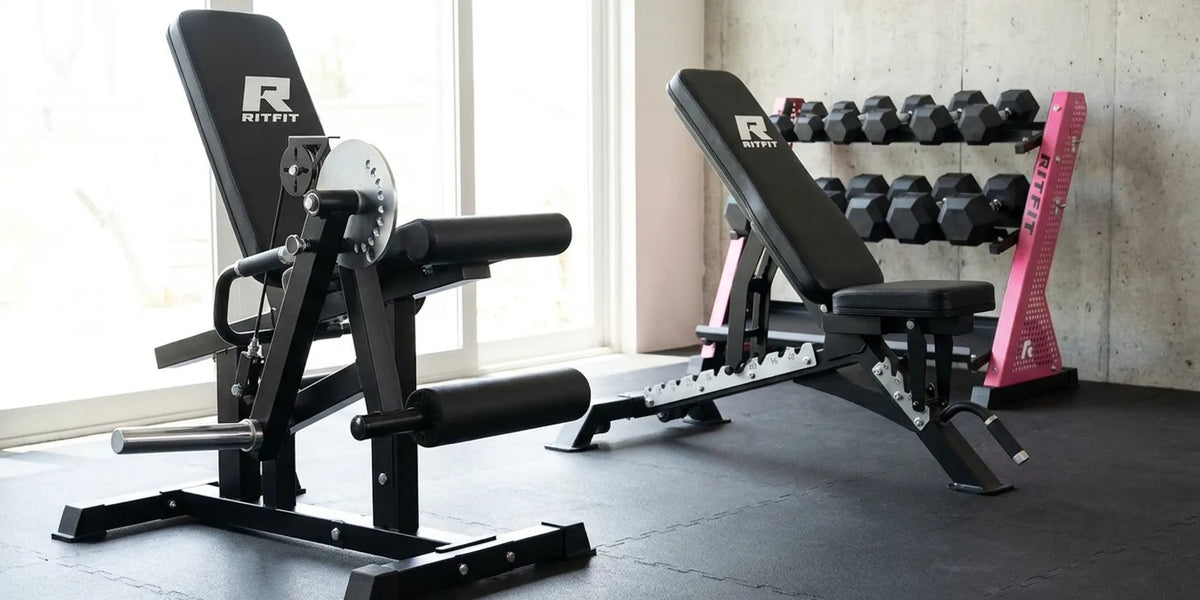
| Beginner with a small home gym | RitFit PLC01 Leg Extension Curl Machine | Trains knee extension and knee flexion on one compact frame, one footprint for both movements |
| Taller lifter or heavier training loads | RitFit Mustang PRO Leg Extension Curl Machine | The same 2-in-1 knee extension and knee flexion function on a larger frame |
| Lifter who wants a color option | Pink PLC01 Leg Extension Curl Machine | The same 2-in-1 function as the PLC01 |
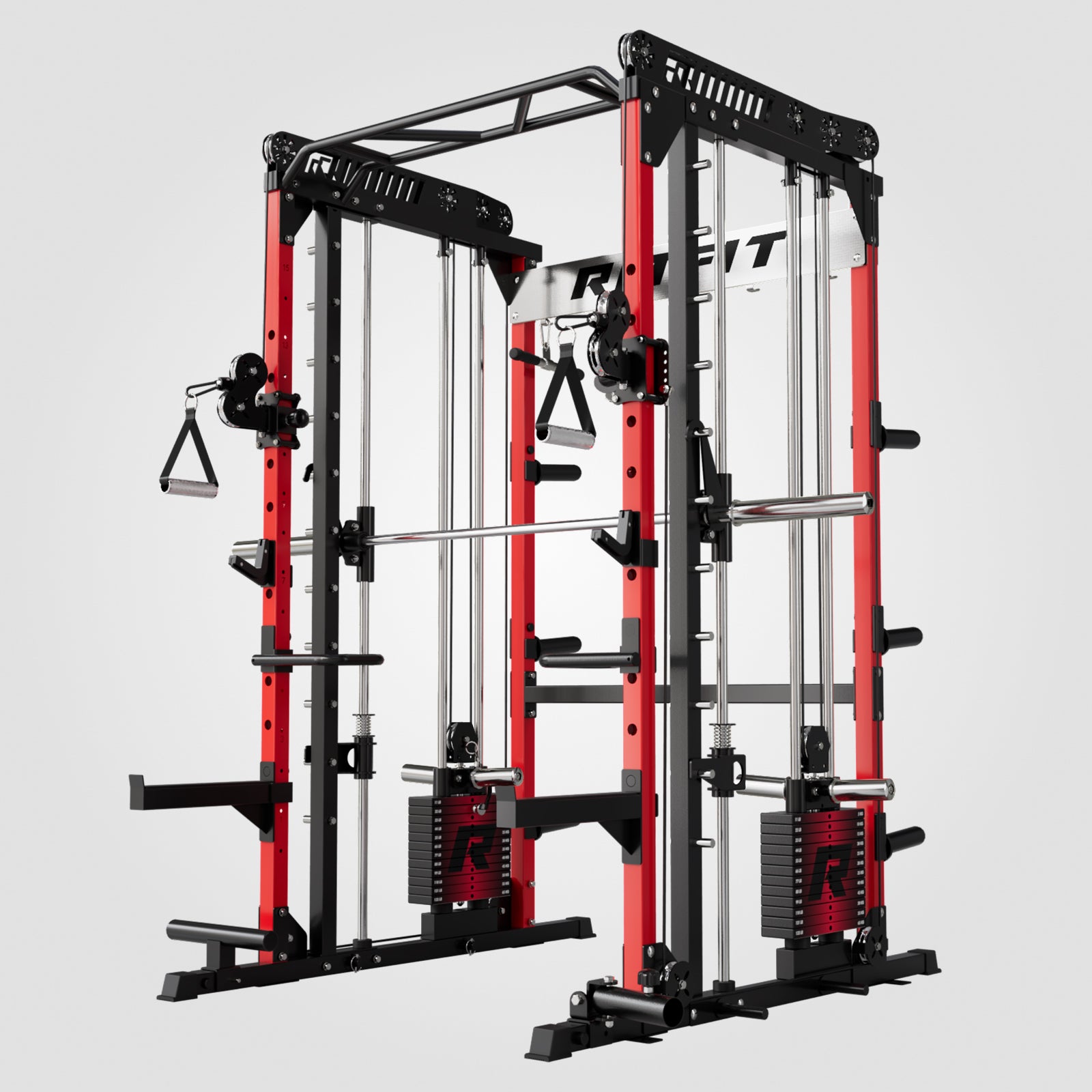
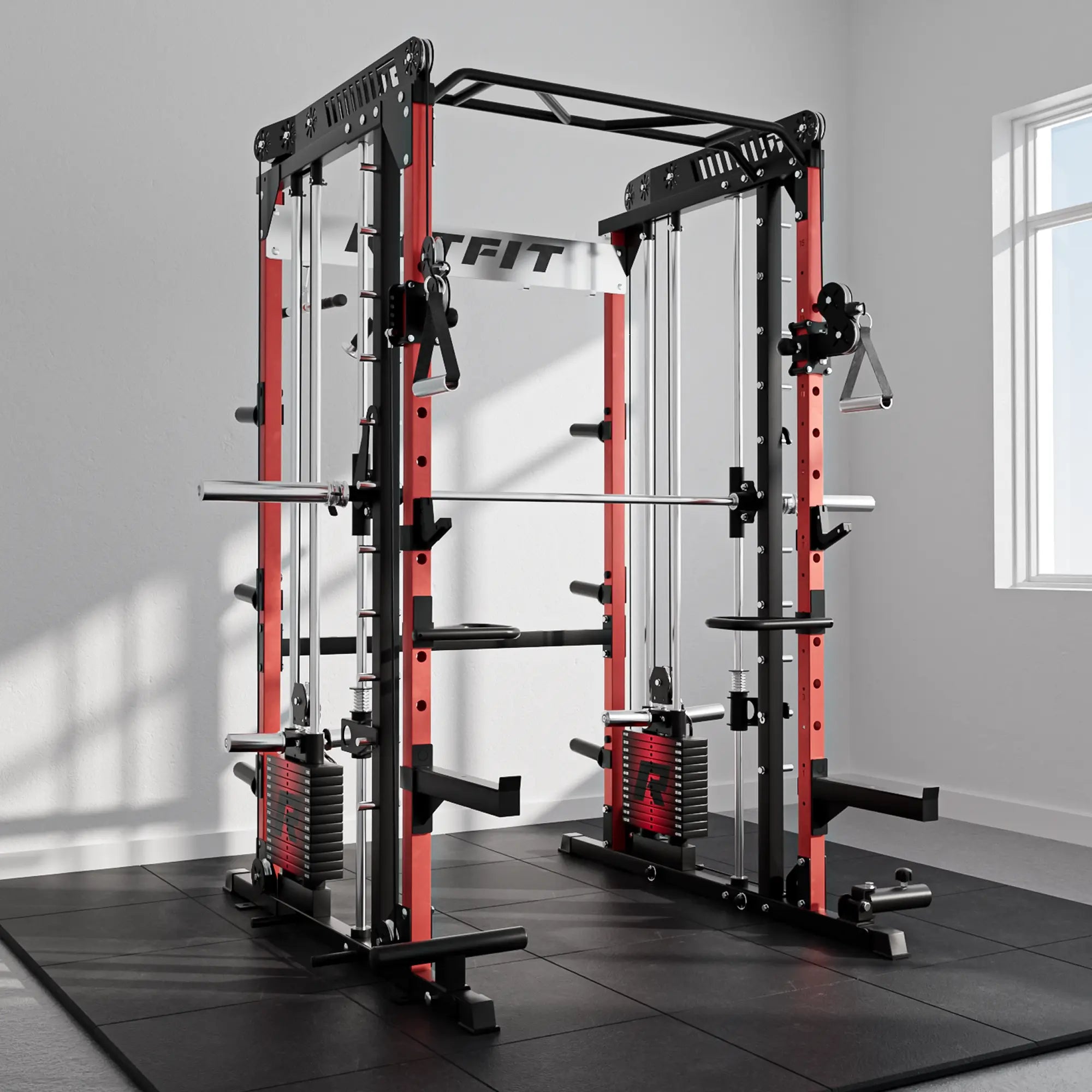
| Owner of an existing M2 rack | RitFit LEM2 Leg Extension Rack Attachment | Adds leg extension and leg curl without a second machine footprint |
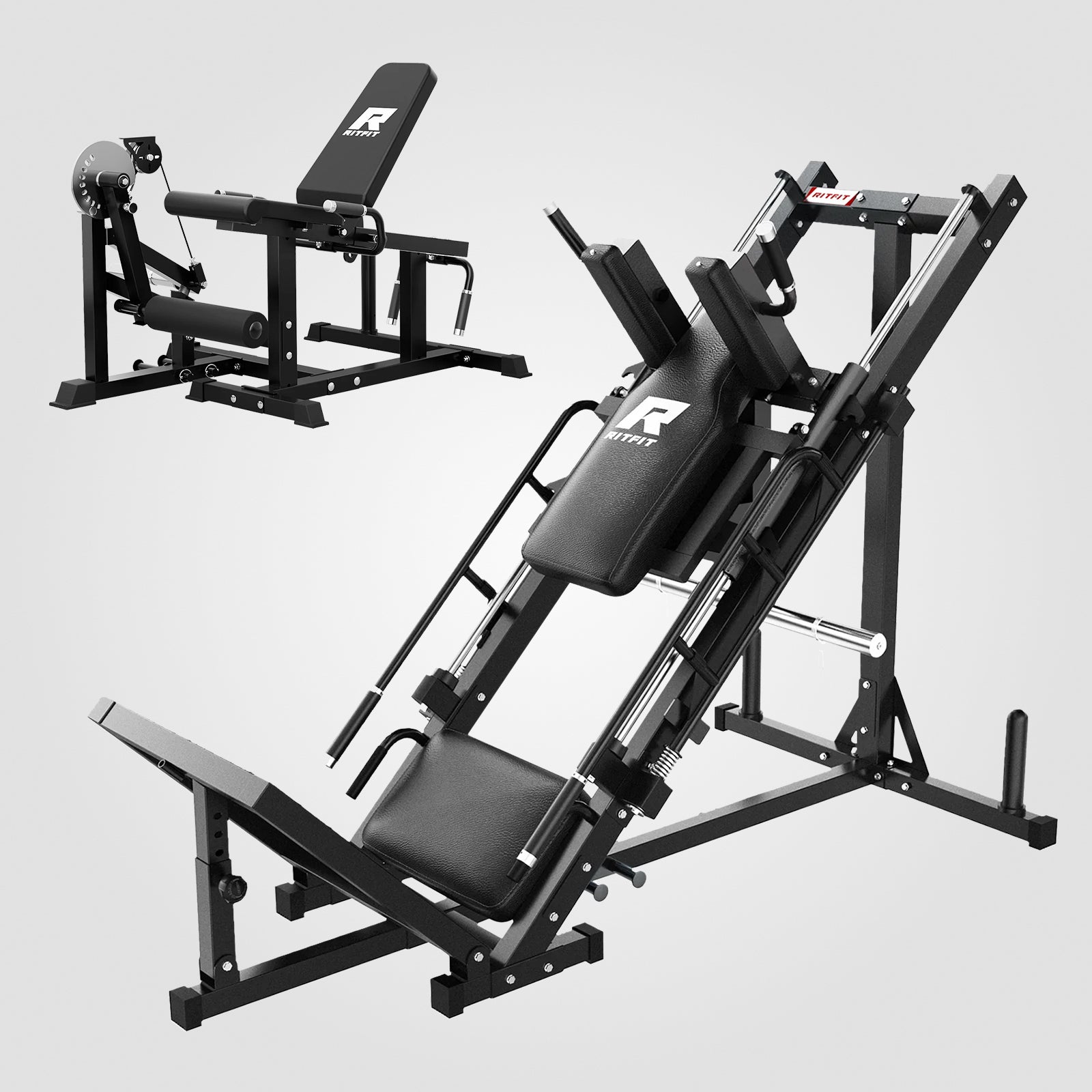
| Lifter who wants a full leg day setup | RitFit Ultimate Leg Day Duo | Adds a 45 degree leg press and hack squat on top of the 2-in-1 unit |
Machine fit depends on ceiling height, floor space, and the equipment you already own. Check each product page for current specifications, pricing, and warranty details.
Does the RitFit PLC01 Train Both Movements Well?
Yes, the PLC01 trains both movements well, because the seat converts between knee extension and knee flexion without swapping stations. The single footprint suits small garage gyms where floor space decides what stays in the lineup.
RitFit Mustang PRO Leg Extension Curl Machine for Taller Lifters
For taller lifters, the Mustang PRO puts knee extension and knee flexion on a larger frame, so the seat and pads can be set without crowding the movement. If the compact PLC01 feels tight for your height, the Mustang PRO keeps both movements in one station with more room to work.
"RitFit mustang pro leg extension. Seated quad extensions and laying hamstring curls. Adjustable plate to fraction the weights resistance. Adjusts to 0.8, 1.05, 1.15 and 1.3. Easily adjusted with plates on it."
Richard S. Verified Buyer, RitFit Mustang PRO Leg Extension Curl Machine
RitFit LEM2 Leg Extension Rack Attachment for M2 Owners
If you already own an M2 rack, the LEM2 leg extension rack attachment adds knee extension and knee flexion without giving up floor space to a second machine. You convert the rack instead of walking to a dedicated station, which keeps a small garage gym open for squats and bench work.
The assembly walkthrough below shows how the PLC01 comes together in a home gym.
"Very well made! Heavy duty."
Christopher B. Verified Buyer, RitFit LEM2 Leg Extension Rack Attachment (Only for M2)
Is a 2-in-1 Leg Extension Curl Machine Worth It?
A 2-in-1 leg extension curl machine is worth it when floor space and total cost matter more than owning dedicated single-purpose stations. One frame covers both isolation movements, so you buy once and train knee extension and knee flexion in the same footprint.
The value math is structural. One machine takes less floor space and less of your budget than two separate units, and switching between movements costs only a few seconds of setup.
- Worth It When: You train both sides of the thigh every leg day and want both movements without dedicating half the gym to leg machines.
- Skip It When: You already own a power rack, because a rack-mounted leg extension attachment adds both movements with less cost and less floor space.
- Costs To Plan For: Pricing and warranty terms change over time, so compare current details on the product page before you order instead of trusting old reviews.
When you are ready to compare options side by side, browse the RitFit leg machines collection, and see our comparison of the best leg extension curl machines for home gyms for the space and setup trade-offs.
The third-party review below shows the machine working in a real home gym setup.
Long-Term Cost and Upgrade Path
The most cost-effective long-term path depends on what you already own. A single 2-in-1 machine concentrates your spending and keeps the floor open, while a rack attachment grows with an existing rack instead of being replaced.
Think in stages rather than one big purchase. Start with the movement pair you will use every week, then add machines that expand the leg day only when space and budget allow.
- Stage One: Cover knee extension and knee flexion first, on a 2-in-1 machine or a rack attachment matched to the rack you already own.
- Stage Two: Add leg press machines or a hack squat when you want more loading for the quads and glutes without more sets of isolation work.
- Bundle Option: The RitFit Ultimate Leg Day Duo pairs a 45 degree leg press and hack squat with the 2-in-1 unit, which is the natural next step for a full leg day setup.
If this is your first machine, our guide to the best leg extension curl machine for beginners frames the decision for entry-level buyers.
FAQs About Leg Extensions and Leg Curls
What is the main difference between a leg extension and a leg curl?
A leg extension is an open chain knee extension movement that trains the quadriceps on the front of the thigh, while a leg curl is a knee flexion movement that trains the hamstrings on the back of the thigh. They target opposite muscle groups around the same knee joint.
Which muscles do leg extensions and leg curls work?
Leg extensions work the four heads of the quadriceps, including the rectus femoris, through knee extension against a padded lever. Leg curls work the hamstrings, mainly the biceps femoris, semitendinosus, and semimembranosus, through knee flexion. The two movements balance the front and back of the thigh.
Can I replace leg curls with leg extensions?
No. A leg extension trains knee extension and a leg curl trains knee flexion, so they load opposite sides of the knee joint. Replacing one with the other leaves one muscle group undertrained. Most lifters benefit from including both in a leg day program for balanced thigh development.
Should I do leg extensions or leg curls first?
Most programs place the movement that matches your main goal first, when you are fresh. If quad size is the priority, start with leg extensions. If hamstring development or knee comfort is the priority, start with leg curls. On a 2 in 1 machine you can simply alternate the order across sessions.
Are leg extensions and leg curls enough for leg training?
Leg extensions and leg curls are isolation movements and do not cover hip extension, ankle work, or overall lower body strength. Use them as accessories alongside squats, hip hinges, and calf work. For a small home gym a 2 in 1 machine covers both isolation movements on one frame.
Is a 2 in 1 leg extension curl machine worth it for a home gym?
A 2 in 1 machine saves floor space and the cost of buying two separate units, and it lets you switch between knee extension and knee flexion in seconds. If you already own a power rack, a rack mounted leg extension attachment is a cheaper way to add both movements.
Do leg extensions and leg curls hurt your knees?
Both movements load the knee through a fixed path, which keeps the joint in a predictable range and reduces balance demands. Lifters with existing knee discomfort should use a controlled tempo, avoid snapping the joint hard at the end range, and stop if discomfort increases during a set.
Conclusion
The leg extension and the leg curl are partners, not rivals, because one trains the quadriceps through knee extension and the other trains the hamstrings through knee flexion. A complete leg day keeps both isolation movements alongside squats and hip hinges, with the order set by your main goal.
Start with the setup that fits your space and height, and build the habit before adding more hardware. Check the RitFit discount guide before you order so your first purchase stretches as far as possible.
Disclaimer
This article covers training mechanics and machine capabilities only and is not medical advice. If you have an existing injury or knee discomfort, lighten the load, stop the exercise if discomfort increases, and consult a qualified healthcare professional.
References
1. Yanagisawa O, Fukutani A. Muscle Recruitment Pattern of the Hamstring Muscles in Hip Extension and Knee Flexion Exercises. J Hum Kinet. 2020;72:51-59. doi:10.2478/hukin-2019-0124. PMCID: PMC7126262
2. Kellis E, Blazevich AJ. Hamstrings force-length relationships and their implications for angle-specific joint torques: a narrative review. BMC Sports Sci Med Rehabil. 2022;14(1):166. doi:10.1186/s13102-022-00555-6. PMCID: PMC9446565
3. Hirose N, Kagaya Y, Tsuruike M. The task dependent differences in electromyography activity of hamstring muscles during leg curls and hip extensions. PLoS One. 2021;16(2):e0245838. doi:10.1371/journal.pone.0245838. PMCID: PMC7872291