Yes, you can train shoulders and biceps together, and for many lifters it is a smart split for hypertrophy, arm emphasis, and cleaner upper body planning. It often works because pressing does not directly fatigue the biceps the way rows and pulldowns do, but your chest and back schedule still decides whether it is the best choice.
Key Takeaways
- Shoulders and biceps can pair well because the biceps stay fresher than they usually do on back day.
- Most lifters should train shoulders first, then move to curls once the heavy pressing is done.
- This split works especially well for hypertrophy blocks, four day routines, and arm priority phases.
- It works less well when chest volume already crushes your front delts or when back day is too close.
- A press, a lateral raise, a rear delt move, and two curl patterns are enough for a strong session.
Shoulders and Biceps, Muscles Worked
Shoulder Anatomy
The shoulder is mainly driven by the deltoid, which has anterior, lateral, and posterior portions that each contribute differently across pressing, raising, and pulling patterns. For fuller shoulder development, this split should not stop at pressing alone, because different shoulder exercises bias different deltoid portions.[3]
- Anterior deltoid: Helps with shoulder flexion and most overhead pressing patterns.
- Lateral deltoid: Drives arm abduction and helps create shoulder width.
- Posterior deltoid: Supports shoulder extension, horizontal abduction, and better upper body balance.
Biceps Anatomy
The biceps brachii has a long head and a short head, and it works with the brachialis to flex the elbow and assist forearm supination. That matters here because biceps performance is usually preserved better after shoulder work than after a heavy back session.
- Long head: Often gets more stretch in incline curl patterns.
- Short head: Often feels stronger in preacher and more front loaded curl setups.
- Brachialis: Adds upper arm thickness and responds well to hammer curl variations.
Why This Pairing Can Work
The main reason this split works is simple, shoulder pressing does not pre exhaust the biceps the same way back work does. That gives you a chance to train arms with more quality, especially if your back day usually makes curls feel flat or rushed.
- Lower direct overlap: Shoulders are mainly trained through pressing and raise patterns, while biceps are trained through curling.
- Better arm priority: Biceps often get more focused work here than they do at the end of pull day.
- Cleaner session identity: Many lifters find this easier to organize than mixing shoulders into a crowded push day.
Pros and Cons of Training Shoulders and Biceps Together
Benefits
This pairing is most useful when you want better biceps performance, more shoulder detail, and a session that feels focused instead of crowded. It also fits well into upper lower splits and torso limb style training where chest and back already own the heavier compound work.
- Fresher curls: Your biceps are usually not as drained as they are after rows, pulldowns, and pull ups.
- Better shoulder balance: You can give more room to lateral and rear delt work that often gets ignored on chest day.
- Good for weak points: If arms or delts lag behind your chest and back, this split gives them a clearer growth slot.
- Easy equipment flow: A bench, dumbbells, cables, or a Smith machine are usually enough for the whole session.
Limitations
This split is not magic, because chest day can still beat up your front delts and back day can still affect your elbow comfort and grip. The pairing works best when the whole week is balanced, not when one good idea is dropped into a messy program.
- Front delt fatigue: Heavy benching the day before can make overhead pressing feel weak and awkward.
- Elbow stress: Too much curling volume on top of heavy pulling can irritate elbows and forearms.
- Recovery conflicts: Back day that sits too close can still reduce biceps quality later in the week.
- Exercise creep: It is easy to turn this into a vanity day with too many low value isolation sets.
How to Structure a Shoulder and Biceps Workout
Exercise Order
Most lifters should train shoulders before biceps, especially when the shoulder work includes a press or any movement that demands stability and skill. Traditional exercise order still favors larger or multi joint movements before smaller isolation work when performance matters most.[1]
- Start with a press: Use a barbell, dumbbells, machine, or a Smith machine shoulder press guide if you want a stable setup.
- Add shoulder detail work: Follow with a lateral raise pattern and one rear delt movement.
- Finish with curls: Use one more stretch biased curl and one more stable curl for better coverage.
Volume, Reps, and Rest
A broad loading range can build muscle if your sets are hard enough, so use lower reps when stability is high and moderate to higher reps when control and joint comfort matter more. That makes presses, lateral raises, and curls easy to scale without forcing one rep target onto every exercise.[5]
- Shoulders: Start with 2 to 4 exercises and about 6 to 12 direct sets per week, then adjust by recovery and progress.
- Biceps: Start with 2 to 3 exercises and about 6 to 10 direct sets per week, then add only if recovery stays good.
- Rest periods: Rest about 2 minutes after harder presses, and about 60 to 90 seconds after most raises and curls.
- Weekly context: Pull direct shoulder or biceps volume down if chest and back days already run high.
Sample Shoulder and Biceps Workouts
Beginner Routine
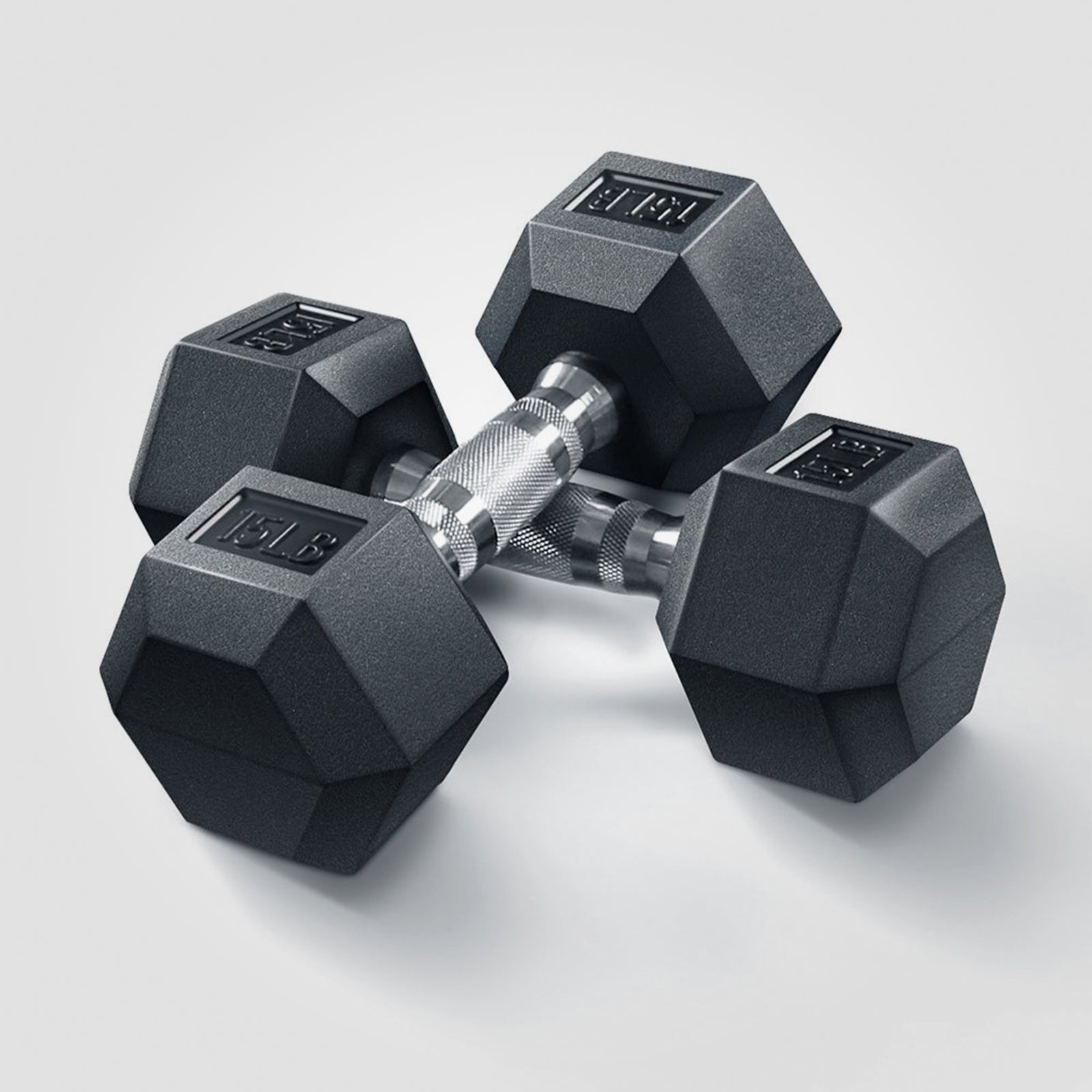
This version keeps the session simple and teaches the split without burying a new lifter in junk volume. A pair of RitFit PVC coated round head dumbbells and an adjustable bench are enough for most of it.
- Seated dumbbell shoulder press: 3 sets of 6 to 10 reps.
- Dumbbell lateral raise: 3 sets of 12 to 15 reps.
- Rear delt fly: 2 sets of 12 to 15 reps.
- Alternating dumbbell curl: 3 sets of 8 to 12 reps.
- Hammer curl: 2 sets of 10 to 14 reps.
Intermediate Hypertrophy Routine
This version spreads stress across all three delt regions and gives the biceps both stretch and stability. It is a strong option when your main goal is visible upper body size rather than peak pressing strength.
- Standing overhead press: 4 sets of 5 to 8 reps.
- Lateral raise: 4 sets of 10 to 15 reps.
- Face pull: 3 sets of 12 to 18 reps.
- Incline dumbbell curl: 3 sets of 8 to 12 reps, best done with one of the benches from the RitFit benches collection.
- Preacher curl: 3 sets of 10 to 14 reps.
Time Efficient Routine
This version uses controlled supersets to save time without forcing your heaviest lifts into sloppy fatigue. Time efficient resistance training can work well when exercise pairing is thoughtful and skill demand stays manageable.[4]
- Superset 1: Shoulder press, 3 sets, with incline curl, 3 sets.
- Superset 2: Lateral raise, 3 sets, with hammer curl, 3 sets.
- Superset 3: Face pull, 3 sets, with cable curl, 3 sets.
Best Exercise Choices
Shoulder Exercise Priorities
A press plus a raise plus a rear delt movement is a better shoulder plan than pressing alone, because different exercises shift activation across the deltoid. That is why a smart shoulder day usually mixes a compound press with targeted isolation work instead of chasing one pattern over and over.[3]
- Pressing option: Use a dumbbell press, a machine press, or the Smith machine shoulder press guide if you want a stable path.
- Lateral delt option: Use the lateral raises muscles worked, form, and best weight guide for cleaner side delt work.
- Rear delt option: Use the Smith machine face pulls guide for posture and rear shoulder balance.
- Trap and upper shoulder option: Use the Smith machine upright row guide carefully if your shoulders tolerate it well.
Biceps Exercise Priorities
You do not need endless curl variations to make this split productive, because both multi joint and single joint resistance work can support strength and hypertrophy when the overall plan is balanced. The smart move is to pick a small menu of curl patterns that cover stretch, stability, and neutral grip work.[2]
- Stretch biased curl: Incline dumbbell curls are strong here because the shoulder sits behind the torso.
- Stable curl: Preacher curls or machine curls make it easier to keep tension on the biceps late in the workout.
- Neutral grip curl: Hammer curls help the brachialis and usually feel friendlier on the elbows.
- Extra reading: The best short head biceps exercises for wider, thicker arms guide is a good follow up if your arm goal is width and fullness.
Weekly Programming Examples
Three Day Split
This setup works when you want a simple week and still want a focused shoulders and biceps session. It is best when lower body work is either separated cleanly or kept modest on the upper body accessory day.
- Day 1: Chest and triceps.
- Day 2: Legs and core.
- Day 3: Back, shoulders, and biceps, with shoulder work pushed toward lateral and rear delt emphasis if back volume runs high.
Four Day Upper Lower Split
This is one of the cleanest ways to run the pairing because it keeps chest and back heavy work away from your arm priority session. It also gives you a natural place to use equipment from the RitFit dumbbells collection or the best arm machines at the gym guide.
- Upper A: Chest and back.
- Lower A: Quads, hamstrings, and calves.
- Upper B: Shoulders and biceps.
- Lower B: Glutes, posterior chain, and core.
Five Day or Six Day Rotation
This option works best when shoulders or arms are a weak point and you want them to stop living at the end of bigger torso sessions. The main rule is simple, do not place the day so close to chest or back that performance falls apart before you even start.
- Good placement: After a lower body day or a rest day.
- Less ideal placement: Right after a very heavy chest session if front delts are already smoked.
- Best use case: Lifters chasing delt detail, biceps fullness, or more direct arm quality than pull day allows.
Safety, Recovery, and Common Mistakes
Safety and Recovery
Warm up the shoulders before the first press, and let your weekly plan decide how much direct delt work you really need. If chest pressing already hits your front delts hard, most of your direct shoulder value may come from lateral and rear delt work rather than more pressing.
- Before pressing: Use light cuff work, arm circles, and a few progressive warm up sets.
- Before curls: Start with one lighter set to check elbow comfort and grip readiness.
- For recovery: Keep at least one clear recovery day or lower body day between this session and your heaviest chest or back work when possible.
Common Mistakes
The biggest mistake is not the pairing itself, it is pretending weekly overlap does not exist. The second biggest mistake is turning the session into endless raises and curls with no real progression.
- Too much front delt work: Benching plus shoulder pressing plus front raises is often unnecessary.
- No rear delt work: That usually leaves the shoulder day incomplete and more front dominant than it should be.
- Too many curl variations: Two quality curl patterns beat four random ones done with fatigue and swing.
- No progression target: Track reps, load, or execution quality so the split actually moves forward.
FAQs
Should you train shoulders and biceps together?
Yes. Shoulders and biceps can work well together because pressing does not directly fatigue the biceps the way a back workout does. The pairing is usually best for hypertrophy focused lifters, arm priority blocks, and four day routines where you want a dedicated upper body accessory session.
Which muscle group should you train first in a shoulders and biceps workout?
Train shoulders first in most cases. Start with your heaviest press or your highest skill shoulder movement, then move to lateral or rear delt work, and finish with curls. This order protects performance on compound lifts and usually keeps technique cleaner once fatigue builds.
Is it bad to superset shoulder presses with biceps curls?
No. It is not automatically bad, but heavy press and curl supersets are usually better for time saving blocks than for pure strength work. If your pressing form, grip, or elbow comfort drops fast, keep the big lifts as straight sets and superset only isolation work.
Can you train shoulders and biceps after chest day?
It depends. If chest day already hammers your front delts, your shoulder and biceps session should lean harder into lateral delts, rear delts, and curling variations. If pressing strength keeps crashing, add more recovery before shoulder day or trim chest volume.
Can beginners use a shoulder and biceps workout split?
Yes. Beginners can use this split if exercise selection stays simple and weekly volume stays modest. One press, one lateral raise, one rear delt movement, and two curl patterns is usually enough to learn the split without turning the session into junk volume or sloppy technique.
When should you choose a shoulders and biceps day over back and biceps?
Choose it when your biceps always feel flat after back day. A shoulders and biceps day often works best when arm growth is the priority, when you train four days per week, or when you want a cleaner separation between big torso work and smaller accessory work.
Conclusion
Training shoulders and biceps together is a solid option when you want fresher curls, clearer delt work, and a more focused upper body accessory day. It works best when you press first, keep your weekly overlap under control, and use the split to solve a real programming need instead of adding random volume.
Disclaimer. This guide is for general educational purposes only and is not medical advice. If you have shoulder, elbow, wrist, or neck pain, a recent injury, or unusual weakness, stop training and speak with a qualified clinician before continuing.
References
- Spineti J, de Salles BF, Rhea MR, et al. Influence of exercise order on maximum strength and muscle volume in nonlinear periodized resistance training. J Strength Cond Res. 2010;24(11):2962-2969.
- Gentil P, Soares S, Bottaro M. Single vs. multi-joint resistance exercises: effects on muscle strength and hypertrophy. Asian J Sports Med. 2015;6(2):e24057. doi:10.5812/asjsm.24057
- Campos YAC, Vianna JM, Guimarães MP, et al. Different shoulder exercises affect the activation of deltoid portions in resistance-trained individuals. J Hum Kinet. 2020;75:5-14. doi:10.2478/hukin-2020-0033
- Iversen VM, Norum M, Schoenfeld BJ, Fimland MS. No time to lift? Designing time-efficient training programs for strength and hypertrophy: a narrative review. Sports Med. 2021;51:2079-2095. doi:10.1007/s40279-021-01490-1
- Schoenfeld BJ, Grgic J, Van Every DW, Plotkin DL. Loading recommendations for muscle strength, hypertrophy, and local endurance: a re-examination of the repetition continuum. Sports. 2021;9(2):32. doi:10.3390/sports9020032