
Is a Smith machine weight stack worth it? For most home gyms the answer comes down to arithmetic rather than lifestyle, and the deciding numbers are cost per pound and cost per effective pound at the handle.
This guide prices the stack option against loose plates, applies the 2:1 pulley math, and maps who should pay the premium versus who should stay plate-loaded.
Quick Answer: A Smith machine weight stack is worth it if you change loads often, share the machine, or want pin-select speed instead of handling plates. It is not worth the premium if you already own iron plates or train alone on heavy compounds, and a separate RitFit stack set still runs roughly $1,000 to $1,160.
Key Takeaways
- Cost math: A 264 lb RitFit stack set lists at $999.99, which works out to about $3.79 per printed pound.
- Effective load: On a 2:1 pulley system the handle sees about half the pin selection, so the same set costs about $7.58 per effective pound.
- Load ceiling: A 260 lb stack presents roughly 130 lb at the handle, so heavy compound pressing can approach its ceiling while cable work rarely does.
- Reversibility: A stack needs a welded tower and pulley carriage, so a plate-loaded frame cannot accept one later.
- Best fit: The premium favors shared, fast-changing, pin-select training, and plate-loaded setups stay cheaper if you already own plates.
Is a Smith Machine Weight Stack Actually Worth It?
A Smith machine weight stack is worth it when pin-select loading matches how you actually train, not when you simply want the largest printed number. The premium buys speed, shared usability, and fast weight changes, and those benefits matter more to some buyers than others.
- Fast load changes: Moving from 20 lb to 120 lb is a single pin move instead of stripping and loading plates between sets.
- Shared machines: When two or three people train on one frame, a stack keeps everyone moving without plate traffic.
- Plate ownership: If you already own iron plates and a bar, a plate-loaded frame lets that equipment keep working.
Buyers who are still choosing between machine types can start with this comparison of plate loaded vs weight stack Smith machines.
"I am happy with this product! Love the different attachments that come with it! 100% worth buying!"
Adale H. Verified Buyer, RitFit M1 PRO Smith Machine Weight Stack Home Gym Package
What Does a Weight Stack Cost Compared With Buying Plates?
A separate RitFit weight stack set lists between $999.99 and $1,159.99 depending on the machine it fits. Machines sold with a stack built in roll that cost into a higher package price instead of listing the stack on its own.
| Configuration | Listed price | Stack capacity | Fits |
|---|---|---|---|
| WSM1 weight stack set | $999.99 | 264 lb | M1 PRO |
| WSBFL weight stack set | $1,159.99 | 286 lb | Buffalo |
| WSM2 weight stack set | $1,159.99 | 286 lb | M2 and M2 3D, out of stock when checked |
| BPC06 all-in-one | $2,699.99 | 260 lb built in | Standalone all-in-one frame |
| M1 PRO weight stack package | from $2,399.99 | Stack included | M1 PRO |
| Buffalo weight stack package | $3,399.99 | Stack included | Buffalo |
Listed prices checked October 2026. Prices change and specs are set by the manufacturer, so confirm current pricing on each product page before buying.
RitFit lists the WSM1 264 lb weight stack set at $999.99 and the WSBFL 286 lb weight stack set at $1,159.99. The Smith machine collection shows which frames accept a stack and which stay plate-loaded.
What the Weight Stack Option Adds to a Smith Machine
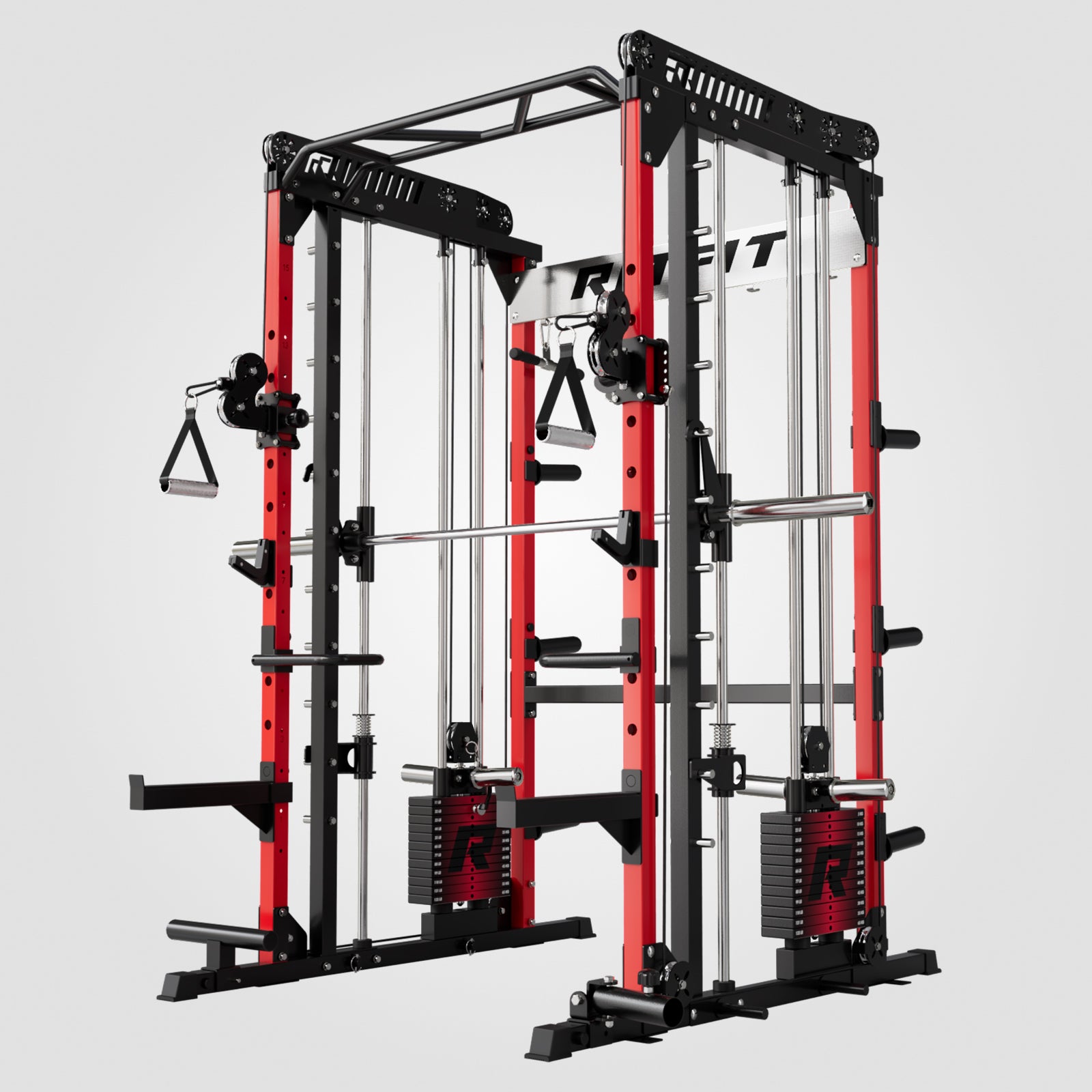
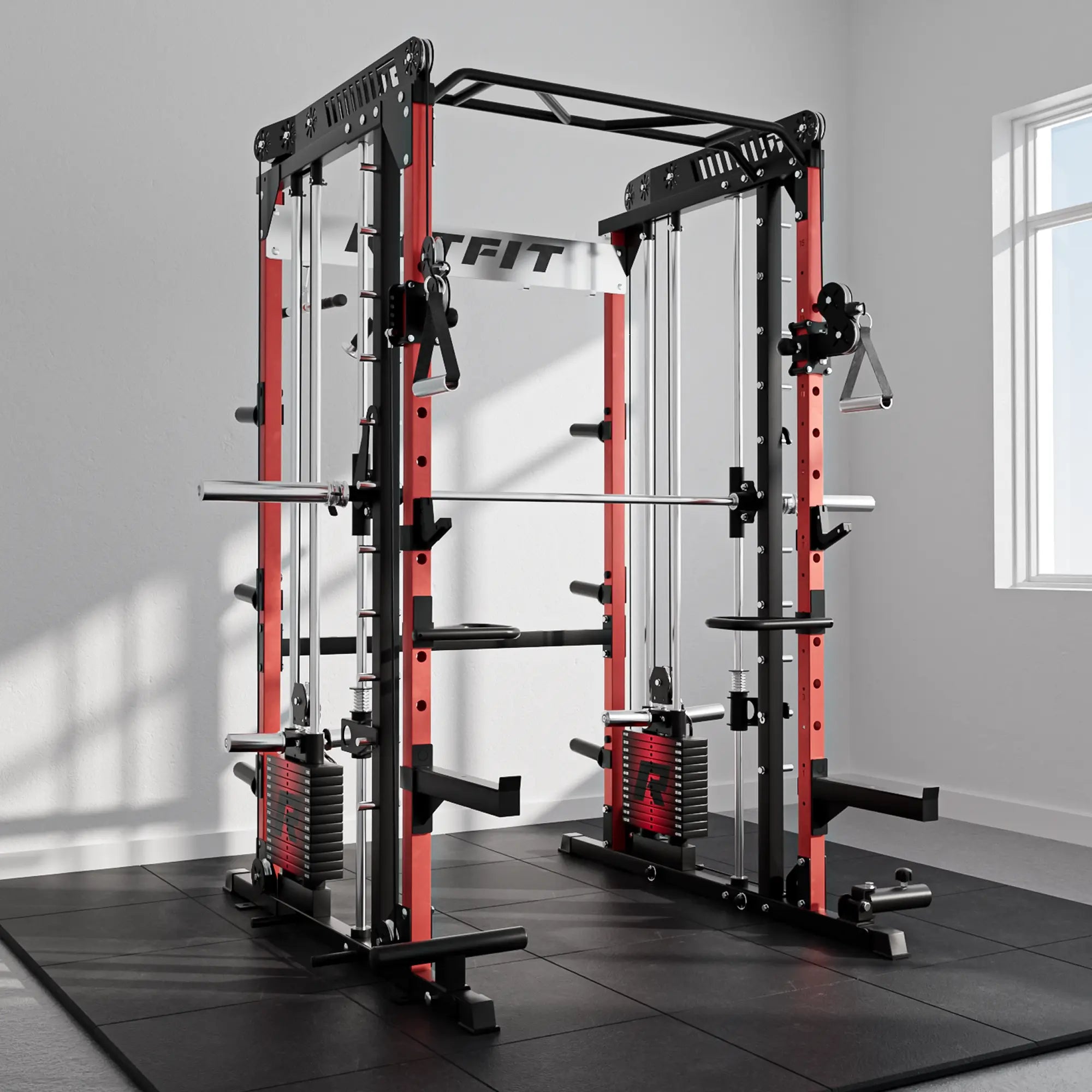
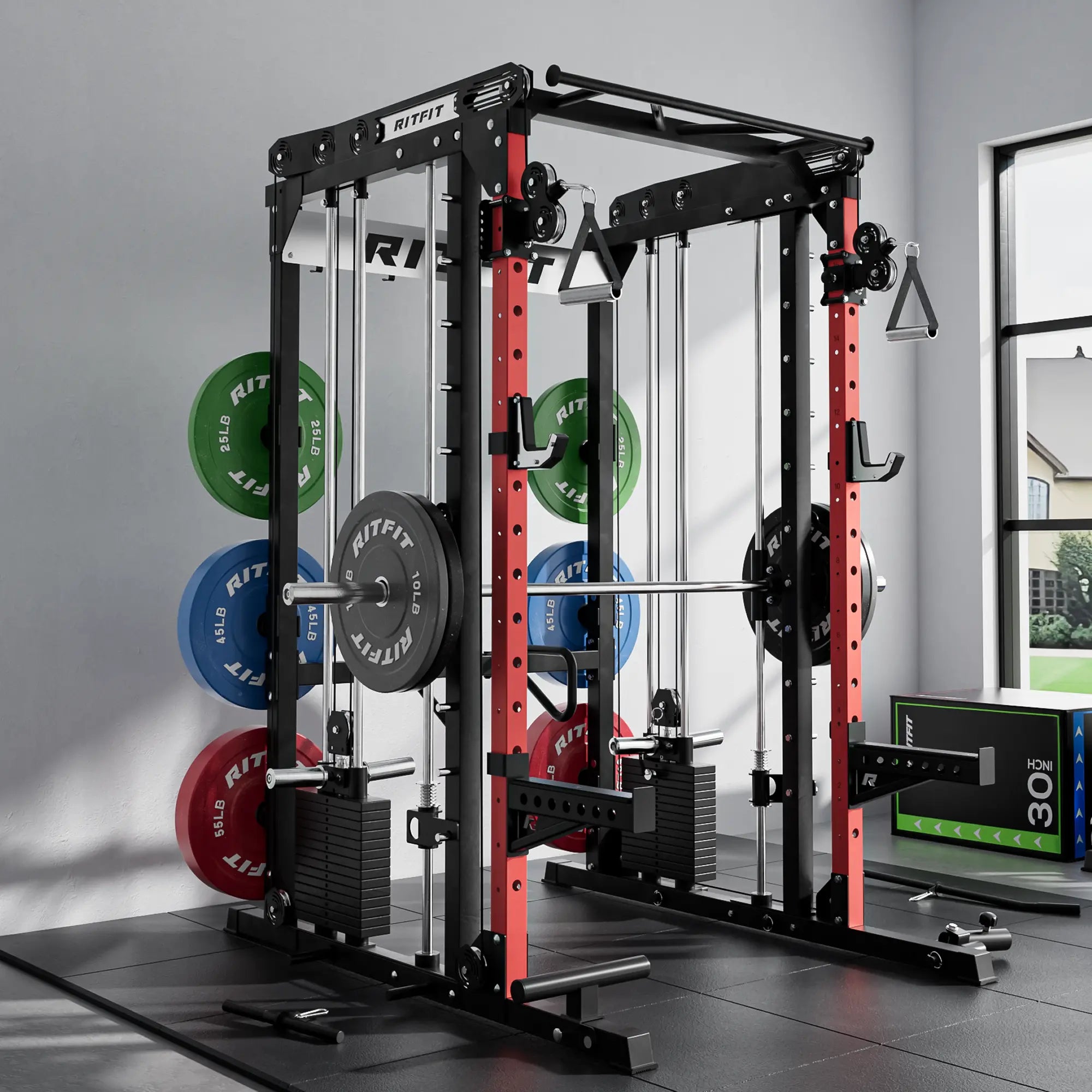
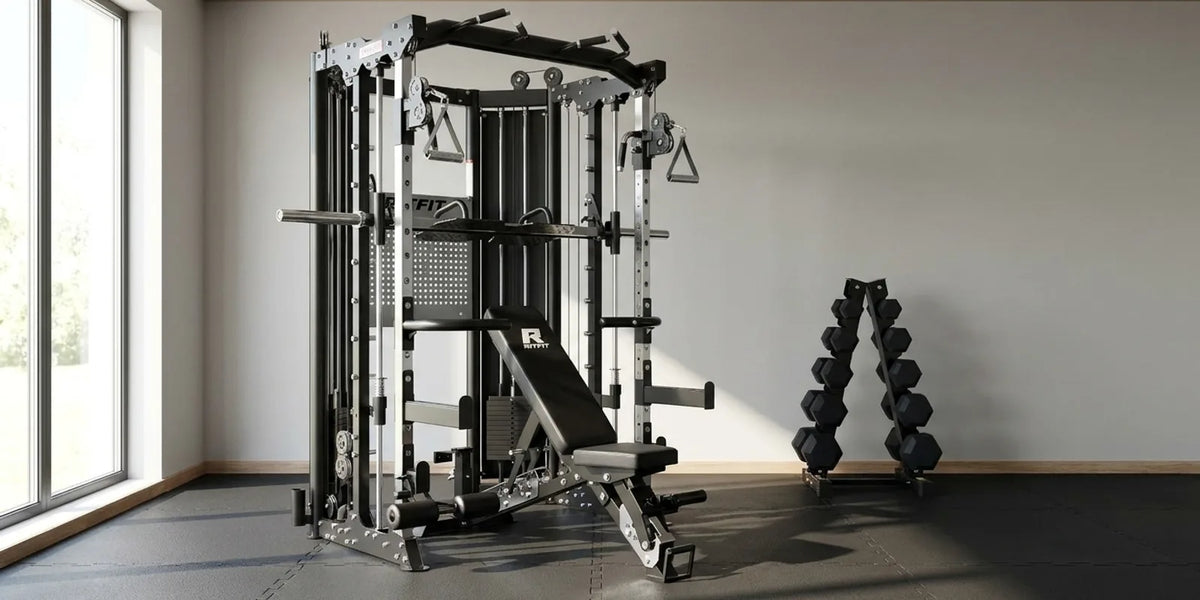
A weight stack adds a welded tower, guide rods, and a pulley carriage that let you change resistance with a pin instead of loading plates. Those parts are why the option changes both setup speed and exercise range on the same frame.
- Pin selection: A single pin move sets the load, which shortens rest between sets and keeps a training partner moving.
- Cable capacity: The pulley carriage also drives lat pulldowns, rows, and crossovers that a bare Smith bar cannot.
- Footprint: A stack tower keeps plates off the floor, which matters in a garage or basement where storage is tight.
The RitFit BPC06 with 260 lb weight stacks shows how a built-in stack pairs with a Smith bar in one frame.
Cost Per Pound: Stack Set vs Loose Iron Plates
At $999.99 for 264 lb, the WSM1 stack set works out to about $3.79 per printed pound. That figure is the brand-listed price divided by nominal stack weight, and it is the first number to check against what plates cost where you live.
Loose plates are sold by the pound and reused across a bar, so buyers who already own iron are weighing the stack against a cost they have already paid. The stack price also includes the tower and carriage, which plates alone do not cover.
"Feels great and exactly what i need so I fit more plates on the horns of my M1 and other machines"
Paul N. Verified Buyer, RitFit Silver Steel Strip Olympic Plates 2-Inch
The Number That Matters: Cost Per Effective Pound
Cost per effective pound divides the listed price by the load the handle actually presents, which is lower than the printed stack weight. On a 2:1 system a 264 lb stack presents roughly 132 lb at the handle, so $999.99 divided by 132 comes to about $7.58 per effective pound.
That is the number to compare against a bar and plates for the same exercise, because it reflects the resistance you actually train against.
Why a 2:1 Pulley Ratio Changes Your Load Math
On a 2:1 cable system the cable travels twice the distance the handle moves, so the resistance at the handle runs about half the weight selected on the pin. That ratio is why the printed pin number is not the resistance you feel, and it sits underneath the cost per effective pound above.
The mechanics behind the ratio are explained in this guide to what pulley ratio means.
Can You Outgrow a Weight Stack, or Does It Limit How Heavy You Can Go?
A 200 lb stack rarely limits cable or isolation work, though heavy compound pressing can approach its effective ceiling. At a 2:1 ratio a 200 lb stack presents roughly 100 lb at the handle, so the effective load your heaviest exercise needs is the real limit, not the label.
RitFit's larger sets run to 286 lb, which presents more usable resistance for lifters who press and row near the top of the range, as outlined in this roundup of Smith machines with weight stack options.
Can You Add a Weight Stack Later, or Is the Choice Permanent?
A weight stack usually cannot be added later because the frame has to be built with a welded tower, guide rods, and a pulley carriage from the start. Plate-loaded frames are not designed to accept those parts afterward, so for most buyers the stack decision is effectively permanent.
RitFit does sell separate sets for models already built to take them, a path covered in this guide to adding more weight to a cable machine.
What Does a Stack Cost You in Maintenance Over Time?
A weight stack adds maintenance points that a plate-loaded frame does not have, mainly the cable, the pulleys, and the guide rods. None of those parts are expensive on their own, but they are the components most likely to wear first.
- Cable wear: Cables stretch and fray over years of use and are the part most likely to need replacing first.
- Pulley service: Pulley wheels and bearings need periodic lubrication to stay quiet and smooth.
- Guide rods: Guide rods collect dust and need wiping so the stack travels evenly along the frame.
Plates need none of that, so a buyer weighing total ownership should budget for periodic checks on the moving parts.
Decision Matrix: Who Should Pay the Stack Premium and Who Should Stay Plate-Loaded
The stack premium pays off for buyers who change loads often or share the machine, and it is optional for solo heavy lifters. Match your situation to a configuration before you commit to the upgrade.
| Buyer profile | Recommended configuration | Why it fits |
|---|---|---|
| Shared family gym with mixed strength levels | M1 PRO weight stack package | Pin-select speed keeps several users moving without plate changes |
| Training alone without a spotter | BPC06 with 260 lb weight stacks | Built-in stack plus Smith safeties let one person train safely |
| Heavy compound lifter who owns plates | Plate-loaded Smith frame with your own plates | No stack premium and more load headroom for pressing and rowing |
| Small garage or low-ceiling space | Compact all-in-one with stacks built in | One frame covers Smith work and cable work in less floor space |
Recommendations stay inside the RitFit product line and reflect how each configuration is listed for sale. Prices change, so confirm current pricing and specs on each product page.
Buyers who want a larger frame can compare the Buffalo weight stack package, listed at $3,399.99 with the stack included.
Does the RitFit M1 PRO Weight Stack Package Fit Your Training?
The M1 PRO weight stack package fits buyers who want pin-select loading on a Smith frame from day one. It starts at $2,399.99 with the stack included, which bundles the upgrade into one purchase instead of adding it later.
"For $1,800, this machine delivers a combination of build quality, stability, and versatility that is rare at this price. The BUFFALO is not a machine that excels at one thing. It is a platform that lets you program an entire training week without ever stepping off the frame."
BJ Nelson, Head of Field Testing, The Iron Clinic, RitFit Buffalo Smith Machine Review, The Iron Clinic
Does Loading Method Change How Much Muscle You Build?
Loading method does not appear to change muscle growth much, based on current research comparing machines with free weights. A 2023 systematic review and meta-analysis of 13 studies with 1,016 participants found no significant differences between free-weight and machine-based training in muscle hypertrophy, dynamic strength, isometric strength, or countermovement jump performance.[1]
That analysis also found strength changes were specific to the training modality, so gains show up most in the movement you practice. A 10-week randomized trial in 36 novice males found similar gains in muscle size, 1RM strength, and functional ability whether participants trained with machines only, free weights only, or switched after five weeks.[2]
In 120 men completing 8 weeks of training, both the barbell squat and leg press groups significantly increased their 1RM, but only the squat group significantly improved squat jump and countermovement jump performance.[3]
The takeaway for this decision is that loading method is not the muscle-building variable, so pick the option that keeps you training consistently.
FAQs About Smith Machine Weight Stacks
Is a weight stack worth it on a Smith machine?
It depends on how you train. A stack is worth it if you change weights often, share the machine, or want fast pin-based adjustments without handling plates. It costs roughly $1,000 to $1,160 as a separate set, so plate-loaded setups stay cheaper if you already own iron plates.
How much does a weight stack cost?
As a standalone RitFit upgrade, the WSM1 264 lb set for the M1 PRO lists at $999.99, while the WSBFL 286 lb set for the Buffalo lists at $1,159.99. Machines sold with stacks built in bundle that cost into the machine price instead.
Does a 2 to 1 pulley ratio cut the weight in half?
Yes, roughly. On a 2 to 1 cable system the cable travels twice as far as the handle, so resistance at the handle runs about half the selected stack weight. A 200 lb pin selection therefore feels closer to 100 lb on the cable.
Can you add a weight stack to a plate loaded Smith machine later?
Usually not. A stack needs a welded tower, guide rods, and a pulley carriage built into the frame, so machines not designed for one cannot accept it later. RitFit does sell separate stack sets for models already built to take them, such as the WSM1 and WSBFL.
How much weight do you actually need on a weight stack?
What matters is effective load at the handle, not the printed number. Because a 2 to 1 system roughly halves it, a 260 lb stack delivers more usable resistance than the label suggests, so most home programs will not run out of room.
Conclusion
A Smith machine weight stack is worth it when the cost per effective pound fits how you train and you value pin-select speed over handling plates. The arithmetic, not the lifestyle comparison, is what separates a good buy from an unnecessary premium.
If you share the machine or change loads constantly, price the M1 PRO weight stack package. If you already own plates and train solo on heavy compounds, stay plate-loaded and check the RitFit discount guide for current offers.
Disclaimer
Product prices and specifications in this article are listed by the manufacturer and can change without notice. This guide is for general information only and is not medical or professional training advice, so consult a qualified professional before starting a new training program.
References
1. Haugen ME, Vårvik FT, Larsen S, et al. Effect of free-weight vs. machine-based strength training on maximal strength, hypertrophy and jump performance - a systematic review and meta-analysis. BMC Sports Science, Medicine & Rehabilitation. 2023;15(1):103. PMCID: PMC10426227
2. Wirth K, Keiner M, Hartmann H, et al. Effect of 8 weeks of free-weight and machine-based strength training on strength and power performance. Journal of Human Kinetics. 2016;53:201-210. PMCID: PMC5260589
3. Aerenhouts D, D'Hondt E. Using Machines or Free Weights for Resistance Training in Novice Males? A Randomized Parallel Trial. International Journal of Environmental Research and Public Health. 2020;17(21). PMCID: PMC7662789