A good workout heart rate for most healthy adults sits between 50 and 85 percent of your estimated maximum heart rate, with the right target depending on whether you want easy conditioning or hard effort. This guide shows how to find that number and check it during training.
You will learn to estimate your maximum heart rate, read the moderate and vigorous zones, pick a zone for your goal, and measure your pulse with or without a device. If you have a heart condition or take medication, ask your doctor what range is safe for you.
Table of Contents
- What Is a Good Workout Heart Rate?
- How Do You Estimate Your Maximum Heart Rate?
- What Are the Moderate and Vigorous Target Zones?
- What Are the Five Heart Rate Zones?
- How Do You Measure Heart Rate During a Workout?
- What Mistakes Should You Avoid, and When Should You Slow Down?
- How Do You Build a Simple Weekly Heart Rate Plan?
Key Takeaways
- Target range: A good workout heart rate is roughly 50 to 85 percent of your estimated maximum, scaled to your goal.
- Quick estimate: Maximum heart rate is about 220 minus your age, a useful ballpark rather than a precise personal number.
- Moderate vs vigorous: Moderate effort is 50 to 70 percent of maximum, while vigorous effort reaches 70 to 85 percent.
- Check yourself: Count your pulse or use the talk test to confirm you are in the right zone without fancy gear.
- Listen to your body: Heart rate is one signal, so slow down if you feel dizzy, breathless, or unwell.
What Is a Good Workout Heart Rate?
A good workout heart rate for a healthy adult is generally 50 to 85 percent of your estimated maximum heart rate, adjusted to your fitness goal. According to the American Heart Association, that broad band covers everything from light conditioning up to hard, near-peak effort.
Where you aim within that band depends on the session. Easy recovery and warm-ups sit low, steady endurance work sits in the middle, and short hard intervals push toward the top.
- Beginners: Start near the lower end, around 50 to 60 percent, and build up over several weeks.
- Regular exercisers: Spend most steady cardio in the 60 to 75 percent range for endurance.
- Conditioning sessions: Reserve 80 percent and above for brief, intense efforts like a Tabata workout.
The number is a tool, not a rule. Use it to make sure you are working hard enough to improve without overreaching on any single session.
How Do You Estimate Your Maximum Heart Rate?
You can estimate your maximum heart rate by subtracting your age from 220, so a 40 year old gets about 180 beats per minute. According to Harvard Health, this is a convenient ballpark figure rather than an exact personal value.
The Tanaka formula, 208 minus 0.7 times your age, is a popular alternative. One study of 52 participants found it predicted measured maximum heart rate more accurately than 220 minus age in young adults aged 18 to 25[2].
- Fox formula: 220 minus age, the simplest and most widely taught estimate.
- Tanaka formula: 208 minus 0.7 times age, often a little closer for many adults.
- Direct testing: A supervised graded exercise test gives the most accurate number when precision matters.
A study comparing predicted and directly measured maximum heart rate found wide limits of agreement across the population, meaning your true maximum can sit well above or below the estimate[1]. Research in 230 healthy adults reported a typical error of about 7 to 10 beats per minute, fine for setting initial targets but limited for individual precision[3].
What Are the Moderate and Vigorous Target Zones?
Your target zones are bands of intensity built from your maximum heart rate. According to the American Heart Association, moderate-intensity activity is about 50 to 70 percent of maximum, while vigorous-intensity activity is about 70 to 85 percent.
To turn that into numbers, multiply your estimated maximum by each percentage. For a 40 year old with a 180 maximum, moderate effort is roughly 90 to 126 beats per minute, and vigorous effort is roughly 126 to 153 beats per minute.
| Age | Estimated Max HR | Moderate Zone (50-70%) | Vigorous Zone (70-85%) |
|---|---|---|---|
| 30 | 190 bpm | 95-133 bpm | 133-162 bpm |
| 40 | 180 bpm | 90-126 bpm | 126-153 bpm |
| 50 | 170 bpm | 85-119 bpm | 119-145 bpm |
| 60 | 160 bpm | 80-112 bpm | 112-136 bpm |
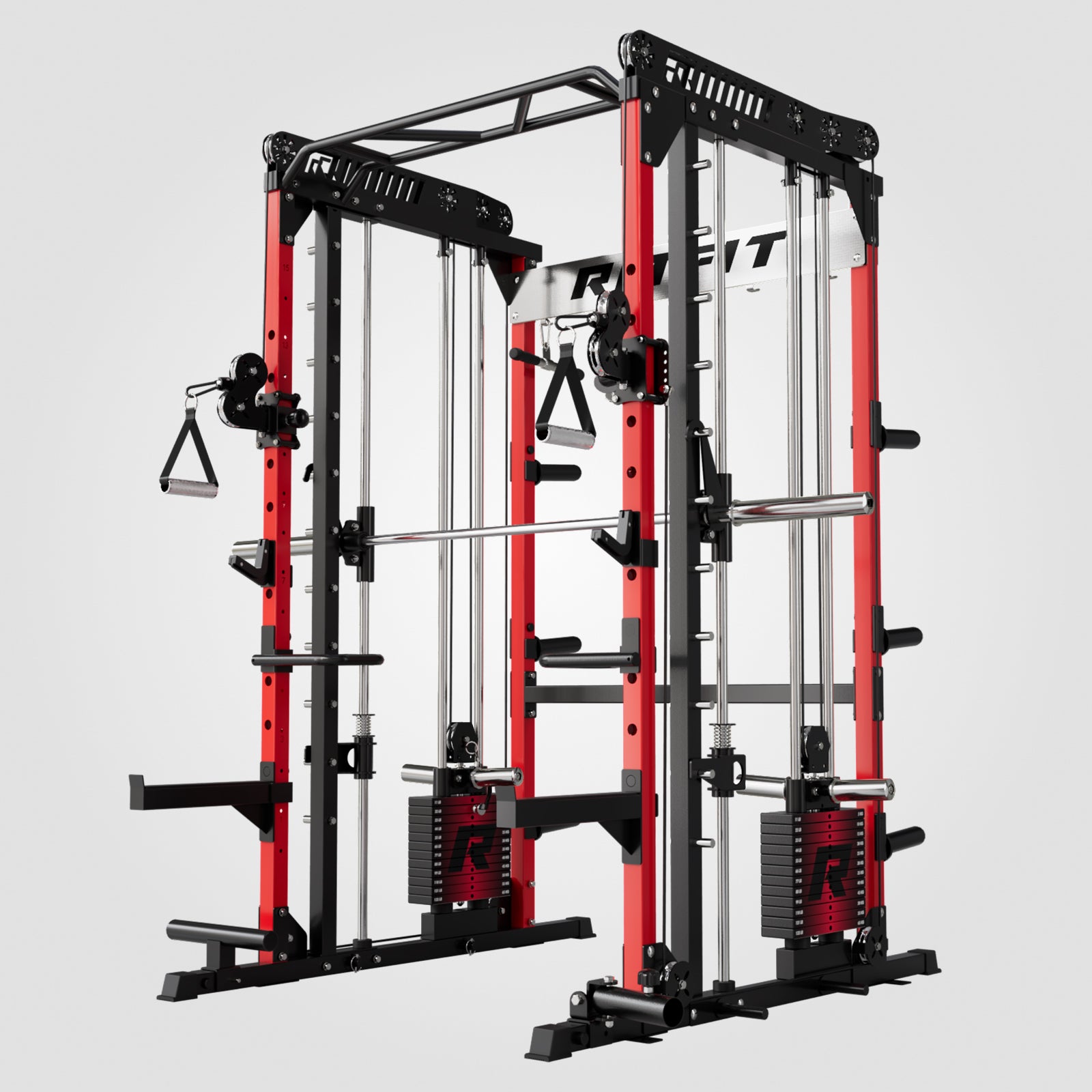
Strength-based circuits can also reach these zones when you keep rest short. Pacing sets on a cable machine or moving through combo machine workouts raises your pulse while you build strength.
What Are the Five Heart Rate Zones?
The five heart rate zones split the range from easy to maximal into bands set by percentage of maximum heart rate, and each one trains your body differently. Zone 1 is the gentlest at 50 to 60 percent, and Zone 5 is all-out effort at 90 to 100 percent.
Knowing the zones helps you match effort to purpose instead of guessing. The video below explains the science behind each band.
- Zone 1 (50-60%): Very light, for warm-ups, cooldowns, and recovery.
- Zone 2 (60-70%): Light aerobic work that builds endurance and a base.
- Zone 3 (70-80%): Moderate to hard, improving aerobic capacity and stamina.
- Zone 4 (80-90%): Hard threshold effort, best limited to one or two sessions a week.
- Zone 5 (90-100%): Maximal bursts for short high-intensity intervals only.
Picking the Right Zone for Your Goal
Match the zone to what you want from the session, since each band delivers a different benefit and stress.
- Build endurance: Spend most time in Zone 2, where conversation is still possible.
- Boost fitness: Add Zone 3 to 4 intervals through formats like MetCon workouts guide or bodyweight CrossFit workouts.
- Recover: Keep easy days in Zone 1 so your body adapts and rebuilds.
How Do You Measure Heart Rate During a Workout?
You can measure your heart rate by counting your pulse for 30 seconds and multiplying by two to get beats per minute. Press two fingers gently on the thumb side of your inner wrist, since the thumb has its own pulse and can throw off the count.
Devices make this easier and more continuous. A wearable tracker, a chest strap, or the grip sensors built into many machines let you watch your heart rate change in real time without stopping.
- Manual pulse check: Reliable, free, and a good backup when a device fails.
- Wearables and straps: Convenient for steady monitoring across a whole session.
- Machine sensors: Handy for paced strength work on a Smith machine or large-muscle sessions using leg machines.
The Talk Test and RPE: No-Device Backups
The talk test gauges effort by how easily you can speak, and it lines up well with heart rate zones.
- Moderate effort: You can talk in full sentences but not sing.
- Vigorous effort: You can only get a few words out before needing a breath.
- Rate of perceived exertion: Score effort from 1 to 10 and aim for 4 to 6 for steady cardio.
What Mistakes Should You Avoid, and When Should You Slow Down?
The most common mistake is treating an age-based estimate as an exact personal number. Because formulas carry a typical error of several beats per minute, fixating on a single target can push you too hard or hold you back.
Slow down or stop if your heart rate climbs well above your target zone, or if your body sends warning signs that no number can override.
- Stop signals: Dizziness, chest discomfort, nausea, or sudden severe breathlessness mean stop and rest.
- Skipping warm-ups: Jumping straight to hard effort spikes your pulse and raises strain.
- Ignoring recovery: Spending every session in Zone 4 or 5 invites fatigue, so balance hard days with easy ones.
Devices can also malfunction, so pair the numbers with how you feel. A military-style session like a military-style workout can spike your heart rate fast, making these checks especially useful.
How Do You Build a Simple Weekly Heart Rate Plan?
A simple weekly plan mixes mostly easy zone work with a couple of harder sessions. According to widely cited weekly activity guidance via Harvard Health, adults benefit from 150 minutes of moderate-intensity or 75 minutes of vigorous-intensity activity per week, or a combination.
Spread that across the week so most minutes stay comfortable and only a small share gets hard.
- Three to four easy days: Zone 2 cardio of 30 to 45 minutes to build your aerobic base.
- One to two hard days: Short Zone 4 intervals for fitness, kept brief and well spaced.
- Recovery and variety: Add a lower-intensity option like a barre workout or a structured home setup with the Multifunctional Smith Machine.
Start at the lower end and build gradually. Consistency in the easy zones matters more than chasing high numbers on every session.
FAQs About Workout Heart Rate
What is a good heart rate during a workout?
For most healthy adults a good workout heart rate falls between 50 and 85 percent of your estimated maximum heart rate. Moderate activity sits around 50 to 70 percent, while vigorous training reaches 70 to 85 percent. Start near the lower end if you are new and build up gradually as your fitness improves over several weeks.
How do I calculate my maximum heart rate?
The simplest estimate is 220 minus your age, so a 40 year old gets about 180 beats per minute. The Tanaka formula, 208 minus 0.7 times your age, is often a little more accurate. Remember both are population estimates that can be off by roughly 7 to 12 beats, so treat them as starting points rather than exact personal numbers.
Is the 220 minus age formula accurate?
It is a useful ballpark but not precise for individuals. Research comparing predicted and directly measured maximum heart rate found wide limits of agreement, with typical errors near 7 to 12 beats per minute. Your true maximum may run higher or lower depending on genetics and fitness, so pair the estimate with how you feel.
How can I check my heart rate without a tracker?
Press two fingers gently on the thumb side of your inner wrist, count the beats for 30 seconds, then multiply by two for beats per minute. You can also use the talk test, if you speak in full sentences you are likely moderate, and if talking is a struggle you have moved into vigorous effort.
When should I slow down or stop during cardio?
Slow down if your heart rate climbs well above your target zone, if you feel dizzy, very short of breath, or experience chest discomfort. Heart rate is only one signal, so always listen to your body. If you have a heart condition or take medication affecting heart rate, ask your doctor first.
Conclusion
A good workout heart rate is the band that matches your goal, roughly 50 to 70 percent of maximum for steady work and 70 to 85 percent for hard effort. Estimate your maximum, then confirm with a pulse check or the talk test.
If you are new, start in the easy zones and add short hard intervals as you adapt. Let the numbers guide you while you stay tuned to how your body feels.
Disclaimer
This article is for general educational purposes and does not replace personalized medical or fitness advice. If you have a heart condition, take medication that affects heart rate, or feel unwell during exercise, consult a qualified healthcare professional before starting or changing your routine.
References
1. Martin JR, et al. Accuracy of Commonly Used Age-Predicted Maximal Heart Rate Equations. Int J Exerc Sci. 2020;13(7):1242-1250. https://pmc.ncbi.nlm.nih.gov/articles/PMC7523886/
2. Roy S, McCrory J. Validation of Maximal Heart Rate Prediction Equations Based on Sex and Physical Activity Status. Int J Exerc Sci. 2015;8(4):318-330. https://pmc.ncbi.nlm.nih.gov/articles/PMC4831892/
3. Martin J, Lindsey B, Gerrity C, Ambegaonkar J. Exploratory analysis of the accuracy of age-based maximal heart rate equations across cardiorespiratory fitness levels. PLoS One. 2025;20(10):e0335842. https://pmc.ncbi.nlm.nih.gov/articles/PMC12574831/