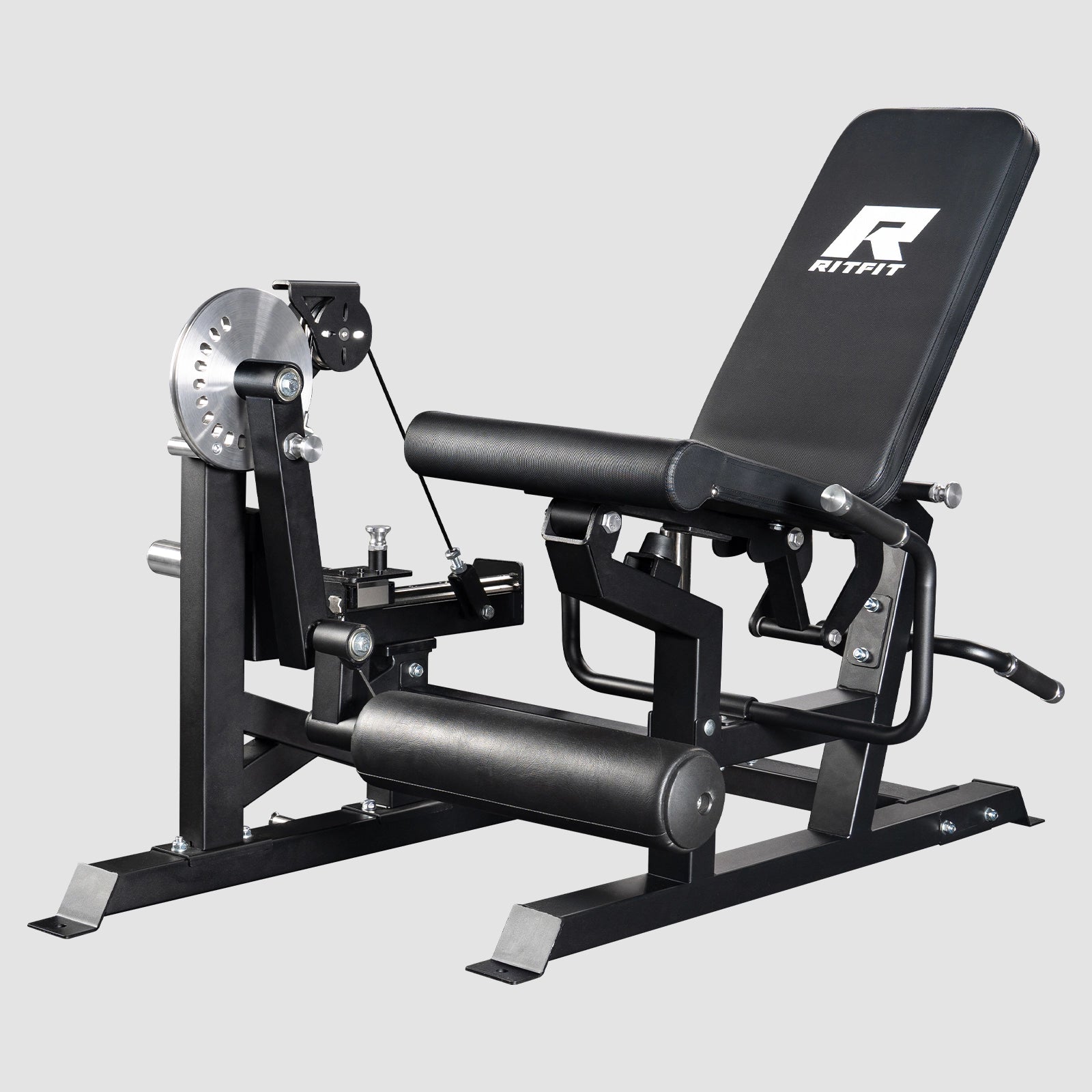
A Nordic workout usually refers to the Nordic hamstring curl, a bodyweight exercise where you kneel with your feet anchored and lower your torso under control. It trains the hamstrings eccentrically to build strength and reduce injury risk.
This guide explains what the movement is, the muscles it works, its evidence-based benefits, how to perform it with correct form, and how beginners can scale and program it safely.
Table of Contents
- What Is a Nordic Workout?
- Which Muscles Does the Nordic Curl Work?
- What Are the Benefits of the Nordic Hamstring Exercise?
- How Do You Do a Nordic Hamstring Curl?
- How Can Beginners Scale the Nordic Curl?
- How Should You Program Nordic Curls?
- What Are the Common Mistakes and When Should You Stop?
- What Equipment Anchors Your Feet at Home?
Key Takeaways
- What it is: A Nordic workout is the Nordic hamstring curl, a kneeling bodyweight move that loads the hamstrings during the lowering phase.
- Main benefit: Programs including it are linked to roughly a 51% lower rate of hamstring strain injuries in athletes.
- How it works: It builds eccentric knee flexor strength and lengthens the biceps femoris fascicles, both tied to injury resilience.
- Scalable: Beginners use bands, a box, or partial range first, since few people can complete a full rep at the start.
- Programming: Most plans use it one to two times weekly for low reps, with at least 48 hours of recovery.
What Is a Nordic Workout?
A Nordic workout is the Nordic hamstring curl (NHC), a bodyweight exercise in which you kneel with your feet anchored and lower your torso toward the floor under control. The name traces to its long use in Scandinavian and Russian strength traditions, which is why it is also called the Russian leg curl.
It is not the same as Nordic walking, a pole-based cardio activity. This article covers the Nordic hamstring curl, a strength move that targets the hamstrings during the lowering phase.
- Other names: Nordic hamstring exercise (NHE), Russian leg curl, natural glute-ham raise.
- Equipment: Minimal, you mainly need a way to anchor your feet plus a padded surface for your knees.
It suits lifters and athletes who want stronger, more resilient hamstrings. If you are new to bodyweight training, our bodyweight training routines offer a gentler entry point.
Which Muscles Does the Nordic Curl Work?
The Nordic curl primarily works the hamstrings, made up of the biceps femoris, semitendinosus, and semimembranosus. The glutes, lower back, and calves assist to a lesser degree, while the emphasis stays on the lengthening, or eccentric, phase.
One biomechanics study comparing three hamstring exercises found the Nordic curl generally produced the highest peak hamstring forces and the most eccentric fascicle lengthening, tested in ten participants.[1]
- Primary movers: The three hamstring muscles, loaded as the knee extends and the body lowers.
- Why eccentric matters: Strength in the lengthened position is closely tied to lower hamstring injury risk in sport.
"The eccentric nature of the NHC is believed to increase hamstrings length and shift the maximum strength of the muscle toward longer muscle lengths, which is believed to be important in sports."
Bret Contreras, PhD, Sports Science Researcher, bretcontreras.com
For balanced lower-body training, pair Nordic curls with leg strengthening exercises that hit the quads and glutes.
What Are the Benefits of the Nordic Hamstring Exercise?
The Nordic hamstring exercise offers three well-documented benefits, injury prevention, eccentric strength gains, and improved athletic performance. Most of the evidence comes from soccer and football populations, where hamstring strains are common.
How much does it reduce hamstring injuries?
Systematic reviews and meta-analyses found that injury-prevention programs including the Nordic hamstring exercise produced an average reduction of hamstring strain injuries of about 51%. In women's elite football, teams that used it in whole-team training had a lower match-play injury incidence, 1.4 versus 4.0 per 1000 hours.[2]
How does it build eccentric strength and fascicle length?
A systematic review of soccer players found the exercise significantly improved biceps femoris long head fascicle length, with greater effects at higher training volumes over six to twelve weeks.[3]
- Performance carryover: Stronger, longer hamstrings support sprinting and change of direction.
- Scope note: Most data come from athletes, so results may not generalize to every reader.
To round out a session, explore bodyweight workouts that complement hamstring training.
How Do You Do a Nordic Hamstring Curl?
You perform a Nordic curl in three phases, set up, descend, and return. Kneel tall with your feet anchored, keep a straight line from your head to your knees, and lower your torso slowly using your hamstrings to resist the fall.
- Set up: Kneel on a pad with your heels secured, hips extended, and torso upright.
- Descend: Lower your chest toward the floor under control, keeping your hips straight rather than bending at the waist.
- Return: Push off lightly with your hands, then use your hamstrings to pull back to the start.
The video below walks through setup, execution, and programming so you can match your technique to the cues.
Quality beats quantity here, so stop a set the moment your form breaks down.
How Can Beginners Scale the Nordic Curl?
Beginners scale the Nordic curl by reducing the eccentric load until they can control the full range. Few people can complete an unassisted full repetition at first, so start with assistance and progress in clear stages.
- Band assist: Loop a resistance band across your chest, anchored behind you, to share the load on the way down.
- Box assist: Place a box or bench ahead of you and reach your hands to it as you descend, then push back up.
- Partial range: Lower only as far as you can control, then build depth over several weeks.
- Isometric holds: Pause and hold at the point where control breaks down to build strength there.
A sturdy bench works well as a push-off surface, and our weight benches give beginners a stable assist option.
How Should You Program Nordic Curls?
You should program Nordic curls one to two times per week, since the eccentric load creates significant muscle damage that needs recovery. A common starting point is three to five sets of three to six controlled repetitions.
- Load selection: Use bodyweight first, since the lever and gravity already make this very demanding.
- Frequency: Train hamstrings this way twice weekly at most, with at least 48 hours between sessions.
- When to progress: Add range, then reps, then a held weight only once you control the full descent.
Higher training volumes over six to twelve weeks drove the largest fascicle adaptations in research, so consistency matters more than max effort early on.[3]
You can slot Nordic curls into structured plans like our metcon workouts or pair them with bodyweight strength moves for a full session.
What Are the Common Mistakes and When Should You Stop?
The most common mistake is bending at the hips instead of keeping a straight line from head to knees, which turns the movement into a different, easier exercise. Stop a set as soon as that form breaks down.
- Hip flexion error: Too much hip bend reduces hamstring loading and shifts strain to passive tissues.
- Dropping uncontrolled: Plummeting to the floor skips the eccentric stimulus that makes the exercise work.
- When to stop: End the set if you cannot control the descent, and stop entirely if you feel sharp hamstring pain.
Soreness for a day or two is normal early on, but pain during a rep is a signal to rest and reassess rather than push through.
What Equipment Anchors Your Feet at Home?
At home you can anchor your feet with a partner, a loaded barbell, a sturdy bench, or the base of a power rack. The goal is a fixed, immovable point that holds your heels while a pad protects your knees.
- Barbell or rack: Wedge your heels under a loaded barbell or the upright base of a rack.
- Bench: Hook your heels under the leg of a heavy, stable bench.
For dependable anchoring, an adjustable weight bench doubles as a foot anchor and assist surface, while a unit from our power racks gives the most secure heel fixation. If you want to vary your weekly plan, see what is a Tabata workout for a contrasting conditioning style.
FAQs About Nordic Workouts
Is a Nordic workout the same as Nordic walking?
No, they are different. A Nordic workout usually refers to the Nordic hamstring curl, a bodyweight strength exercise where you kneel with your feet anchored and lower your torso under control. Nordic walking is a cardio activity using poles. This article covers the Nordic hamstring curl, which targets the hamstrings eccentrically for strength and injury prevention.
Are Nordic curls good for beginners?
Yes, when scaled properly. Full Nordic curls are very demanding, so most beginners cannot complete one unaided. Start with assisted versions using a resistance band, a box to push off, or partial range eccentric holds. Lower as slowly as you can and use your hands to catch yourself, then build range and control over several weeks before attempting full repetitions.
How often should I do Nordic hamstring curls?
Most programs use Nordic curls one to two times per week, often for three to five sets of three to six controlled repetitions. Because the exercise causes significant muscle damage and soreness, give your hamstrings at least 48 hours of recovery between sessions. Beginners should start with lower volume and add reps or range gradually as control improves.
Do I need equipment to do Nordic curls?
You need a way to anchor your feet, but not much else. A partner can hold your ankles, or you can wedge your heels under a loaded barbell, a sturdy weight bench, or the base of a power rack. A padded surface protects your knees. Adding a band or box gives beginners the assistance needed to scale the movement safely.
What muscles do Nordic curls work?
Nordic curls primarily train the hamstrings, which include the biceps femoris, semitendinosus, and semimembranosus. The glutes, lower back, and calves assist to a lesser degree. The movement emphasizes the eccentric or lowering phase, which builds strength in the lengthened position and is linked to lower hamstring injury risk in athletes.
Conclusion
A Nordic workout is the Nordic hamstring curl, a simple bodyweight move with strong evidence for building eccentric hamstring strength and lowering injury risk. Start with an assisted version, control the descent, and progress slowly.
To begin, anchor your feet securely, train it once or twice a week, and stop any set the moment your form breaks down or pain appears.
Disclaimer
This article is for general educational purposes only and does not replace personalized medical or training advice. Consult a qualified healthcare or fitness professional before starting new exercises, especially if you have a current or past hamstring injury.
References
1. Van Hooren B, Vanwanseele B, van Rossom S, et al. Muscle forces and fascicle behavior during three hamstring exercises. Scandinavian Journal of Medicine & Science in Sports. 2022;32(6):997-1012. https://pmc.ncbi.nlm.nih.gov/articles/PMC9314024/
2. Ekstrand J, Hallén A, Gauffin H, Bengtsson H. Low adoption in women's professional football: teams that used the Nordic Hamstring Exercise in the team training had fewer match hamstring injuries. BMJ Open Sport & Exercise Medicine. 2023;9(2):e001523. https://pmc.ncbi.nlm.nih.gov/articles/PMC10163446/
3. Pecci J, Sañudo B, Ramirez-Campillo R, Saez de Villarreal E. Influence of Resistance Training Variables and the Nordic Hamstring Exercise on Biceps Femoris Architectural Adaptations in Soccer Players: A Systematic Review. Sports Health. 2026;18(2):334-343. https://pmc.ncbi.nlm.nih.gov/articles/PMC11999990/