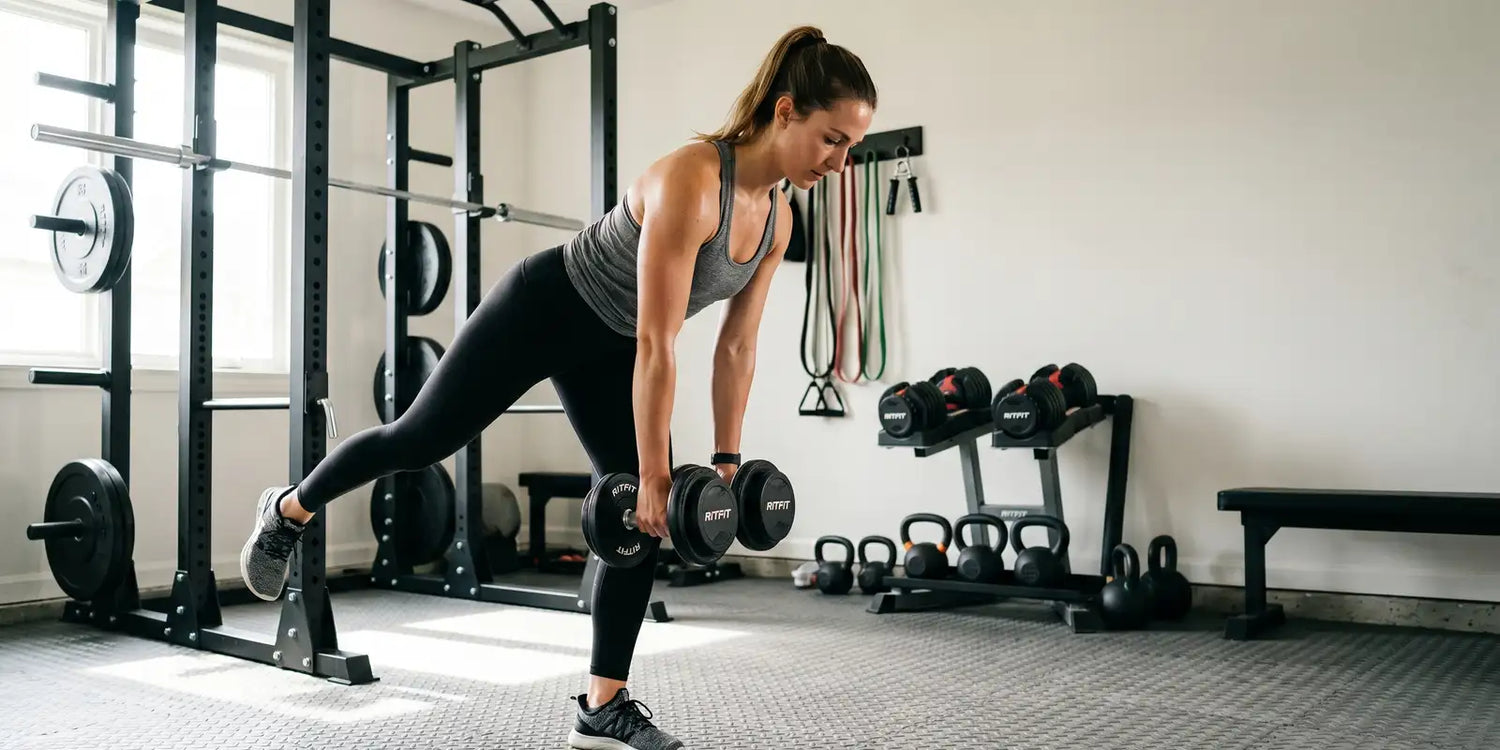
Weak or wobbly knees can make stairs, squats, and even standing up feel harder than they should. Standing exercises rebuild that strength by training your knees in the upright, weight bearing positions you actually use every day.
This guide covers seven home friendly standing drills, plus how to load them, how often to train, and when to stop. It is general education, not medical advice.
Table of Contents
- Why Are Standing Exercises Best for Restoring Knee Strength?
- Which Muscles Keep Your Knees Strong and Stable?
- What Should You Know Before You Begin?
- Which Standing Exercises Restore Knee Strength?
- How Do You Choose Your Starting Load and Difficulty?
- How Many Sets, Reps, and Sessions Per Week?
- How Do You Progress Safely and When Do You Add Load?
- When Is Knee Pain a Signal to Stop?
- When Should You See a Physical Therapist or Doctor?
Key Takeaways
- Train upright: Standing drills strengthen the knee in the weight bearing positions used for walking, stairs, and balance.
- Build the support team: Quadriceps, hamstrings, glutes, hip abductors, and calves all stabilize the knee.
- Start gentle, progress slow: Begin with bodyweight, master form, then add range, reps, or light load over weeks.
- Consistency wins: Two to three sessions per week on non consecutive days is a sensible starting point.
- Respect pain: Mild fatigue is fine, sharp or worsening pain is a signal to stop and seek a professional.
Why Are Standing Exercises Best for Restoring Knee Strength?
Standing exercises restore knee strength best because they train the joint in the upright, weight bearing positions you use for walking, climbing stairs, and catching your balance. Seated machines isolate a muscle, but standing drills also recruit the stabilizers that keep the knee tracking correctly.
- Functional carryover: Upright movement patterns mirror daily tasks, so strength gains transfer to real life.
- Balance and proprioception: Standing on one leg forces small stabilizing muscles to fire and improves joint position sense.
A pilot study of elderly patients with knee osteoarthritis found that an eight week progressive neuromuscular training program, three sessions per week, improved postural balance and function, with gains seen within four weeks and maintained four weeks after the program ended.[1]
"Even a seemingly basic task like walking up stairs requires 70-80% of the force production of maximal leg strength."
Andy Galpin, PhD, Professor of Exercise Science and Human Performance, Parker University
Which Muscles Keep Your Knees Strong and Stable?
The knee stays strong and stable when the muscles around it work together, mainly the quadriceps, hamstrings, glutes, hip abductors, and calves. The quads control bending and straightening, while the hips and glutes keep the knee from caving inward during movement.
- Quadriceps: Power knee extension and absorb load when you lower into a squat or step down.
- Hamstrings and glutes: Stabilize the back of the knee and control the hip hinge.
- Hip abductors: Keep the knee tracking over the foot instead of collapsing inward.
- Calves: Support the knee during walking and stair climbing.
In one trial, knee osteoarthritis patients who did standing balance work on an unstable surface and knee extensor strengthening with gradually increased loads both improved one leg standing time and reduced pain over a six week program.[2] You can support this work with our best quad exercises for strength and best hip exercises at home for strength and glutes.
What Should You Know Before You Begin?
Before you begin, know that this routine is general fitness education for healthy adults rebuilding everyday knee strength, not a treatment plan. Warm up for a few minutes, use a sturdy chair or wall for support, and move within a comfortable, pain free range.
- Set up safely: Clear floor space and keep a stable chair, counter, or wall within reach for balance.
- Start light: Master bodyweight form before adding a band, dumbbells, or a step.
If you have a diagnosed knee condition, recent injury, or surgery, get clearance from a professional first. For gentler options, see our home exercises for knee pain relief and stronger joints.
Which Standing Exercises Restore Knee Strength?
The best standing exercises to restore knee strength are mini squats, wall sits, step ups, reverse lunges, standing hamstring curls, single leg balance, and calf raises with lateral band walks. Together they train the quads, hamstrings, glutes, hips, and calves through upright, functional patterns.
1. Mini Squats
Mini squats build strength in the first 30 to 45 degrees of knee bend, the range used most in daily movement, while keeping joint stress low. Stand feet shoulder width apart, sit back slightly, then drive through your heels to stand.
2. Wall Sits
Wall sits are an isometric hold that builds quad endurance with no joint movement, making them friendly for sensitive knees. Slide down a wall until your knees stay above your ankles, hold 10 to 30 seconds, then stand.
3. Step Ups
Step ups train single leg strength, the pattern you use on stairs, and reveal side to side imbalances. Step onto a low, sturdy platform, push through the heel to stand tall, then lower with control.
4. Reverse Lunges
Reverse lunges load one leg at a time with less forward knee stress than forward lunges. Step one foot back, lower until both knees bend toward 90 degrees, then push through the front heel to return.
5. Standing Hamstring Curls
Standing hamstring curls strengthen the muscles that stabilize the back of the knee. Hold a chair for balance, bend one knee to bring the heel toward your buttocks, then lower slowly and repeat.
6. Single Leg Balance and Reach
Single leg balance trains proprioception and the small stabilizers that keep the knee steady. Stand on one slightly bent leg, hold 15 to 30 seconds, then progress by reaching the free foot forward and to the side.
7. Bent Knee Calf Raises and Lateral Band Walks
Bent knee calf raises build calf and quad stability, while lateral band walks fire the hip abductors that keep the knee tracking. Place a band around your ankles and step side to side with controlled, knee over foot alignment.
How Do You Choose Your Starting Load and Difficulty?
Choose a starting load where you can complete every rep with clean form and no pain, which for most people new to knee work means bodyweight only. Use a chair or wall for support, then remove that support as your balance and control improve.
- Bodyweight first: Earn good form on mini squats and step ups before adding any external load.
- Add support, not weight: Hold a counter or chair for single leg drills until you feel steady.
- Light external load: Progress with a resistance band, light dumbbells, or a higher step once form is solid.
When you are ready to add resistance, browse our strength training equipment and strength machines for options that scale with you.
How Many Sets, Reps, and Sessions Per Week?
A sensible starting point is two to three sessions per week on non consecutive days, with two to three sets of 8 to 15 reps per exercise. Hold isometric drills like wall sits for 10 to 30 seconds and balance drills for 15 to 30 seconds per side.
- Frequency: Two to three weekly sessions allow recovery between workouts.
- Volume: Two to three sets of 8 to 15 reps for strength drills, fewer if form breaks down.
- Form over load: Prioritize clean, controlled reps rather than chasing numbers.
For broader lower body routines, see our guide on how to build leg muscle.
How Do You Progress Safely and When Do You Add Load?
Progress safely by adding difficulty only after the current level feels easy and stays pain free for at least a week. Increase one variable at a time, such as range of motion, reps, balance challenge, or light load, rather than several at once.
- Master then advance: Add reps or range before adding external weight.
- Small steps: Increase load or step height in modest increments and reassess how the knee responds.
- The slow phase matters: Control the lowering, or eccentric, portion to build strength with less joint stress.
A study of persons with mild knee osteoarthritis found that an eight week progressive resistance program, three half hour sessions per week following ACSM principles, produced strength gains and improvements in pain and function with no reported symptom flare ups.[3]
When you graduate to loaded squats, an adjustable bench can guide depth and assist sit to stand drills, like the adjustable weight bench. You can also blend in core work using our Pilates exercises for core strength at home.
When Is Knee Pain a Signal to Stop?
Knee pain is a signal to stop when it is sharp, stabbing, or worsening, or when you feel swelling, locking, or the knee giving way. Mild muscle fatigue and a gentle working burn are normal, but pain inside the joint is a warning to back off.
- Stop right away: Sharp pain, swelling, clicking with pain, or instability mean end the session.
- Scale back: If a movement aggravates the knee, reduce range, load, or reps before trying again.
This guidance is general and is not a substitute for individualized advice. For balance focused options, see our exercises for seniors to improve strength and balance safely.
When Should You See a Physical Therapist or Doctor?
You should see a physical therapist or doctor if knee pain persists beyond a few weeks, fails to improve, or follows an injury or surgery. A licensed professional can assess your knee, rule out serious issues, and tailor a program to your needs.
- Seek care: Persistent, worsening, or post injury and post surgical knee symptoms need professional evaluation.
- Get a plan: A physical therapist can adapt these drills safely for your specific situation.
When in doubt, professional guidance comes first, and home exercise supports rather than replaces it.
FAQs About Standing Knee Strength Exercises
Can standing exercises really restore knee strength?
Yes, for many people standing exercises rebuild knee strength by training the quadriceps, hamstrings, glutes, and stabilizers in upright, weight bearing positions you use daily. Studies on knee osteoarthritis patients show progressive strengthening and balance work can improve function and reduce pain. Always start gently and stop if pain sharpens or worsens.
How often should I do standing knee exercises?
A common starting point is two to three sessions per week on non consecutive days, allowing rest for recovery. Several research programs used three weekly sessions over six to eight weeks and saw improvements. Begin with lighter volume, prioritize good form over heavy load, and progress gradually as the movements feel easier and pain free.
Which exercises are safest for weak or painful knees?
Low impact standing movements such as mini squats, wall sits, chair assisted step ups, and supported single leg balance are gentle starting points because they limit deep knee bending and joint stress. Build endurance and control first, then add range or load. If you have a diagnosed condition or recent surgery, follow your physical therapist or doctor first.
When should I stop exercising and see a doctor?
Stop immediately if you feel sharp, stabbing, or worsening pain, swelling, locking, giving way, or instability in the knee. Mild muscle fatigue is normal, but pain is a warning signal. If symptoms persist beyond a few weeks, do not improve, or follow an injury or surgery, consult a licensed physical therapist or doctor before continuing.
Do I need equipment to strengthen my knees at home?
No, most standing knee exercises start with just your bodyweight and a sturdy chair or wall for support. As you get stronger you can add a resistance band, light dumbbells, or a step to keep progressing. Equipment is optional and should be added only once your form and pain free range are solid.
Conclusion
Standing exercises restore knee strength by training your quads, hamstrings, glutes, hips, and calves in the upright patterns daily life demands. Start with bodyweight mini squats, wall sits, and step ups, then progress slowly as your form and confidence grow.
Train two to three times per week, respect any pain, and add load only when movements feel easy. Be patient, stay consistent, and let stronger, steadier knees follow.
Disclaimer
This article is general fitness education and is not medical advice, diagnosis, or treatment for any knee condition. If you are injured, recovering from surgery, or experiencing pain, consult a licensed physical therapist or doctor before starting any exercise program.
References
1. Sazo-Rodríguez S, Méndez-Rebolledo G, Guzmán-Muñoz E, Rubio-Palma P. The effects of progressive neuromuscular training on postural balance and functionality in elderly patients with knee osteoarthritis: a pilot study. Journal of Physical Therapy Science. 2017;29(7):1229-1235. https://pmc.ncbi.nlm.nih.gov/articles/PMC5509598/
2. Kim K, Lee HY, Lim SJ. Effects of increased standing balance on pain in patients with knee osteoarthritis. Journal of Physical Therapy Science. 2016;28(1):87-89. https://pmc.ncbi.nlm.nih.gov/articles/PMC4755980/
3. McQuade KJ, de Oliveira AS. Effects of progressive resistance strength training on knee biomechanics during single leg step-up in persons with mild knee osteoarthritis. Clinical Biomechanics (Bristol, Avon). 2011;26(7):741-748. https://pmc.ncbi.nlm.nih.gov/articles/PMC3138879/