








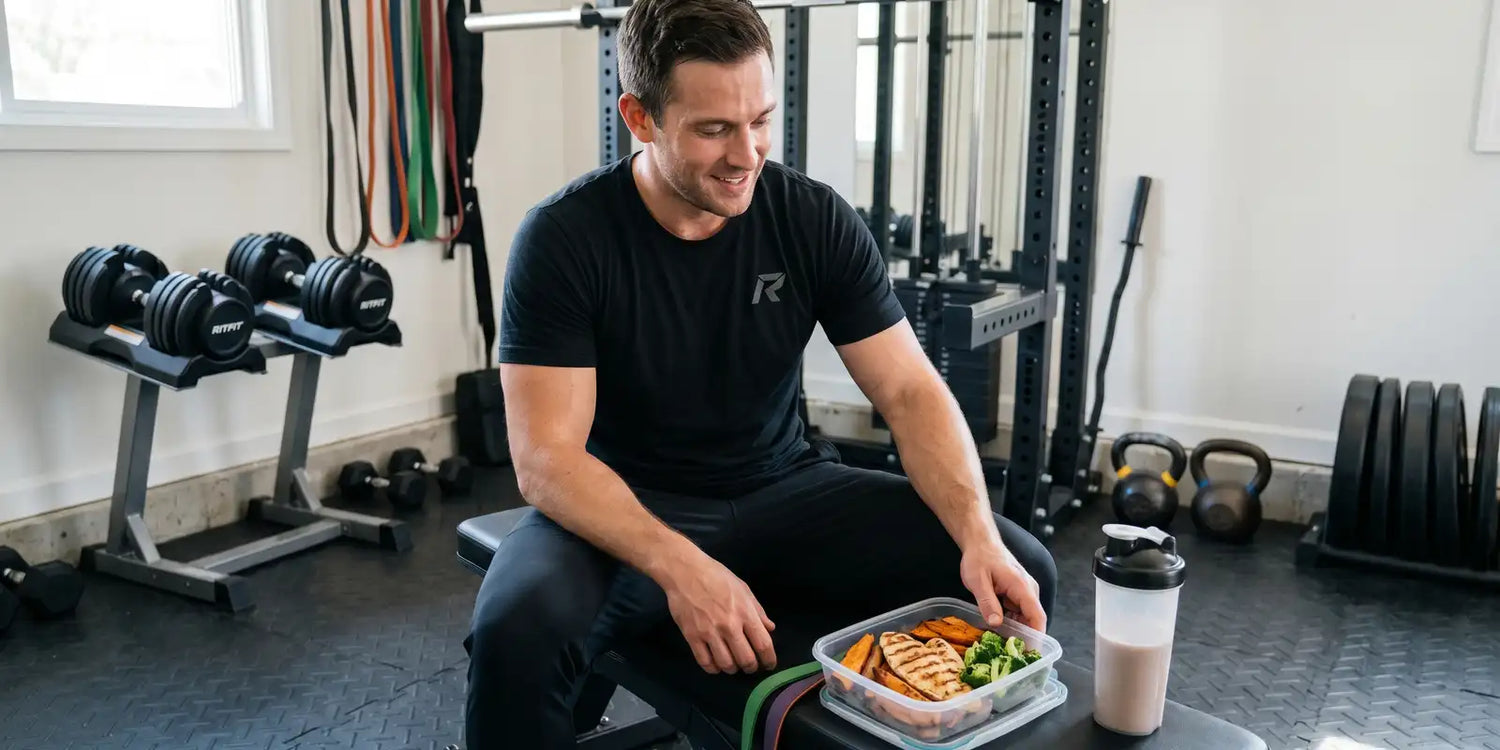
What you eat after a workout helps your body recover, rebuild muscle, and refill the energy it just used. The right post-workout meal centers on two things, protein and carbohydrates, paired with good hydration.
This guide is general nutrition education for healthy, active adults. It covers how much to eat, when timing matters, and easy real-food meals, not personalized diets or medical advice.
Table of Contents
Key Takeaways
- Pair protein and carbs: Protein rebuilds muscle while carbohydrates refill the energy your muscles burned.
- Protein target: Around 20 to 40 grams of high-quality protein supports recovery for several hours after training.
- Carbs matter too: Simpler, faster carbs after exercise help replenish muscle glycogen quickly.
- Timing is flexible: Your total daily intake matters more than racing to eat within thirty minutes.
- Hydrate to finish: Replace fluids with water, adding electrolytes after long or sweaty sessions.
Why What You Eat After a Workout Matters
Exercise breaks down muscle tissue and drains the stored energy your muscles rely on. Eating afterward gives your body the raw materials to repair, refuel, and adapt to your training.
- Repair: Protein supplies amino acids your body uses to rebuild and strengthen muscle fibers.
- Refuel: Carbohydrates restore glycogen, the muscle energy used during your session.
- Rehydrate: Fluids and electrolytes replace what you lost through sweat.
Skipping food entirely can leave you fatigued and slow your progress. If you train hard regularly, a smart post-workout recovery routine pays off over time.
The Two Macronutrients That Anchor Recovery
A good post-workout meal is built around protein and carbohydrates. Together they support muscle repair and energy restoration better than either one alone, whether you favor fitness for women routines or heavier lifting.
Protein: How Much and Best Sources
Aim for roughly 20 to 40 grams of high-quality protein after exercise, which helps maximize muscle protein synthesis for several hours[1]. Good sources include eggs, chicken, fish, Greek yogurt, tofu, beans, and a protein shake.
Carbohydrates: Refueling Your Glycogen
One sports nutrition guide describes a post-workout plate of about 1.0 gram of carbohydrate per kilogram of body weight, mostly simpler carbs, with around 0.3 gram of protein per kilogram to support repair[2]. Good carb choices include rice, potatoes and sweet potatoes, oats, fruit such as bananas, and whole-grain bread.
Does the Post-Workout Window Really Matter
The strict thirty-minute window is less critical than once believed. The anabolic effect of exercise is long-lasting, at least 24 hours, and total daily protein intake is a strong predictor of muscle gain[3].
- Practical timing: Cleveland Clinic suggests a protein-rich snack within about 15 minutes to an hour, followed by a balanced meal later.
- When sooner helps: Eating quickly matters more if you trained fasted or have another session within 24 hours.
- Daily total wins: Hitting your protein and carb targets across the day outweighs perfect timing.
For most people, a balanced meal within a couple of hours is perfectly fine. Build a sustainable habit rather than chasing a clock, especially around your 4-day workout split.
7 Easy Post-Workout Meals and Snacks
The best post-workout food combines protein and carbohydrates in a form you enjoy. Real food and shakes both work, so choose what fits your schedule.
- Grilled chicken with rice and vegetables: A classic, balanced plate of lean protein and starchy carbs.
- Greek yogurt with berries and granola: Quick, high in protein, and great for lighter days.
- Protein shake with a banana and oats: Ideal when you have no time to cook.
- Salmon with sweet potato: Adds omega-3 fats alongside protein and complex carbs.
- Eggs on whole-grain toast: Simple, affordable, and easy to digest.
- Tofu stir-fry with brown rice: A plant-based option that still hits protein and carbs.
- Turkey sandwich on whole-grain bread: Portable fuel you can prep ahead.
The video below walks through several of these foods and why they support recovery.
Hydration and Electrolytes After Exercise
Rehydrating after exercise is just as important as refueling. According to Cleveland Clinic guidance, water is enough for most sessions, while longer or intense ones may benefit from added electrolytes.
- Replace fluids first: Sweat loses water plus minerals such as sodium and potassium.
- Add electrolytes when needed: Long, hot, or sweaty sessions can warrant an electrolyte drink.
- Two birds, one drink: A protein shake blended with fruit covers hydration and nutrition together.
Listen to thirst and the color of your urine as simple hydration cues. Consistent fluids support recovery for everyone, including readers exploring fitness accessories for seniors.
Strength Days vs Cardio Days
The protein-plus-carb principle holds on every training day, but the emphasis shifts. After strength work, protein for repair leads, while endurance days lean more on carbohydrates.
- After strength training: Prioritize a solid protein serving to support muscle repair, with moderate carbs.
- After cardio or endurance: Carbohydrate replenishment is a higher priority, especially when your next session is within 24 hours.
- Either way: Adequate carbs, protein, and fluids matter most when recovery time is short.
Adjust portions to your goals and appetite rather than following rigid rules. The same recovery meals fuel workouts for muscle mass growth and steady-state cardio alike.
Common Post-Workout Eating Mistakes
A few simple errors can blunt your recovery. Most are easy to fix once you know what to watch for.
- Skipping food entirely: Eating nothing after hard training offers no benefit and can slow recovery.
- Protein with no carbs: Leaving out carbs means slower glycogen refueling after demanding sessions.
- Obsessing over timing: Stressing about a thirty-minute window matters less than your daily totals.
- Overcomplicating it: A balanced plate beats expensive supplements you do not actually need.
Keep it simple and repeatable, and your recovery improves session after session. Even structured plans like Smith machine chest workouts benefit from steady post-workout fueling.
FAQs About What to Eat After a Workout
What should I eat right after a workout?
Aim for a snack or meal that combines protein and carbohydrates, such as Greek yogurt with berries, a banana with a protein shake, or chicken with rice. The protein supports muscle repair while the carbohydrates help replenish the energy your muscles used. Real food works just as well as supplements when it is convenient for you.
How much protein should I eat after a workout?
Research suggests that roughly twenty to forty grams of high-quality protein after exercise helps maximize muscle repair for several hours. Most people can reach this with a normal meal containing eggs, chicken, fish, Greek yogurt, tofu, or a protein shake. Hitting your total protein for the day matters more than getting an exact amount in one sitting.
Do I really need to eat within thirty minutes of exercising?
The strict thirty-minute window is less critical than once believed, since the muscle-building effect of training lasts well beyond an hour. Eating a balanced meal within a couple of hours is generally fine for most people. A quicker snack can help if you trained hard, ate little beforehand, or have another session coming soon.
Should I eat carbs after a workout or just protein?
Both help. Carbohydrates refill the glycogen your muscles burned for energy, while protein provides the building blocks for repair. Pairing them is more effective than protein alone, especially after long or intense sessions. Good carb choices include rice, potatoes, oats, fruit, and whole-grain bread alongside your protein source.
What should I drink after a workout?
Water is enough to rehydrate after most workouts, so make replacing lost fluids a priority. After long, sweaty, or very intense sessions, adding electrolytes such as sodium and potassium can help replace what you lost through sweat. A protein shake blended with fruit can cover both hydration and post-workout nutrition at once.
Conclusion
What you eat after a workout comes down to a simple formula, protein to repair muscle and carbohydrates to refuel energy, finished with good hydration. Choose real foods you enjoy and keep portions in line with your goals.
Start with one easy go-to meal, stay consistent, and let your daily totals do the heavy lifting rather than chasing the perfect timing window.
Disclaimer
This article is general nutrition education for healthy adults and is not medical, dietary, or treatment advice. Consult a qualified healthcare professional or registered dietitian before making significant changes to your nutrition or exercise routine.
References
1. Naderi A, Rothschild JA, Santos HO, et al. Nutritional Strategies to Improve Post-exercise Recovery and Subsequent Exercise Performance: A Narrative Review. Sports Medicine. 2025;55(7):1559-1577. https://pmc.ncbi.nlm.nih.gov/articles/PMC12297025/
2. Baroni L, Pelosi E, Giampieri F, Battino M. The VegPlate for Sports: A Plant-Based Food Guide for Athletes. Nutrients. 2023;15(7). https://pmc.ncbi.nlm.nih.gov/articles/PMC10097385/
3. Jäger R, Kerksick CM, Campbell BI, et al. International Society of Sports Nutrition Position Stand: protein and exercise. Journal of the International Society of Sports Nutrition. 2017;14:20. https://pmc.ncbi.nlm.nih.gov/articles/PMC5477153/





