








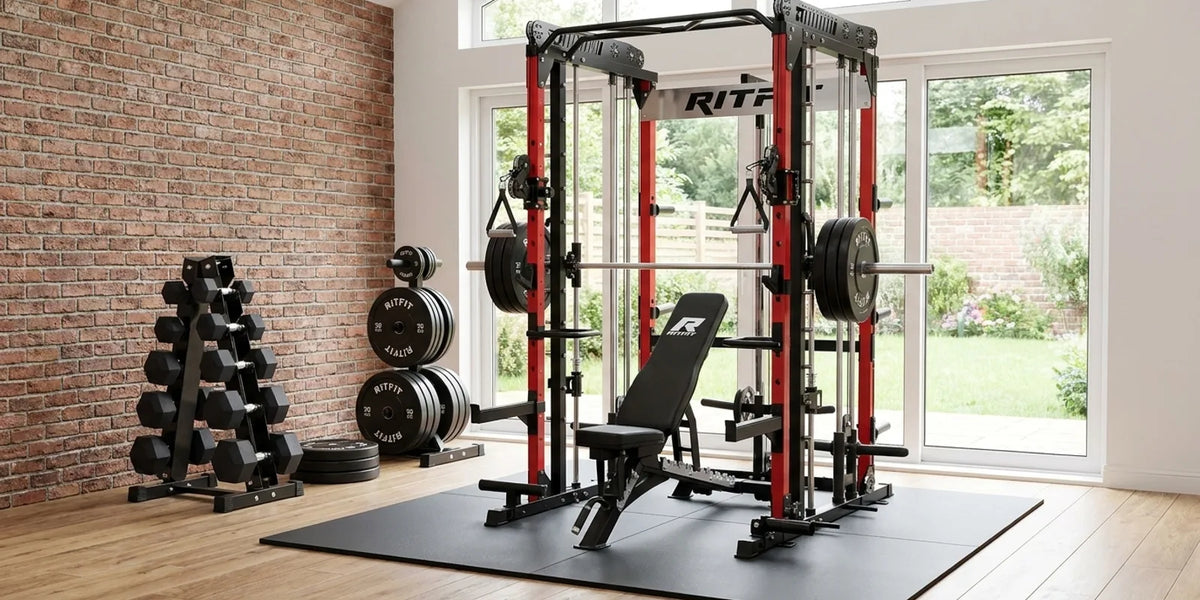
Buying direct from a specialized fitness brand is usually the best way to get home gym equipment that fits your space, budget, and training goals. This guide compares where to buy, what to buy first, and which RitFit setup makes the most sense for beginners, small rooms, and garage gyms.
You will learn how to match equipment to your goals, measure your space, set a budget, and avoid the most common buying mistakes. Use the quick answer and tiered lists below to build a setup you will actually use.
Quick Answer: The best place to buy gym equipment for home is direct from a specialized fitness brand like RitFit, because you get better product compatibility, clearer warranty support, and a coordinated upgrade path. Start with your space and training goal, then choose a bench centered starter, a rack based setup, or an all in one Smith machine package.
Key Takeaways
- Buy around your space and goal: Your room and training goal come before your budget, because the right footprint prevents regret.
- Start with weekly essentials: A bench, dumbbells, bands, and flooring cover most workouts before you add large frames.
- Buy major items direct: A dedicated fitness brand is often the safest path for racks, benches, and Smith machines.
- Choose all in one when you want versatility: Integrated systems avoid the guesswork of mixing mismatched parts.
- RitFit suits a coordinated path: The brand supports a clear upgrade route from entry setup to advanced garage gym.
Why Build a Home Gym in 2026?
Building a home gym in 2026 gives you flexible, private, and repeatable training that removes commute time and gym membership barriers. Resistance training done consistently supports muscle mass, strength, and physical function when the program is structured well.
Home based training also removes scheduling friction, because you train whenever the room and your routine allow. That makes consistency easier to protect for busy professionals, parents, and anyone who dislikes crowded gyms.
What Do You Need for a Home Gym?
You need a home gym that starts with your goal, your space, and a realistic budget before any product purchase. Strength training, fat loss, general fitness, and family use do not require the same setup.
Define Your Fitness Goal
Your goal should decide your first purchase, because different training goals need different equipment. Home based exercise works best when the plan fits your routine, environment, and behavior, not just a wish list.
- Strength and muscle building: Prioritize a stable rack or Smith machine, a bench, and enough resistance to keep progressing.
- General fitness: Start with a bench, adjustable dumbbells, bands, and flooring before buying large frames.
- Shared family use: Favor adjustability, simple changeovers, and safer solo training options.
- Beginner setup: Use a simple roadmap, such as this best home gym equipment guide for beginners, before jumping into a full package.
Measure Your Space Before You Shop
Measure floor area, ceiling height, door clearance, and storage zones before you compare products, because the wrong footprint creates regret faster than the wrong color. Small rooms usually need a compact bench, adjustable dumbbells, smart storage, and possibly a foldable rack instead of a permanent full frame.
- Small room or apartment: Review the best weight bench for small spaces before choosing a bench centered setup.
- Floor protection: Start with a home gym flooring guide so the room is ready for weight, noise control, and equipment stability.
- Garage planning: Leave room for loading plates, bench movement, and safe walkways, not just the machine footprint.
Set a Realistic Budget
Your best budget is the one you can finish in stages without compromising safety. A practical starter setup often beats a perfect setup that never gets built.
- Under 500 dollars: Start with a bench, dumbbells, bands, and mats, then compare options in best home gym equipment under 500.
- 500 to 1,500 dollars: This is a strong range for a balanced bench plus rack or bench plus dumbbell setup, and best home gym equipment under 1000 helps narrow the middle ground.
- 1,500 dollars and up: This range opens the door to advanced all in one systems, and best home gym equipment under 2000 is useful when you want more capability without overspending.
What Are the Core Types of Home Gym Equipment?
The core of most serious home gyms is a stable training station, a bench, and scalable resistance. Your first comparison should usually be between a rack centered setup and an all in one setup, not between random accessory bundles.
Strength Training Essentials
Strength equipment is the backbone of a home gym because it supports progressive overload safely. Build around a training station, a quality bench, and plates or resistance that can grow with you.
- Rack or Smith machine: Use Smith machine vs power rack if you are choosing between guided movement and a more open rack workflow.
- Bench: An adjustable bench supports far more exercise variety than a flat only bench for most home users.
- Plates and bars: Read how to choose the right weight plates before buying iron, bumper, or mixed sets.
Conditioning and Cardio Options
Cardio equipment is useful, but it should not crowd out the equipment you will use most often. If your room is limited, jump ropes, med balls, and compact conditioning tools can create far more value than a large machine you rarely touch.
Mobility, Safety, and Storage
Smaller support items improve the room more than shoppers expect, because they make training easier to repeat and safer to manage. Mats, collars, bands, storage, and traffic flow matter because common barriers to home based resistance exercise include safety concerns, fatigue, and equipment access problems.
1lbs.
5 or 29mm bar will be the most durable and provide the best service over time.
NEVER buy a 32mm bar.
"
Mark Rippetoe, Strength Coach and Author of Starting Strength, Starting Strength
Where to Buy Gym Equipment for Home
The best place to buy gym equipment for home is direct from a specialized fitness brand, especially for racks, benches, Smith machines, and bundled home gym systems. Direct buying gives you better product compatibility, clearer warranty expectations, and a more confident path to a complete setup without the guesswork of mixing parts from different sellers.
Direct From Fitness Brands
Buying direct from a brand like RitFitSports.com is usually the smartest choice for major training stations. You get coordinated equipment, honest dimensions, and one support channel for shipping, assembly, and warranty questions.
Specialty Fitness Retailers
Specialty retailers are useful when you want in person advice or regional pickup support. They can be a strong option, but pricing and inventory are often narrower than buying from the brand itself.
Big Online Marketplaces
Large marketplaces are convenient for price checks, accessories, and entry items, but they are less reliable for big ticket training stations that need long term support. The main downside is inconsistent quality control, weaker product matching, and limited expert guidance when you compare complex systems.
Second Hand and Local Marketplace Options
Used plates, dumbbells, and storage can be smart buys, but benches, racks, and moving cable systems deserve closer scrutiny. A good rule is to buy simple steel used more confidently, and buy safety critical frames new when possible.
Is RitFit the Right Brand for Your Home Gym?
RitFit is worth considering when you want a home focused lineup instead of piecing together unrelated parts from several generic sellers. The brand is especially useful for shoppers choosing between bench centered starters, rack based strength stations, and all in one Smith machine packages.
Where RitFit Makes the Most Sense
RitFit is strongest when you want a coordinated upgrade path across benches, racks, Smith machines, plates, and accessories. That makes it easier to start simple, then add complexity only when your training style and space justify it.
What to Look For on Any Brand Page
Check dimensions, training function, shipping details, return policy, assembly expectations, and compatibility before you buy. Good buying pages should reduce uncertainty, not force you to guess what fits your room or your program.
Best RitFit Picks by Use Case
Choose the machine that matches your training level and available space. The RitFit BWB01 adjustable bench and RitFit GATOR bench anchor a bench centered start.
- Beginners and budget gyms: Start with a bench centered setup, adjustable dumbbells, bands, and mats before adding a machine.
- Intermediate and all purpose gyms: Look for a training station that covers pressing, squatting, pulling, and accessory work, like the RitFit P3 power cage.
- Advanced and garage gyms: Anchor the room with an all in one unit such as the RitFit M1 PRO Smith machine or the RitFit BUFFALO for rack work, cable work, and guided bar training in one footprint.
Browse the full all in one home gym guide and compare RitFit power rack packages to see which footprint fits your room.
How Do You Evaluate Any Gym Equipment Brand?
Every major purchase should pass a simple five point filter for dimensions, training value, safety, support, and upgrade path. If a product fails one of those five checks, the price alone is not a good reason to keep it on your list.
- Dimensions: Confirm footprint, height, loading room, and storage impact.
- Training value: Choose equipment that supports repeatable progress, not novelty.
- Safety: Prioritize stability, spotter options, locking points, and sensible solo use.
- Support: Check shipping, returns, warranty, and assembly help before checkout.
- Upgrade path: Buy into a setup that can grow with your goals instead of forcing a full replacement later.
This filter works across every seller type, from direct brand stores to marketplaces. Apply it before you compare price, and the correct machine usually becomes obvious.
What Mistakes Should You Avoid When Buying Home Gym Equipment?
Most home gym mistakes come from overbuying, under measuring, or copying someone else's setup without matching your own room and routine. The best buying decision is usually the simplest one you will still be happy to use six months from now.
- Buying too much too early: Start with the highest use essentials and earn the upgrade.
- Ignoring ceiling height: A tall frame that barely fits is still the wrong frame.
- Underestimating the bench: A better bench improves more workouts than most accessories do.
- Skipping storage: A cluttered room quietly lowers consistency and safety.
- Letting price decide everything: Cheap equipment is expensive when it blocks progress or forces replacement.
Start with essentials such as a dumbbell set with a rack and a versatile RitFit bench, then add frames only after your training habits are stable.
FAQs About Where to Buy Gym Equipment for Home
Where is the best place to buy home gym equipment in 2026?
Direct from a specialized fitness brand is usually best for compatibility, warranty support, and bundled value. Marketplaces can be useful for price checks and basic accessories, but major items like racks, benches, and all in one systems are easier to evaluate and support when you buy from the brand itself.
What home gym equipment should beginners buy first?
Most beginners should start with a bench, adjustable dumbbells, resistance bands, and flooring. This setup covers pressing, rowing, squatting, hinging, and core work, while keeping cost and space demands reasonable before moving into a rack, barbell, or Smith machine.
How much home gym equipment do you need for a small space?
You need less home gym equipment than most shoppers think. A compact bench, adjustable dumbbells, bands, and smart storage can support full body training in a spare room or apartment corner, while a foldable rack or slim all in one unit makes sense only after you confirm floor space and ceiling clearance.
Is it better to buy home gym equipment in a package or piece by piece?
It depends on your budget, training level, and upgrade plan. Packages make sense when you want a coordinated rack, bench, and accessory setup with fewer compatibility problems, while buying piece by piece is better if you want to phase spending, compare categories, or mix used plates with new safety critical equipment.
Which home gym equipment is best for strength training at home?
The best home gym equipment for strength training is equipment that supports progressive overload safely and consistently. For most lifters, that means a stable rack or Smith machine, a quality bench, a barbell or cable option, and enough plates or resistance to keep progressing without sacrificing form.
Can you build a good home gym equipment setup on a budget?
Yes.
A good budget home gym equipment setup starts with essentials, not everything at once.
Buy the bench, dumbbells, bands, and mats first, then add a rack, barbell, or all in one machine as your training style becomes clearer and your space, budget, and lifting confidence grow.
Conclusion
The best place to buy gym equipment for home in 2026 is direct from a specialized brand that can match products, support the sale, and simplify future upgrades.
Start with your space, goal, and realistic budget, then choose a bench centered starter, a rack based setup, or an all in one system with a clear reason behind the purchase. Compare the latest options at the RitFit sales page and build your setup in stages you will actually use.
Disclaimer
This guide is for general educational and buying guidance only. It does not replace medical advice, individualized coaching, product manuals, or room safety checks, so always confirm dimensions, floor tolerance, assembly requirements, and your own training readiness before buying or installing heavy equipment.





