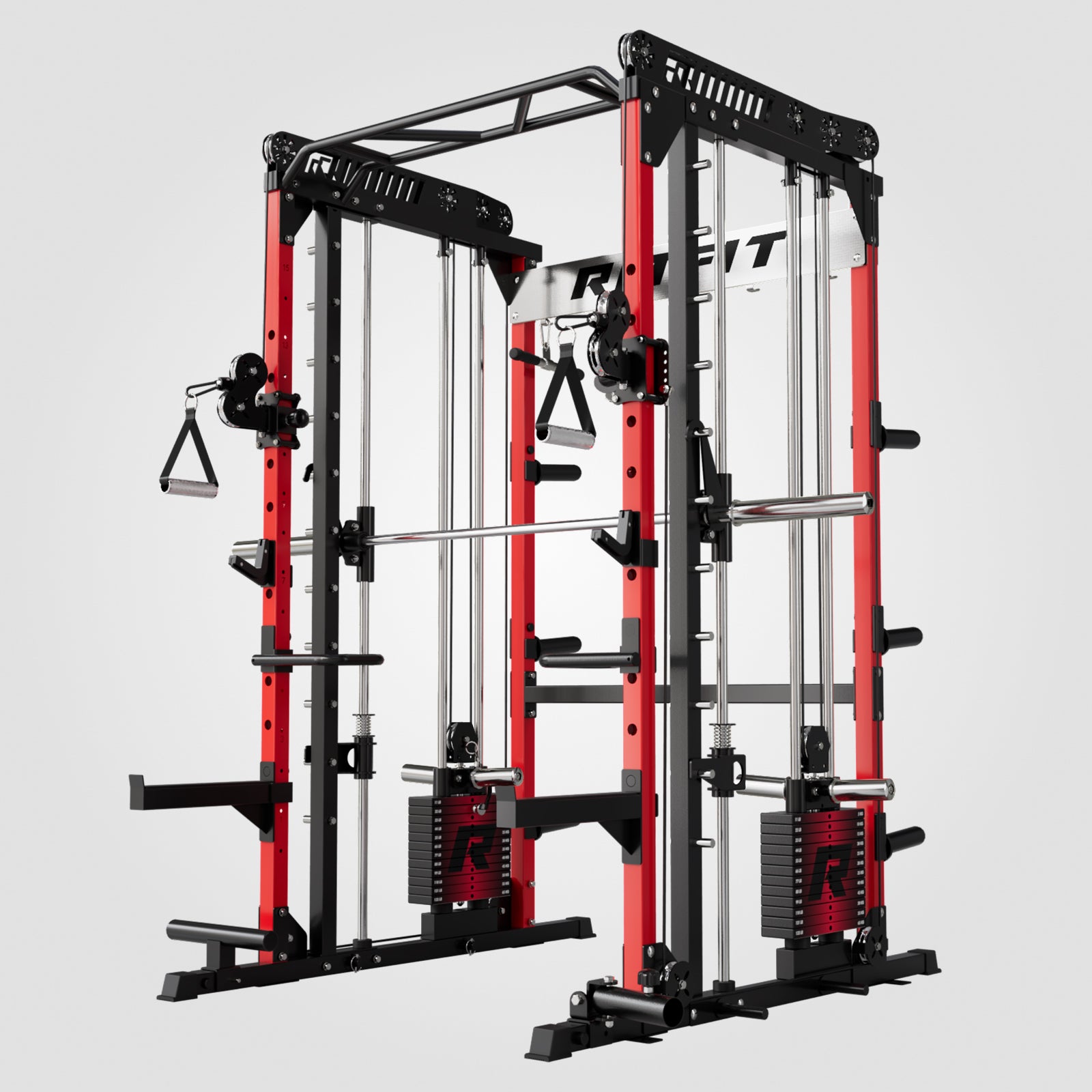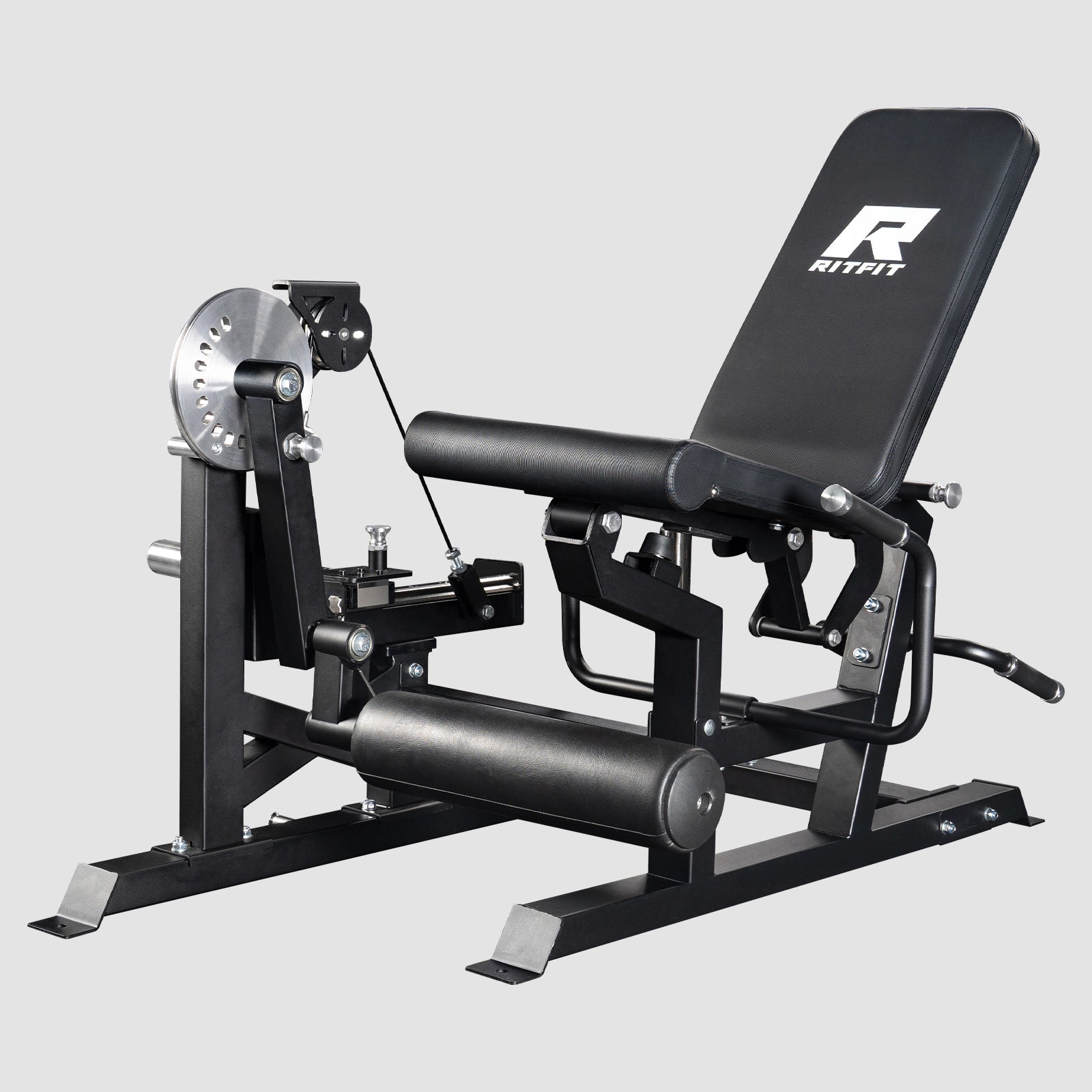
This Athletic Lower Body Workout trains strength, power, and single-leg control in one lower-body session on the RitFit M1 Pro smith machine and the PLC01 leg extension and curl machine. Coach Allison Murphy runs the full routine in the official RitFit video, and this guide covers the exact movement order, sets, reps, loads, and progression.
Expect four movement blocks, concrete loading rules, swap options, and clear stop conditions. The session targets the quads, hamstrings, and glutes and suits home gym owners training for sport or general athleticism.
Quick Answer: This Athletic Lower Body Workout pairs leg extensions and hamstring curls with Bulgarian split squats and Smith squats on the RitFit M1 Pro and PLC01, run in that order for 3 to 5 sets of 4 to 15 reps, once or twice a week, with load added when reps turn clean.
Key Takeaways
- Session order: Leg extensions, hamstring curls, Bulgarian split squats, and Smith squats, exactly as listed in the official RitFit video with Allison Murphy.
- Equipment split: The PLC01 handles quad and hamstring isolation while the M1 Pro smith machine carries the heavy compound work.
- Programming: Strength blocks run 3 to 5 sets of 4 to 8 reps and accessory blocks run 2 to 4 sets of 8 to 15 reps, with one to three reps left in reserve.
- Frequency and progression: Run the session once or twice a week, add reps before load, and reset the numbers whenever form drifts.
- Swaps and stop rules: Exchange movements freely when setup changes, and end any set the moment bar speed or bar path breaks down.
What Makes a Lower Body Workout Athletic
An athletic lower body workout trains three qualities at once: maximal strength, explosive power, and single-leg stability. Bodybuilding leg days chase muscle size, while athletic sessions train the legs to produce force quickly and stay balanced under load. Muscle growth still matters because a 2025 study reports that muscle growth is very strongly correlated with strength gains after lower body resistance training.[1]
Strength Base First
The heavy patterns come first in the session because they demand the most coordination and the freshest legs. Smith squats and Bulgarian split squats build the force base that the accessory work rides on.
Power Output
Power output is trained by keeping reps crisp and stopping well before form grinds. Athletes need legs that move load quickly, so the accessory blocks stay fast and controlled rather than slow and strained.
Single-Leg Control
Single-leg work like the Bulgarian split squat fixes the side-to-side gaps that bilateral squats hide. The exercise also loads balance and hip stability, which carry over to running, cutting, and field sports.
That three-part recipe separates an athletic lower body workout from a generic leg day, and the session below follows it exactly.
Why Build This Athletic Lower Body Workout Around Compound Lifts
Compound movement patterns train the largest muscle groups in one lift, which is why they anchor this session. Squat patterns load the quads, glutes, and trunk together, so each set buys more training effect than isolation work alone.
Big Patterns First, Isolation Last
Leg extensions and hamstring curls open the session to raise quad and hamstring temperature before the heavy patterns. The isolation work is not wasted at the front because it also preps the target muscles for the squats that follow.
This order keeps the heaviest work in the block where the bar and safety hooks are in play. If time runs short, keep the two compound patterns and trim one accessory rather than skipping squats.
"Real fat loss requires total-body strength training and conditioning that drives results. That means combining functional movements with compound lifts, aiming for the largest muscle groups that elevate heart rate and improve energy expenditure the most."
Jeff Cavaliere, MSPT, CSCS, Physical Therapist and Strength Coach at Athlean-X. How To Get Six Pack Abs Guide
Run the Session in This Order
The session follows the four movements listed in the official RitFit video with coach Allison Murphy: leg extensions, hamstring curls, Bulgarian split squats, and Smith squats. Run them as separate blocks in that order, resting 2 to 3 minutes before squats and about 90 seconds elsewhere.
Leg Extensions
Leg extensions open the session on the PLC01 with light to moderate loads for 10 to 15 reps. The goal is a full squeeze at the top and a slow 2 second return, not maximal weight.
Hamstring Curls
Hamstring curls follow on the same machine with the hips flat and the tempo slow on the way down. Treat them as direct hamstring work that also prepares the hip hinge patterns in your other sessions.
Bulgarian Split Squats
The Bulgarian split squat carries the single-leg load of the session, with the rear foot elevated and the torso tall. Our how to do a Bulgarian split squat guide covers the setup in detail.
Smith Squats
Smith squats close the session as the heavy anchor, working 3 to 5 sets of 4 to 8 reps. Set the hooks where a clean rep ends, and our how to do a Smith machine squat guide covers the full movement.
Warm up with these smith machine leg workout warm-up exercises before block one, and log the load and reps for every set.
Choose Your Smith Squat Stance on the RitFit M1 Pro
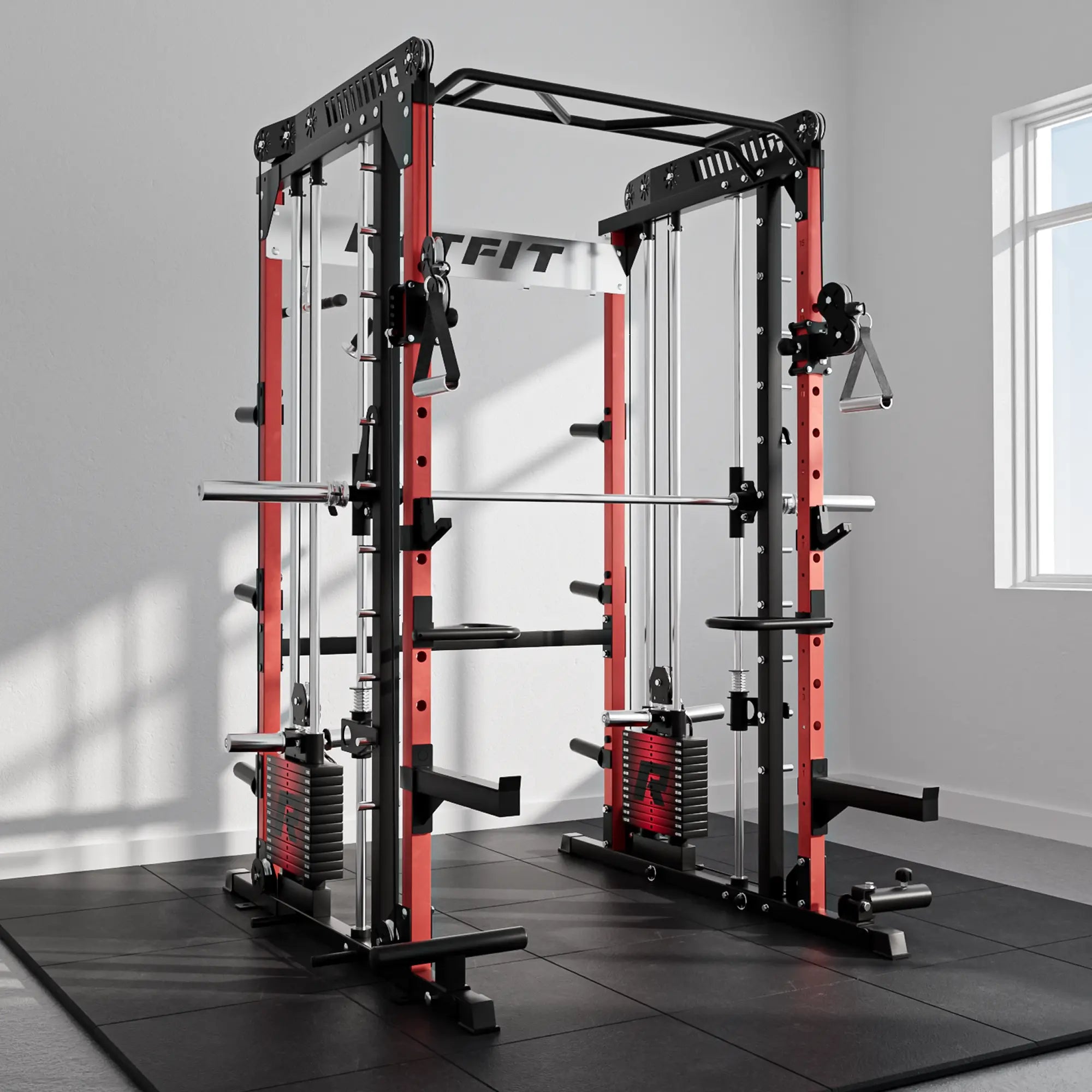
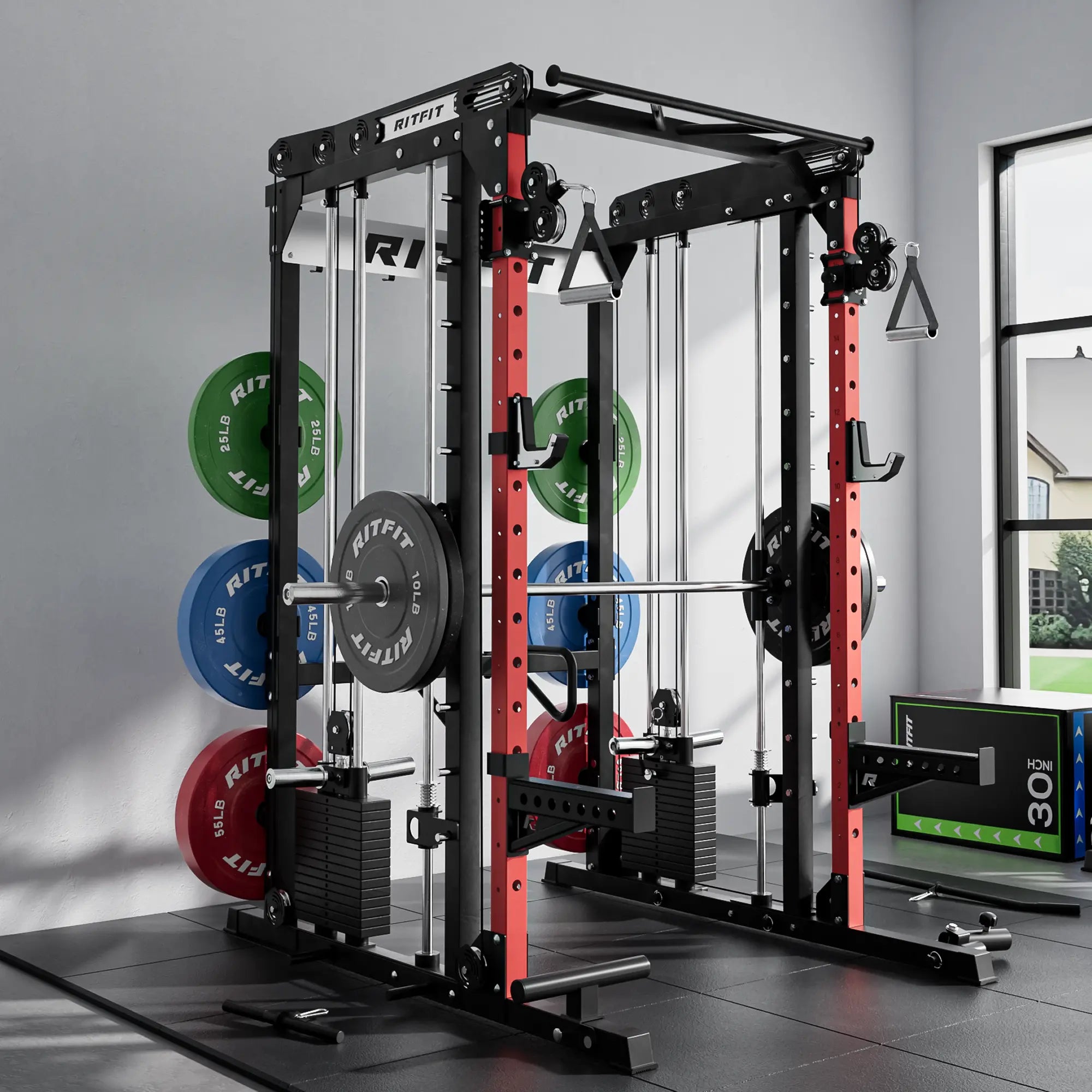
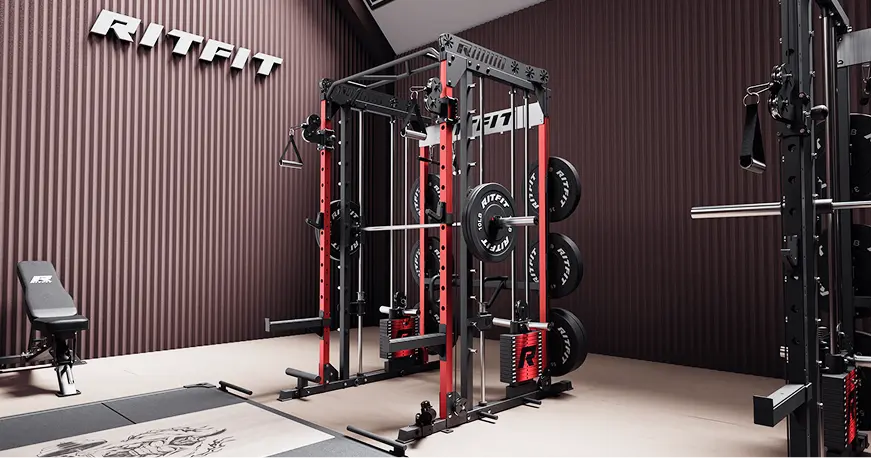
The RitFit M1 Pro smith machine locks the bar into a fixed vertical path, so your stance becomes the main variable in the heavy squat block. Set the safeties just below your bottom position, unrack with a quarter turn, and squat with a stance that lets the knees track over the middle of each foot.
Bar Path and Solo Safety
Keep the bar over midfoot and the brace tight through the full rep so the fixed track works for you. The fixed path means there is no spotter to call, so clip the hooks before every top set and stop the set the moment bar speed dies.
The same frame covers accessory patterns through its cable crossover system and squat rack, so one machine handles the whole lower body week.
"This thing is amazing for the price. Solid build quality. Shipped super fast, packing was done very well. Lifts have improved from my previous routine and now are much safer due to the smith machine benefits."
Walter S. Verified Buyer, RitFit M1 PRO Multi-Functional Smith Machine with Cable Crossover System and Squat Rack for Home Gym
Get More From Leg Extensions and Curls on the PLC01
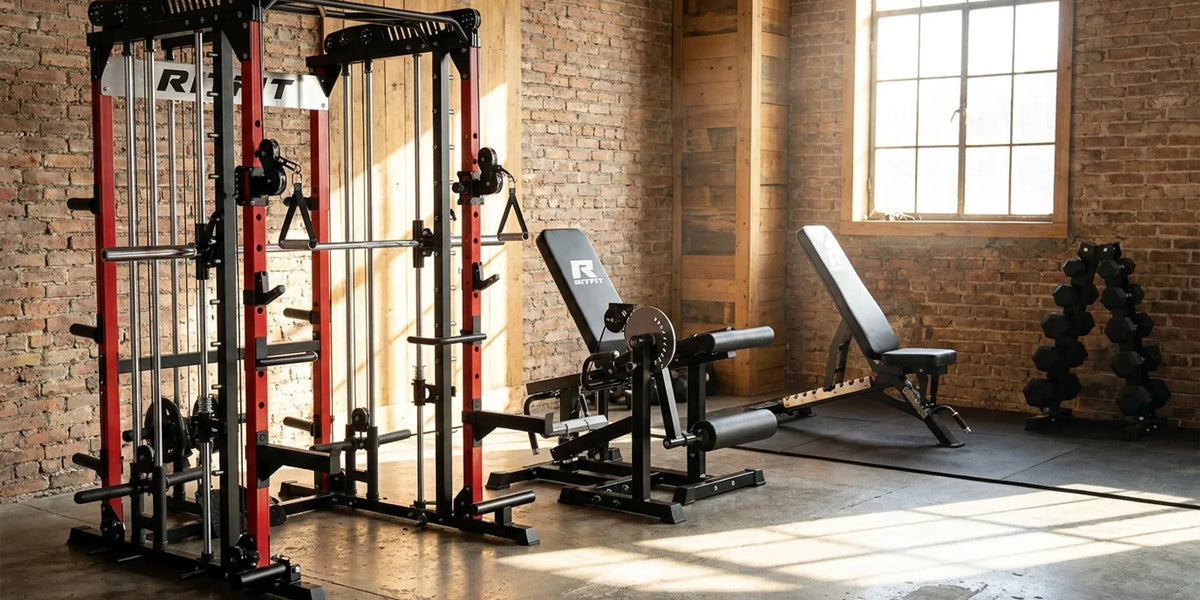
The PLC01 leg extension and curl machine delivers isolation work that free weights rarely match: leg extensions for the quads and curls for the hamstrings from a pinned seat. Set the pad so the knee lines up with the machine pivot, then move the stack with eccentric control and a 2 second pause at the top.
Pad Position, Tempo, and Glute Raises
Pad position decides the result: too far forward and the quads lose the top range, too far back and the hamstrings take over. Slow lowering reps and a hard squeeze beat heavy stacks swung with momentum, and the same seat supports glute raises for the posterior chain.
This is where a leg extension and curl machine earns its floor space in a home gym, since the movements are awkward to replicate with dumbbells and easy to load progressively. Our prone leg curl guide covers the hamstring side in detail, and the RitFit leg machines collection shows the wider category.
"Well made machine. Very smooth motion & an added bonus is that you can lean the back support backwards so that you are leaning backwards for leg extensions so you get a better stretch on the quads during a leg extension"
Grant P. Verified Buyer, RitFit PLC01 Leg Extension Curl Machine
Choose Loads, Reps, and Sets for Every Block
Load selection follows one rule: leave one to three clean reps in reserve on every work set. The heavy squat block runs 3 to 5 sets of 4 to 8 reps, while extensions, curls, and split squats run 2 to 4 sets of 8 to 15 reps.
Strength Blocks
For Smith squats, pick a load that moves 4 to 8 reps with the same bar speed on the last rep as the first. Warm up with an empty bar, then add load in two or three even steps before the work sets.
Accessory Blocks
Accessory loads are lighter and steadier: choose a stack pin you can move for 8 to 15 reps without changing body position. Stop each set when the tempo breaks, and keep the same load across every set in that block.
The American College of Sports Medicine position stand covers this exact terrain, summarizing how to prescribe resistance training for muscle function, hypertrophy, and physical performance in healthy adults.[2]
Run It Weekly and Know When to Progress
Training frequency and progression decide whether the session keeps working after the first month. The schedule is simple: run the session once or twice a week, and drive progressive overload with reps first and load second.
How Often to Run the Session
In one 8-week study of 22 resistance-trained adults, squat 1-RM gains of 8 and 15 kg came from one and four weekly sessions respectively, and the higher frequency group added about 7 kg more.[3] Muscle thickness and jump height tracked together at both frequencies, with jump height up 1.5 and 1.9 cm, so the best frequency is the one your weekly schedule absorbs.
When to Add Reps or Weight
Progress in two steps: first add reps inside the target range, then add load when the top of the range turns clean. An 8-week trial in 43 trained lifters found load progression and rep progression both viable, with strength favoring load by 2.0 kg and rectus femoris growth favoring reps by 2.8 mm.[4]
The trial called those differences of questionable practical significance, so consistency with either route beats perfection in choosing one.
Swap Movements Without Losing the Goal
Every block has a job, so swap the movement and keep the job when equipment or setup changes. Hack squats, goblet squats, and leg press patterns replace Smith squats, while reverse lunges and step-ups replace Bulgarian split squats.
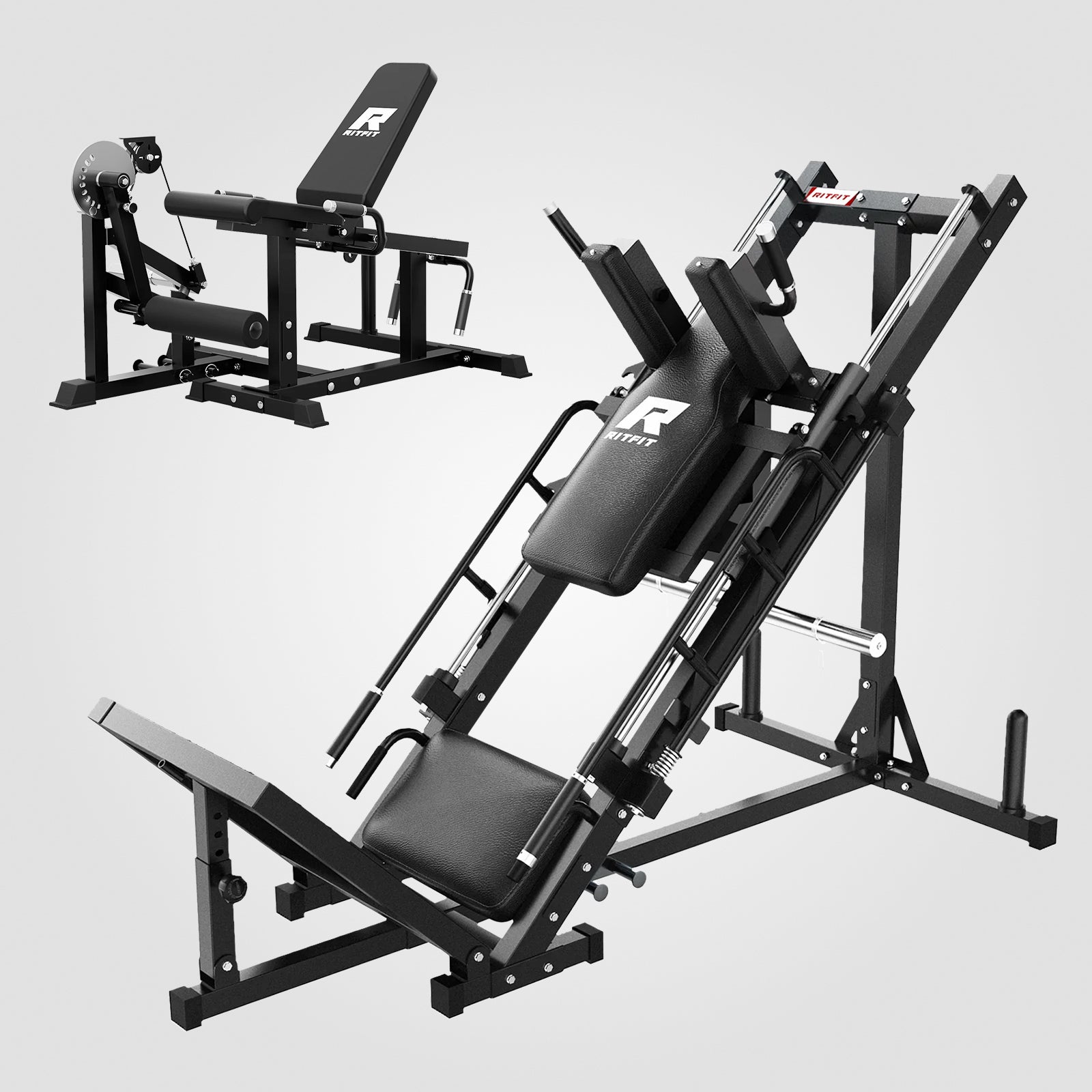
- Knee-dominant swap: The RitFit M1 Pro and BLP01 leg press package adds a dedicated leg press and hack squat pattern for the days the bar feels wrong.
- Single-leg swap: Reverse lunges and step-ups keep the balance demand of split squats without the rear-foot setup.
- Isolation swap: Any seated quad or hamstring machine replaces leg extensions and curls as long as the tempo stays slow and controlled.
- Posterior chain swap: Cable pull-throughs and hip thrusts fill in when the hamstrings need a different angle.
The load resets to whatever the new movement allows, but the set and rep targets stay put. Browse the RitFit smith machines collection when a squat-pattern upgrade is the real fix.
End the Set and the Session With Form Intact
End every set when the rep speed dies or the bar path drifts, not when the plan says the reps are done. Training through form breakdown adds fatigue without adding quality, and the next session pays for it.
- Stop the set: when the last rep grinds, when the bar path bends, or when body position shifts to move the load.
- Stop the session: when two sets in a row miss their rep target or the squat bar speed drops set after set.
- Next step: log the load and reps, repeat the same numbers next session until they turn clean, then progress.
Common Mistakes to Avoid
The most common mistakes are skipping the warm-up, jumping load in large steps, and grinding reps just to hit a number. Each mistake steals quality from the next set, so own the load and cut the set short when speed dies.
Sharp sets done early beat long grinding sets done late, and that habit keeps this athletic lower body workout sustainable week after week.
FAQs About This Athletic Lower Body Workout
What makes an athletic lower body workout different from a bodybuilding leg day?
An athletic lower body workout trains strength, power, and single-leg control together, not just muscle size. It pairs heavy compound patterns like Smith squats with fast, crisp accessories such as leg extensions and hamstring curls, so your legs produce force and stay stable under it.
Which movements does this athletic lower body workout include?
The workout follows the four movements listed in Allison Murphy's official RitFit video: leg extensions, hamstring curls, Bulgarian split squats, and Smith squats. The first two run on the PLC01, the split squats are free or machine assisted, and the Smith squats anchor the session on the M1 Pro.
How often should I run this lower body workout routine each week?
Run it once or twice a week with at least two easy days between sessions. In one eight week study, trained adults who spread four lower body lifts across four weekly sessions gained about 7 kg more on their squat one rep max than a single weekly session, so more frequent exposure can help strength.
How much weight should I use in this lower body workout?
Start with a load you can move for the listed reps with two clean reps still in reserve. On the M1 Pro Smith machine, warm up in stages before your work sets, and on the PLC01 choose a stack pin that lets the last two reps slow down without changing your position on the pad.
Can I swap exercises in this lower body workout routine?
Yes. Keep the training goal of each block and trade the movement. Swap Smith squats for hack squats or goblet squats, Bulgarian split squats for reverse lunges, and leg extensions or curls for any quad or hamstring isolation you control well. The set and rep targets stay the same.
Is this athletic lower body workout suitable for beginners?
Yes, with lighter loads and fewer sets. Beginners can keep the same four movement order, start with two sets per exercise, leave three or more reps in reserve, and add sets or reps only after the movement feels consistent for two straight sessions.
Conclusion
This athletic lower body workout gives home gym athletes a complete session on the RitFit M1 Pro and PLC01: leg extensions, hamstring curls, Bulgarian split squats, and Smith squats, with loading, frequency, and progression rules that scale with you. Run it once or twice a week, add reps before load, and end sets on clean form.
New to the session, start with two sets per movement and build up steadily. Browse more smith machine leg workouts and check the RitFit discount guide for current offers before expanding your setup.
Disclaimer
This article provides general training information for healthy adults and is not medical advice. Consult a qualified professional before starting a new exercise program, especially if you have an existing medical condition.
References
1. Marques EA, Balshaw TG, Funnell MP, et al. Muscle Growth Is Very Strongly Correlated with Strength Gains after Lower Body Resistance Training: New Insight from Within-Participant Associations. Med Sci Sports Exerc. 2025;57(12):2838-2845. doi:10.1249/MSS.0000000000003819. PMCID: PMC12893175
2. Currier BS, D'Souza AC, Singh MAF, et al. American College of Sports Medicine Position Stand. Resistance Training Prescription for Muscle Function, Hypertrophy, and Physical Performance in Healthy Adults: An Overview of Reviews. Med Sci Sports Exerc. 2026;58(4):851-872. doi:10.1249/MSS.0000000000003897. PMCID: PMC12965823
3. Pedersen H, Iversen VM, Vereide PF, et al. High-frequency resistance training improves maximal lower-limb strength more than low frequency. Eur J Sport Sci. 2024;24(5):557-65. doi:10.1002/ejsc.12055. PMCID: PMC11235667
4. Plotkin D, Coleman M, Van Every D, et al. Progressive overload without progressing load? The effects of load or repetition progression on muscular adaptations. PeerJ. 2022;10:e14142. doi:10.7717/peerj.14142. PMCID: PMC9528903