
A basic fitness routine for muscle gain is a simple weekly plan built on full body resistance workouts, compound exercises, and steady progressive overload.
You do not need a gym membership to run it.
Three focused sessions a week with dumbbells, a bench, or just your body weight are enough to put muscle on most beginners.
This guide walks you through the exact routine, how to pick your starting weight, and when to add more so you keep progressing without overcomplicating it.
Quick Answer: A basic fitness routine for muscle gain is a three day per week full body plan built on compound exercises like squats, presses, rows and hip hinges, done for 2 to 3 sets of 6 to 15 reps. You build muscle by gradually adding reps or weight over time, which is called progressive overload.
Key Takeaways
- Train 3 days: Run two to three full body sessions a week with at least one rest day between workouts.
- Compound exercises: Squats, presses, rows and hip hinges build the most muscle for the time you invest.
- Rep range: Use 2 to 3 sets of 6 to 15 reps, aiming for about four weekly sets per muscle group.
- Progress slowly: Add a rep or a small amount of weight only when your top sets stay clean.
- Start light: Pick a weight that keeps the last two reps hard without breaking your form.
What Is a Basic Fitness Routine for Muscle Gain?
A basic fitness routine for muscle gain is a repeatable weekly schedule that trains all major muscle groups with compound resistance exercises and slowly raises the difficulty as you get stronger.
- Full body focus: Each session hits legs, chest, back and shoulders so every muscle group is trained more than once a week.
- Simple progression: The plan drives growth with reps, sets and load instead of complicated equipment.
- Recovery built in: Rest days are part of the routine, because muscle is built between sessions, not during them.
This is a strength based plan, so it helps to understand how Types Of Weight Lifting Explained For Strength Muscle And Fitness differ before you build your own schedule.
Why Progressive Overload Is the Engine of Muscle Growth
Progressive overload is the practice of making your muscles work slightly harder over time, and it is the main signal that tells your body to build new muscle tissue.
- More reps: Push from 8 reps to 10 to 12 on the same exercise.
- More weight: Move to the next dumbbell up once your form stays clean.
- More range: Squat a little deeper or lower the bar under control.
- Slower tempo: Lower for three seconds instead of dropping the weight.
If the term is new to you, read What Is Overload In Fitness for a plain language breakdown before you start tracking it.
The 3 Day Full Body Muscle Gain Routine
The best starting schedule for a basic fitness routine for muscle gain is three full body sessions per week on alternating days, which trains every muscle group twice while leaving a full rest day between workouts.
| Day | Focus | Sample Exercises |
|---|---|---|
| Day 1 | Upper body | Dumbbell press, rows, shoulder press, plank |
| Day 2 | Lower body | Goblet squat, hip hinge, walking lunge, calf raise |
| Day 3 | Full body | Push ups, split squat, band rows, core work |
Exercises are examples. Swap any movement for a version that suits your equipment and comfort level.
- Keep volume realistic: Research on minimal dose training found that even a single set of each exercise, done at least twice a week, can still build strength in beginners, so a two day start is fine while you build the habit. [1]
- Spread it across sessions: A study found that training the same total amount across three sessions produced greater strength gains with less fatigue than a single weekly session in untrained subjects. [2]
- Use the 6 to 15 rep range: A review of time efficient resistance training recommends about four working sets per muscle group each week in that range as the baseline for hypertrophy. [3]
No dumbbells yet? Can You Gain Muscle With Resistance Bands shows how bands cover the same movement patterns.
"Training muscles in a lengthened position, where the muscle is under load at its greatest stretch, produces superior hypertrophic gains compared to training in a shortened range. This is why exercises that achieve deep knee flexion under load are particularly effective for quad development."
Brad Schoenfeld, PhD, Exercise Science Researcher specializing in Muscle Hypertrophy, CUNY Lehman College
How to Choose Your Starting Weight
Pick a starting weight you can lift for your full target reps with good form, where the last two reps of each set feel hard but your technique stays controlled.
- Dumbbells: For presses and rows, most beginners start around 10 to 25 lb per hand and adjust from there.
- Bodyweight first: If an exercise feels shaky, do the bodyweight version for two weeks before adding load.
- Err on the light side: A weight that is slightly too light still builds the habit, while a weight that is too heavy teaches bad form.
An Adjustable Dumbbells set makes it easy to step up 5 lb at a time as you progress.
When and How to Add Weight
Add weight when you complete all your target reps with clean form on the top two sets, and increase by a small step of around 2 to 5 percent.
- Reps first: Increase from 8 to 10 to 12 reps before you touch the load.
- Small jumps: Move up one dumbbell increment, usually 5 lb, rather than a whole plate.
- Two clean sessions: Progress only after two consecutive sessions with clean top sets.
- Relearn first: When you stall, revisit form or try a slightly harder variation before buying new gear. See What Is A Fitness Plateau.
Bands follow the same rule. How To Use Bands For Big Time Muscle And Strength Gains explains how to add tension in small steps.
Common Beginner Mistakes and How to Avoid Them
Most beginners stall because they lift too heavy too soon, skip rest days, or never track progress, so a basic routine fails for reasons that are easy to fix.
- Lifting too heavy: Heavy load with poor form creates bad habits and cut short workouts.
- Skipping rest days: Muscle grows during recovery, so training every day backfires.
- No tracking: Write down sets, reps and weights so you can see progress and know when to add more.
- Ignoring the warm up: Five minutes of easy reps and marching in place prepare your joints.
- Training through sharp pain: Stop any exercise that causes sharp joint pain instead of muscle burn, and have the movement checked.
Diet matters too. Read What Is Bulking In Fitness to pair this routine with the calories you need for growth.
Minimum Equipment to Run This Routine at Home
You can run this routine with an adjustable dumbbell set, a bench, and optionally a resistance band, which covers every movement pattern in the plan.
- Adjustable dumbbells: One pair replaces a whole rack and makes small weight jumps easy.
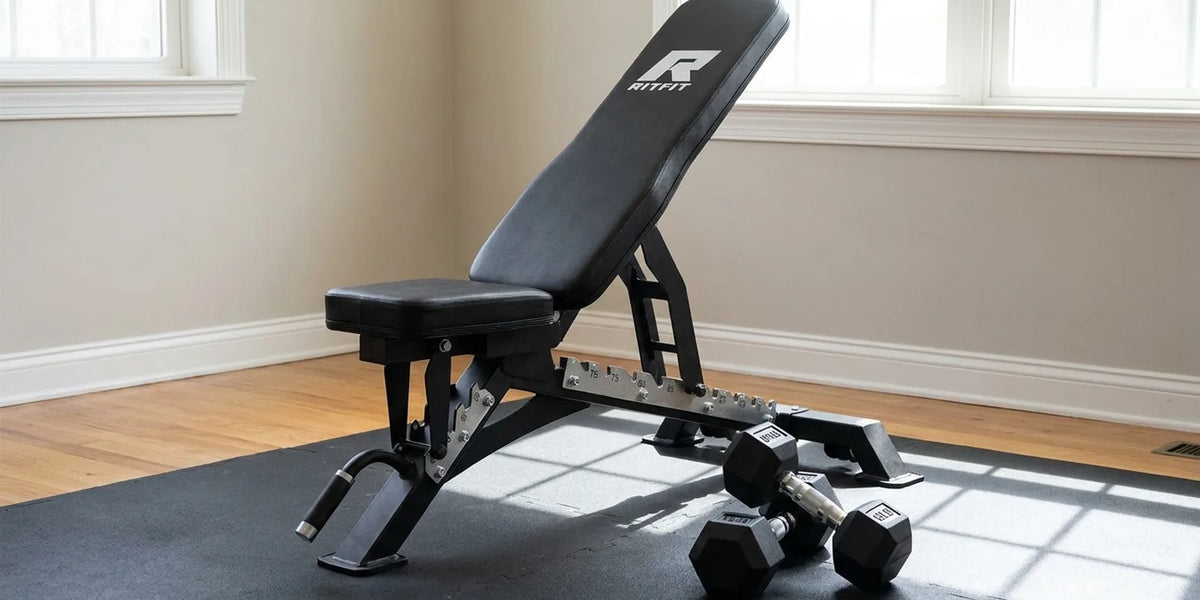
- A bench: A Benches model with incline positions supports presses and rows.
- Resistance bands: Cheap and compact, and they add load to rows and presses.
- An exercise mat: Protects your knees for planks and lunges.
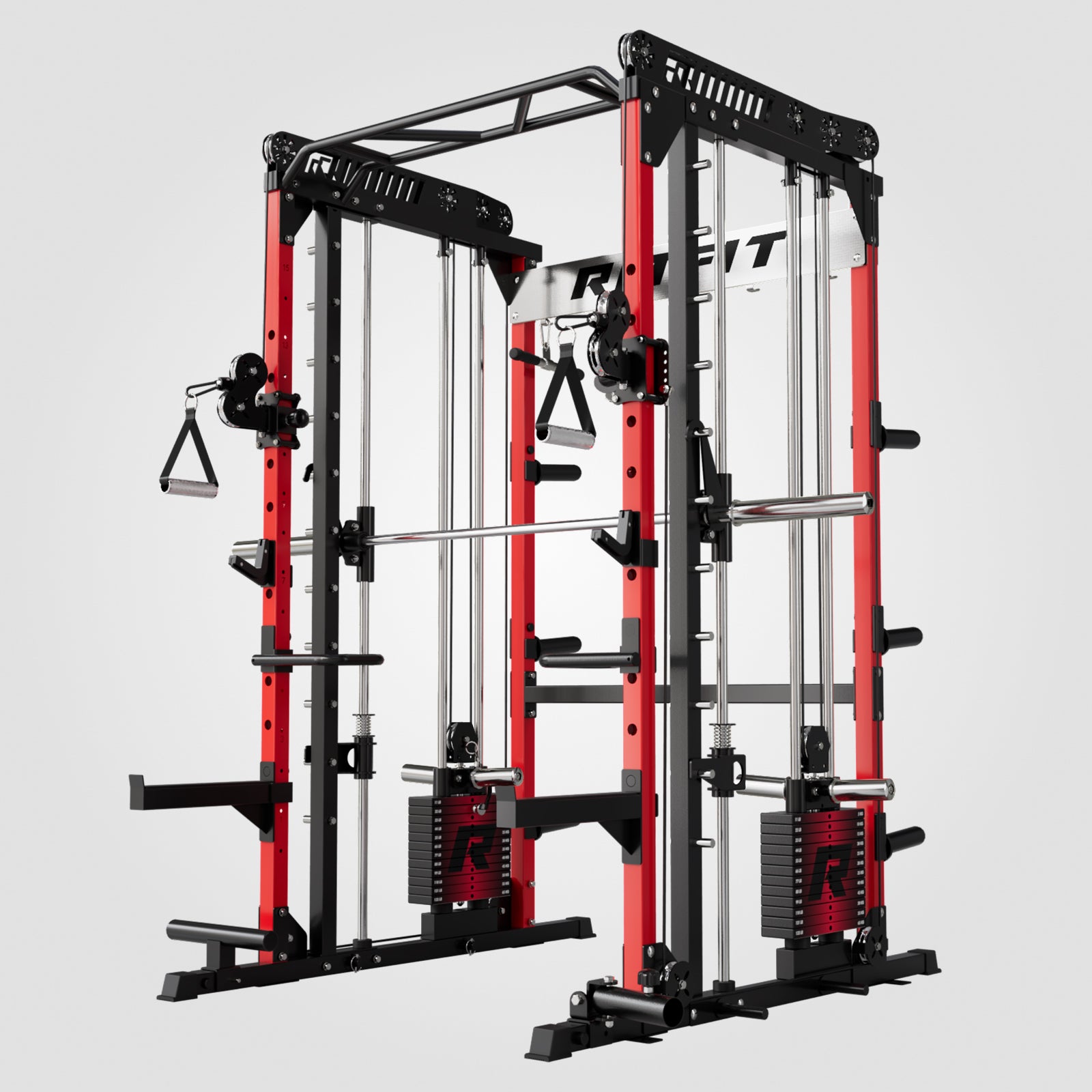
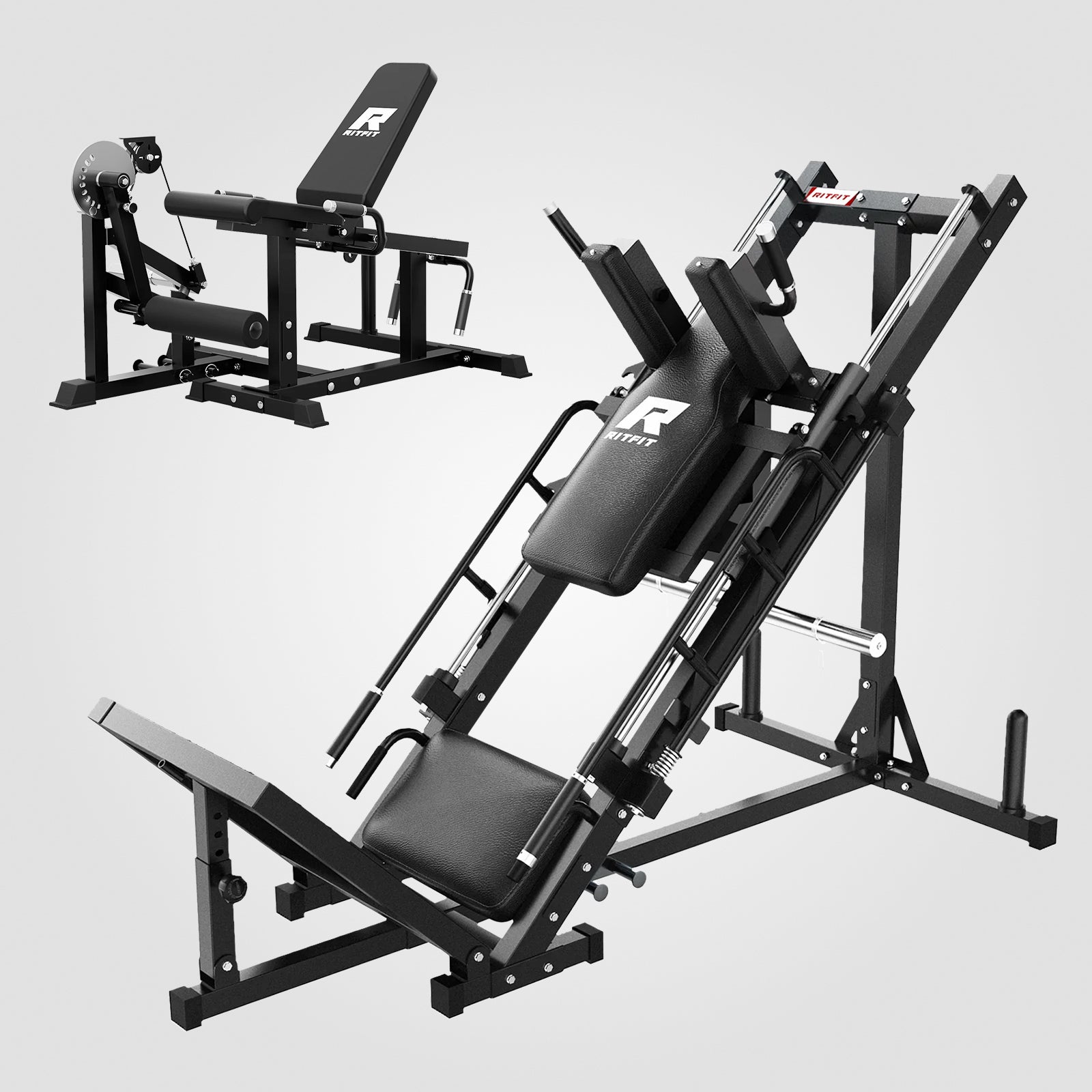
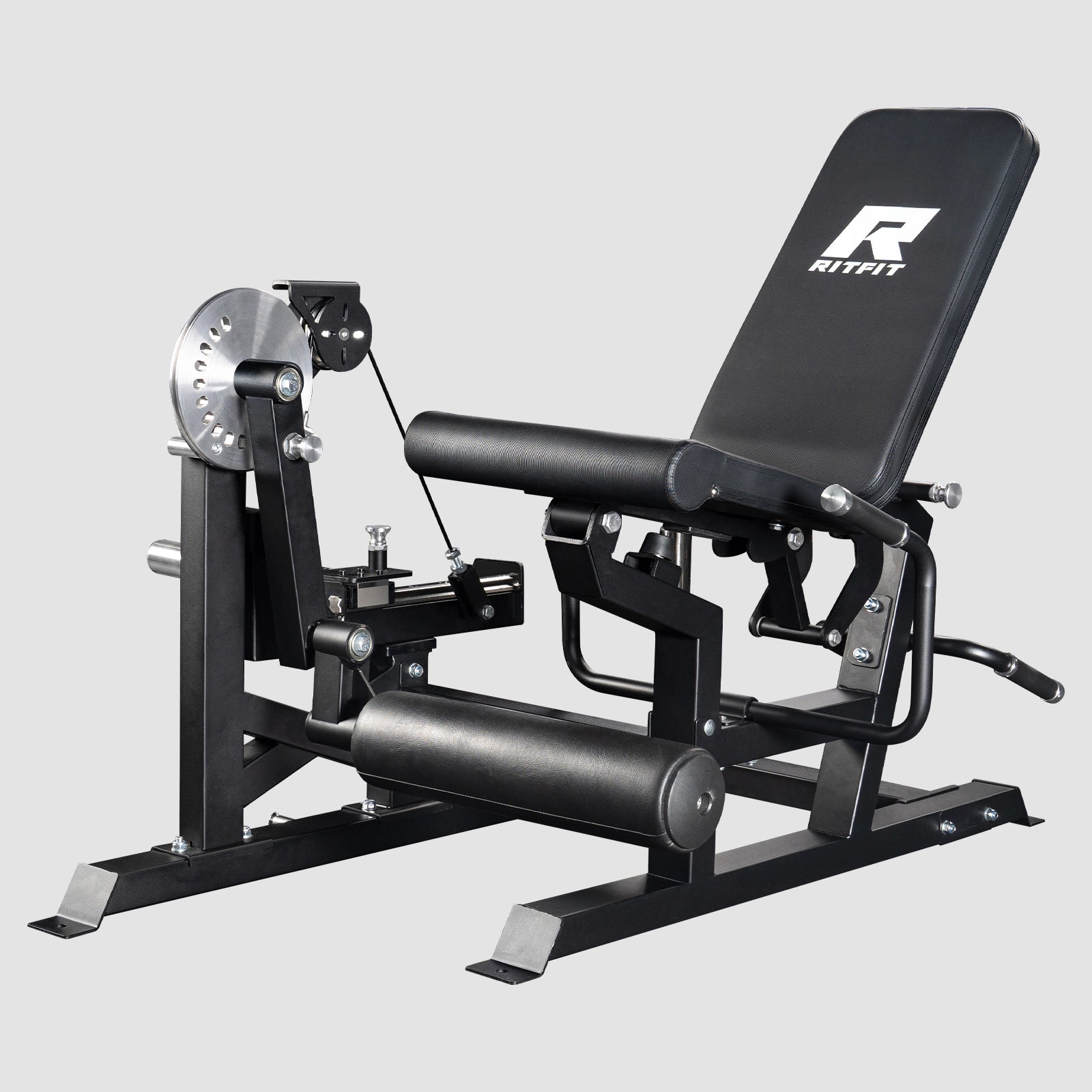
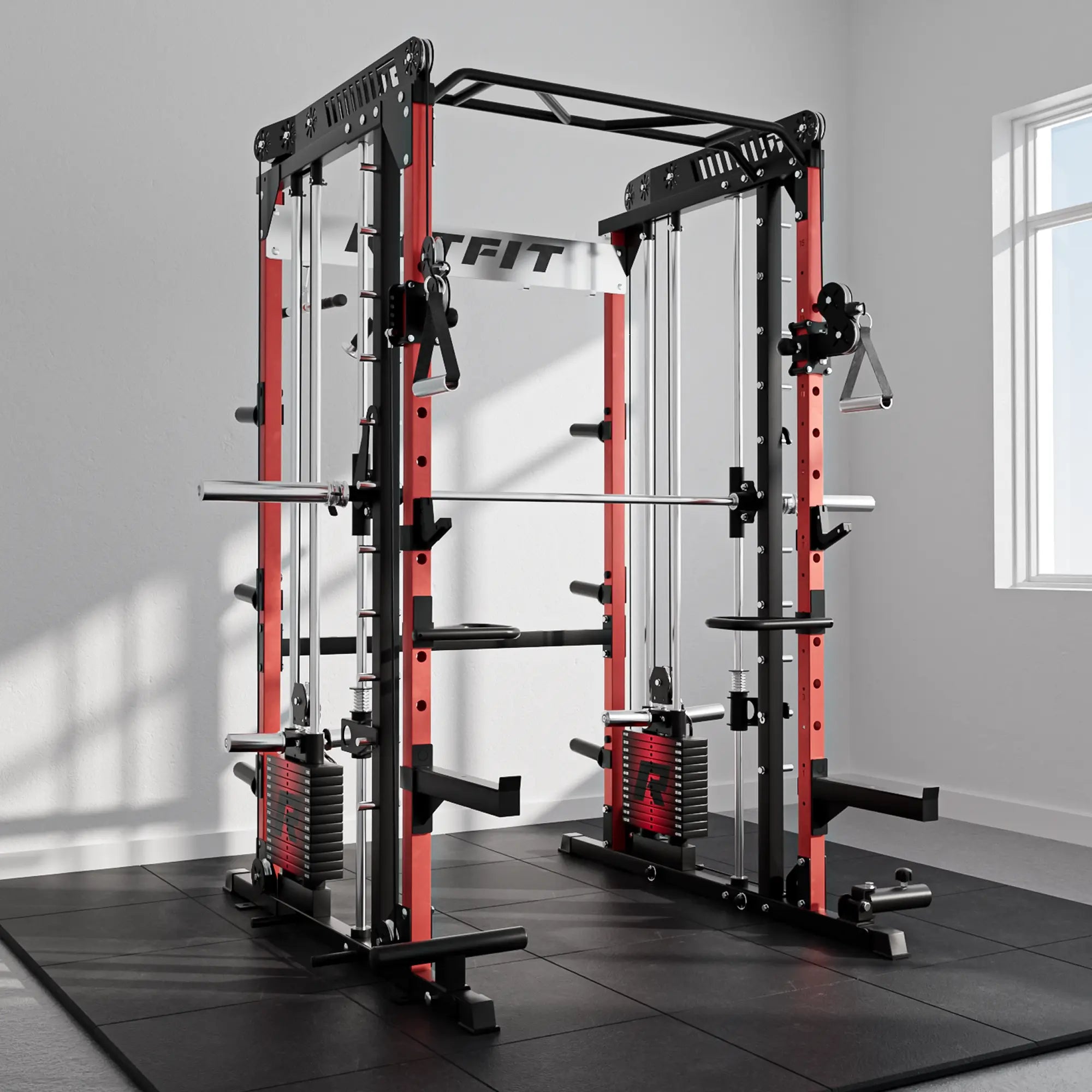
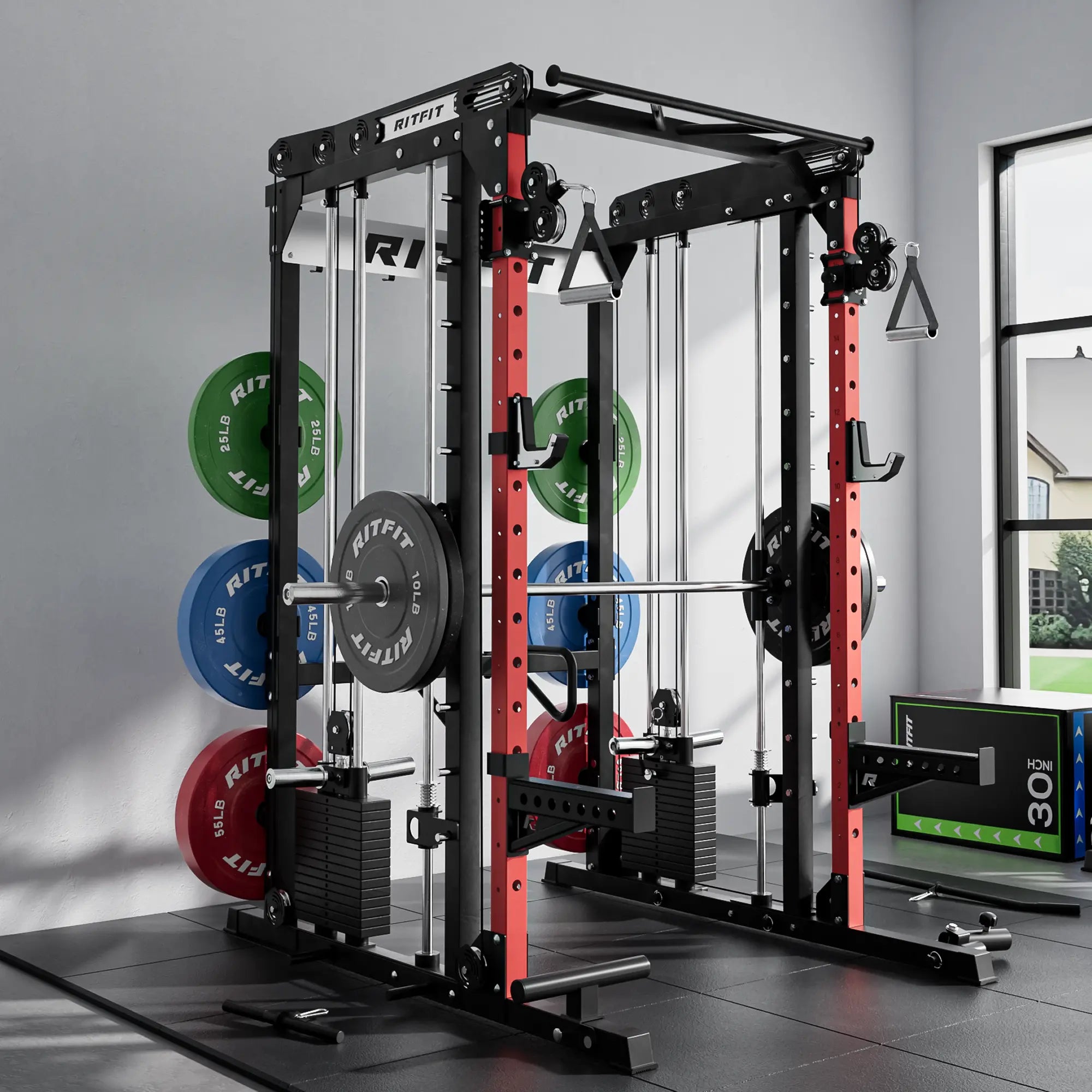
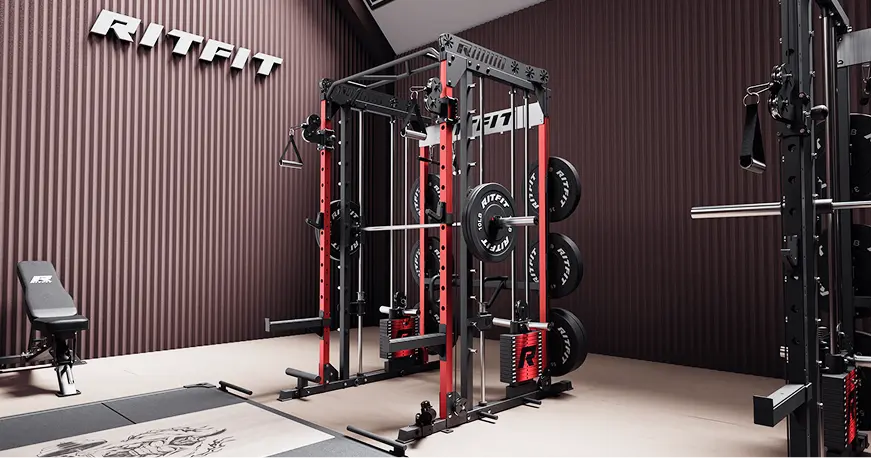
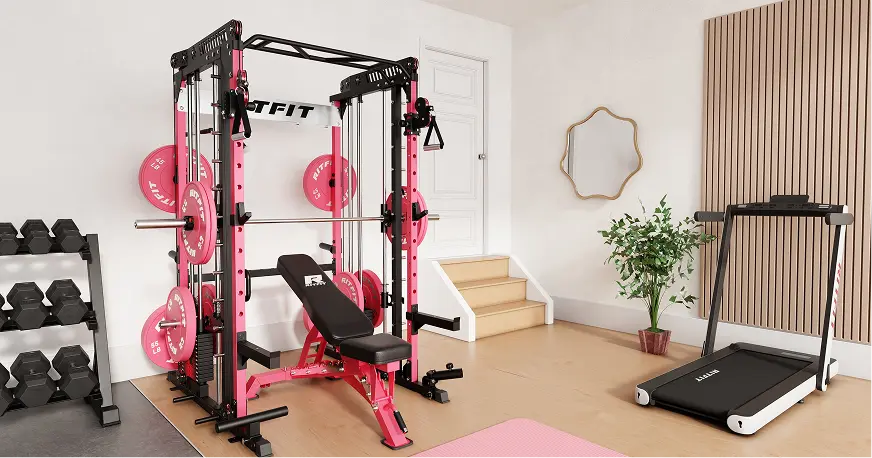
- All in one upgrade: If you want squat, press and cable work in one footprint, a machine like the RitFit M2 Multi Functional Modular Home Gym Smith Machine replaces several separate pieces.
Buy the pieces that cover the movements you skip most, and add gear only after your routine is consistent.
FAQs About Basic Fitness Routines for Muscle Gain
How many days a week should a beginner train to gain muscle?
Most beginners build muscle with two to three full body resistance sessions per week. Spreading the same weekly volume across three sessions improves strength with less fatigue than one long session, and it leaves enough rest days between workouts for recovery and growth.
How many sets and reps are best for muscle gain?
A practical starting point is two to three sets of six to fifteen repetitions per exercise.
Research recommends at least four weekly sets per muscle group within that rep range.
Beginners can start with three sets of eight to twelve reps and adjust the weight as they improve.
Can you build muscle with just bodyweight and dumbbells?
Yes.
Squats, push ups, rows and presses all build muscle when you apply progressive overload.
As bodyweight movements become easy, add dumbbells or a weighted vest, increase reps, or slow the lowering phase to keep the muscles challenged at home.
When should I increase the weight?
Add weight when you can complete your target reps with clean form on the top two sets.
Increase by a small step, around two to five percent, and keep the last two reps of each set challenging.
Progress slowly and prioritize form over heavier loads.
What is the quickest way for a beginner to build muscle?
The quickest reliable path is consistent full body resistance training, adequate protein and sleep, and steady progressive overload. Training each major muscle group at least twice a week while gradually adding reps or weight produces faster and more sustainable results than sporadic intense sessions.
Conclusion
A basic fitness routine for muscle gain comes down to three full body sessions a week, compound exercises, and a small bump in reps or weight whenever your form is clean. Rest days and steady progression do the heavy lifting behind the scenes.
Start with the lightest weight that challenges you, run the plan for four weeks, and only then consider adding gear. When you are ready to upgrade, browse the RitFit sales page for package deals.
Disclaimer
This article is for general information only and is not medical advice. If you have an injury, a health condition, or any doubt about an exercise, consult a qualified healthcare or fitness professional before starting a new training routine.
References
1. Nuzzo JL, Pinto MD, Kirk BJC, Nosaka K. Resistance Exercise Minimal Dose Strategies for Increasing Muscle Strength in the General Population: an Overview. Sports Med. 2024;54(5):1139-1162. doi:10.1007/s40279-024-02009-0. PMCID: PMC11127831
2. Ochi E, Maruo M, Tsuchiya Y, Ishii N, Miura K, Sasaki K. Higher Training Frequency Is Important for Gaining Muscular Strength Under Volume-Matched Training. Front Physiol. 2018;9:744. doi:10.3389/fphys.2018.00744. PMCID: PMC6036131
3. Iversen VM, Norum M, Schoenfeld BJ, Fimland MS. No Time to Lift? Designing Time-Efficient Training Programs for Strength and Hypertrophy: A Narrative Review. Sports Med. 2021;51(10):2079-2095. doi:10.1007/s40279-021-01490-1. PMCID: PMC8449772