A workout bench helps you train your chest, back, arms, core, glutes, and legs at home with better support, range of motion, and exercise variety. With one stable bench and a pair of dumbbells, you can build a practical full body strength routine without needing large machines.
This guide covers 12 effective weight bench exercises, the main muscles worked, form cues, programming tips, and a simple home bench workout you can repeat weekly. It also explains how an adjustable bench supports flat, incline, decline, and upright training.
Table of Contents
- Safety First: Bench Setup Checklist
- Quick Exercise Guide
- Dumbbell Bench Press
- Incline Dumbbell Bench Press
- Decline Bench Dumbbell Pull Over
- Incline Bicep Curl
- Barbell Curls Lying Against An Incline Bench
- Single Arm Dumbbell Row
- Plyo Bench Plank Hold
- Feet Elevated Cross Body Mountain Climb
- Feet Elevated Hip Thrust
- Bulgarian Split Squat
- Dumbbell Fly
- Close Grip Bench Press
- Sample Full Body Bench Workout
- How to Break a Bench Press Plateau
- Why an Adjustable Workout Bench Matters
Key Takeaways
- A workout bench can support full body strength training: You can train chest, back, arms, core, glutes, and legs with dumbbells, a barbell, or bodyweight.
- Bench angle changes muscle emphasis: A flat bench supports general pressing, while a moderate incline shifts more work toward the upper chest and front shoulders.
- Stable setup matters before every set: Check the bench locks, floor contact, and surrounding space before pressing, rowing, or loading the hips.
- Control beats heavy weight: Slow reps, full body tension, and proper joint alignment make bench exercises safer and more effective.
- An adjustable bench adds long term flexibility: Flat, incline, decline, and upright positions help you build more exercise variety in a compact home gym.
Safety First: Bench Setup Checklist
Proper bench setup reduces wobble, improves pressing control, and helps protect your shoulders, spine, wrists, and knees. Before every workout, check the bench position, locking pins, floor contact, and available space.
- Stability: Place the bench on flat ground and test for wobble before loading weight. Use a rubber mat if the floor is slick or uneven.
- Locks and pins: Confirm that the back pad and seat pad are fully locked before sitting or lying down. Never adjust the bench while holding weight.
- Footing: Keep your feet planted during presses, rows, and hip thrusts. Stable foot pressure helps your torso stay controlled.
- Clear space: Leave enough room around the bench to set down dumbbells safely. This is especially important when training alone.
- Load choice: Use a weight you can control for every rep. Stop one to three reps before failure on heavy pressing movements when you do not have a spotter.
Quick Exercise Guide
Use this quick guide to match each bench exercise with its main muscle group and best training goal. Choose four to seven exercises for a full body session, or focus on one region when training with a split routine.
| Exercise | Main Muscles | Best For |
|---|---|---|
| Dumbbell Bench Press | Chest, triceps, front shoulders | Upper body strength |
| Incline Dumbbell Bench Press | Upper chest, shoulders | Upper chest growth |
| Single Arm Dumbbell Row | Lats, upper back, core | Back strength |
| Feet Elevated Hip Thrust | Glutes, hamstrings | Glute training |
| Bulgarian Split Squat | Quads, glutes, hamstrings | Single leg strength |
12 Effective Weight Bench Exercises
These workout bench exercises cover major movement patterns for pressing, rowing, curling, hip extension, single leg training, and core stability. For best results, use controlled reps and train through a comfortable range of motion, since full range training can support hypertrophy when it is performed safely and with control.[1]
1. Dumbbell Bench Press

The dumbbell bench press is one of the best weight bench exercises for building chest strength at home. It lets each arm move independently, which can help improve control and reduce side to side strength gaps.
Main muscles worked: Chest, triceps, front shoulders.
- How to do it: Lie on the bench with your feet flat, shoulder blades pulled back, and dumbbells at chest level. Press the weights up until your arms are almost straight, then lower them with control.
- Form cue: Keep your elbows slightly tucked instead of flared straight out. This helps your shoulders stay in a stronger pressing path.
- Programming: Perform 3 to 4 sets of 8 to 12 reps. Rest 60 to 90 seconds between sets.
- Progression: Add weight only after you can complete every rep without bouncing, twisting, or losing shoulder position.
2. Incline Dumbbell Bench Press

The incline dumbbell bench press targets the upper chest more than a flat press when the bench is set to a moderate incline. Research on bench angles suggests that around 30 degrees can increase upper pectoralis major activation while very high inclines shift more work toward the shoulders.[2]
Main muscles worked: Upper chest, front shoulders, triceps.
- How to do it: Set the bench to a low or moderate incline and sit back with a dumbbell in each hand. Press the dumbbells over your upper chest, then lower them until your elbows are slightly below bench level.
- Form cue: Keep your wrists stacked over your elbows. Press up and slightly inward instead of pushing toward your face.
- Programming: Perform 3 to 4 sets of 8 to 10 reps. Use a lighter load than your flat dumbbell press.
- Regression: Lower the bench angle if your shoulders take over before your chest feels engaged.
3. Decline Bench Dumbbell Pull Over

The decline bench dumbbell pull over trains the chest, lats, and triceps through a long overhead arc. It works best with a moderate load and slow control because the bottom position can challenge shoulder mobility.
Main muscles worked: Chest, lats, triceps.
- How to do it: Set the bench to a slight decline and lie back with one dumbbell held over your chest. Lower the dumbbell behind your head in a controlled arc, then pull it back over your chest.
- Form cue: Keep your ribs down and avoid arching your lower back. Stop the descent before shoulder discomfort appears.
- Programming: Perform 2 to 3 sets of 10 to 12 reps. Use a weight that lets you move slowly.
- Regression: Use a flat bench if the decline position feels unstable.
4. Incline Bicep Curl

The incline bicep curl places the upper arm slightly behind the torso, which creates a strong stretch through the biceps. Training with controlled tempo and a stable arm path helps keep tension on the target muscle instead of the shoulders.[3]
Main muscles worked: Biceps, brachialis, forearms.
- How to do it: Set the bench to a 45 to 60 degree incline and sit back with your arms hanging down. Curl the dumbbells toward your shoulders, squeeze briefly, then lower them slowly.
- Form cue: Keep your elbows from drifting forward. If your elbows move forward, the front shoulders help lift the weight.
- Programming: Perform 3 to 4 sets of 8 to 12 reps. Lower each rep for 2 to 3 seconds.
- Progression: Add a pause at the stretched bottom position before curling again.
5. Barbell Curls Lying Against An Incline Bench

Barbell curls against an incline bench help reduce body swing and make the curl stricter. This variation is useful when you want more arm tension with less torso momentum.
Main muscles worked: Biceps, brachialis, forearms.
- How to do it: Position the bench upright or at a steep incline and lean your upper back against it. Hold a barbell or EZ curl bar with an underhand grip, then curl up and lower with control.
- Form cue: Keep your torso in contact with the bench. Do not lean away to create momentum.
- Programming: Perform 3 sets of 8 to 10 reps. Use a moderate load that allows a complete range of motion.
- Regression: Use dumbbells if a straight bar bothers your wrists.
6. Single Arm Dumbbell Row

The single arm dumbbell row is one of the most practical bench exercises for building the lats and upper back. It also trains your core to resist rotation while each side works independently.
Main muscles worked: Lats, upper back, rear shoulders, core.
- How to do it: Place one knee and the same side hand on the bench, with your other foot on the floor. Pull the dumbbell toward your hip, squeeze your back, then lower it until your arm is straight.
- Form cue: Keep your shoulders square to the floor. Avoid twisting your torso to heave the weight up.
- Programming: Perform 3 to 4 sets of 8 to 12 reps per side. Rest briefly before switching sides.
- Internal link: Pair rows with dumbbell chest exercises with a bench to build a balanced upper body routine.
7. Plyo Bench Plank Hold

The plyo bench plank hold is a core focused movement that also trains the shoulders, chest, and upper body stability. It can be performed as a static incline plank or a more dynamic power push variation.
Main muscles worked: Abs, shoulders, chest, glutes.
- How to do it: Place your hands on the bench and walk your feet back into a straight plank. Brace your abs and glutes, then hold or lower into a controlled incline pushup.
- Form cue: Keep your body in a straight line from head to heels. Do not let your hips sag.
- Programming: Perform 3 to 4 rounds of 20 to 30 seconds. Choose the static version before adding explosive reps.
- Regression: Skip the plyometric pop if your wrists or shoulders feel unstable.
8. Feet Elevated Cross Body Mountain Climb

The feet elevated cross body mountain climb trains the abs, hip flexors, shoulders, and stabilizers while raising your heart rate. Elevating the feet increases the demand on the core and shoulders.
Main muscles worked: Abs, hip flexors, shoulders, stabilizers.
- How to do it: Place your feet on the bench and your hands on the floor in a high plank. Drive one knee toward the opposite elbow, then switch sides with control.
- Form cue: Keep your shoulders over your wrists and your spine neutral. Look slightly ahead of your hands instead of dropping your head.
- Programming: Perform 3 to 4 rounds of 20 to 30 seconds. Move fast only if your hips stay level.
- Internal link: For more core ideas, use this 10 minute weight bench core routine.
9. Feet Elevated Hip Thrust

The feet elevated hip thrust trains hip extension and helps target the glutes and hamstrings with minimal equipment. Research reviews on hip thrust training report high gluteus maximus involvement during hip thrust variations.[4]
Main muscles worked: Glutes, hamstrings, hips.
- How to do it: Sit on the floor and place your heels on the bench. Drive through your heels to lift your hips until your body forms a straight line from shoulders to knees.
- Form cue: Squeeze your glutes at the top without over arching your lower back. Stop when your pelvis is neutral.
- Programming: Perform 3 to 4 sets of 10 to 12 reps. Add a dumbbell across your hips when bodyweight feels easy.
- Progression: Pause for two seconds at the top of each rep to increase glute tension.
10. Bulgarian Split Squat

The Bulgarian split squat is a demanding single leg bench exercise for quads, glutes, hamstrings, and balance. It is especially useful for home gyms because it creates a strong training effect without requiring a large machine.
Main muscles worked: Quads, hamstrings, glutes.
- How to do it: Stand about two feet in front of the bench with your back to it. Place the top of one foot on the bench, lower straight down, then push through your front heel to stand.
- Form cue: Keep your front knee tracking in line with your second and third toes. Do not let the knee collapse inward.
- Programming: Perform 3 sets of 8 to 10 reps per leg. Start with bodyweight before holding dumbbells.
- Regression: Use a standard split squat with both feet on the floor if balance is the limiting factor.
11. Dumbbell Fly
The dumbbell fly is a chest isolation exercise that emphasizes the stretch and squeeze of the pectoral muscles. It works best as a controlled finisher after pressing rather than a heavy max strength movement.
Main muscles worked: Pectoralis major, front shoulders, biceps as stabilizers.
- How to do it: Lie flat on the bench with dumbbells over your chest and palms facing each other. Lower the weights in a wide arc until you feel a chest stretch, then bring them back together without clanking the dumbbells.
- Form cue: Keep a slight fixed bend in your elbows. Stop the descent before shoulder pinching or pain.
- Programming: Perform 3 to 4 sets of 10 to 15 reps. Use a slow lowering phase and a light to moderate load.
- Safety note: Do not chase extra depth if your shoulder position changes or the front of the shoulder feels irritated.
12. Close Grip Bench Press
The close grip bench press is a compound triceps exercise that also trains the chest and front shoulders. It is useful for improving lockout strength because the triceps work hard near the top of the press.
Main muscles worked: Triceps, chest, front shoulders.
- How to do it: Lie on the bench with your feet planted and shoulder blades squeezed back. Grip the bar around shoulder width, lower it toward the lower chest, then press back to lockout.
- Form cue: Keep your hands shoulder width rather than extremely narrow. A too narrow grip can stress the wrists and reduce stability.
- Programming: Perform 3 sets of 8 to 12 reps. Use less weight than your standard bench press.
- Safety note: If training alone, avoid grinding heavy reps to failure. Use a rack with safeties or choose dumbbell triceps work instead.
Optional Add On: Triceps Bench Dips
Bench dips can add extra triceps work, but they should be used carefully because the shoulder position may bother some lifters. Follow this Triceps Bench Dips Form and Safety Guide before adding them to your routine.
- Quick finisher: Perform 3 to 4 sets of 8 to 15 controlled reps. Stop one to two reps before failure.
- Shoulder cue: Keep the range of motion pain free. Do not force a deep bottom position.
Sample Full Body Bench Workout
Use this home bench workout two to three times per week with at least one rest day between sessions. For more structured training plans, visit the Best Bench Workout Routines guide.
- Dumbbell Bench Press: 3 sets of 8 to 12 reps.
- Incline Dumbbell Bench Press: 3 sets of 8 to 10 reps.
- Single Arm Dumbbell Row: 3 sets of 8 to 12 reps per side.
- Bulgarian Split Squat: 3 sets of 8 to 10 reps per leg.
- Feet Elevated Hip Thrust: 3 sets of 10 to 12 reps.
- Incline Bicep Curl: 3 sets of 8 to 12 reps.
- Core Finisher: Choose Plyo Bench Plank Hold or Feet Elevated Cross Body Mountain Climb for 3 rounds of 20 to 30 seconds.
Beginner tip: Start with 2 sets per exercise and lighter weights. Add a third set only when your form stays clean across the full workout.
Advanced tip: Add three second lowering phases, pauses, or single limb variations to increase difficulty. Loading research suggests strength, hypertrophy, and endurance goals can use different rep ranges, so match your load and reps to your training goal.[5]
How to Break a Bench Press Plateau
If your bench press has been stuck for several weeks, your weak point is usually triceps strength, upper back stability, technique consistency, or poor programming. Use accessory bench exercises to strengthen the muscles that support pressing.
- Strengthen your triceps: Use close grip bench press when your lockout fails near the top. Keep the load controlled and avoid wrist discomfort.
- Build a stronger upper back: Use single arm rows and pull overs to support scapular stability. A stronger back gives your press a more stable base.
- Change the rep scheme: Replace constant 3 sets of 10 with a short strength phase. Try 5 sets of 5 for a few weeks if your form is consistent.
Why an Adjustable Workout Bench Matters
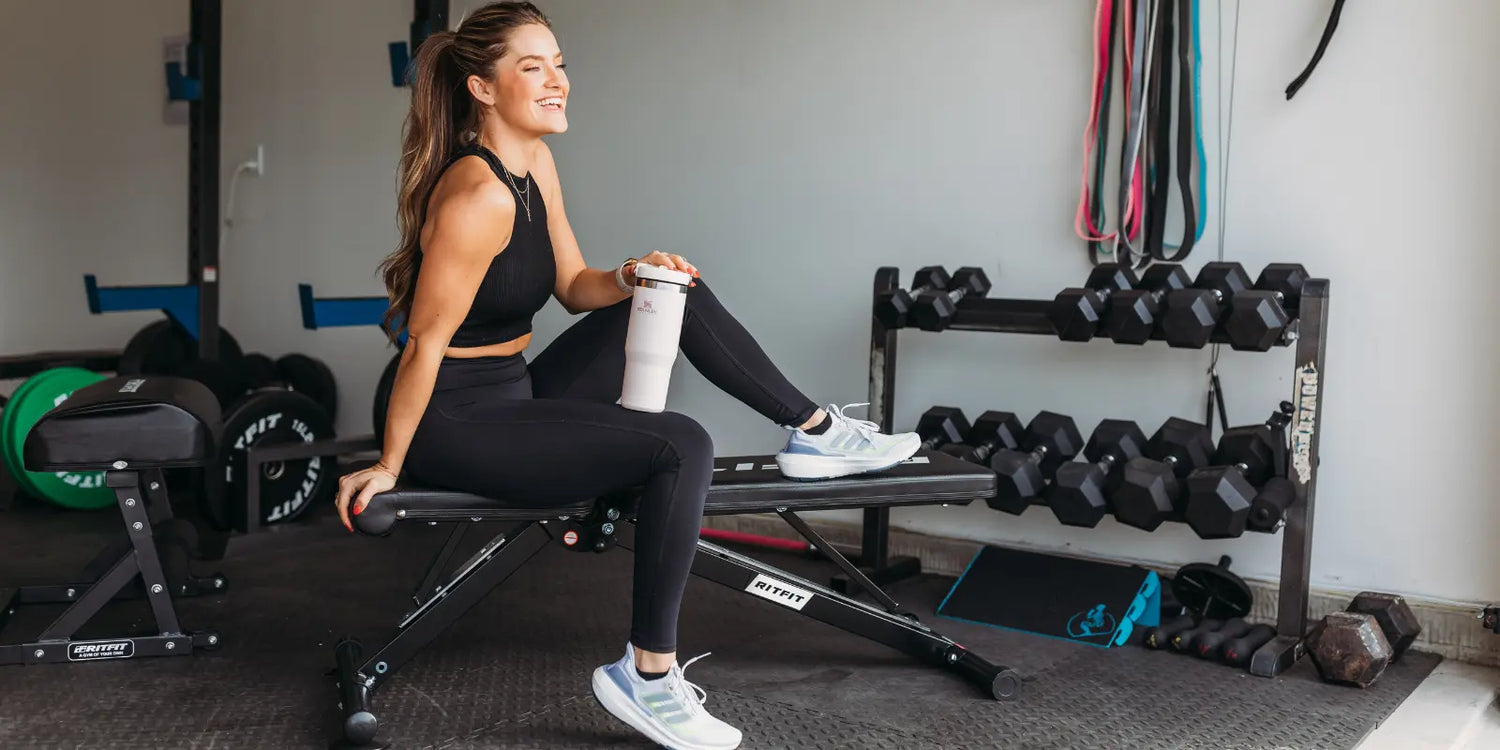
An adjustable bench gives you more exercise variety than a flat bench because it supports flat, incline, decline, and upright positions. This helps you train more muscle groups with fewer pieces of equipment in a home gym.
For lifters who want a stable bench for heavy pressing, rows, hip thrusts, and incline work, the RitFit Adjustable Workout Bench collection is the most relevant place to compare options.
The RitFit GATOR 1600LB Adjustable Weight Bench is a strong fit for this guide because it supports flat, incline, decline, and upright training positions for home strength workouts.
RitFit GATOR 1600LB Adjustable Weight Bench Key Specs
The GATOR is designed for lifters who want a heavy duty adjustable bench for home strength training. Its specs support a broad range of bench exercises, including presses, curls, rows, hip thrusts, and decline movements.
- Total load capacity: 1600 lb.
- Back pad adjustment: 10 levels from 0 to 85 degrees.
- Seat pad adjustment: 3 levels.
- Headrest adjustment: 5 levels.
- Decline settings: 3 levels.
- Padding: 2.7 in thick foam with durable vinyl style cover.
- Bench size: 57.8 in length, 25.2 in width.
- Product weight: 109.1 lb.
- Mobility: Built in transport wheels and handle for easier moving.
FAQs
What weight bench exercises are best for a full body workout?
The best weight bench exercises for a full body workout are presses, rows, split squats, hip thrusts, curls, flyes, and core planks. These movements train chest, back, arms, glutes, legs, and abs with minimal equipment, especially when paired with dumbbells or a barbell.
Can I build muscle with only a weight bench and dumbbells?
Yes. You can build muscle with a weight bench and dumbbells when you train with progressive overload, controlled form, and enough weekly volume. A bench expands your exercise range, helps you train muscles through deeper positions, and supports full body workouts at home.
How often should I do weight bench exercises at home?
Most lifters can do weight bench exercises two to four times per week. Beginners should start with two full body sessions weekly, while experienced lifters can split bench based training into push, pull, legs, or upper and lower body days.
Which adjustable bench angle is best for chest exercises?
A flat bench is best for overall chest pressing, while a thirty to forty five degree incline shifts more work toward the upper chest. Higher inclines usually involve more front shoulder work, so most home lifters should use moderate angles for better control.
Are weight bench exercises safe for beginners?
Yes. Weight bench exercises are safe for beginners when the bench is stable, the load is controlled, and each rep is performed with proper alignment. New lifters should start with basic dumbbell presses, rows, hip thrusts, and supported curls before adding heavy barbell work.
What muscles can I train with a workout bench?
A workout bench can train the chest, shoulders, triceps, biceps, back, core, glutes, hamstrings, and quads. Pressing, rowing, curling, thrusting, and single leg movements make the bench a versatile platform for balanced home strength training.
Should I choose a flat or adjustable weight bench?
An adjustable weight bench is usually better for home gyms because it supports flat, incline, decline, and upright exercises. A flat bench is stable and simple, but an adjustable bench offers more exercise variety and better long term training flexibility.
How do I make weight bench exercises harder without heavier weights?
You can make weight bench exercises harder by slowing the lowering phase, adding pauses, increasing range of motion, using single limb variations, or shortening rest periods. These methods increase muscular tension and control without requiring heavier dumbbells or a larger home gym setup.
Final Thoughts
A weight bench is one of the most useful pieces of home gym equipment because it turns a small training space into a full body strength station. Start with controlled reps, choose safe loads, and use flat, incline, decline, and upright positions to keep progressing over time.
Disclaimer: This article is for general educational purposes only and is not medical advice. If you have shoulder, back, neck, elbow, wrist, hip, or knee pain, or if you are recovering from injury or surgery, consult a qualified clinician before training. Stop any exercise that causes sharp pain, numbness, dizziness, or unusual weakness.
References
- Schoenfeld BJ Grgic J. Effects of range of motion on muscle development during resistance training interventions: a systematic review. SAGE Open Med. 2020;8:2050312120901559. doi:10.1177/2050312120901559
- Rodríguez Ridao D Antequera Vique JA Martín Fuentes I Muyor JM. Effect of five bench inclinations on the electromyographic activity of the pectoralis major, anterior deltoid, and triceps brachii during the bench press exercise. Int J Environ Res Public Health. 2020;17(19):7339. doi:10.3390/ijerph17197339
- Androulakis Korakakis P Wolf M Coleman M Burke R Piñero A Nippard J Schoenfeld BJ. Optimizing resistance training technique to maximize muscle hypertrophy: a narrative review. J Funct Morphol Kinesiol. 2024;9(1):9. doi:10.3390/jfmk9010009
- Neto WK Vieira TL Gama EF. Barbell hip thrust, muscular activation and performance: a systematic review. J Sports Sci Med. 2019;18(2):198-206.
- Schoenfeld BJ Grgic J Van Every DW Plotkin DL. Loading recommendations for muscle strength, hypertrophy, and local endurance: a re-examination of the repetition continuum. Sports. 2021;9(2):32. doi:10.3390/sports9020032