The best chest isolation exercises are the fly and crossover movements that train arm adduction, the one motion a press never finishes. They load the pectoralis major directly, at the point where it contracts hardest.
This guide ranks eight of them across cable, machine, and dumbbell setups, then covers how heavy to go, how often to train them, what to swap in at home, and the shoulder signals that mean stop.
Quick Answer: The best chest isolation exercises are the cable fly, low to high cable crossover, high to low cable crossover, pec deck fly, flat and incline dumbbell flyes, the single arm dumbbell fly, and the Svend press. Each one trains arm adduction under load, which a bench press never completes.
Key Takeaways
- Isolation means adduction: a chest isolation exercise brings the arms across the body, a range a press never reaches.
- Cables first: cable and machine flyes hold tension through the whole arc, so they are the easiest to feel and to control.
- Load lighter than you press: the 10 to 15 rep range keeps the lengthened position from becoming a shoulder test.
- Two or three movements per session: flies add quality sets, they do not replace your pressing work.
- Stop at the first pinch: front of shoulder discomfort means shorter range or a cable version, not more warmup sets.
What Are Chest Isolation Exercises and Why Do They Matter?
Chest isolation exercises are single joint movements that bring the arms across the body to train the pectoralis major directly. They matter because a press stops at the mid range, leaving the adduction and peak contraction work undone.
- Shortened range: the arms travel toward and past the midline, a position no press reaches.
- Constant tension: cables and machines hold load across the whole arc instead of unloading near lockout.
- Low skill ceiling: there is no bar path to balance, so you can chase the squeeze instead of the lift.
A 10 week study of 16 strength trained men found that adding targeted pectoralis major work to a bench press program significantly raised chest activity during the bench press, while the bench press only group showed no significant change.[1] The practical reading is that direct chest work changes how much your chest contributes, not just how much weight is on the bar.
"We have to train adduction. This is not an optional exercise if you want your biggest chest. I don't like the unsupported dumbbell flyes -- it actually creates a lot of instability at the shoulder."
Jeff Cavaliere, MSPT, CSCS, Physical Therapist and Strength Coach, Creator of ATHLEAN-X, Jeff Cavaliere Chest Cable Crossover
Isolation vs Pressing: What Is the Difference?
- Presses: the elbows extend, load peaks near lockout, and the chest shares the work with the front delts and triceps.
- Isolation: the elbows stay at a fixed bend, load peaks as the arms cross the midline, and the chest is the only muscle that can move the joint.
Why Adduction and Peak Contraction Decide Chest Growth
The pectoralis major has a clavicular head that helps raise the arm and a sternocostal head that drives the arm inward. Cable and machine flyes let you bias that inward job by keeping tension on the chest as your hands cross the midline.
Which Cable and Machine Chest Isolation Exercises Work Best?
Cable and machine flyes are the best chest isolation exercises for most lifters. The pulley or the cam keeps tension on the pectoralis major through the entire arc, and you can change the angle of pull to shift which fibers do the work.
Cable Fly
Set both pulleys at chest height and stand in the middle with a handle in each hand. Step forward, keep a soft bend in the elbows, and bring your hands together without letting it turn into a press.
- Setup: pulleys level with your chest, one foot forward for balance.
- Path: sweep in a hugging arc rather than a straight line.
- Finish: hands meet in front of the sternum, then take 3 seconds to return.
Low to High Cable Crossover
This version points your arms upward as they meet, which tilts the line of pull toward the upper fibers. It is the crossover most lifters feel fastest.
- Setup: pulleys on the lowest setting, handles held with an underhand grip.
- Path: sweep your hands up and inward until they almost touch at chin height.
- Finish: hold the squeeze for 1 second, then lower with control.
High to Low Cable Crossover
Pulleys at the top turn the crossover into a downward sweep. That keeps tension on the chest even after the arms pass below the midline.
- Setup: pulleys above head height, slight forward lean from the hips.
- Path: pull down and in, finishing with your hands near your hips.
- Finish: do not let the stack slam, treat the return as part of the rep.
Pec Deck Machine Fly
The pec deck fixes your elbow angle and your path, which makes it the easiest chest isolation exercise to take close to failure safely. A study on the pec fly tracked pectoralis major thickness with real time ultrasound at 50% and 80% of one rep max, and reported that visual biofeedback narrowed the difference between those two loads.[2]
- Setup: set the seat so the handles sit level with your chest, not your shoulders.
- Path: drive with the upper arms and keep the elbows at a fixed angle.
- Finish: squeeze hard, then resist the pads on the way back.
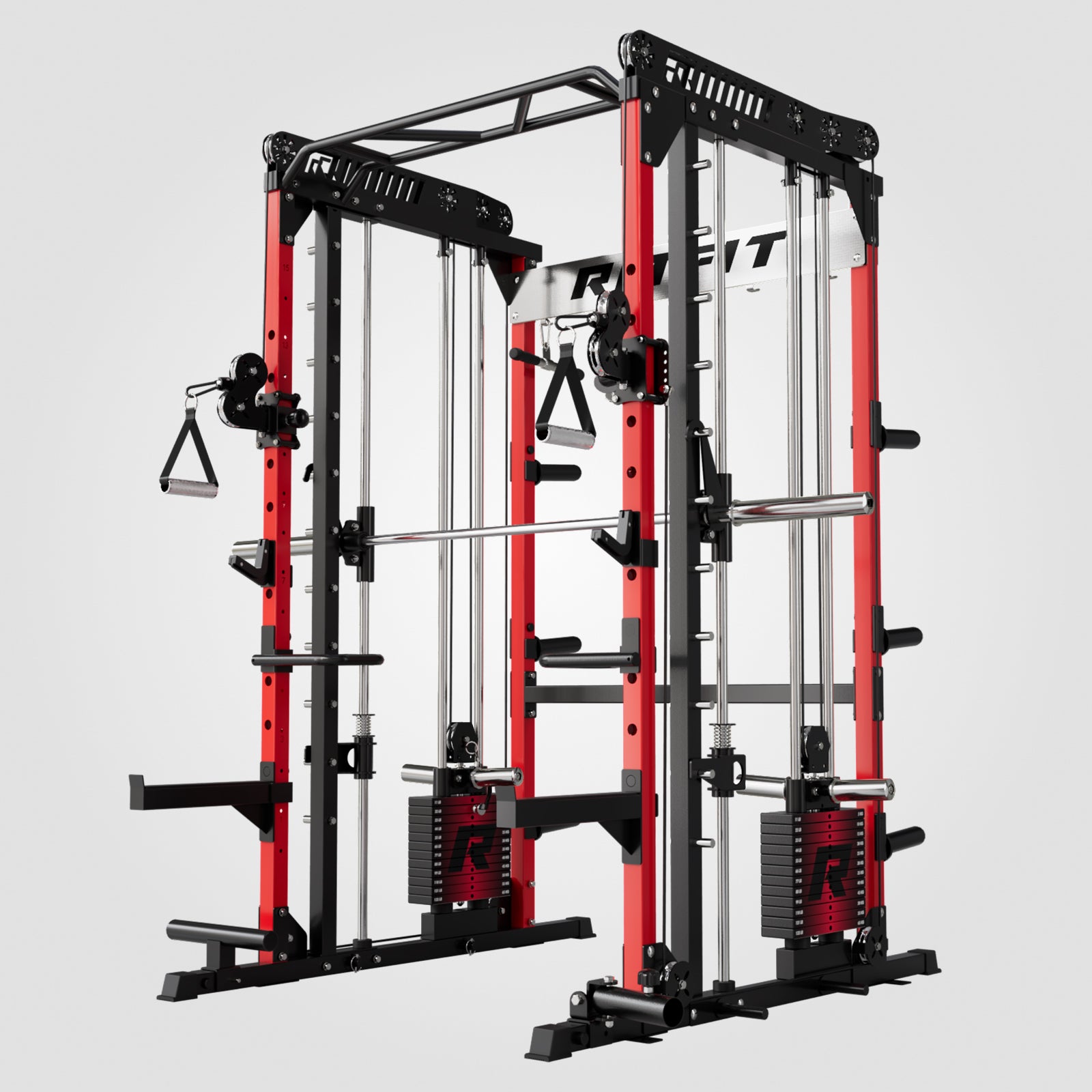
A cable machine or a rack with a crossover station covers three of the four movements above, and the RitFit M3 Power Rack Cable Crossover Smith Machine runs dual pulleys you can lock at any height. A pair of cable machine handles is worth adding if you want single arm reps without changing your grip mid set.
"Arrived today and took less than an hour to put together. Very good directions! Will be breaking it in tomorrow."
Diane L. Verified Buyer, RitFit Gorilla 2-in-1 Chest and Shoulder Press Machine
Which Dumbbell Chest Isolation Exercises Should You Add?
Dumbbell flyes are the best chest isolation exercises when you have no cable station or pec deck. They fix the elbow angle, so you can own the stretch at the bottom and the squeeze at the top.
Flat Bench Dumbbell Fly
Lie flat with a dumbbell in each hand and press them above your chest with the palms facing each other. Lower the weights out to the sides until your upper arms are level with the bench, then squeeze them back together.
- Setup: neutral grip, elbows bent about 15 degrees and locked there.
- Path: wide arc, not a straight arm raise.
- Finish: stop at the midline and do not clang the dumbbells together.
Incline Dumbbell Fly
Setting the bench to a 30 degree incline puts more of the work on the clavicular head of the pectoralis major. That is the upper section most lifters want to bring up.
- Setup: bench around 30 degrees, both feet planted.
- Path: the same arc as the flat version, with a slightly shorter range.
- Finish: squeeze at the top and keep your lower back on the pad.
Single Arm Dumbbell Fly
Working one arm at a time lets you rotate slightly and hold the peak longer. It is useful when one side of your chest lags behind the other.
- Setup: one dumbbell, free hand braced on the bench or your ribs.
- Path: the same arc, but you can pause wherever tension feels strongest.
- Finish: match the reps on both sides, even if the weaker side sets the number.
Svend Press
The Svend press is the squeeze version of chest isolation work. You press two plates together at chest height and push them forward, so the pectoralis major keeps contracting through adduction the whole time.
- Setup: two light plates pinched between your palms, elbows bent.
- Path: push straight out and pull straight back, never let the plates part.
- Finish: use higher reps here, the load is not the point.
For the heavier pressing side of your chest day, see our guide to dumbbell exercises for the upper chest and the wider list of dumbbell chest exercises. Flyes cover the range those movements cannot.
"RitFit Rubber Hex Dumbbell with Metal Handle For Free Weights Exercises|10-60 lbs Weights Range"
Romaine Hall, Verified Buyer, RitFit Rubber Hex Dumbbells Pairs and Sets
How Heavy Should You Go on Chest Isolation Exercises?
Go lighter than you press, and treat the 10 to 15 rep range as home base. The stretched position puts a long lever on the shoulder, so a heavy fly stops being a chest exercise and becomes a shoulder test.
- Starting load: begin around half of what you press for the same reps, then adjust from feel.
- Add weight when: you reach the top of the rep range on every set with a 1 second pause at the stretch.
- Progress in this order: more reps, then more load, then a longer pause at the peak.
- Do not add when: your elbows drift forward or your shoulders roll off the bench.
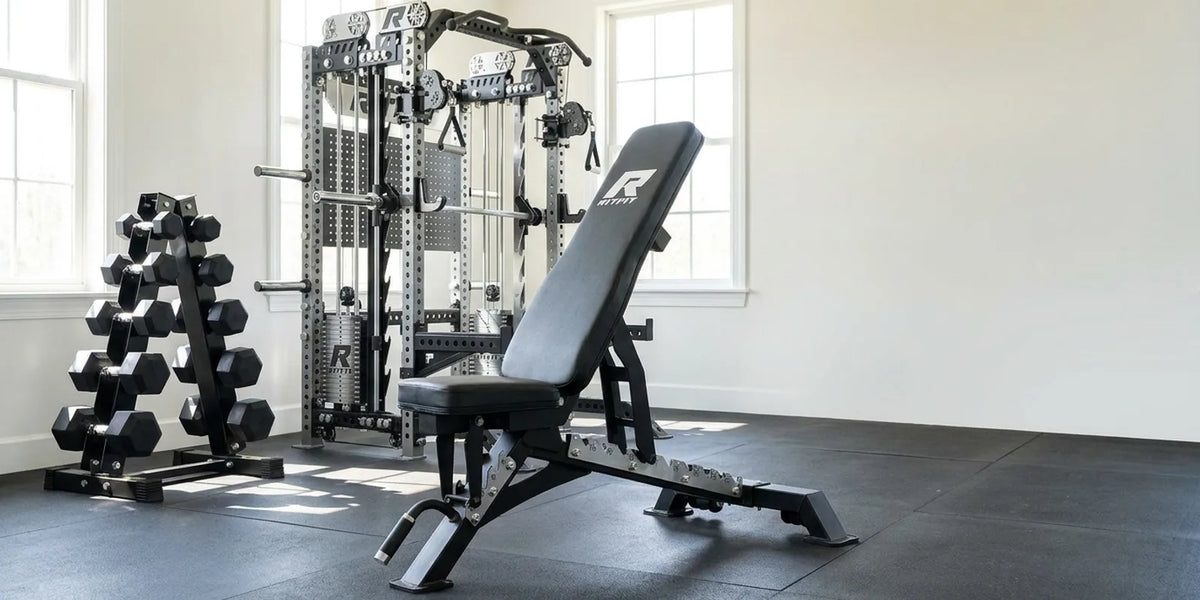
If you want the pressing and the flyes on the same bench, our guide to dumbbell chest exercises with a bench covers that setup.
How Often Should You Train Chest Isolation and What Can You Swap In?
Twice a week is enough for most lifters. Plan 2 or 3 isolation movements per session and 6 to 10 isolation sets per week, then let presses carry the heavy work.
- Weekly volume: one interview with hypertrophy researcher Brad Schoenfeld suggests 10 or more hard sets per muscle per week as a reasonable starting point, and flyes count toward that total.
- Where to put them: after your press, not before, unless you are deliberately pre-exhausting.
- Recovery: leave about 48 hours before training the chest hard again.
- No cable machine: band flyes anchored to a rack, floor flyes with dumbbells, and the Svend press are all pec isolation exercises you can run at home.
One trial with 14 trained men found that pre-exhausting the triceps before the bench press significantly reduced total volume load, and that the last rep of each press produced more chest activity than the first.[3] That is a reason to run your flyes after the press when the press is the priority that day.
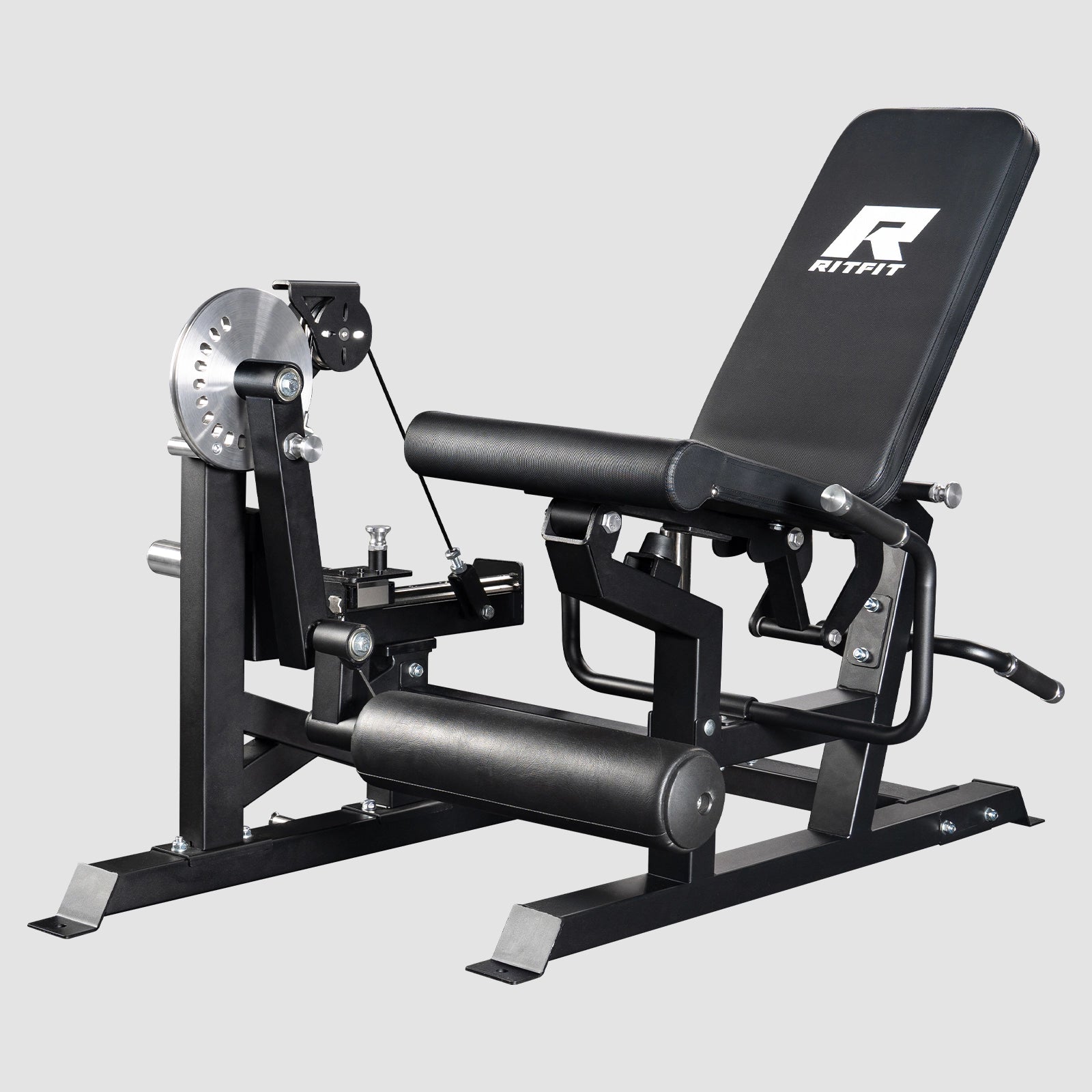
If you want the pressing side handled by one machine, the RitFit Gorilla 2 in 1 Chest and Shoulder Press Machine covers the compound work while your flyes cover the squeeze.
What Common Mistakes Ruin Chest Isolation Exercises?
The most common chest isolation mistakes are pressing the weight, overstretching, and chasing load. Each one moves the work off your chest and onto your shoulders or elbows.
- Pressing the load: if your elbows extend during the rep, you are benching on a cable.
- Overstretching: stop the negative when your upper arms reach torso level, not when your hands hit the floor.
- Chasing load: a heavier fly usually means a shorter range and less time under tension.
- Skipping the squeeze: the peak contraction is the part a press cannot give you, so do not rush past it.
When Should You Stop if Your Shoulder Hurts?
Stop the set the moment you feel a pinch at the front of the shoulder. If the same pinch returns next session at a lighter load, drop the dumbbell fly and use a cable fly with a shorter range until it settles.
Elbows deserve the same attention. A fixed soft bend protects the joint, and if your elbows ache, shorten the range before you cut the load.
How Do You Build a Chest Isolation Workout at Home?
Build the session around one press, two isolation movements, and a fixed order you repeat for 6 to 8 weeks. Put the press first, then a cable or machine fly, then a dumbbell or plate squeeze.
| Order | Exercise | Sets and Reps | Why It Is There |
|---|---|---|---|
| 1 | Bench press or machine chest press | 3 x 6 to 10 | Heavy compound work while you are fresh |
| 2 | Cable fly | 3 x 12 to 15 | Constant tension through full adduction |
| 3 | Low to high cable crossover | 2 x 12 to 15 | Upward line of pull for the upper chest |
| 4 | Incline dumbbell fly | 2 x 12 to 15 | Lengthened position on the clavicular head |
| 5 | Svend press | 2 x 20 | Peak contraction finisher with no joint load |
Rep ranges and set counts are general training guidance, not individualized programming.
A rack with a cable crossover station covers this whole list in one footprint. The RitFit M1 Smith Machine handles the press and the cable fly at an entry price point, while the RitFit Buffalo Wild Smith Machine adds a dual cable system with a wider pulley range.
FAQs About Chest Isolation Exercises
What are the best chest isolation exercises for beginners?
Yes. Start with the pec deck machine and a flat bench dumbbell fly, because both let you learn the hugging path without balancing a bar. Keep the load light, stop when your hands reach chest height, and focus on a two second squeeze at the peak.
How many chest isolation exercises should you do per workout?
Two or three is plenty. Isolation work adds direct pectoral fatigue, so stacking five fly variations usually costs you pressing strength on the next compound. Pick one cable movement and one dumbbell or machine movement, then add a third only when your recovery and weekly volume still allow it.
Are chest isolation exercises better than presses for building the chest?
No. Presses build the mass, and isolation movements finish the job by training the adduction and shortened positions a press never reaches. One interview with a hypertrophy researcher suggests ten or more hard sets per muscle each week, so use flies to add quality sets rather than replacing your pressing work.
Can you do chest isolation exercises at home without a cable machine?
Yes. Dumbbell flyes on an adjustable bench, band flyes anchored to a rack, and a plate squeeze all train adduction with minimal equipment. A smith machine or functional trainer with a cable crossover simply adds constant tension through the whole arc, which makes the peak contraction easier to feel.
How heavy should you go on cable flyes and dumbbell flyes?
Lighter than you think. Cable flyes and dumbbell flyes work best in the eight to fifteen rep range, because the lengthened position puts a long lever on the shoulder. Add load only when you can control the full range with a one second pause at the stretch and still squeeze at the finish.
Why do your shoulders hurt during dumbbell flyes?
Usually it is too much load, too much stretch, or a flat bench that forces the arms far behind the torso. A physical therapist notes that unsupported dumbbell flyes create shoulder instability, so switching to a cable fly with a controlled range often removes the pinch.
How often should you train chest isolation movements each week?
Twice a week fits most lifters, usually after a pressing movement or on a separate upper body day. Leave at least forty eight hours before training the same muscles hard again, and count your isolation sets toward the weekly total for the chest rather than treating them as free volume.
Conclusion
Start with one press and two isolation movements, keep the flyes in the 10 to 15 rep range, and judge every set by the squeeze instead of the number on the stack. The best chest isolation exercises for you are the ones you can load through a full, controlled adduction without a pinch in the shoulder.
Pick a cable fly plus one dumbbell or machine variation, run them twice a week for six weeks, and add reps before you add weight. Check the RitFit discount guide before you order the rack or handles you need.
Disclaimer
This article is general fitness information and not medical advice. Consult a qualified professional before starting a new training program, and stop any exercise that causes sharp or persistent pain.
References
1. Stronska-Garbien K, Golas A, Roczniok R, Terbalyan A. Neuromuscular Repatterning of the Pectoralis Major During the Bench Press Exercise Following a 10-week Targeted Resistance Training Intervention. J Musculoskelet Neuronal Interact. 2024;24(3):276-283. PMCID: PMC11367169
2. Cai S, Lin Y, Chen H, Huang Z. Automated analysis of pectoralis major thickness in pec-fly exercises: evolving from manual measurement to deep learning techniques. Vis Comput Ind Biomed Art. 2024;7(1):8. PMCID: PMC11021386
3. Soares EG, Brown LE, Gomes WA, Correa DA. Comparison Between Pre-Exhaustion and Traditional Exercise Order on Muscle Activation and Performance in Trained Men. J Sports Sci Med. 2016;15(1):111-7. PMCID: PMC4763829