








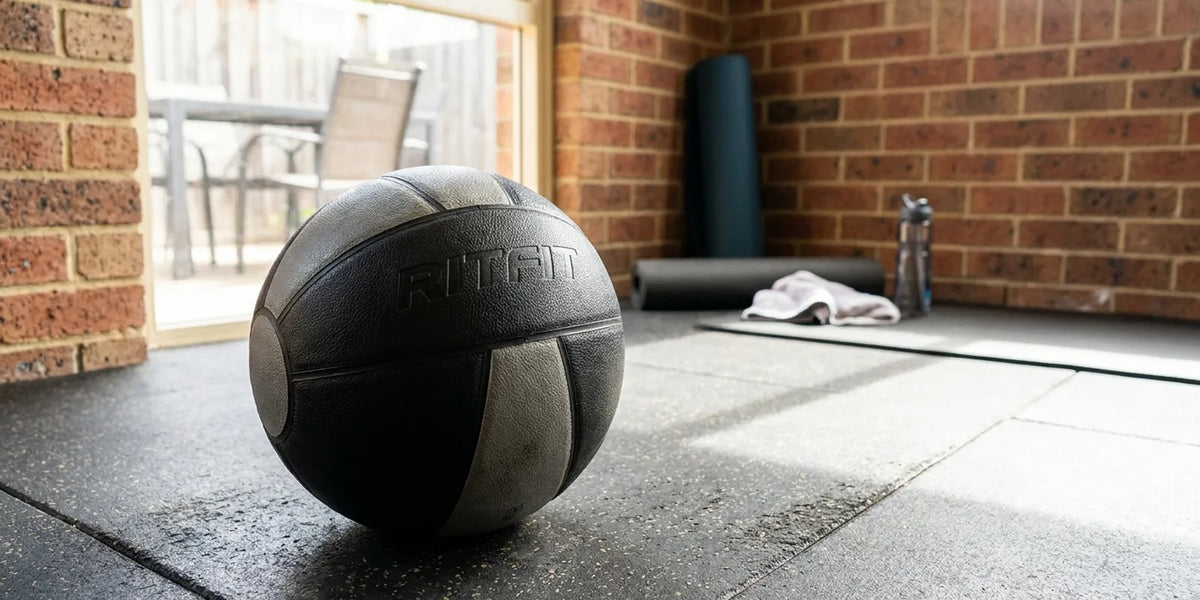
The best medicine ball for home gym use in 2026 is a soft-shell, non-bounce wall ball, and the RitFit Soft Medicine Ball is the pick this guide breaks down. It pairs a 14-inch diameter with five color-coded weights from 5 to 25 lb, so one ball covers throws, wall balls, and core work in a small space.
This guide is written for beginner and intermediate lifters training in apartments and garages. You will finish knowing which type to buy, which weight matches your drills, and how to use it safely.
Quick Answer: The best medicine ball for home gym use in 2026 is a soft, non-bounce wall ball, and the RitFit Soft Medicine Ball is the featured pick at $73.68 for the 25 lb ball, with a 4.7-star average across 443 Amazon ratings. See the current Amazon listing for all five weight options.
Key Takeaways
- Best type: A soft-shell, non-bounce wall ball is the most versatile medicine ball type for apartments and garages.
- Featured pick: The RitFit Soft Medicine Ball uses a 14-inch diameter and a color-coded line from 5 to 25 lb.
- Weight rule: Beginners start at 5 to 10 lb, intermediate circuits run 15 to 20 lb, and advanced lifters load 25 lb.
- Build quality: A waterproof PU leather shell, double-stitched seams, and side finger loops define the spec sheet.
- Price signal: The 25 lb ball lists at $73.68 and carries a 4.7-star average across 443 Amazon ratings with an Amazon's Choice badge.
What Is the Best Medicine Ball for a Home Gym in 2026?
A soft-shell, non-bounce wall ball is the best medicine ball type for a home gym in 2026, because it throws quietly, spares floors and walls, and still handles squats, passes, and core work. The RitFit Soft Medicine Ball fills that role with a 14-inch diameter and five weights from 5 to 25 lb.
- Type: A soft stitched shell absorbs impact, so wall throws stay quiet and surfaces stay intact.
- Pick: One 14-inch size spans 5 to 25 lb, so you progress by changing weight, not gear.
- Where to buy: The RitFit Soft Medicine Ball on Amazon carries the full color-coded line.
A single ball also replaces several pieces of weighted gear in a tight room, which is exactly the trade a small home gym wants.
Why Does a Medicine Ball Belong in Your Home Gym?
A medicine ball earns its spot because it packs conditioning, core, and balance work into one 14-inch ball that stores on a shelf. Research backs both sides of that case, from metabolic response to balance training.
- Conditioning in small spaces: A study measured heart-rate and metabolic responses during medicine ball interval training, so ball circuits count as real conditioning work. [2]
- Balance and stability: A trial examined ball exercise for balance ability in young adults, which supports offset carries and controlled rotational work. [1]
- Small footprint: A 14-inch ball slides into a closet or onto a shelf, so conditioning gear does not eat your floor plan.
- Quiet training: A soft non-bounce shell keeps wall throws neighbor-friendly, unlike hard rubber that rebounds and marks surfaces.
If balance is your main goal, pair ball work with these 10 Bosu Ball Exercises To Work Core and Improve Balance.
How Do You Choose a Medicine Ball for Home Use?
Choose a home medicine ball by shell material, diameter, and build quality, then match weight to your training level. A soft PU shell, a 14-inch diameter, and reinforced stitching cover most home use cases.
Shell Material and Grip
Per the listing, the RitFit shell is a waterproof, wear-resistant PU leather that stays grippable when hands sweat. Hard rubber trades that grip for rebound, which matters less in a tight room.
Diameter and Bounce
A 14-inch diameter matches standard wall ball sizing and suits most hand sizes for throws and carries. A soft, non-bounce shell also removes rebound off walls and floors in a small space.
Stitching, Finger Loops and Balance
Double-stitched reinforced seams absorb repeated wall impacts, and side finger loops give you a secure carry between sets. Per the listing, the maker states each ball is individually balance-tested, so throws track where you aim them.

What Weight Medicine Ball Should You Choose?
Start at 5 to 10 lb for core work and controlled passes, move to 15 or 20 lb for wall balls and conditioning circuits, and use 25 lb for heavy throws once your form holds. The line keeps the same 14-inch diameter across all five weights, so you only change color as you progress.
| Who it fits | Weight | Key drills | Why it works |
|---|---|---|---|
| Beginner or core focus | 5-10 lb | Russian twists, chest passes, light wall balls | Builds control without strain |
| Intermediate HIIT and conditioning | 15-20 lb | Wall balls, squat throws, circuits | Enough load for real power output |
| Advanced strength and power | 25 lb | Heavy wall balls, explosive throws | Top resistance in the line |
| Mix-and-match sets | Combine 10, 15, 20, 25 lb | Progressive circuits and family use | Custom sets shown on the listing |
Weight bands reflect the RitFit Soft Medicine Ball line shown on the Amazon listing, five color-coded options from 5 to 25 lb, all 14 inches.

Why Choose the RitFit Soft Medicine Ball?
The RitFit Soft Medicine Ball earns the featured slot with a 14-inch non-bounce shell, a five-weight color-coded line from 5 to 25 lb, and a 25 lb variant listed at $73.68 with a 4.7-star average across 443 Amazon ratings. It is built for the drills a home gym actually runs.
- Shell: Waterproof, wear-resistant PU leather with double-stitched reinforced seams, per the listing.
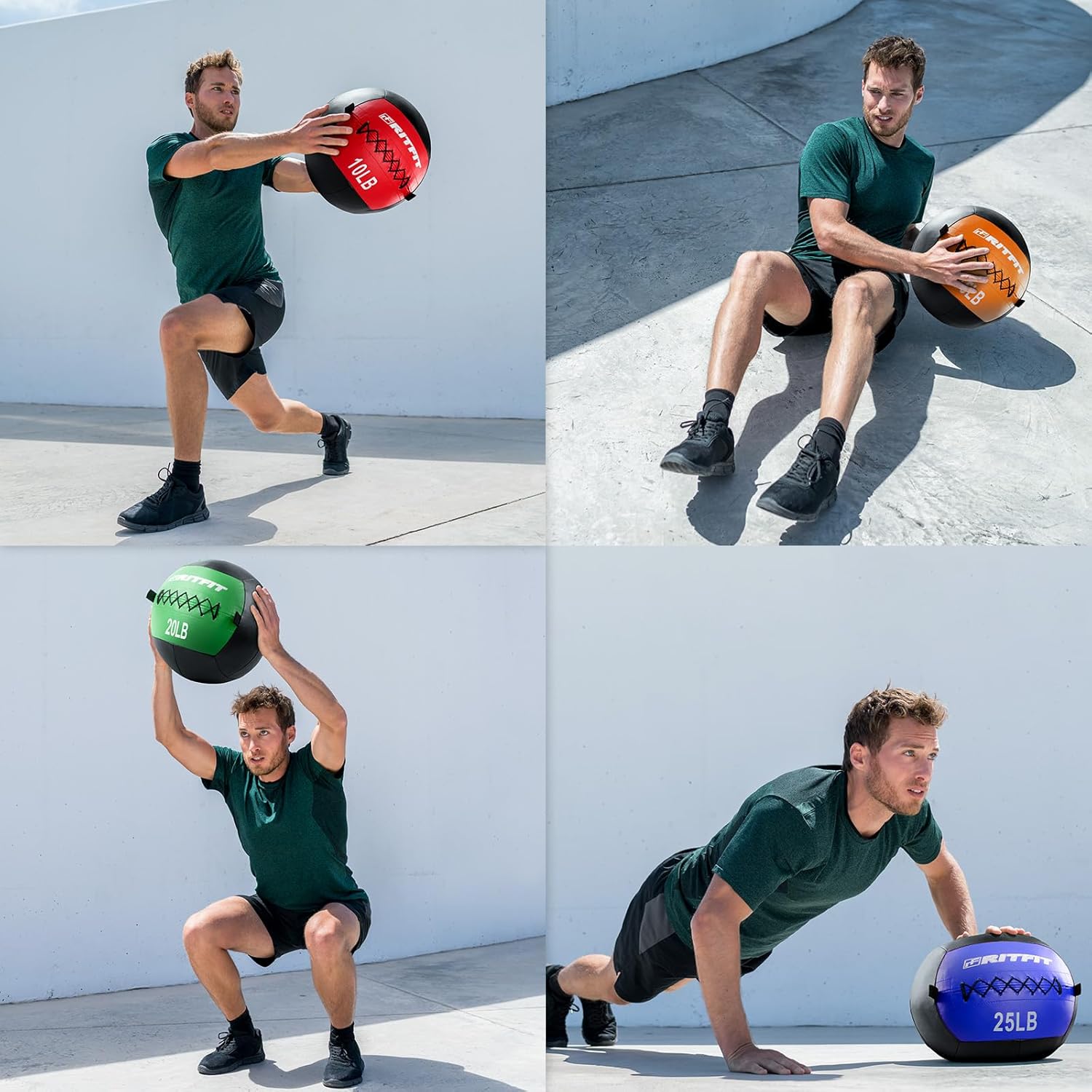
- Weight line: Five color-coded options, 5 lb purple, 10 lb red, 15 lb orange, 20 lb green, and 25 lb blue, all 14 inches.
- Grip and safety: Side finger loops for carries, plus a soft shell that protects floors and walls.
- Trust signals: An Amazon's Choice badge on the 25 lb ball, a 4.7-star average across 443 ratings, and a maker statement that each ball is individually balance-tested.
Ready to pick a weight? Check the RitFit Soft Medicine Ball on Amazon and match the color to your training level.

Medicine Ball vs Wall Ball vs Slam Ball: Which One Does a Home Gym Need?
A wall ball is a soft, larger-shell medicine ball built for throws at a target, while a slam ball is a dense ball built for slamming the floor. For a one-ball home gym, the soft wall ball role covers the widest drill list.
- Medicine ball: The general category, a weighted ball for passes, twists, and carries.
- Wall ball: A soft-shell medicine ball sized for wall targets, which is exactly what the RitFit 14-inch shell is built for.
- Slam ball: A denser shell designed to take slams, useful only if floor slamming is your priority.
For the full breakdown, read Differences Between Wall Ball, Slam Ball and Medicine Ball.
What Medicine Ball Exercises Should You Start With at Home?
Start with five drills, chest passes, squat throws, wall balls, Russian twists, and rotational lunges, all doable in a doorway or against a clear wall. Keep the load light enough that every throw stays controlled.
- Chest pass: Stand a step from the wall, drive the ball from chest height, and catch it on the return.
- Squat throw: Drop into a quarter squat and throw up the wall, driving through the legs.
- Wall ball: Squat, throw high at a wall target, and catch the soft return.
- Russian twist: Sit with heels down and rotate the ball side to side across your torso.
- Rotational lunge: Hold the ball at your chest and rotate over the front knee as you lunge.
Medicine ball drills also work as a dynamic warm-up, and a study compared medicine-ball warm-ups against static stretching, mini-band work, and light jogging on common athletic ability tests. [3] For progressions, this library of 19 Best Medicine Ball Workouts For Beginners extends the list.
Is the RitFit Soft Medicine Ball Worth the Price?
Yes, for home gyms that run wall balls, throws, and core work, because the 25 lb ball lists at $73.68, the lighter weights cost less, and the double-stitched soft shell is built for years of wall contact. Paying once for a durable shell beats replacing a worn-out rubber ball.
The value case rests on build quality, since a waterproof PU shell with reinforced seams is made for repeated impact rather than a single season. Skip it only if you specifically want rebound for speed-focused chest passes, because a hard rubber ball is the better tool for that one drill.
How Do You Grow a Home Gym Around One Medicine Ball?
Treat the medicine ball as the first piece of a functional corner, then add storage, accessories, and one anchor machine as budget allows. The ball already covers conditioning, so each later purchase should add a new movement pattern.
- Storage and accessories: Keep the ball on a rack or shelf and round out grip and recovery work with the Best Gym Accessories for a Home Gym in 2026.
- Space plan: Map the room before the next order using this 12x12 Home Gym Layout: Complete Small Room Strength Setup Guide.
- Functional corner: Build out conditioning and rotational work from the RitFit Functional Training Equipment collection.
- Anchor machine: When you are ready for heavy strength work, the RitFit M1 Multi Functional Home Gym Smith Machine turns a corner setup into a full gym.
FAQs About the Best Medicine Ball for a Home Gym
What weight medicine ball should a beginner start with?
Most beginners do well with a 5 to 10 lb medicine ball for core work, twists, and chest passes. Move to 15 or 20 lb once wall balls and squat throws feel controlled. A soft shell protects floors and walls, which matters in apartments and shared home gyms.
Is a soft medicine ball better than a rubber one for home gyms?
For most home gyms, yes. A soft PU leather shell is quieter, gentler on floors and walls, and easier to grip when hands sweat. Rubber medicine balls bounce and can mark surfaces. If you specifically want rebound for chest-pass drills, a rubber ball helps, but a soft wall ball covers more home use cases.
Can I use a medicine ball as a wall ball?
Yes, if it has a soft, non-bounce shell and a reinforced stitched cover, like the RitFit Soft Medicine Ball. A 14-inch diameter matches standard wall ball sizing, and color-coded weights from 5 to 25 lb let one ball serve squats, throws, and core work. Avoid hard rubber balls for overhead wall throws at home.
What size medicine ball is best for home workouts?
A 14-inch diameter is the standard for soft medicine balls and wall balls, and it suits most hand sizes and throwing drills. Diameter matters less than weight, so pick the weight for your training goal, then confirm the shell is durable, balanced, and easy to grip. All five RitFit weights share the same 14-inch diameter.
How much should I spend on a medicine ball in 2026?
Budget by weight, not by brand hype. The 25 lb RitFit Soft Medicine Ball lists at $73.68 on Amazon, and lighter weights in the same line cost less. Because a double-stitched soft shell is built to survive years of wall throws, buying one well-made ball usually beats replacing a cheap rubber ball every year.
How do I care for a PU leather medicine ball?
Wipe the shell with a damp cloth after sweaty sessions and keep it off sharp surfaces that could tear the stitching. Store it on a rack or shelf rather than in direct sunlight, which dries out PU leather. Check the seams and finger loops occasionally, and rotate weights gradually as your throws get stronger.
Conclusion
The best medicine ball for a home gym in 2026 is a soft, non-bounce wall ball, and the RitFit Soft Medicine Ball covers that role with a 14-inch shell and five weights from 5 to 25 lb. Pick the weight that matches your drills, start lighter than you think, and move up once every throw stays clean.
New to throwing? Begin at 5 to 10 lb and master control before you load up, then check the RitFit discount guide before you order.
Disclaimer
This guide is general fitness information and does not replace medical advice, so check with a qualified professional before starting a new program, especially if you are pregnant, recovering from injury, or managing a health condition. Use a weight you can control, clear your throwing area, and stop any drill that causes pain.
References
1. Yu W, Cha S, Seo S. The effect of ball exercise on the balance ability of young adults. J Phys Ther Sci. 2017. PMCID: PMC5890205 .
2. Faigenbaum AD, Kang J, Ratamess NA, et al. Acute Cardiometabolic Responses to Medicine Ball Interval Training in Children. Int J Exerc Sci. 2018. PMCID: PMC6033503 .
3. Christensen B, Bond CW, Napoli R, et al. The Effect of Static Stretching, Mini-Band Warm-Ups, Medicine-Ball Warm-Ups, and a Light Jogging Warm-Up on Common Athletic Ability Tests. Int J Exerc Sci. 2020. PMCID: PMC7039492 .





