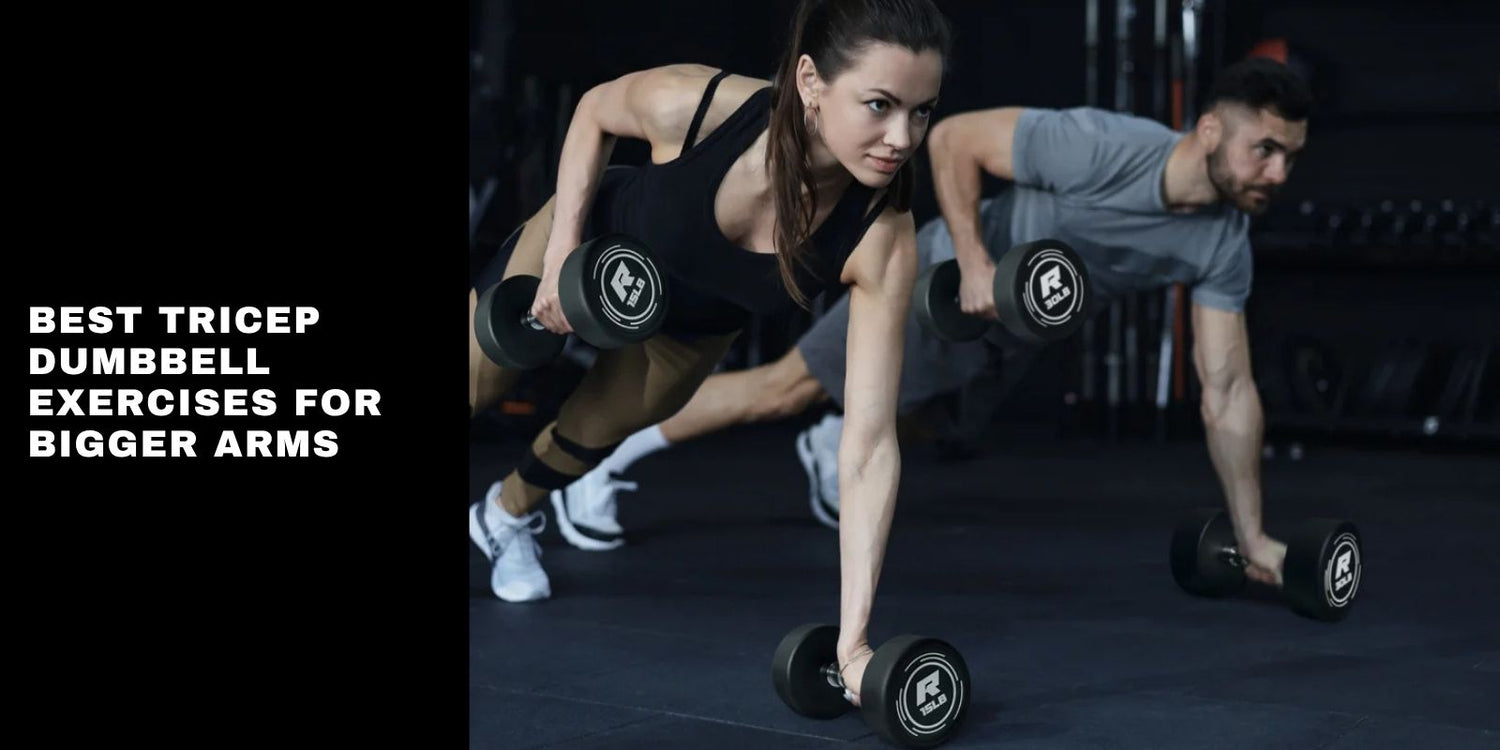
The best tricep dumbbell exercises for strength and size combine close grip presses, overhead extensions, skull crushers, kickbacks, and single arm work to train all three triceps heads with limited equipment.
Triceps drive elbow extension and support stronger bench presses, push ups, and overhead presses. This guide ranks the movements, explains how to program them, and shows how to scale the work for beginners and experienced lifters.
Quick Answer: The best tricep dumbbell exercises are the close grip floor press for heavy lockout strength, the overhead dumbbell extension for long head stretch, and skull crushers, Tate presses, and kickbacks for isolation. Training triceps two to three times weekly for 8 to 15 reps per set covers all three heads.
Key Takeaways
- Train from multiple angles: Presses, overhead extensions, and isolation work cover all three triceps heads in one program.
- Do not skip overhead work: Overhead extensions load the long head through a deep stretch that supports fuller arm development.
- Use heavier presses for strength: Close grip and neutral grip floor presses are the best dumbbell options for lockout strength.
- Control beats momentum: Cleaner reps, stable elbows, and a full range of motion grow triceps faster than swinging heavier weight.
- Progress with purpose: Train triceps two to three times per week and track sets, reps, and load so volume increases over time.
What Principles Make Effective Triceps Training?
Effective triceps programming trains all three heads with controlled reps, enough weekly volume, and steady progression in load or reps. Direct work two to three times per week covers growth and pressing strength without crowding out recovery.
A Quick Anatomy Snapshot
The triceps have three heads: the long head, lateral head, and medial head. Overhead work helps bias the long head, while presses and lockout focused movements challenge the lateral and medial heads for stronger, thicker arms.
Core Training Goals
If your goal is size, spend most of your direct triceps work in the 8 to 15 rep range with controlled eccentrics, a full stretch, and strong lockouts. If your goal is pressing strength, keep some work in the 4 to 8 rep range with heavier dumbbells and longer rest.
Safety and Form Fundamentals
Keep your shoulders stable, your core braced, and your elbows under control so the triceps do the work instead of your chest, shoulders, or lower back. Build tension with smooth lowering phases and stop or modify any movement that causes sharp joint pain.
Programming Basics
Most lifters do well with direct triceps work two to three times per week. Beginners can start with 6 to 10 hard sets weekly, while intermediate lifters often grow well on 10 to 16 hard sets split across pressing and isolation patterns.
"10+ sets per muscle per week elicited greater hypertrophy than <10 sets. Thus, this would be a good starting point."
Brad Schoenfeld, PhD, Exercise Science Researcher specializing in Muscle Hypertrophy, CUNY Lehman College, Brad Schoenfeld Hypertrophy (BarBend)
What Are the Best Dumbbell Tricep Exercises?
The best dumbbell tricep exercises are the close grip floor press, overhead extension, skull crushers, Tate press, kickback, neutral grip floor press, single arm overhead extension, and JM press. Together they cover heavy pressing, deep stretch work, and strict isolation for all three heads.
| Exercise | Best for | Sets and reps |
|---|---|---|
| Dumbbell close grip floor press | Overall triceps mass and lockout strength | 3 to 4 sets of 6 to 10 |
| Dumbbell triceps kickback | Strict isolation and peak contraction | 3 sets of 12 to 15 |
| Overhead dumbbell triceps extension | Long head development and upper arm size | 3 to 4 sets of 8 to 12 |
| Dumbbell skull crushers | Hypertrophy and stretch under load | 3 sets of 10 to 15 |
| Dumbbell Tate press | Medial and lateral head emphasis | 3 sets of 10 to 12 |
| Dumbbell neutral grip floor press | Heavy pressing with elbow friendly angles | 4 sets of 5 to 8 |
| Single arm overhead extension | Long head isolation and balance | 3 sets of 10 to 12 per arm |
| Dumbbell JM press | Advanced overloading and lockout carryover | 3 sets of 8 to 10 |
Rep ranges assume controlled reps, a full stretch, and a load that lets you finish every set with clean form.
Every entry below lists its best use, the technique that matters most, the mistake most lifters make, and a starting set and rep target. For the pressing muscles that share this work, pair the routine with the best dumbbell exercises for the upper chest and the smith machine triceps exercises guide.
Dumbbell Close Grip Floor Press
- Best for: Overall triceps mass, lockout strength, and shoulder friendly pressing.
- How to do it: Lie on the floor with dumbbells over your chest, keep your elbows close to your sides, lower until your upper arms touch the floor, then press to lockout.
- Why it works: The floor shortens the range just enough to reduce shoulder strain while keeping a strong triceps bias.
- Common mistake: Letting the elbows flare wide and turning the lift into more of a chest press.
- Recommended sets and reps: 3 to 4 sets of 6 to 10 reps.
Dumbbell Triceps Kickback
- Best for: Strict isolation, peak contraction, and lighter finishing work.
- How to do it: Hinge at the hips, keep your upper arm fixed by your side, and extend the elbow until your arm is straight behind you.
- Why it works: Kickbacks are light, joint friendly, and useful when you want direct triceps tension without loading the shoulders heavily.
- Common mistake: Swinging the dumbbell or letting the upper arm drop as the set gets harder.
- Recommended sets and reps: 3 sets of 12 to 15 reps.
Overhead Dumbbell Triceps Extension
- Best for: Long head development and fuller upper arm size.
- How to do it: Hold one dumbbell with both hands overhead, lower it behind your head under control, then extend your elbows to bring it back up.
- Why it works: The overhead position places the long head under a deep stretch that many arm by your side movements do not match.
- Common mistake: Arching the lower back or letting the elbows drift too wide.
- Recommended sets and reps: 3 to 4 sets of 8 to 12 reps.
Dumbbell Skull Crushers
- Best for: Triceps hypertrophy, stretch under load, and bench based arm work.
- How to do it: Lie on a bench with a neutral grip, lower the dumbbells toward the sides of your head by bending only at the elbows, then extend back to the start.
- Why it works: Skull crushers load the triceps hard through the middle and lengthened portions of the rep.
- Common mistake: Turning the movement into a pullover by moving the shoulders too much.
- Recommended sets and reps: 3 sets of 10 to 15 reps.
Dumbbell Tate Press
- Best for: Medial and lateral head emphasis with a different pressing angle.
- How to do it: Lie on a bench with dumbbells over your chest, flare the elbows out, lower the bells toward your upper chest, then press them back up by extending the elbows.
- Why it works: The unusual path changes the stimulus and can feel better than skull crushers for some lifters.
- Common mistake: Pressing like a standard dumbbell bench press and losing the triceps focus.
- Recommended sets and reps: 3 sets of 10 to 12 reps.
Dumbbell Neutral Grip Floor Press
- Best for: Heavy triceps biased pressing and elbow friendly strength work.
- How to do it: Press from the floor with your palms facing each other, lower under control, touch the floor softly, and drive back to lockout.
- Why it works: The neutral grip often feels natural on the shoulders and keeps the elbows in a stronger triceps focused path.
- Common mistake: Bouncing off the floor or rushing the lowering phase.
- Recommended sets and reps: 4 sets of 5 to 8 reps.
Single Arm Overhead Dumbbell Triceps Extension
- Best for: Long head isolation and side to side balance.
- How to do it: Hold one dumbbell overhead with one hand, lower it behind your head, then extend to a full lockout with control.
- Why it works: One arm work helps expose strength imbalances and improves control through a deep stretch.
- Common mistake: Using body English or rushing the hardest part of the rep.
- Recommended sets and reps: 3 sets of 10 to 12 reps per arm.
Dumbbell JM Press
- Best for: Advanced triceps overloading and lockout carryover for pressing strength.
- How to do it: Lower the dumbbells toward your upper chest or lower neck with your elbows tracking forward slightly, then press up with a controlled blend of elbow extension and pressing power.
- Why it works: It bridges the gap between a press and an extension, which makes it useful for stronger lifters chasing lockout strength.
- Common mistake: Going too heavy too early and irritating the elbows.
- Recommended sets and reps: 3 sets of 8 to 10 reps.
"RitFit Rubber Hex Dumbbell with Metal Handle For Free Weights Exercises|10-60 lbs Weights Range"
Romaine Hall, Verified Buyer, RitFit Rubber Hex Dumbbells Pairs and Sets
How Do You Choose Triceps Exercises by Goal and Experience?
Triceps exercise selection should follow your main goal, your training experience, and how your elbows tolerate each pattern. Beginners need simple presses plus one overhead movement, while advanced lifters rotate angles and rep ranges to keep progress moving.
For Beginners
Start with movements that are easy to learn and easy to recover from. A strong beginner combination is the close grip floor press, an overhead extension, and light kickbacks, and a basic set of RitFit dumbbells covers all three without a rack of specialized equipment.
For Intermediates
Rotate angles and rep ranges so your progress does not stall. Add skull crushers, Tate presses, and one arm overhead work to keep building size, and an adjustable dumbbell set lets you jump in small increments on those smaller movements.
For Strength Focused Lifters
Prioritize heavier floor presses and use isolation lifts as support work. Heavier pressing loads suit dense, fixed weights, and rubber hex dumbbells are the practical pick for high load sets, since the rubber heads survive regular contact with a concrete floor during floor presses.
For Size Focused Lifters
Use more total weekly volume and include both arm by your side work and overhead work. That combination gives you heavy tension, deep stretch, and full coverage, and RitFit hex rubber dumbbells keep two matched pairs on hand so you can drop from a heavy press straight into a lighter stretch set without hunting for plates.
What Do Sample Triceps Dumbbell Workouts Look Like?
A sample triceps dumbbell workout pairs one heavy pressing movement with two isolation movements, then finishes with a stretch focused set. Beginners can run two or three exercises, while intermediate lifters can add a second press and a finisher.
Beginner Home Workout
This session fits a garage or a spare room and needs only one pair of dumbbells plus a floor. A compact rack of hexagon dumbbell sets keeps each working load within reach so you are not carrying weights between sets.
- Dumbbell Close Grip Floor Press: 3 sets of 8 to 10 reps with 90 seconds of rest.
- Seated Overhead Dumbbell Extension: 3 sets of 10 to 12 reps with 60 seconds of rest.
- Dumbbell Triceps Kickback: 2 sets of 12 to 15 reps with 60 seconds of rest.
Intermediate Gym Workout
An intermediate session adds a second pressing angle and more weekly volume. Keeping two pairs ready in a dumbbell and rack package means you can move from a heavy neutral grip press into lighter skull crushers without losing your rest timing.
- Dumbbell Neutral Grip Floor Press: 4 sets of 6 to 8 reps with 2 minutes of rest.
- Dumbbell Skull Crushers: 3 sets of 10 to 12 reps with 90 seconds of rest.
- Single Arm Overhead Extension: 3 sets of 10 to 12 reps per arm with 60 seconds of rest.
- Dumbbell Tate Press: 2 sets of 12 to 15 reps with 60 seconds of rest.
Triceps Finisher Options
Finish an upper body day with overhead extensions to near failure, then move straight into close grip dumbbell presses with the same weight. This simple sequence increases metabolic stress and extends time under tension without changing equipment, and ToughFit decagon shape dumbbells sit flatter on the floor when you set them down between the two movements.
What Are the Most Common Triceps Training Mistakes?
The most common triceps training mistakes are loading too heavy, skipping overhead work, warming up too little, and treating arm work as an afterthought. Each one is easy to fix with a small change in load, exercise choice, or weekly planning.
Using Too Much Weight and Cheating Form
If you swing the dumbbells or shorten the range, the triceps lose tension and the joints do more work. Reduce the load, slow the lowering phase, and earn each lockout with control, and keep a lighter pair such as PVC coated dumbbells for kickbacks and extensions where the load stays modest.
Neglecting Overhead Movements
If you only use presses and kickbacks, you miss one of the best ways to challenge the long head through a loaded stretch. Keep at least one overhead extension pattern in your weekly program if size is a priority.
Inadequate Warm Ups
Cold elbows and shoulders rarely respond well to hard extensions. Start with light pressing, easy triceps activation, and a few ramp up sets before your heavier work.
Poor Weekly Programming
Throwing in random arm work at the end of a workout usually leads to inconsistent progress. Give triceps their own tracked volume, recover well, and progress reps or load over time, and a RitFit 3 tier dumbbell rack keeps the working pairs sorted by load so repeating the same weight week to week is straightforward.
How Should You Manage Safety, Recovery, and Progress Tracking?
Triceps training stays productive when you warm up the elbows and shoulders before heavy work, swap painful variations early, and log sets, reps, and load every week. Those three habits protect the joints and make progress measurable instead of guessed.
Warm Up Protocol
Begin with a general upper body warm up, then do a few light sets of push ups, floor presses, or kickbacks before your working sets. The goal is to increase blood flow, improve joint readiness, and sharpen your movement pattern.
Elbow and Shoulder Care
If one exercise keeps irritating your elbows or shoulders, do not force it. Switch to a friendlier option such as the neutral grip floor press, shorten the range slightly, or lower the training load until symptoms settle.
Tracking Progress
Log your sets, reps, load, and exercise order every week. If your reps are rising at the same weight or your load is rising at the same reps, your triceps training is moving in the right direction.
FAQs About Tricep Dumbbell Training
How often should I train triceps with dumbbells?
Most lifters grow well with direct triceps work two to three times per week. That schedule gives enough frequency for growth while still leaving room for recovery from pressing days.
Can I build big triceps with only dumbbells?
Yes, especially if you use a mix of heavy presses, overhead extensions, and isolation work. Dumbbells are enough to build stronger, bigger triceps when you train hard and progress over time.
What if my elbows hurt during skull crushers?
Try a neutral grip, reduce the range slightly, or swap to Tate presses or floor presses. Many lifters can keep training pain free by adjusting angle, load, and exercise selection instead of forcing one variation.
How long until I notice size gains in my triceps?
With consistent training, enough protein, and steady progression, many lifters notice visible changes within 8 to 12 weeks. The exact pace depends on training quality, recovery, nutrition, and how much direct arm work you were doing before.
Do I need a bench for dumbbell triceps exercises?
A bench is optional for most dumbbell triceps work. Close grip and neutral grip floor presses need only a floor, and standing or seated overhead extensions and kickbacks work with a chair. A bench helps with skull crushers and Tate presses, but the floor version trains the same elbow extension pattern with a shorter range.
Should I do triceps dumbbell exercises before or after pressing?
Place heavy close grip and neutral grip floor presses before your main pressing work if lockout strength is the goal, because fresh triceps handle more load. Isolation work such as kickbacks, skull crushers, and overhead extensions fits better after pressing or at the end of an upper body session.
Conclusion
Dumbbells are more than enough to build bigger triceps and stronger pressing power when you train through multiple angles and progress with intent. Prioritize close grip presses for strength, overhead extensions for the long head, and strict isolation work for control, then stay consistent long enough to let the results show.
Start with the beginner workout above and add volume only when your reps or load climb. If you are building a home setup, browse the full RitFit dumbbell lineup and check the RitFit discount guide for current offers.
Disclaimer
This article is for general fitness education and is not medical advice. If you have elbow, shoulder, wrist, or neck pain, recent surgery, or a condition that limits exercise, get clearance from a qualified healthcare professional before starting or changing your training.