








The best dumbbell shoulder exercises build all three deltoid heads with nothing more than a single pair of dumbbells.
The deltoid is really three muscles, the front, side, and rear heads, and each one responds best to a specific movement.
This guide lists the top dumbbell moves by head, gives you loadable sets and reps, and lays out a home progression plan.
The plan suits home-gym lifters who want balanced, injury-resistant shoulders with minimal equipment. Warm up the shoulder girdle first, follow the rep ranges below, and stop any exercise that causes sharp or pinching pain.
Quick Answer: The best dumbbell shoulder exercises are the seated dumbbell shoulder press for the front delts, the dumbbell lateral raise for the side delts, and the seated rear delt fly for the rear delts. Use 3-4 sets of 6-10 reps for presses and 3 sets of 12-15 reps for raises.
Key Takeaways
- Front delts: The seated dumbbell shoulder press is the top front delt builder because it allows the heaviest loads.
- Side delts: The dumbbell lateral raise most strongly activates the medial head that makes shoulders look wider.
- Rear delts: The seated rear delt fly targets the often-neglected rear head, which also supports posture.
- Sets and reps: Use 3-4 sets of 6-10 reps for compound presses and 3 sets of 12-15 reps for isolation raises.
- Frequency: Train shoulders one to two times a week with at least 48 hours between sessions for steady progress.
Why Are Dumbbells a Smart Choice for Shoulder Training?
Dumbbells are a smart choice for shoulder training because each hand works independently through a full range of motion, which builds balanced strength and helps correct side-to-side differences. A pair of dumbbells takes up almost no space, so you can train all three deltoid heads at home.
- Full range of motion: Dumbbells let your shoulders move naturally through a longer path that a fixed bar often restricts.
- Balanced loading: Each side must work on its own, so a stronger arm cannot mask a weaker one.
- Three heads in one tool: Presses hit the front, raises hit the side, and flys hit the rear delts.
- Home friendly: A single set or an adjustable pair covers every movement in this guide.
For a full range of shoulder-friendly pairs, browse the Dumbbells collection and match a set to your training space.
"Dumbbells are the undisputed S-tier of workout equipment. There isn't a muscle you can't hit with them, and when you slow your tempo, even light weight can push serious gains. If you only had space or budget for one tool, adjustable dumbbells should be it."
Ebenezer Samuel, C.S.C.S., Fitness Director, Men's Health
What Are the Best Dumbbell Exercises for the Front Delts?
The seated dumbbell shoulder press is the best exercise for the front delts because it is a compound lift that lets you handle the most weight. A 2018 study found the dumbbell overhead press produced greater front delt activation than a kettlebell press [1], and a 2020 study ranked the press first for anterior deltoid activity among press and raise movements [2].
Seated Dumbbell Shoulder Press
Set an adjustable bench to 75-90 degrees, hold a dumbbell in each hand at shoulder height, and press straight overhead until your arms are extended.
- How to do it: Sit with your back against the pad, brace your core, and press the dumbbells up without arching your lower back.
- Sets and reps: 3-4 sets of 6-10 reps with the heaviest weight you can control through a full range.
Arnold Press
The Arnold press adds a rotation at the bottom of the press so the front and side delts both work through a longer range of motion.
- How to do it: Start with your palms facing you at shoulder height, rotate your palms forward as you press overhead, and reverse the motion on the way down.
- Sets and reps: 3 sets of 8-12 reps with a moderate weight.
Dumbbell Front Raise
The front raise isolates the front head after heavier pressing work.
- How to do it: Stand tall, raise one dumbbell to shoulder height with a soft elbow, pause, and lower under control.
- Sets and reps: 2-3 sets of 10-12 reps per arm.
What Are the Best Dumbbell Exercises for the Side Delts?
The dumbbell lateral raise is the go-to move for the side delts because it isolates the medial head, the muscle that makes your shoulders look wider. The same 2020 study found the lateral raise produced the highest side delt activation of the exercises tested [2].
Dumbbell Lateral Raise
Stand tall with a light dumbbell in each hand and raise your arms out to the sides until they are parallel to the floor.
- How to do it: Keep a soft elbow, pause for a second at the top, and lower slowly. Do not swing or use your hips to lift the weight.
- Sets and reps: 3 sets of 12-15 reps with a light weight.
Leaning Lateral Raise
The leaning lateral raise removes momentum so the side delt does all the work.
- How to do it: Hold a rack or bench with one hand, lean away, and raise the far-side dumbbell to shoulder height.
- Sets and reps: 3 sets of 10-12 reps per side.
What Are the Best Dumbbell Exercises for the Rear Delts?
The seated rear delt fly is the most reliable way to hit the rear delts, the head most lifters under-train. A 2018 crossover study of 29 men and women found dumbbells activated the posterior deltoid more than elastic bands during flye and reverse-flye movements [3].
Seated Rear Delt Fly
Hinge at the hips so your torso is near parallel to the floor, and pull the dumbbells up and out in a wide arc.
- How to do it: Keep a slight bend in your elbows, squeeze your shoulder blades, and lead with your elbows rather than your hands.
- Sets and reps: 3 sets of 12-15 reps with a light weight.
Bent-Over Reverse Fly
The bent-over reverse fly is the standing version of the same movement and works well if you do not have a bench handy.
- How to do it: Bend at the hips with a flat back, let your arms hang, and raise the dumbbells out to the sides.
- Sets and reps: 3 sets of 12-15 reps.
What Does a Dumbbell-Only Shoulder Workout Look Like?
A complete dumbbell-only shoulder workout trains all three delt heads in a single session with a proven set and rep structure. Run it once or twice a week with at least 48 hours of rest between sessions.
| Exercise | Sets | Reps |
|---|---|---|
| Seated dumbbell shoulder press | 3-4 | 6-10 |
| Arnold press | 3 | 8-12 |
| Dumbbell lateral raise | 3 | 12-15 |
| Dumbbell front raise | 2-3 | 10-12 |
| Seated rear delt fly | 3 | 12-15 |
| Bent-over reverse fly | 3 | 12-15 |
Rest 60-90 seconds between sets and 2 minutes between heavy press sets.
For a related routine built around these same moves, read our Shoulder Workout With Dumbbells guide.
How Do I Choose the Right Dumbbells for Shoulder Training at Home?
For shoulder training at home, pick dumbbells that span both your pressing and raising weights, which usually means a set that starts light and goes up in small steps. Fixed rubber hex dumbbells and adjustable pairs both work well depending on your space and budget.
Fixed vs Adjustable Dumbbells
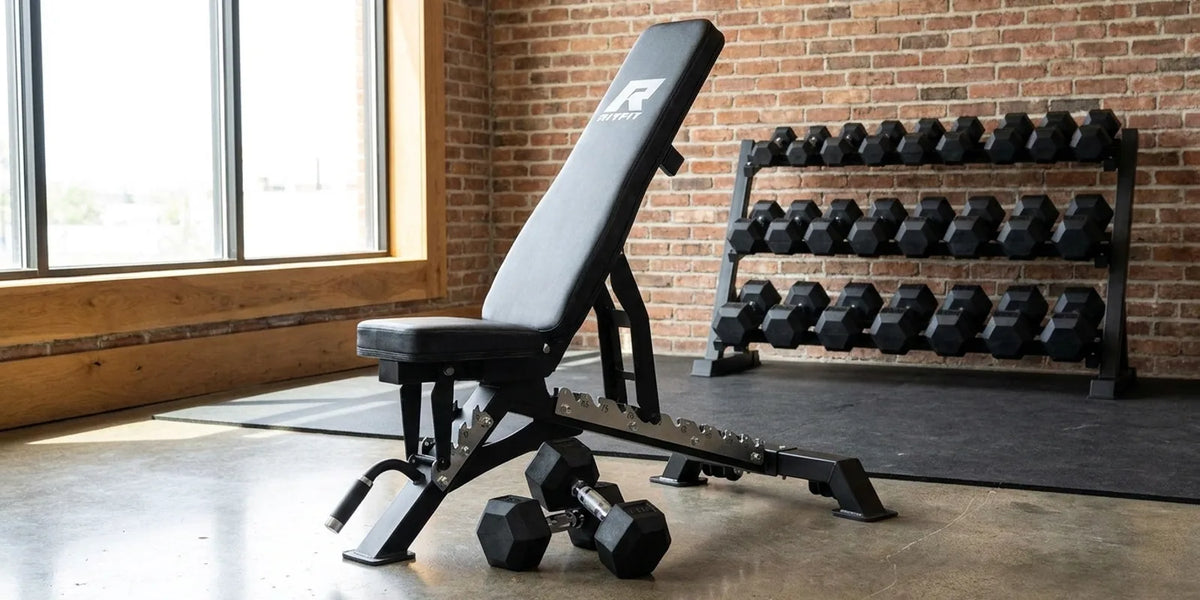
Fixed Ritfit Hex Rubber Dumbbells give you a solid, nonslip grip and a classic feel, while Adjustable Dumbbells save space by swapping weight plates on a single handle.
- Fixed sets: Great for a dedicated home gym where you want pairs you can grab quickly for each exercise.
- Adjustable pairs: Ideal for small spaces because one handle replaces an entire rack of dumbbells.
- Package option: A Dumbbells A Rack Package combines pairs with storage so the whole setup stays organized.
What Weight to Start With
Start light enough to finish every rep with clean form, then add weight only when you hit the top of your rep range.
- Raises: 5-15 lb per dumbbell is a common starting range for lateral and rear delt work.
- Presses: 15-30 lb per dumbbell suits most beginners for seated shoulder presses.
- Scaling up: If you plan to grow over years, a Hexagon Dumbbell Set with multiple pairs, plus a Ritfit 3 Tier Dumbbell Rack, keeps heavier options close by.
- Durable rubber option: The Toughfit Decagon Shape Dumbbells resist rolling on the floor between sets.
How Often Should I Train My Shoulders and Progress With Dumbbells?
Train your shoulders one to two times per week with at least 48 hours of rest between sessions. Add weight when you complete the top of your rep range with clean, controlled form.
- Frequency: One or two shoulder days per week is enough for most home lifters.
- Progressive overload: Add 2.5-5 lb to presses when you hit 10 clean reps, and add a rep to raises before adding weight.
- Track your weights: Log every session so you know exactly when it is time to move up.
- Deload: Every 6-8 weeks, drop the weight by roughly 20 percent for one week to let your joints recover.
If you prefer a bench to support your pressing, our Bench Shoulder Exercises You Can Do guide covers those variations too.
What Common Dumbbell Shoulder Mistakes Should I Avoid?
The most common dumbbell shoulder mistakes turn good exercises into joint problems. Fix these before you add more weight.
- Swinging for momentum: Letting your hips or body weight lift the dumbbell on lateral raises robs the side delt of tension.
- Arching the lower back: Pressing with an arched back shifts load to the spine instead of the shoulders.
- Going too heavy on raises: Isolation raises do not need heavy weight, so keep them strict and controlled.
- Skipping the rear delts: A balanced shoulder needs rear delt work, not just presses and raises.
- Poor shoulder warm-up: Cold shoulders are more prone to strain, so warm up the shoulder girdle before pressing.
When Should I Stop a Shoulder Exercise to Protect My Shoulders?
Stop any shoulder exercise that causes sharp, pinching, or radiating pain, and never train through joint pain. Muscle burn is normal, but joint pain is a signal to reduce the load or change the movement.
- Sharp or pinching pain: Stop immediately and switch to a lighter weight or a different angle.
- Pain that lasts: If discomfort continues for several days, rest and consider speaking with a medical professional.
- Impingement warning signs: Pain when raising the arm overhead is a common sign to reduce pressing volume.
- Listen to your joints: Choose a range of motion that stays pain-free, even if it is slightly shorter.
FAQs About Dumbbell Shoulder Exercises
What is the best dumbbell exercise for the front delts
The seated dumbbell shoulder press is the best front delt builder because it is a compound movement that allows heavier loads and delivers the highest anterior deltoid activation of the common press and raise variations. A 2020 study of resistance-trained men ranked the press first for front delt activity. Keep a strict range of motion.
How many sets and reps should I do for dumbbell shoulder exercises
Use three to four sets of six to ten reps for compound pressing such as the seated dumbbell shoulder press and the Arnold press. Use three sets of twelve to fifteen reps for isolation raises such as the lateral raise and rear delt fly. This builds both strength and size across all three delts.
Can I build big shoulders with dumbbells only at home
Yes, a pair of dumbbells is enough to train all three delt heads. Pressing movements build the front delts, lateral raises target the side delts, and rear delt flys hit the back of the shoulder. Train shoulders once or twice per week with progressive overload and you can build balanced, well-developed shoulders without a gym.
What dumbbell weight should I start with for shoulder exercises
Start light enough to complete every rep with strict form. Beginners often use five to fifteen pound dumbbells for raises and fifteen to twenty five pound dumbbells for presses. Choose a weight where the last two reps feel challenging but not sloppy. Add weight once you hit the top of your rep range.
How often should I train my shoulders per week
Train your shoulders one to two times per week with at least 48 hours between sessions. The delts recover like any other muscle group, so frequent heavy work without rest slows progress. Spread pressing and isolation work across your sessions and track your weights so you can add load steadily.
What mistakes cause shoulder pain during dumbbell training
The most common mistakes are swinging for momentum on lateral raises, pressing with an arched lower back, and adding weight before form is solid. Keep raises strict and controlled, brace your core during presses, and stop any movement that causes sharp or pinching pain in the shoulder joint. Prioritize pain-free technique over load.
Conclusion
The best dumbbell shoulder exercises cover all three delt heads with one simple tool: a pair of dumbbells. Press for the front delts, raise for the side delts, and fly for the rear delts, using 3-4 sets of 6-10 reps for compounds and 3 sets of 12-15 reps for isolation work.
Start with the seated dumbbell shoulder press, a lateral raise, and a rear delt fly today, then add weight in small steps once your form stays clean. Pair your training with the right Best Back Exercises With Dumbbells and save on gear with our RitFit discount guide.
Disclaimer
This article is for general information only and is not medical advice or a substitute for professional guidance. Always consult a qualified health professional before starting a new training program, and stop any exercise that causes pain.
References
1. Dicus JR, Holmstrup ME, Shuler KT, Rice TT, Raybuck SD, Siddons CA. Stability of Resistance Training Implement alters EMG Activity during the Overhead Press. Int J Exerc Sci. 2018;11(1):708-716. doi:10.70252/CUDK5288. PMCID: PMC6033506
2. Campos YAC, Vianna JM, Guimarães MP, et al. Different Shoulder Exercises Affect the Activation of Deltoid Portions in Resistance-Trained Individuals. J Hum Kinet. 2020;75:5-14. doi:10.2478/hukin-2020-0033. PMCID: PMC7706677
3. Iversen VM, Mork PJ, Fimland MS, et al. Muscle Activity in Upper-Body Single-Joint Resistance Exercises with Elastic Resistance Bands vs. Free Weights. J Hum Kinet. 2018;61:5-13. PMCID: PMC5873332





