Getting fit without getting muscular comes down to choosing lighter loads, higher reps, and multi joint movements, then progressing slowly. This style of training firms muscles, boosts everyday strength, and trims body fat without the mass gains that come from heavy, high volume lifting.
Below you will find why strength training will not make women bulky, the best toning exercises with light to moderate weights, a simple weekly program, and the mistakes that quietly stall progress.
Quick Answer: You can get fit without getting bulky by training with light to moderate weights, about 12 to 20 reps per set, using multi joint movements two to three times a week, and this firms muscle and burns fat while keeping the load and volume that drive size low. Consistency and gradual progression matter more than heavy weight.
Key Takeaways
- Toning is not a special exercise: Getting toned means building lean muscle and losing body fat, not shrinking muscle.
- Women rarely bulk up: Lower testosterone makes dramatic muscle growth unlikely with normal toning programs.
- Light loads work: Sets taken close to fatigue build muscle and strength whether the load is light or heavy.
- Multi joint moves win: Squats, lunges, rows and glute bridges tone more muscle per minute than isolation lifts.
- Rest and progression matter: Two to three weekly sessions with slow load increases deliver the firm, lean look you want.
What Does Getting Fit Without Getting Bulky Really Mean?
Getting fit without getting bulky means building lean muscle and lowering body fat so your muscles look firmer and more defined, without adding visible size. Resistance training builds lean muscle that is more metabolically active than body fat, and losing weight still requires a calorie deficit.
- Toning versus bulking: Toned muscles come from firming existing muscle and lowering body fat, while bulky muscles come from years of heavy, high volume training in a calorie surplus.
- Firmness, not size: You reshape the muscle you already have by challenging it consistently at moderate effort.
- Everyday strength: This approach improves posture, bone density and functional strength that carries into daily life.
This approach suits anyone who wants to feel stronger and look defined without chasing heavy one rep maxes. Pair your strength work with aerobic step exercises to burn fat and get toned and a balanced diet for the leanest results.
"One of the two things that I would recommend just about everyone do is some sort of loaded carry. One of the main things so many older adults complain about is getting groceries out of their car and into their house, and I think that loaded carries are going to directly transfer to that."
Greg Nuckols, MA, Strength Researcher and Coach, holder of multiple powerlifting world records, Stronger By Science
Why Strength Training Won't Make Women Bulky
Strength training will not make most women bulky because women produce far less testosterone than men, and building visible size requires heavy, high volume training plus a calorie surplus. Muscle gain for most women is gradual and subtle, so the result is a firmer, more defined body rather than large muscles.
- Hormones: Men typically produce around 15 to 20 times more testosterone than women, which is a key driver of large muscle gains.
- Load and effort: Comparisons of lighter and heavier loads found similar muscle growth when sets were taken close to fatigue, so heavy weights are not required for a muscle-building stimulus.
- Muscle fiber recruitment: A challenging set at a light load recruits the same muscle fibers as a heavy set, so heavier loads simply recruit them faster.
- Metabolism: Lean muscle is more metabolically active than body fat, so you burn more calories at rest as you get fitter.
The difference between strength and cardio adaptation explains why resistance work firms you rather than just tiring you out; read more on why weight training improves muscular strength more than cardio. Add an adjustable foldable utility bench at home to make lower body moves comfortable and stable.
Which Exercises Tone Best With Light and Moderate Weights?
The best toning exercises are multi joint movements that train several muscles at once, using a load you can lift for 12 to 20 controlled reps. Squats, lunges, glute bridges, rows and push ups deliver the most firming effect per minute with light to moderate weights.
- Lower body: Squats, lunges, glute bridges and hip thrusts shape the legs and glutes, while hip abduction work activates the gluteus medius and minimus, which research notes are crucial for pelvic stability and lower limb alignment [1].
- Elastic resistance: One study found elastic resistance elicited somewhat higher gluteus medius activity than a machine during hip abduction, and both tools are effective [2].
- Upper body: Rows, chest presses and push ups firm the arms, shoulders and back without adding size when reps stay in the 12 to 20 range.
- Full body moves: Loaded carries, Turkish get ups and standing presses build coordination and core control with modest loads.
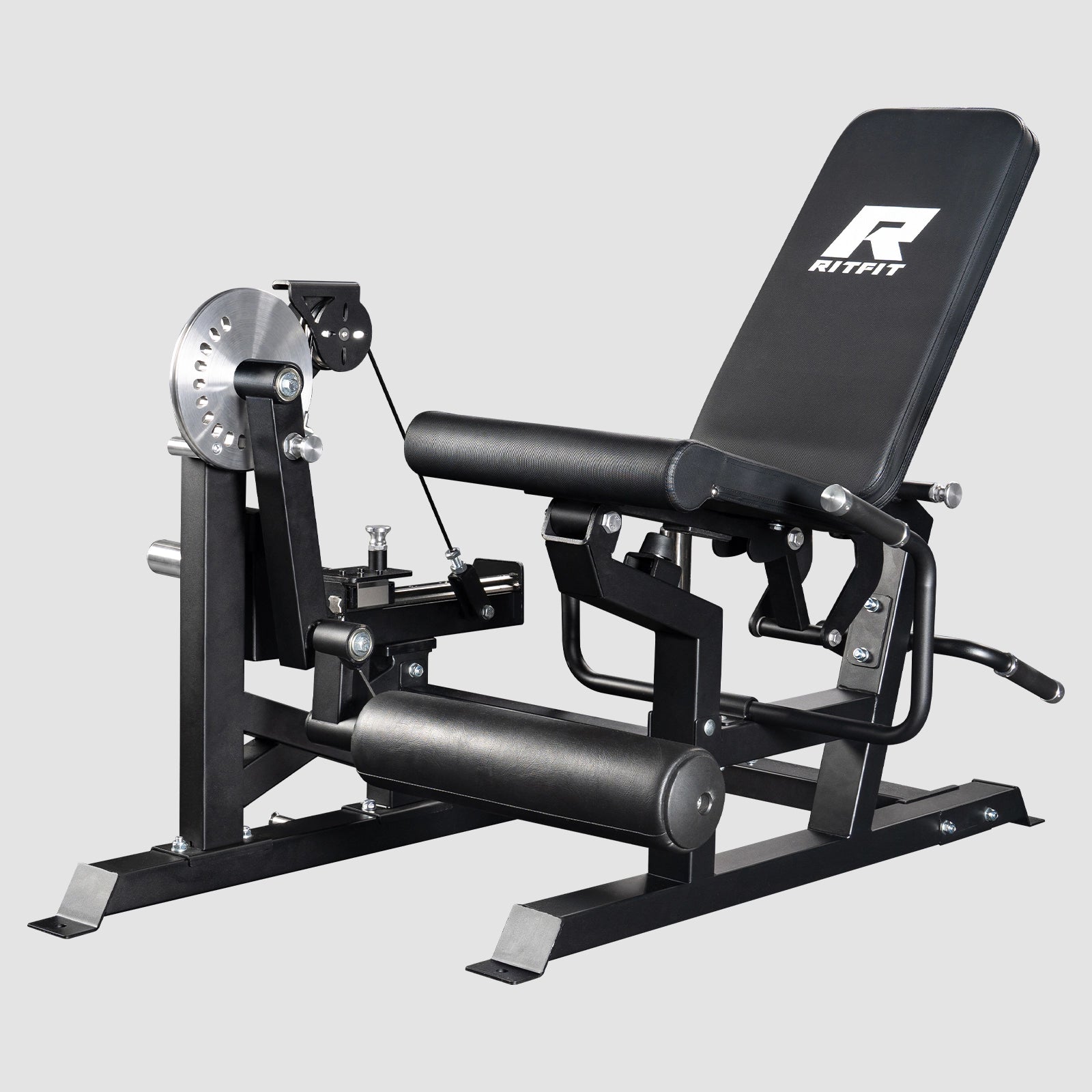
Most of these moves work with a pair of dumbbells or even water bottles at home. Browse the strength training equipment from RitFit for adjustable weights and benches, try the Turkish get up for a coordination challenge, and consider the adjustable back extension machine for glute and lower back firming.
How to Program Your Toning Workouts
Program two to three full body sessions a week, using 2 to 3 sets of 12 to 20 reps per exercise with light to moderate weights. Allow at least 48 hours between sessions that train the same muscles, and add a small load only when the target reps feel easy two workouts in a row.
- Pick a starting weight: Choose a load you can lift for 12 to 20 clean reps, where the last two reps feel challenging but stay controlled.
- Keep volume low: Two to three sets per movement is enough for toning, keeping total weekly workload moderate.
- Rest between sessions: Strength and firming happen during recovery, so leave at least 48 hours before training the same muscles again.
- Progress slowly: When the top of your rep range becomes easy two sessions in a row, add roughly 5 percent more weight.
- Stay consistent: Research shows that self-efficacy, your confidence in your ability to keep going, is a key determinant of whether people form and maintain a physical activity habit [3].
- Stop for sharp pain: If a joint aches or you lose control of the movement, stop that exercise and switch to a lighter variation or a different move.
This simple program fits any home setup, from a single pair of dumbbells to a complete functional and strength training collection.
What Common Mistakes Make Toning Fail?
Toning fails most often when people lift too heavy too fast, skip progression, or chase soreness instead of steady effort. Choose a light load, progress gradually and rest enough, and the firm, defined look follows.
- Using weights that are too light: Very light loads that never challenge you add little muscle or strength, so pick a weight where the last two reps feel hard.
- Lifting too heavy too soon: Heavy loads combined with high volume drive size, so keep reps in the 12 to 20 range for a firming effect.
- Adding weight every week: Rushing progression raises soreness and injury risk, so add load only when the target reps are consistently easy.
- Training the same muscles daily: Without rest days muscles do not recover or firm up, so schedule at least 48 hours between sessions.
- Ignoring nutrition: Muscle tone stays hidden under extra body fat, so pair training with a modest calorie deficit and enough protein.
- Judging results by soreness: Soreness is a sign of new stimulus, not progress, so focus on technique, consistency and gradual load increases.
Apply these fixes and your toning program will keep working month after month. If your first sessions leave you stiff, read our guide on how to get rid of muscle soreness.
FAQs About Getting Fit Without Getting Bulky
Can I get toned without lifting heavy weights?
Yes.
Research comparing light and heavy loads found similar muscle growth when sets were taken close to fatigue.
Light to moderate dumbbells with higher repetitions tone muscles without adding bulk, as long as you train with consistent effort and gradual progression.
Why do women not get bulky from strength training?
Women produce far less testosterone than men, so building large visible muscle requires specific high volume training and a calorie surplus. Strength training builds lean firm muscle and lowers body fat, which creates a toned look rather than a bulky one.
What weights should I use to tone not bulk?
Use a weight you can lift for 12 to 20 clean repetitions, roughly 30 to 60 percent of your one rep max.
The last two reps should feel challenging but stay controlled with good form.
Increase the weight only when the target repetitions become easy, which usually takes a few weeks.
How many days a week should I strength train for toning?
Two to three full body sessions per week works well for most beginners.
Allow at least 48 hours between sessions that train the same muscles so they recover fully.
Pair your strength work with daily activity and a balanced diet for the most visible toning results over time.
Will I lose my curves if I train to get fit?
No.
Strength training with multi joint movements like squats, lunges and hip thrusts shapes the glutes and legs rather than shrinking them.
You firm the muscle you already have while lowering body fat, which keeps a defined feminine shape instead of adding visible size.
Consistency and a balanced diet preserve your natural curves.
How long until I see toning results?
Most women notice firmer muscles and better energy within 6 to 8 weeks of consistent training.
Visible changes also depend on body fat reduction, so combine strength sessions with a modest calorie deficit and enough protein each day.
Give your program at least eight to twelve weeks before judging the results.
Conclusion
You can get fit but not muscular by training two to three times a week with light to moderate weights, higher reps, and multi joint movements.
Firm muscles, better posture and a leaner body come from consistent effort and slow progression, not from heavy lifting.
Choose a load that challenges the last two reps, rest at least 48 hours between sessions, and add weight only when the target reps become easy.
For a complete home setup, explore the RitFit sales page for value-driven strength equipment.
Disclaimer
This article is for general fitness information only and is not medical advice or a substitute for advice from a qualified professional. Before starting a new exercise program, especially if you have an injury or a health condition, consult a doctor or a certified trainer.
References
1. González-de-la-Flor Á. Optimizing hip abductor strengthening for lower extremity rehabilitation: a narrative review on the role of monster walk and lateral band walk. J Funct Morphol Kinesiol. 2025;10(3). doi:10.3390/jfmk10030294. PMCID: PMC12372021
2. Brandt M, Jakobsen MD, Thorborg K, Sundstrup E, Jay K, Andersen LL. Perceived loading and muscle activity during hip strengthening exercises: comparison of elastic resistance and machine exercises. Int J Sports Phys Ther. 2013;8(6):811-9. PMCID: PMC3867074
3. Stojanovic M, Fries S, Grund A. Self-Efficacy in Habit Building: How General and Habit-Specific Self-Efficacy Influence Behavioral Automatization and Motivational Interference. Front Psychol. 2021;12:643753. PMCID: PMC8137900