








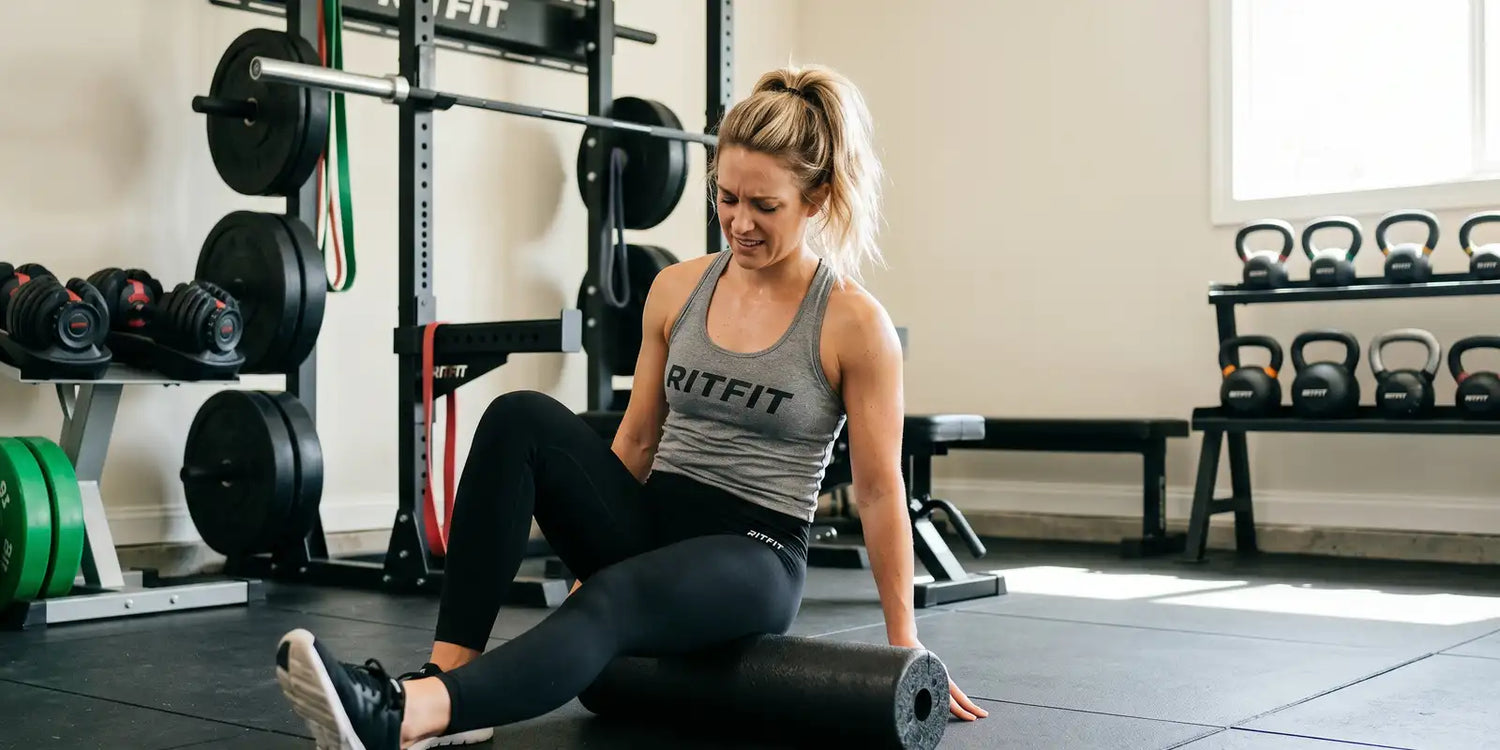
Muscle soreness after a workout, known as delayed onset muscle soreness or DOMS, is a normal part of training recovery, not a sign of injury. This guide explains why it happens and the most effective ways to ease it.
You will find evidence-backed recovery tips for healthy, active adults, plus simple ways to lower your risk next time and a clear note on when soreness deserves professional attention.
Table of Contents
Key Takeaways
- Soreness is normal: DOMS is a typical recovery response to new or harder training, not an injury.
- It is temporary: Soreness usually peaks within 24 to 72 hours and fades within a few days.
- Movement helps: Gentle active recovery, massage, and foam rolling ease soreness better than total rest.
- Recovery is multimodal: Sleep, hydration, and heat or cold all support faster recovery.
- Prevent it gradually: Warming up and easing into new workouts lowers how sore you get next time.
What Muscle Soreness (DOMS) Really Is
Delayed onset muscle soreness is the tender, stiff feeling that shows up a day or two after a tough or unfamiliar workout. It reflects normal exercise-induced muscle damage as your body adapts and gets stronger.
- The trigger: New movements, more volume, or eccentric work like lowering weights cause the most soreness.
- The feeling: Tenderness, stiffness, and reduced strength in the worked muscles, not sharp or sudden pain.
- The upside: This temporary discomfort is part of how muscles repair and become more resilient.
Knowing which areas are affected helps you plan recovery. A quick look at the major muscle groups makes it easier to target the right spots.
How Long Does Muscle Soreness Last?
Most muscle soreness appears 24 to 72 hours after exercise and eases within a few days. According to Cleveland Clinic, DOMS rarely lasts more than five days, and the discomfort should fade a little each day.
- Peak window: Soreness usually feels worst between one and three days after the workout.
- Recovery pace: Everyone heals at a different speed, so timelines vary from person to person.
- Watch the trend: The pain should steadily improve, not stay flat or get worse.
Rest is usually the best starting point, giving muscles the time they need to repair before your next hard session.
Evidence-Backed Ways to Get Rid of Muscle Soreness
No method erases soreness instantly, but several approaches help you feel better sooner. The most useful tools combine gentle movement, hands-on techniques, and good recovery habits.
Keep Moving with Active Recovery
Light activity like walking, easy cycling, or gentle mobility work boosts blood flow and tends to ease soreness more than lying completely still. Low-impact options such as resistance band work can keep you moving without overloading sore muscles.
Massage and Foam Rolling
Hands-on techniques are among the most reliable ways to reduce soreness. A meta-analysis of 11 studies involving 504 participants found that massage after strenuous exercise significantly reduced muscle soreness compared with no intervention, with the strongest effect at 48 hours and lower creatine kinase levels[1].
Foam rolling offers a do-it-yourself version of the same idea. In one controlled study using a demanding squat protocol, 20-minute bouts of foam rolling right after exercise and every 24 hours afterward reduced muscle tenderness and improved recovery of performance[2].
A review of physical therapies for DOMS describes massage, heat and cold therapy, stretching, vibration, compression, and low-intensity exercise as common approaches that aim to increase blood and lymphatic flow, reduce muscle tension, and ease soreness[3].
Heat, Cold, and Hydration
Cold can dull pain and inflammation while heat increases blood flow and relieves stiffness, so both have a place depending on your symptoms. Staying well hydrated and getting quality sleep round out recovery, and you can read more on how sleep drives muscle recovery and growth.
Should You Work Out When You Are Sore?
Light movement is usually fine and can even help, but avoid pounding the same sore muscles with another hard session. Give the affected area time while you stay active in smarter ways.
- Train elsewhere: Work non-sore muscle groups so you keep your routine going without overloading tender areas.
- Go easy: Choose gentle active recovery or a rest day when soreness is significant.
- Mind the signal: General tenderness is fine to move through, but sharp pain means stop.
If you are building a program, understanding how many reps to build muscle helps you progress without constant soreness.
How to Reduce Soreness Before It Starts
You cannot always avoid soreness, but smart habits lower how much you get. The biggest lever is easing into new or harder training instead of going all out.
- Warm up: A few minutes of light cardio and gentle movement prepares muscles for the work ahead.
- Progress gradually: Add weight, reps, or new movements step by step rather than all at once.
- Cool down: Easing off at the end helps your body shift from active to resting state.
Beginners can ramp up safely at home, and learning the best way to build leg muscle or how to build muscle with just dumbbells makes gradual progression simpler.
When to See a Healthcare Professional
Normal soreness is dull, symmetrical, and improves daily, but some signs call for a professional check. Stretching and recovery tips are meant for general tightness, not diagnosing or treating injuries.
- Sharp or severe pain: Sudden, intense, or one-sided pain is different from typical DOMS.
- Persistent symptoms: Soreness that lasts well beyond a few days or keeps worsening deserves attention.
- Other warning signs: Significant swelling, dark urine, or pain with weakness should be evaluated promptly.
When in doubt, a healthcare professional can rule out anything more serious and guide your return to training.
FAQs About Muscle Soreness
How do you get rid of muscle soreness fast?
There is no instant fix, but several methods help you feel better sooner. Gentle active recovery like walking, massage or foam rolling, staying hydrated, getting good sleep, and using heat or cold can all ease soreness. Most importantly, give the muscles a little time, since light movement and patience usually work better than forcing another hard session.
How long does muscle soreness last after a workout?
Delayed onset muscle soreness usually appears 24 to 72 hours after exercise and fades within a few days. According to Cleveland Clinic, it rarely lasts more than five days, and the discomfort should gradually ease each day. If soreness is sharp, severe, or lingers well beyond that window, it is worth checking in with a healthcare professional.
Should you work out when your muscles are still sore?
Light movement is usually fine and can even help, but avoid hammering the same sore muscles with another intense session. You can train other muscle groups, do gentle active recovery, or take a rest day. Listen to your body, and if a movement causes sharp pain rather than general tenderness, stop and let the area recover.
Does stretching get rid of muscle soreness?
Stretching may feel good and can ease stiffness, but research suggests it has only a small effect on reducing soreness itself. Methods like massage, foam rolling, and gentle active recovery tend to give more noticeable relief. Use stretching as one part of a broader recovery routine rather than relying on it alone to clear soreness.
How can you prevent muscle soreness before it starts?
You cannot always avoid soreness, but you can lower the risk. Warm up before training, ease into new or harder workouts gradually instead of going all out, and cool down afterward. Staying hydrated and getting enough sleep also support recovery, so your muscles adapt to new demands with less lingering soreness over time.
Conclusion
Muscle soreness is a normal, temporary part of getting stronger, and you can ease it with gentle movement, massage or foam rolling, good sleep, hydration, and a little patience.
Warm up, progress gradually, and listen to your body. If pain is sharp, severe, or persistent, check in with a healthcare professional before your next session.
Disclaimer
This article is for general educational purposes about normal post-workout soreness in healthy adults and is not medical advice. If you have sharp, severe, or persistent pain, consult a qualified healthcare professional before continuing exercise.
References
1. Guo J, Li L, Gong Y, et al. Massage Alleviates Delayed Onset Muscle Soreness after Strenuous Exercise: A Systematic Review and Meta-Analysis. Frontiers in Physiology. 2017;8:747. https://pmc.ncbi.nlm.nih.gov/articles/PMC5623674/
2. Pearcey GE, Bradbury-Squires DJ, Kawamoto JE, Drinkwater EJ, Behm DG, Button DC. Foam Rolling for Delayed-Onset Muscle Soreness and Recovery of Dynamic Performance Measures. Journal of Athletic Training. 2015;50(1):5-13. https://pmc.ncbi.nlm.nih.gov/articles/PMC4299735/
3. Wiecha S, Posadzki P, Prill R, Płaszewski M. Physical Therapies for Delayed Onset Muscle Soreness: A Protocol for an Umbrella and Mapping Systematic Review with Meta-Meta-Analysis. Journal of Clinical Medicine. 2024;13(7). https://pmc.ncbi.nlm.nih.gov/articles/PMC11012564/





