The Smith machine JM press is a triceps focused press that combines parts of a close grip press and a skull crusher. It can be easier to learn than the free bar version because the fixed bar path improves repeatability, solo safety, and setup control.
Key Takeaways
- The Smith machine JM press is best used as a heavy triceps accessory, not as a general chest press.
- Your elbows should travel slightly forward as the bar lowers toward the upper chest or low collarbone.
- Most elbow pain comes from too much load, a poor touch point, or turning the rep into a close grip bench press.
- Moderate reps work well for hypertrophy, while lower reps fit strength focused programming better.
- A smooth Smith machine, a stable bench, and well placed safeties make the exercise easier to repeat and progress.
What Is the JM Press?
The JM press is a triceps dominant pressing variation that sits between a close grip press and a skull crusher. It lets you load elbow extension harder than many isolation moves while still keeping a pressing pattern that many lifters find productive for arm size and lockout strength.
Why Choose the Smith Machine for JM Press?
The Smith machine version is useful because the fixed path reduces balance demands and makes the setup easier to repeat from week to week. Like other narrower upper body press patterns, it can help bias the triceps when technique stays tight and the elbows remain controlled.[2]
- More repeatable bar path: You do not have to stabilize the bar in space, so it is easier to focus on elbow path and touch point.
- Better solo safety: Adjustable safeties make hard sets less stressful when you train without a spotter, which is one reason many lifters use Smith setups for safe solo workouts at home.
- Cleaner progression: Because the setup changes less from session to session, it is easier to judge whether your reps are actually improving.
- Lower learning friction: Many lifters who are still learning what a Smith machine is find this version easier to organize than a free bar JM press.
What Muscles Does the Smith Machine JM Press Work?
The Smith machine JM press mainly trains the triceps brachii, with the long, lateral, and medial heads all contributing. The long head can change its contribution as shoulder position changes, which is one reason setup and bar path matter so much for how the rep feels.[1]
- Long head: This head often feels more involved when shoulder position and elbow travel let the rep stay triceps dominant.
- Lateral head: This head contributes strongly as you extend the elbow and drive the bar back to the top.
- Medial head: This head helps stabilize and finish elbow extension, especially when the rep stays controlled.
- Secondary support: The chest and front delts may assist, but they should not dominate the rep if you are doing a true JM press.
Proper Smith Machine JM Press Setup
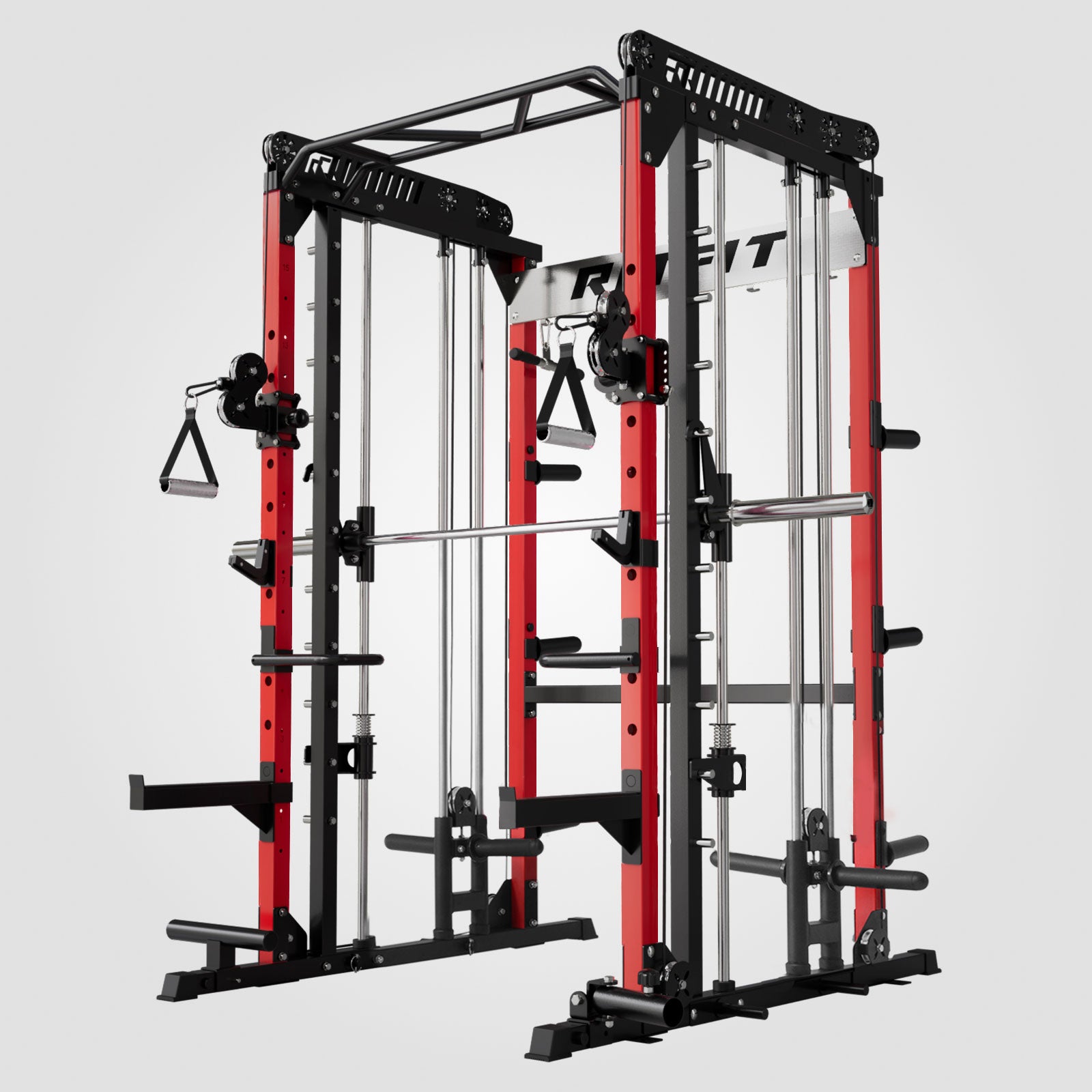
Proper setup matters because a small change in bench position, grip width, or safety height can completely change the exercise. You need a flat bench, a Smith machine with reliable safeties, and a load light enough to learn the path before you chase heavier sets.
- Bench position: Place the bench so the bar starts above your upper chest, not directly above your face or lower chest. A stable bench from the benches collection makes the setup easier to repeat.
- Safety height: Set the safeties just below your lowest planned touch point. This gives you room to train hard without turning every set into a bailout gamble.
- Grip width: Start around shoulder width or slightly inside. Too narrow often bothers the wrists and elbows before it improves the triceps stimulus.
- Feet and torso: Keep your feet planted and your upper back steady. You want a firm base, not a loose body English rep.
- Starting load: Begin lighter than you think you need. JM press technique usually improves faster when the early sets teach the path instead of testing your ego.
How to Do JM Press on a Smith Machine
Good Smith machine JM press form keeps the triceps loaded while avoiding a sloppy close grip bench press pattern. Your goal is a controlled descent, a consistent upper chest touch point, and a strong elbow extension on the way up.
- Step 1: Unrack with stacked joints. Lie flat, grip the bar close, and unrack with your wrists stacked over your elbows. Start with the bar above the upper chest and shoulders, not above the throat.
- Step 2: Lower with the elbows slightly forward. Let the elbows travel forward a little as the bar comes down. This is what separates the movement from a standard close grip press.
- Step 3: Aim for the upper chest. Bring the bar toward the upper chest or low collarbone area. If it drops too low, the rep often turns into a chest dominant press.
- Step 4: Pause in the loaded position. Briefly own the bottom without bouncing. You should feel the triceps loaded, with the wrists and elbows still organized.
- Step 5: Press by extending the elbows. Drive the bar up by straightening the elbows and keeping them relatively tucked. The rep should feel like a triceps driven press, not like a full range close grip bench press.
Common Mistakes to Avoid
Most Smith machine JM press mistakes come from trying to load the exercise too early or forcing a bar path that does not match your joints. Controlling the eccentric matters as well, because movement tempo can influence training outcomes and rep quality.[5]
- Flaring the elbows too wide: This usually shifts the rep away from the triceps and makes the bottom position feel less stable. Reduce load and bring the elbows back into a tighter working path.
- Touching too low on the chest: This often turns the rep into a close grip bench press. Bring the bar back toward the upper chest or low collarbone area.
- Using too much weight: Heavy load hides technical errors very quickly on this exercise. Build the pattern first, then progress in small jumps.
- Bent back wrists: A collapsed wrist can make the bottom position feel rough on the elbows. Keep the wrists stacked and adjust grip width if needed.
- Rushing the eccentric: Dropping the bar fast reduces control and usually makes the touch point drift. Lower with intent and keep the triceps under tension.
Programming Your Smith Machine JM Press
The best rep range depends on whether you want more triceps size, more lockout strength, or both. Current evidence suggests hypertrophy can be built across a broad loading range, while heavier loading tends to provide a larger strength advantage when technique stays solid.[3][4]
Sets and Reps
Use 3 to 4 working sets for most programs and keep the quality of each rep high. Moderate reps are usually the easiest place to learn the movement, while lower reps fit better once the pattern is stable.
- Strength focus: Use 3 to 4 sets of 4 to 6 reps. Rest long enough to keep elbow path and touch point consistent.
- Hypertrophy focus: Use 3 to 4 sets of 8 to 12 reps. This range gives many lifters a better mix of tension, control, and joint comfort.
- Placement in a workout: Put it after your main press, not before. It works especially well after a Smith machine bench press or after heavier chest work.
Exercise Pairings
The Smith machine JM press pairs best with simpler triceps work and other controlled Smith machine compounds. That makes it easy to keep the session focused instead of turning it into random arm fatigue.
- After presses: Pair it with Smith machine chest workouts when you want extra triceps volume after pressing.
- With cable extensions: Follow with pushdowns or overhead extensions if you still want a simpler finish that is easier on the elbows.
- With lower stress accessories: If your elbows are sensitive, pair the movement with lighter isolation work instead of another heavy elbow dominant press.
Benefits of the Smith Machine JM Press
The main benefit of this variation is that it lets many lifters train the triceps hard without spending as much attention on free bar balance. It also gives a more repeatable setup for people who want consistent home gym progression.
- Better triceps focus: The rep can stay more elbow extension focused when the bar path is stable and the touch point stays high.
- More confidence training alone: Quick rack hooks and safeties reduce the hesitation that often ruins hard triceps accessory work.
- Easy to standardize: Bench position, hand width, and safety height can all be repeated with less guesswork from session to session.
- Useful for home gym planning: If you are comparing machines, these same benefits are why many people search for the best Smith machine for beginners or explore the full Smith machine collection.
Variations and Progressions
You do not need endless variations, but a few smart adjustments can keep the movement productive. Change only one variable at a time so you can tell whether the rep actually improved.
- Paused JM press: Add a short pause near the bottom to improve control and reduce momentum.
- Slight incline JM press: A small incline can change the feel at the shoulder and elbow. It is useful only if the new path feels cleaner, not if it forces awkward bar travel.
- Limited range JM press: A shortened range can help some lifters train around elbow irritation while they relearn the path. It should be a temporary adjustment, not a way to hide bad control.
Equipment Recommendations
The best Smith machine for JM press is one with smooth bar travel, stable safeties, enough rack clearance for a bench, and an easy setup for solo work. If you want a home option that supports repeatable press accessories and broader upper body training, the RitFit M1 Smith Machine is a practical fit.
- Check bar travel: A rough carriage makes small triceps accessory work feel worse than it should.
- Check bench clearance: You need enough room to set a flat bench in the correct position without crowding the rack.
- Check bar weight and feel: If you are still learning how your setup behaves, it helps to know how much a Smith machine bar weighs.
- Check overall training use: If you want more than one press accessory, it also helps to choose a unit that supports squats, rows, lunges, and other Smith machine exercises for muscle building.
FAQs
Is a Smith machine JM press good for beginners?
Yes. A Smith machine JM press can work for beginners because the fixed path reduces balance demands and makes the setup easier to repeat. Beginners should still start very light, learn the elbow path first, and stop the set when the rep starts turning into a close grip bench press.
What muscles does a Smith machine JM press work?
A Smith machine JM press mainly trains the triceps, with the long, lateral, and medial heads all contributing. The exact feel changes with grip width, bar path, and shoulder position, but most lifters use it to emphasize elbow extension while still handling more load than a strict isolation movement.
Why does the Smith machine JM press bother my elbows?
It usually bothers the elbows when the load is too heavy, the bar travels too low, or the grip and touch point do not match your arm mechanics. A lighter load, more warm up reps, and a slightly adjusted grip or bar path often make the exercise feel much smoother.
Where should the bar go during a Smith machine JM press?
The bar should usually move toward the upper chest or low collarbone area, not straight down to the lower chest and not back toward the face. That path helps keep the rep closer to a JM press, maintains triceps tension, and often reduces joint stress for many lifters.
How many reps should I do for Smith machine JM press?
Use lower reps when strength is the main goal and moderate reps when hypertrophy is the priority. Most lifters do well with about 4 to 6 reps for heavier work or 8 to 12 reps for muscle gain, as long as the eccentric stays controlled and the elbows stay tucked.
Can a Smith machine JM press replace pushdowns or skull crushers?
Yes. It can replace them in some programs, especially when you want a heavier triceps movement that still feels stable and repeatable. It does not have to replace every isolation exercise, though, because many lifters still benefit from pairing it with simpler cable or dumbbell triceps work.
Conclusion
The Smith machine JM press is one of the most useful triceps accessories for lifters who want heavier elbow extension work without the extra balance demands of a free bar. Start light, keep the touch point high, progress slowly, and let the triceps drive the rep instead of forcing a close grip bench press pattern.
Disclaimer: This guide is for general education only and does not replace medical advice, physical therapy, or one to one coaching. Stop the exercise if you feel sharp pain, finger numbness, or worsening elbow, wrist, or shoulder symptoms, and adjust load, range, or exercise choice as needed.
References
- Kholinne E, Zulkarnain RF, Sun YC, Lim S, Chun JM, Jeon IH. The different role of each head of the triceps brachii muscle in elbow extension. Acta Orthop Traumatol Turc. 2018;52(3):201-205.
- Marcolin G, Petrone N, Moro T, Battaglia G, Bianco A, Paoli A. Selective activation of shoulder, trunk, and arm muscles: a comparative analysis of different push up variants. J Athl Train. 2015;50(11):1126-1132.
- Schoenfeld BJ, Grgic J, Van Every DW, Plotkin DL. Loading recommendations for muscle strength, hypertrophy, and local endurance: a re examination of the repetition continuum. Sports. 2021;9(2):32.
- Lopez P, Radaelli R, Taaffe DR, et al. Resistance training load effects on muscle hypertrophy and strength gain: systematic review and network meta analysis. Med Sci Sports Exerc. 2021;53(6):1206-1216.
- Wilk M, Zajac A, Tufano JJ. The influence of movement tempo during resistance training on muscular strength and hypertrophy responses: a review. Sports Med. 2021;51(8):1629-1650.